
News
Jonathan, Oborevwori, Diri, Ibori Mourn 104-Year-Old Prince Penawou

- /home/naijuinz/public_html/wp-content/plugins/mvp-social-buttons/mvp-social-buttons.php on line 27
https://naijablitznews.com/wp-content/uploads/2026/08/edvf-1000x600.jpg&description=Jonathan, Oborevwori, Diri, Ibori Mourn 104-Year-Old Prince Penawou', 'pinterestShare', 'width=750,height=350'); return false;" title="Pin This Post">
- Share
- Tweet /home/naijuinz/public_html/wp-content/plugins/mvp-social-buttons/mvp-social-buttons.php on line 72
https://naijablitznews.com/wp-content/uploads/2026/08/edvf-1000x600.jpg&description=Jonathan, Oborevwori, Diri, Ibori Mourn 104-Year-Old Prince Penawou', 'pinterestShare', 'width=750,height=350'); return false;" title="Pin This Post">


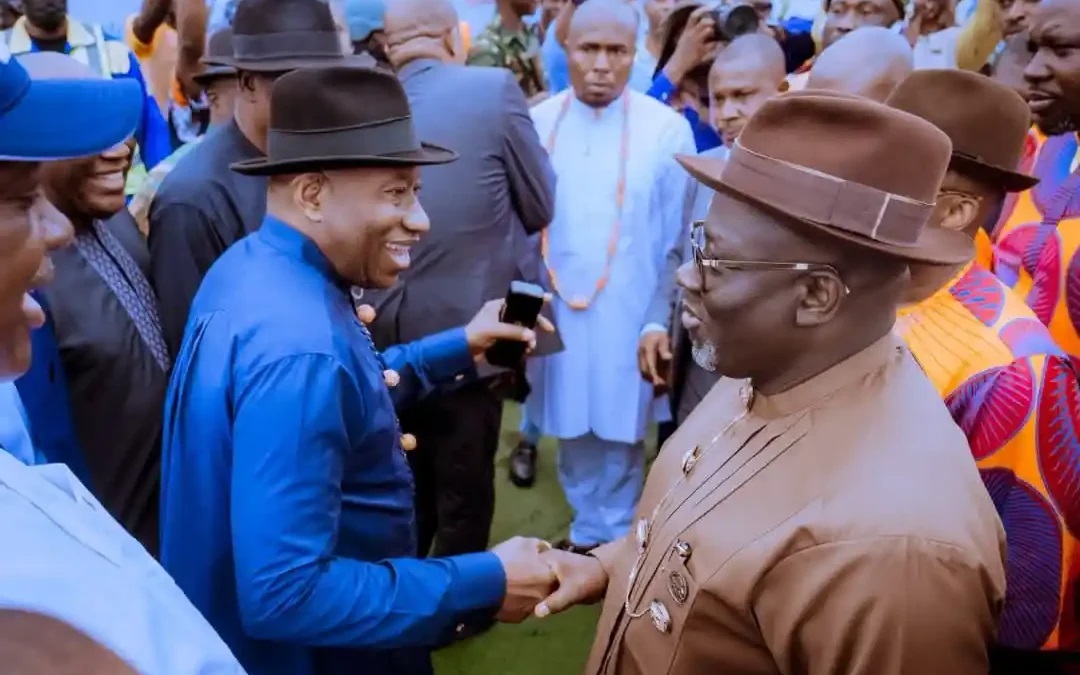
On Saturday, a distinguished assembly of political leaders, government officials, traditional rulers, and community dignitaries gathered in Akugbene Town, Bomadi Local Government Area of Delta State, to pay their final respects to the late Prince Isaac Firimokumo Penawou, who passed away at the age of 104. Among the mourners were former President Goodluck Jonathan, Delta State Governor Rt. Hon. Sheriff Oborevwori, Bayelsa State Governor Senator Douye Diri, and former Delta State Governor Chief James Ibori. The funeral service served as a poignant reminder of the profound impact Prince Penawou had on his family, community, and generations of associates.
The funeral ceremony drew an impressive turnout, reflecting the deep respect and admiration held for the late prince. His son, Prince Kelly Penawou, serves as the Delta State Commissioner for Local Government Affairs, while his other son, Chief Joseph Penawou, holds the position of Chairman and Chief Executive Officer of First Marine Engineering Services Limited. The attendance of high-profile dignitaries underscored the Penawou family’s long-standing influence in the region, as well as the extensive networks cultivated by Prince Penawou and his descendants over decades.
The memorial service was attended by a cross-section of Nigeria’s political and social elite, each representing their respective roles in honoring the late prince’s legacy. Among the prominent figures present were:
Former Deputy Governor of Delta State, Deacon Kingsley Otuaro; Senator Joel-Onowakpo Thomas; Former Senator James Manager; Hon. Nicholas Mutu; Minister of State for Petroleum Resources, Senator Heineken Lokpobiri; Speaker of the Delta State House of Assembly, Rt. Hon. Emomotimi Guwor; Managing Director of Renaissance Africa Energy, Mr. Tony Attah; Seplat Chief Executive Officer, Engr. Effiong Okon; Numerous other political leaders and public office holders.
The presence of these individuals highlighted the breadth of Prince Penawou’s influence, extending beyond his immediate family to encompass political, business, and community spheres. The gathering provided a platform for dignitaries, family members, and mourners to offer prayers, share condolences, and celebrate the life of a man whose journey spanned over a century.
The funeral rites were not merely a somber occasion but also a celebration of Prince Penawou’s remarkable life, marked by resilience, wisdom, and an enduring commitment to his community. Family members and dignitaries took turns to express their gratitude for having shared in his journey, reflecting on the lessons and values he imparted over his 104 years. The event served as a testament to the profound connections he forged with those around him, leaving an indelible mark on the hearts of many.
As the funeral proceedings drew to a close, the legacy of Prince Isaac Firimokumo Penawou was firmly cemented in the annals of history. His passing marked the conclusion of a life well-lived, one that touched countless individuals and left an enduring imprint on his family, community, and beyond. The tributes paid during the service were a fitting tribute to a man whose life exemplified dedication, leadership, and an unwavering spirit that transcended generations.

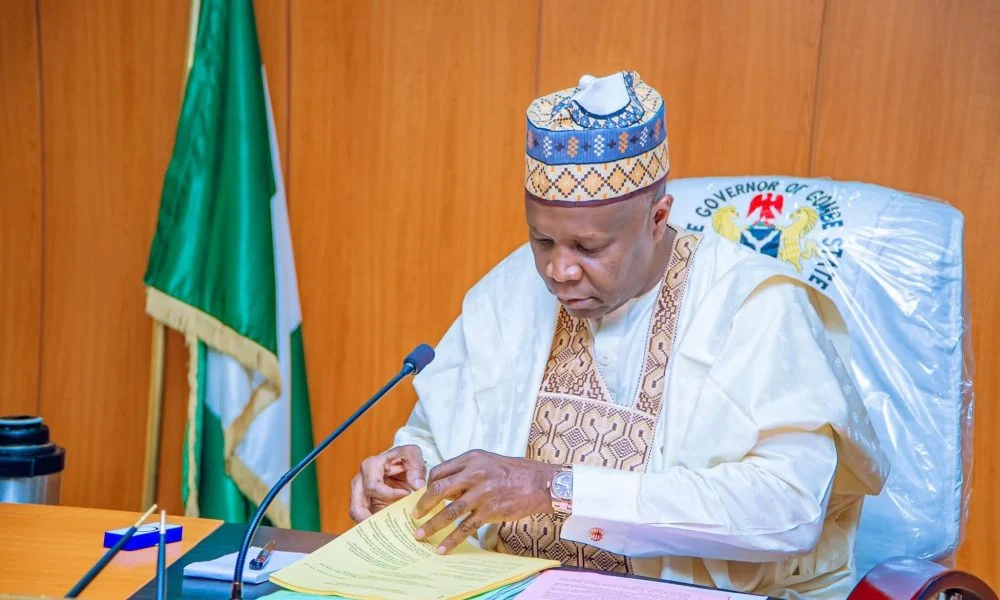
Gombe State Governor and Chairman of the Northern States Governors’ Forum, Inuwa Yahaya, has said Boko Haram insurgents have been weakened but not completely defeated.
Yahaya spoke on Saturday at the 13th meeting of the forum in Maiduguri, Borno State, where he identified insecurity as one of the major challenges still confronting northern Nigeria.
“Boko Haram has been weakened but not defeated, and we still see attacks on our communities. Banditry and communal clashes are emerging as new threats,” he said.
The governor said persistent insecurity had made it difficult for many people displaced by violence to safely return to their communities.
He also expressed concern over the slow pace of major development projects planned for the region, including the Mambilla hydropower project, regional railway connections and broadband expansion.
Yahaya said the North was also facing significant challenges in healthcare and education despite progress recorded in some areas over the past six years.
Reflecting on the formation of the North East Governors’ Forum in Gombe in March 2020, he said the initiative was driven by the need for collective action to address challenges that individual states could not tackle alone.
“When we first met in Gombe, we did so out of necessity. The challenges confronting our region were greater than any one state could solve alone,” he said.
According to him, insecurity, banditry, cross-border crime, poor infrastructure, inadequate power supply and the humanitarian crisis remained issues requiring regional cooperation.
Yahaya, however, said the forum had recorded progress in areas including infrastructure, electricity, economic development, human capital development and security.
He also described the Kolmani oil exploration project as a major opportunity for the region, stressing that the initiative must ultimately translate into oil production, employment opportunities and increased government revenue.

Management of the Madonna University, Elele Campus, Rivers State, has expelled a final-year nursing student, simply identified as Mercy, and suspended 14 other 500-level students of the same department over a viral TikTok video.
The viral video showed a group of nursing students dancing in a hospital waiting area, staircase, and bus.
Mercy, who featured in the opening seconds of the clip dancing in a hospital hallway, allegedly received her expulsion letter during the week.
The dance routine was recorded as part of a social media trend known as the “Gen Z nurses” challenge, featuring healthcare workers dancing in clinical settings.
The video contained a Pidgin English caption reading: “No fall sick o, na Gen Z full hospital now.”
By Saturday evening, the TikTok account used to publish the video had been set to private, while direct messages sent to the user remained undelivered.
It was gathered that the clip was uploaded in August and picked up by social media blogs early last month.
A 15-second version of the video published by Yabaleftonline on September 1 had gathered over 1.7 million views on X by Saturday.
The video was recorded on the premises of the university’s Elele campus.
Madonna University, established as the first private Catholic university in West Africa, operates three campuses in Elele, Rivers State; Okija, Anambra State; and Akpugo, Enugu State.
A medical influencer and TikTok content creator, Nurse Girma (@nurse_girma), drew public attention to the video and launched an online appeal for the institution to grant the affected students clemency.
In a video posted on Friday, Girma confirmed that the university senate had handed down the disciplinary measures.
“The information reaching us from last night and this morning is that the owner of the account has been expelled and other students involved have been served suspension,” Girma said.
He explained that the video had trended negatively, prompting healthcare professionals to call for stricter regulation of student conduct.
Girma noted that he initially assumed the students were registered nurses, but later deleted some of his commentary after learning they were undergraduates.
“Yesterday night, unfortunately, the senate of her school handed out an expulsion letter and every other person involved, a suspension letter.
“I know what has happened has happened, but I want to appeal to the school to temper justice with mercy; when it came to me that she is a 500-level student, it really melted my heart,” he said.
Social media users expressed divergent views over the sanctions meted out by the university authorities.
An X user, Ize (@santaluceya), backed the university’s decision, stating that the students breached known institutional guidelines.
“They respect and value their name and their image; if you are their student, you can’t post anything controversial or silly online,” Ize wrote.
“The tuition fee for Nursing students in Madonna is around N1.5m to N1.8m per session, and when the video was getting views, Mercy was asked to take it down, but she blatantly refused,” the user added.
Similarly, a TikTok user, Sharon (officialsharonbackup), argued that the students mocked the healthcare profession.
“These are not 100-level students; they are final-year students about to become registered nurses who made a video that mocked patients,” Sharon wrote.
Conversely, another user, Her Excellency (her_excellency75), urged the university to show leniency, describing the dance as a harmless stress-relief activity.
“I feel that whatever will reduce stress should be adopted; this can be diversionary therapy, but there should be balance in all we do,” she wrote.
An X user, Nurse Bassey (@nursebassey_), described the expulsion as excessive given the years of study invested by the student.
“Do you think nursing school is a two-month course? You can condemn the video if you think it was inappropriate, but expulsion after years of school fees, clinicals, exams, and sacrifice?” Bassey queried.
A TikTok user, Cynthia Mordi, suggested that the university should have withheld their results for one year or assigned community service instead.
Reacting to the development, the National Executive Council of the Nigerian Universities Nursing Students’ Association expressed concern over the sanctions.
In a statement signed by its National President, Madu Valentine, and Secretary General, Ogwuche Joy, NUNSA stated that it had initiated talks with relevant authorities to seek a review of the decision.
“High-level discussions have already commenced with relevant stakeholders, and decisive steps are being taken to formally communicate our concerns to the university’s management,” the statement read.
“Our primary objective is to seek a fair, just, and favourable resolution by adequately representing the interests and welfare of the affected students,” NUNSA added.
Similarly, the National Association of Nigerian Students, through a statement by its President, Babatunde Akinteye appealed to the management of the institution to pardon the students.
Akinteye said, “No doubt, such conduct is grossly inappropriate and does not align with the ethics, discipline and professional standards expected of students of Nursing.
“However, we humbly appeal to the Management of Madonna University, a reputable institution with a long-standing commitment to academic excellence and character formation, to temper justice with mercy and reconsider the severity of the punishment imposed on these students.
“Expulsion is, by far, a grave punishment. Beyond the immediate academic consequences, it can fundamentally alter the course of a young person’s life. These students have invested years of their lives, resources and hopes in pursuing a professional career in Nursing. An expulsion at this stage could have a lasting toll on their academics, their future careers and their mental and emotional wellbeing.”


By Max Amuchie | The Sunday Stew
In The Sunday Stew of 7 June 2026 I unveiled the Decoupling Sovereignty Index (DSI) and introduced the three vectors, Money, Land and Mind. Unveiling a measurement instrument, however, creates an immediate obligation. An index without a methodology for generating its data is an architectural drawing without a building. And last week, 27 September 2026, as a prelude to outlining the methodology of DSI, I wrote about the anatomy of becoming nobody, the systemic process where an individual slowly loses their legal and functional visibility to the state, making them institutionally nonexistent in a decoupling zone.
Today we begin to lay out, in practical terms, the operational steps necessary to actualise the DSI in the field, in the specific, dangerous and empirically rich environments for which it was designed.
Those environments are not seminar rooms. There is a comfortable, almost clinical delusion that blankets the seminar rooms of capital cities and international development agencies. In these well-lit spaces, policy analysts gather over hot coffee to measure state fragility using neat, top-down statistical sheets supplied by formal ministries. They peer through the glass of the Institutional Mirage, the appearance of formal authority without its substance, convinced that the questionnaires filled out by bureaucratic gatekeepers accurately reflect the state of the nation.
But if you want to find the true boundaries of sovereign authority, you have to leave the glass tower. And more importantly, you have to change your clothes.
When a state’s formal authority dissolves and passes to a parallel Shadow Order, the de facto authority that fills the space the state has vacated, the traditional tools of academic research do not just become useless. They become dangerous. In a zone defined by Constitutional Erasure, where the Shadow Order has locked in prominence and alternative legitimacy put in place, walking into a local motor park or a border market carrying an official clipboard, a laptop bag, or a crisp starched corporate shirt is an immediate broadcast of vulnerability. To the armed actors or parallel tax collectors who wield empirical power on the ground, that elite uniform signals an institutional threat or a high-value target for ransom.
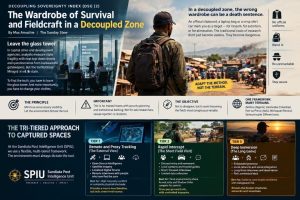
To find the truth in these fractured spaces the researcher must learn the radical science of becoming invisible and unremarkable. This requires a systematic methodology designed to extract unvarnished data while keeping the research infrastructure as secure as possible.
One caution before the method. What follows is written for trained teams working with security planning and institutional backing. It is not a guide for solo students, casual reporters or anyone tempted to try it alone.
The objective is not invisibility for its own sake. It is the reduction of unnecessary researcher visibility where conspicuousness would distort the research environment or create avoidable danger. The researcher is not trying to disappear from the field; the researcher is trying to avoid becoming the field’s most conspicuous variable.
Whether the field site is a decoupled zone in Zamfara, Nigeria; Catatumbo, Colombia; Port-au-Prince, Haiti; or Michoacán, Mexico, the methodological principle remains the same: the researcher must minimise unnecessary visibility while allowing the environment to dictate the tool. These are four very different environments, across four distinct geographical and political contexts, but the DSI begins from the same proposition:where formal sovereignty has weakened, fragmented or been displaced by alternative systems of authority, the researcher must adapt the method to the terrain rather than force the terrain to conform to the method. The wardrobe, mode of entry, duration of presence, interview technique and degree of immersion therefore cannot be prescribed universally. The principle travels; the instrument adapts.
The Tri-Tiered Approach to Captured Spaces
At the Sundiata Post Intelligence Unit (SPIU), we recognise that a uniform approach to conflict and fragility research is tactically reckless. An environment where sovereignty has decoupled requires an agile, multi-tiered methodological framework. The environment must always dictate the tool. Depending on real-time risk, resource availability and accessibility, field tracking for the DSI is divided into three distinct operational options.
Tier 1: Remote and Proxy Tracking, the External View. Deployed when a zone is undergoing high-intensity kinetic conflict or complete physical blockade. Here, the researcher maintains zero physical footprint inside the occupied territory, relying entirely on Open Source Intelligence, satellite imagery tracking economic shifts, localised digital forums, and remote interviews with individuals who have recently fled the zone. It provides a vital macro-level baseline but inherently lacks street-level nuance.
Tier 2: Rapid Intercept, the Short Field Visit. Utilised in fluid environments where the formal state and the Shadow Orderare actively negotiating space. The researcher conducts short-duration, high-mobility field visits, executing rapid unstructured intercept interviews in transit hubs, gas stations or open markets. The investigator captures a real-time snapshot of the terrain before triggering local paranoia, and leaves on a prompt, planned departure.
Tier 3: Deep Institutional Immersion, the Richest Source. Deployed in areas where a stable, predictable alternative authority has taken over daily administration. This is the most demanding option and the one that most needs ethical justification. It is used only when less deceptive methods cannot answer the question. Where it is used, the researcher makes a deliberate, strategic choice, out of analytical methodology rather than operational compulsion, to embed within the local ecosystem by adopting a functional economic persona.
The Art of Negative Space: The Visual Assimilation Protocol
The Wardrobe of Survival is the fieldcraft principle that attire, footwear and accessories must register as unremarkable within the local economic and cultural baseline of a decoupled zone. It is the first layer of the Visual Assimilation Protocol.
In a Shadow Order space, your attire is your first and most immediate broadcast to the environment. Before you speak a single word, your clothes have already told the street whether you are an easy target, an institutional threat, an elite outsider, or someone who naturally belongs. When an operative of a Shadow Order scans a crowd, their brain algorithmically looks for threats or opportunities: state intelligence, rival groups, wealthy targets, media vans. The researcher’s attire must register as absolute zero on those scales. To conduct research discreetly, wardrobe must be treated as a tool of environmental assimilation. That single consideration governs everything that follows.
First: Eliminate the Elite Academic and Corporate Uniform. The classic wardrobe of a city-based executive, journalist or university researcher, meaning crisp ironed shirts, formal trousers, corporate shoes, designer watches and branded polo shirts, signals immediate wealth and institutional privilege. In a zone defined by sovereignty decoupling and economic hardship, this dressing announces outsider status and makes you a primary target for kidnap-for-ransom syndicates or predatory parallel tax collectors. Your clothes must match the average economic baseline of the specific micro-environment you are standing in at that exact hour. Opt for simple, functional, slightly worn clothing: plain unbranded t-shirts, durable jeans or utility trousers that look lived-in. Avoid anything that looks fresh out of a boutique.
Second: Respect Cultural and Regional Conformity. Sovereignty decoupling often intensifies along sharp regional, cultural and religious fault lines. Dressing in a way that aggressively asserts a different regional background than the local population instantly identifies you as a stranger, triggering heightened paranoia among Shadow Order gatekeepers. You do not need an elaborate cultural disguise, but your clothes must show genuine respect for local behavioural and religious norms. In deeply conservative or traditional rural enclaves, casual local daily wear replaces Western clothing for men. For women researchers, strict conformity to local modesty expectations is non-negotiable, for example carrying a hijab or mayafi (a traditional Hausa head-tie, shawl, or scarf used by women to cover the head and shoulders as a sign of modesty) where the environment demands it.
Third: Treat Footwear as a Separate Intelligence Decision. You can tell a great deal about a person’s immediate intentions or status by their shoes. Heavy high-tech tactical boots signal a security operator or foreign aid worker. Expensive polished leather shoes signal a wealthy bureaucrat from the capital. Both attract the wrong kind of attention. Your footwear must balance the practical reality of being able to move fast in an emergency with the visual aesthetic of a casual local. Wear simple, dark-coloured, broken-in sneakers or common local sandals, exactly what a local trader or commuter would wear. Comfortable enough for long distances. Completely unremarkable to any observer looking down.
Fourth: Apply the No-Brand Rule and Conceal All Accessories. Even if your clothes are casual, high-end accessories function as a homing beacon for criminal actors and Shadow Order operatives. The wealth on your body must register as zero. Leave smartwatches, gold bands and designer chronographs at your secure urban base. If you must track time in the field, use a cheap scratched plastic digital watch. If you wear prescription glasses, abandon modern designer frames for plain standard ones. Never carry a high-tech laptop backpack, a branded media camera bag or a tactical sling bag. Your field carrier is a worn common plastic bag or a cheap generic local market tote, the kind carried by millions of ordinary Nigerians every single day.
The protocol also demands linguistic and behavioural conformity. Words like sovereignty decoupling, insurgency or state decay are entirely purged from verbal interactions. The researcher never asks about territorial capture; they simply ask casual commuters how the local trade routes are flowing this season. By blending into the economic and cultural baseline of the micro-environment, the researcher disarms suspicion and guards the critical information asymmetry: you are observing them, but they must not realise they are being analysed.
The Deep Institutional Immersion Protocol: Reducing the Filter
Where prolonged observation is necessary to map the boundaries of sovereign decoupling, the Deep Institutional Immersion Protocol becomes the primary engine of data authenticity. By taking up a lowly paid job, such as a petty trader, a roadside mechanic’s apprentice, a tyre repairer’s assistant or a market labourer, the researcher greatly reduces the Hawthorne Effect: the psychological phenomenon where human subjects alter their behaviour the moment they know they are being studied.
When you are sweating behind a small wooden table of petty goods, you cease to be an academic disruption. You become a peer, and the defensive filters of the population drop far more than they ever would for a clipboard.
The immersion moves DSI data tracking from passive estimation towards direct, lived experience. Instead of guessing shadow tax compliance rates, you experience parallel taxation as a direct business expense, documenting its frequency, its enforcement mechanisms and its toll on small-scale commerce. Instead of mapping territorial boundaries from a distance, your daily movements anchor you to the coordinates where the formal state’s security footprint vanishes and Shadow Order checkpoints begin. Instead of surveying community trust, you hear in the natural flow of daily conversation a far less filtered picture of who the population actually trusts, and where cognitive loyalty is moving from the Institutional Mirage to the Shadow Order.
The Authenticity Premium, and Its Limits
We must accept that when a state’s structure decays, our traditional ways of looking at that state must adapt or die. We cannot theorise our reality using comfortable imported methodologies that assume a baseline of safety and institutional order.
Deep immersion narrows the authenticity deficit inherent in standard conflict research, and it gives the researcher a more direct chain of evidence than a questionnaire ever could.
But it has limits. One market stall is a vantage point, not a zone. The researcher is also a source of bias, and the persona shapes what people say to it. Immersion enriches the evidence. It does not replace the discipline of testing that evidence against the wider picture.
Sometimes, to expose the grandest illusions of governance, the researcher must step onto the tarmac, put on the wardrobe of the street, and live a quiet lie, just to find the truth.
From the Desk to the World
Dr. Max Nwabueze Amuchie is the CEO & Theorist-In-Chief, Sundiata Post, and Lead Researcher at the Sundiata Post Intelligence Unit (SPIU), Abuja, Nigeria. An Expert Member and Peer Reviewer at ScienceOpen, he is a member of the League of Nigerian Columnists (LNC).
X: @MaxAmuchie; Email: [email protected]

Boko Haram still strong, not defeated – Northern governors chairman

Madonna Varsity rusticates students, suspends 14 others over viral Gen Z nurses video

Decoupling Sovereignty Index (2): The Wardrobe of Survival in a Decoupled Zone



-
 News22 hours ago
Grand reception for FCT minister Wike at Ekpeye Kingdom on a visit to Uzugbani NEC, in Ahoada LGA today (VIDEO)
-
 News24 hours ago
Oyo 2027: Massive defections as PDP candidate, Accord aspirant, 3,000 others join APC
-

 News11 hours ago
Was Tinubu’s Speech AI-Generated? Elon Musk’s Grok AI Makes Strong Revelation
-
 News19 hours ago
Confusion As Abductors Of Oyo Corps Members Demand ₦50m Ransom For Each Victim
-

 News11 hours ago
Imo Police Locate Kidnappers’ Camp, Reveal Why Abducted Corps Members Are Yet to Be Rescued
-
 News11 hours ago
How I Hired Cars To Get Drivers Abducted By My Gang, Kidnap Suspect Reveals