By Gloria Ikibah


China has said it lifted more than 800 million people out of poverty since the country began its reform and opening-up programme in 1978, contributing more than 70 per cent of global poverty reduction, the Chinese Embassy in Nigeria has said.
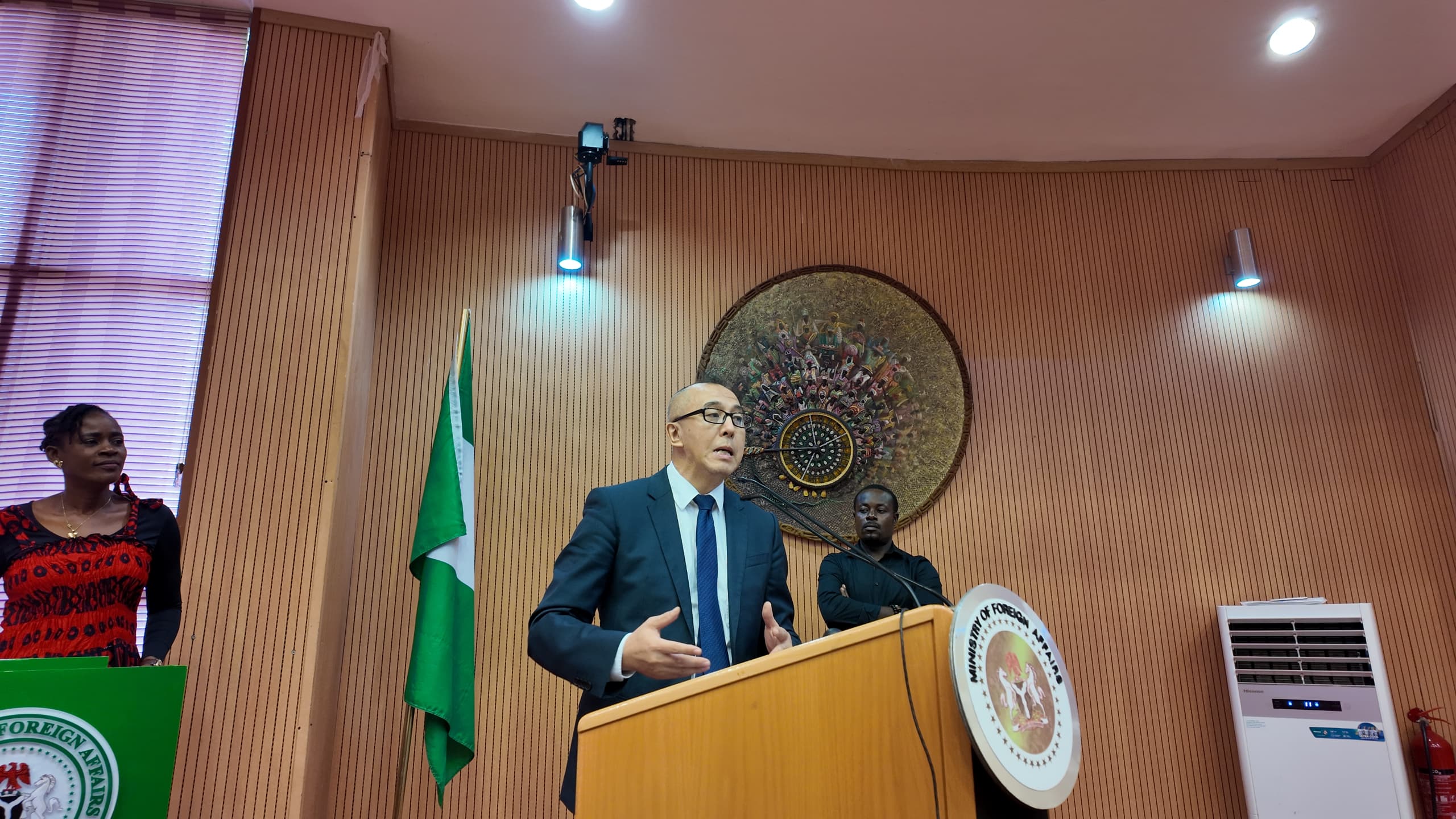
Chinese Ambassador to Nigeria, Yu Dunhai, stated this on Tuesday in Abuja ar a one-day workshop on Nigeria’s Poverty Alleviation and China’s Development model organised by the Diplomatic Correspondents Association of Nigeria on Tuesday in Abuja. 
Ambassador Yu was represented by the Counsellor, Economic and Commercial Office of the Chinese Embassy in Nigeria, Counsellor Sun Xuekun.
According to him, China’s poverty reduction achievement was unprecedented in scale, speed and sustainability, with the country eradicating absolute poverty by 2020.
He said when the People’s Republic of China was founded in 1949, nearly 87 per cent of its population lived in rural areas under extreme poverty, while per capita national income stood at only 27 US dollars.
Dunhai said the pace of poverty reduction also stood out, noting that nearly 100 million rural residents were still living below the poverty line at the end of 2012.
“Since the launch of reform and opening-up in 1978, China has lifted more than 800 million people out of poverty, contributing over 70 percent of global poverty reduction.
“Yet within only eight years, by the end of 2020, all of them had been lifted out of poverty.
“On average, more than 12 million people escaped poverty each year, equivalent to the population of a medium-sized country,” he said.
He added that 98.99 million rural poor residents, 832 impoverished counties and 128,000 impoverished villages were removed from poverty.
“China eradicated absolute poverty and achieved the poverty reduction target of the United Nations 2030 Agenda ten years ahead of schedule,” Dunhai said.
He attributed the achievement to strong government leadership, targeted interventions, economic development and the mobilisation of communities, businesses and social organisations.
The envoy said China invested nearly 1.6 trillion yuan in special poverty alleviation funds and deployed more than three million officials and village work team members to support poor communities.
He said the country also moved away from broad-based interventions towards targeted poverty alleviation by identifying poor households, examining the causes of poverty and tailoring assistance to local needs.
“China shifted from broad, generalized measures to precision-based interventions.
“Through detailed identification of poor households and villages, analysis of the causes of poverty, and the establishment of a national information management system, assistance was tailored to local realities,” he said.
Dunhai said China’s strategy included developing local industries, relocating communities from inhospitable areas, ecological compensation, educational assistance and stronger social security.
He also highlighted investments in roads, drinking water, electricity, telecommunications, education and healthcare as important parts of the country’s poverty reduction strategy.
According to him, China has since linked poverty alleviation with rural revitalisation to prevent people from slipping back into poverty.
“Poverty governance has gradually shifted from intensive campaigns to long-term institutional mechanisms, demonstrating that poverty can not only be overcome but also prevented from recurring,” he said.
The envoy said China’s experience showed that poverty reduction should be people-centred and treated as a core responsibility of government.
“China’s experience shows that poverty reduction begins with putting people’s interests first,” he said.
He also argued that poverty was fundamentally a development issue and could be tackled through economic growth, investment, improved livelihoods and policies adapted to local conditions.
“Poverty is fundamentally a development issue.
“By prioritizing economic development, addressing regional disparities, and continuously improving people’s livelihoods, China created conditions that enabled sustained poverty reduction,” Dunhai said.
He said China’s experience also had lessons for developing countries, stressing that each country should adopt policies suited to its own circumstances.
He said China had supported international development cooperation through initiatives including the Global Development Initiative and the Belt and Road Initiative.
“China’s experience in targeted poverty alleviation, strong accountability, and dynamic management demonstrates that developing countries can successfully overcome poverty through strategies suited to their own national circumstances,” he said.
He maintained that despite continuing global poverty challenges, China’s experience demonstrated that poverty could be overcome through determination, appropriate policies and collective action.
“China’s poverty reduction journey demonstrates that poverty is neither inevitable nor irreversible.
“Through strong leadership, people-centered development, targeted policies, sustained economic growth, and broad social participation, China has achieved a historic transformation that has improved the lives of hundreds of millions of people.
“China’s experience shows that with determination, appropriate policies, and collective effort, poverty can be overcome, development can be shared, and a more prosperous future can be built for all,” Dunhai said.