

Connect with us

Foreign

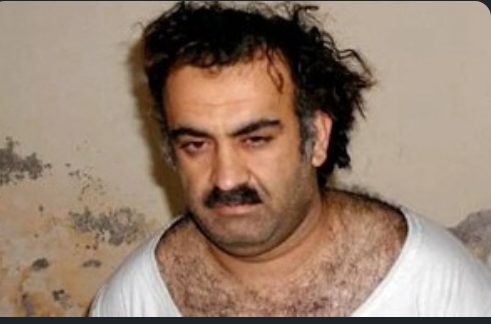
9/11 attack: Mastermind Khalid Sheikh Mohammed to face trial as Judge fixes June 2028

Published

on

ADVERTISEMENT
Zoom Ad
ADVERTISEMENT
Zoom Ad


A US military judge has scheduled the long-delayed trial of Khalid Sheikh Mohammed, the man accused of being the mastermind behind the September 11, 2001 attacks in the United States, for June 5, 2028.

The trial will take place before a military commission at the US detention facility in Guantánamo Bay, Cuba, where Mohammed has been held since 2006. He was captured in Pakistan in 2003.

Mohammed will stand trial alongside three co-defendants: Walid bin Attash, Ali Abdul Aziz Ali, also known as Ammar al-Baluchi, and Mustafa al-Hawsawi. The four men are accused of various roles in planning and facilitating the September 11 attacks, which resulted in the deaths of nearly 3,000 people.

Advertisement

The decision to set the trial date represents a significant development in a case that has been delayed for more than two decades. Prosecutors had requested that the proceedings begin in January 2027, but military judge Lieutenant Colonel Michael Schrama rejected that timetable.

According to the judge’s scheduling order, more time is required to resolve outstanding pre-trial disputes, particularly disagreements concerning what evidence can be presented during the proceedings.

The September 11 attacks remain one of the most significant terrorist attacks in modern US history. On September 11, 2001, hijacked passenger aircraft were used in attacks that targeted the World Trade Center in New York and the Pentagon in Virginia, while another aircraft crashed in Pennsylvania. Nearly 3,000 people were killed.Downloading Interactive Geographic Maps

Mohammed is accused of developing and directing the plot. The charges against him and his co-defendants include conspiracy, hijacking and murder, among other offences.

Advertisement

The case has faced repeated delays because of complex legal disputes surrounding evidence, the treatment of the defendants while in US custody and other procedural matters.

A proposed plea agreement had also created further uncertainty. Mohammed and two of his co-defendants had reached an agreement that would have involved guilty pleas and removed the possibility of the death penalty in exchange for life sentences. However, the agreement was subsequently challenged and was ultimately rejected following further legal proceedings.

The handling of evidence obtained during earlier CIA interrogations has been another major issue in the case. Defence lawyers have argued that the circumstances surrounding some of the defendants’ earlier treatment could affect whether certain statements or evidence should be admitted at trial.

Despite the new date, the case could still face additional delays if outstanding legal issues are not resolved according to the schedule.

Advertisement

The planned June 2028 proceedings will begin with the selection of military personnel to serve as the trial panel. The prosecution and defence will then present their respective cases before the proceedings eventually move to a sentencing phase if convictions are secured.

For families of the victims and others who have followed the case for years, the scheduled date represents another step toward bringing the long-running legal process to a conclusion.
Continue Reading
Advertisement

Foreign

Iran offers to reopen Strait of Hormuz within days amid UN talks

Published

on

By

ADVERTISEMENT
Zoom Ad
ADVERTISEMENT
Zoom Ad

Iran has said it is reviewing US response to its proposal to end war.

A senior Iranian official told Reuters that Tehran is reviewing the United States’ response to its proposal to end hostilities, but many differences remain between the Iranian and U.S. positions as diplomacy continues.

Reopening the Strait of Hormuz and lifting the U.S. naval blockade on Iran were discussed during indirect talks with the U.S. Tuesday, the official said.

Tehran previously said it could reopen the Strait of Hormuz within a week if the U.S. eased military pressure and lifted its blockade of Iranian ports.

Advertisement

Iran’s chief national security advisor Mohsen Rezaee wrote in a post the country is tiring of negotiations.

“Iran’s new diplomacy will not return to the past. We will force America to respect the rights of the Iranian nation and act according to the conveyed conditions; otherwise, the Strait of Hormuz will not be opened,” he wrote. “Enough with negotiations, take action.”

Iranian spokespeople say Iran and the U.S. met for two hours of mediated discussion during the United Nations General Assembly.

During the discussion, Iran repeated its conditions for opening the Strait of Hormuz.

Advertisement

The U.S. Army announced the death of an active-duty servicemember Wednesday who was supporting overseas operations in Qatar.

Capt. Bianca C. Wilkerson, 37, of Virginia, died on Sept. 18 as a result of a noncombat-related incident, according to a release. She was posthumously promoted to major.

The incident is under investigation.

U.S. representatives left the room as Iranian President Masoud Pezeshkian addressed the United Nations General Assembly Wednesday.

Advertisement

“Yesterday, the United States President described us as terrorists. We have been the victims of terrorism,” Pezeshkian said. “Those who are terrorists and train and protect terrorists describe us as such.”

He says America has hit civilian populations and neighborhoods, including schools, and argued Iran has only defended itself. He compared America and Israel’s war with Iran to Israel’s actions in Gaza, calling for justice for Palestine.

“In Gaza, over 80,000 innocent civilians have been murdered, brutally murdered. They are committing genocide, then they label others as terrorists. We only seek to live independently,” he said. “We cannot speak of peace while ignoring Palestine. Lasting peace in West Asia is impossible without justice for Palestine.”

He said the bombing of Iranian cities will not go unanswered.

Advertisement

Trump tells NewsNation ‘we’ll see’ on whether to ‘annihilate’ Iran

Iranian Foreign Minister Seyed Abbas Araghchi said he warned the EU of “severe long-term consequences of facilitating and supporting Israeli-U.S. war crimes” in Gaza and Iran.

“That major folly aside, [NATO Secretary General Mark Rutte] should know by now that groveling never satisfies a bully,” he wrote in a post.

Iran spokesperson accuses Trump of ‘war crime’; Trump threatens to ‘annihilate’ country during UN speech

Advertisement

Iranian foreign ministry spokesperson Esmaeil Baqaei accused Trump of an “unforgivable war crime” associated with Iranian schoolchildren who he says were killed in a Feb. 28 missile attack by American forces.

“They should have been here today, bright-eyed and joyful, celebrating the start of a new school year. Instead their slain bodies lie buried in the earth,” Baqaei wrote in a post with a video of the children. “The Iranian people will never forget these angelic faces. They will never forgive their killers.”

He criticised Trump’s speech at the UN General Assembly, during which the president said he was weighing whether to “annihilate” Iran if Tehran doesn’t agree to a deal, despite ongoing talks.

“The government whose president mockingly flouts international law from the UN podium bears responsibility for this unforgivable war crime. All who stood silent and looked away share in that responsibility,” Baqaei wrote.

Advertisement

Iran’s armed forces have dismissed Trump’s comments as propaganda and said the country is prepared to deliver “more severe, crushing and unpredictable blows” if attacked.

Two casualties in Strait of Hormuz cargo vessel strike: UKMTO

The United Kingdom Maritime Trade Operations UKMTO says a cargo vessel was struck by an “unknown projectile” in the Strait of Hormuz Wednesday, “leaving it on fire and adrift.” Authorities are investigating.

All crew were evacuated and two casualties were reported.

Advertisement
Continue Reading

Foreign

Iranians Will Never Bend At The Knee, President Pezeshkian Tells Trump

Published

on

By

ADVERTISEMENT
Zoom Ad
ADVERTISEMENT
Zoom Ad

Iran’s president struck a defiant tone at the UN on Wednesday, where he spoke for the first time since Washington and Israel launched an all-out war on his country, vowing Tehran would never “bend at the knee.”

Masoud Pezeshkian accused Washington of “terrorism” for assassinating former supreme leader Ayatollah Ali Khamenei at the start of the war.

He held up a photograph of the dead leader before insisting Tehran had never started a war.

On Tuesday, President Donald Trump had told the UN he was weighing whether to “annihilate” Iran, but went on to hail renewed talks between Tehran and Washington’s negotiators.

Advertisement

Pezeshkian did not refer to the talks to resolve the stalled war in his steely speech.

“(Trump) must know that the resistance of the Iranian people will only increase in the face of sanctions, increased pressure, increased bullying. We will never bow our head or bend at the knee,” he said.

Pezeshkian insisted that Tehran would not allow the Strait of Hormuz, which it has been intermittently blockaded since the start of the war, causing global energy prices to spike, to be used for aggression against his country.

“We cannot let some have free access and bolster their interests from the waterway, while at the same time using that waterway to impose their aggression upon us,” he said.

Advertisement

Soaring fuel prices threaten to cost Trump’s Republicans their control of Congress in November’s midterms.

Pezeshkian’s attendance at the UN’s signature diplomatic event, in the heart of Manhattan, had been in doubt as it was unclear if the United States would issue a visa.

Ultimately, Washington granted the permit, but denied visas to several members of Pezeshkian’s entourage.

Advertisement
Continue Reading

Foreign

American power, AI and a walkout – key moments from Trump’s UN speech

Published

on

By

ADVERTISEMENT
Zoom Ad
ADVERTISEMENT
Zoom Ad

US President Donald Trump returned to the stage at the United Nations on Tuesday, where he touted his administration’s policies in front of world leaders and issued pointed threats to some of those gathered in the room.

The lengthy speech was wide-ranging, covering the war in Iran, AI, Cuba and the role of America’s military.

The BBC’s correspondents who covered the address have picked five key moments that stood out.

1. Trump pushes message of American power

Advertisement

The US president has no great respect for the United Nations – he accused it of imposing a far-left agenda – but he does relish the global platform it gives him.

He used Tuesday’s speech to tout his achievements, and claim the mantle of a peacemaker, at the same time as he issued a number of pointed threats.

Iran might be annihilated, lethal strikes on small boats suspected of drug smuggling will continue and the Cuban regime may even be toppled.

The clear message was: America is still prepared to use its military might wherever Trump thinks it might be required to secure its national interests.

Advertisement

Trump said he was “reasserting American power” and flexed what he called the country’s “unmatched military might”.

“The United States will no longer permit threats to America to gain a foothold anywhere in the Western Hemisphere,” he said.

Once again, Trump has made the full-throated assertion to the world of “America First”.

2. Cubans walk out as Trump calls nation ‘failed state’

Advertisement

Trump took aim at one of the US’s closest neighbours, Cuba, calling it “an absolutely failed state” and saying his administration has been pursuing “a fundamental change in the situation in Cuba”.

“It will fall,” he said.

The Cuban delegation walked out of the hall as Trump continued his remarks.

Over the last year, the US president become more vocal in criticising Cuba’s communist government. On Tuesday, he said it was under “enormous pressure” and “failing like never before”.

Advertisement

The US has not, however, provided a detailed picture of what it believes change will look like in Cuba.

Cuba’s foreign minister reacted angrily to Trump’s comments and accused the US president of spreading “falsehoods”.

“The US government is incapable of accepting that Cuba is and has the right to be a full sovereign and independent country,” Bruno Rodriguez wrote on X.

3. A direct threat to ‘annihilate’ Iran

Advertisement

Trump presented Iran with a stark choice at the UN General Assembly: reach an agreement with Washington and rebuild the country, or face the rapid “annihilation” of the Islamic Republic.

He then again predicted that a deal to end the war would probably follow the US midterm elections in November.

His remarks illustrated Trump’s familiar strategy of coercive diplomacy – keeping negotiations open while also threatening overwhelming force.

But his language blurred the distinction between destroying the political system and threatening Iran itself.

Advertisement

International law experts have previously expressed concern at what they called “alarming rhetoric” used by US officials, including Trump himself, who has posted that the US might “obliterate” Iran’s power plants.

References on Tuesday to leaving “no chance of survival” and “no hope” for future generations will likely have stoked similar alarm. There is also an irony in delivering this warning at the United Nations, an organisation founded to save future generations from war.

Yet the speech was not a declaration that diplomacy has failed.

It was an attempt to define the terms of possible negotiations: the US remains prepared to make a deal, but only under the shadow of an existential threat.

Advertisement

4. Trump hails new Greenland security deal

Trump also praised a new deal with Greenland under which he said the US would build two military bases in the Arctic territory.

“We will have the complete ability to do what is necessary to defend the American continent and also Europe,” he said of the deal, which he first announced on Friday.

He added that it “very much enhances” the defence alliance Nato.

Advertisement

The US, Denmark and Greenland held a joint signing ceremony at the UN shortly after Trump’s address.

Although Greenland is a semi-autonomous territory, it is part of the Kingdom of Denmark which primarily handles its foreign policy.

Trump administration officials are already hailing the agreement as enhancing US security at minimal cost – and with relationships intact.

Denmark and Greenland’s governments, however, will be hoping it ends the long-simmering disagreement that began when Trump threatened to take Greenland by force.

Advertisement

That threat shook the Nato alliance and sorely tested the US-Danish relationship.

Given Trump had tried for months to purchase or annex the semi-autonomous territory, some analysts are viewing it as a quiet win for diplomacy.

5. An attempted rebrand of AI

Trump has a penchant for branding, and in his speech he gave Artificial Intelligence a new name: Super Intelligence.

Advertisement

“The use of the word artificial makes it sound fake,” he said. “It’s not fake, it’s actually amazing. But we have to be careful.”

“Welcome to the new world of Super Intelligence – SI,” he added.

Trump has previously argued that the US must come out on top in the AI development race, saying last week: “Whoever wins AI, wins.”

The president is firmly against government regulation or introducing new guardrails – and that puts him at odds with many of those gathered at the UN.

Advertisement

For those who are calling for regulation, the question is whether the slow pace of diplomacy can keep up with AI’s rapid development.

Continue Reading

Trending

Copyright © 2024 Naija Blitz News