News
Gbajabiamila Backs State Police, Says Nigeria Has Outgrown Centralised Policing
- /home/naijuinz/public_html/wp-content/plugins/mvp-social-buttons/mvp-social-buttons.php on line 27
https://naijablitznews.com/wp-content/uploads/2024/09/Gbajabiamila.jpeg&description=Gbajabiamila Backs State Police, Says Nigeria Has Outgrown Centralised Policing', 'pinterestShare', 'width=750,height=350'); return false;" title="Pin This Post">
- Share
- Tweet /home/naijuinz/public_html/wp-content/plugins/mvp-social-buttons/mvp-social-buttons.php on line 72
https://naijablitznews.com/wp-content/uploads/2024/09/Gbajabiamila.jpeg&description=Gbajabiamila Backs State Police, Says Nigeria Has Outgrown Centralised Policing', 'pinterestShare', 'width=750,height=350'); return false;" title="Pin This Post">
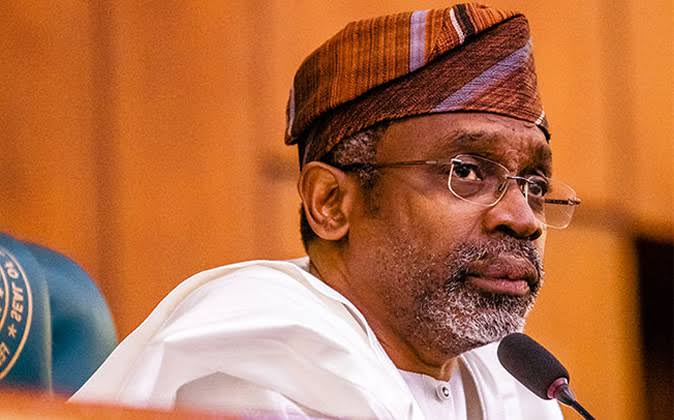
The Chief of Staff to President Bola Tinubu, Femi Gbajabiamila, has said Nigeria can no longer depend solely on a single centrally controlled police institution to tackle the country’s increasingly complex security challenges.

Gbajabiamila made the remarks on Monday in Port Harcourt, Rivers State, during a special session at the 66th Annual General Conference of the Nigerian Bar Association, titled “NBA Takes The Mic: Who Polices Nigeria?”
Delivering President Tinubu’s message to members of the legal profession, the Chief of Staff said the administration was committed to addressing what it considers a structural weakness in Nigeria’s security architecture.

“A country of our size and diversity cannot continue to depend on a single centrally commanded police institution for all its policing needs,” he said.
Gbajabiamila said the existing policing arrangement had been “stretched beyond what any institution can reasonably carry,” citing Nigeria’s large population, vast geographical area and diverse local security challenges.
He contrasted Nigeria’s policing structure with those of other federal systems, including the United States and Canada, where policing responsibilities are shared between federal and subnational institutions.
According to him, Nigeria’s constitutional prohibition against state police has left the country attempting to respond to significantly different local security realities through a single national command structure.
He warned that continued delays in reforming the system were no longer sustainable.
“Further postponement is itself a choice. It is the wrong choice, and citizens have carried its consequences for long enough,” he said.
Gbajabiamila, however, stressed that the call for decentralised policing should not be interpreted as criticism of officers of the Nigeria Police Force, many of whom, he said, continue to serve under difficult and demanding conditions.
He argued that the commitment and sacrifice of police officers made structural reform even more urgent.
“Their sacrifice makes reform more urgent, because courage should not have to compensate indefinitely for structural weakness,” he stated.
Under the proposed arrangement, states with the willingness and capacity to do so would be allowed to establish their own police services, while the federal police would retain responsibility for national, interstate and other constitutionally assigned security duties.
Gbajabiamila disclosed that Nigeria currently has approximately one police officer for every 650 citizens, compared with what he described as a widely accepted international benchmark of one officer to about 450 people.
He said the manpower gap further demonstrated the difficulty of expecting a single national police organisation to address every security challenge across the federation effectively.
Addressing concerns that state police could be used by governors to intimidate political opponents, Gbajabiamila said the proposed framework would include constitutional, institutional and accountability safeguards.
“No governor should possess the personal power to order the arrest of an opponent, stop an investigation, disperse a lawful meeting or direct how officers act in an election,” he said.
He stressed that decentralisation must therefore be accompanied by professional standards, independent oversight, accountability mechanisms and constitutional protections capable of preventing abuse.
Gbajabiamila also disclosed that both chambers of the National Assembly had approved constitutional amendments aimed at creating a framework for federal and state police services.
He explained that because the proposal requires a constitutional amendment, it must also secure the approval of at least 24 State Houses of Assembly before being transmitted to the President for assent.
If ultimately adopted, the reform would significantly alter Nigeria’s policing architecture by allowing subnational governments to establish police services while preserving key federal policing responsibilities.
The Chief of Staff urged members of the legal profession, particularly the Nigerian Bar Association, to play an active role in shaping the proposed framework.
He noted that the NBA is represented on both the Presidential Working Group and its Policy Advisory Committee, giving lawyers an opportunity to contribute directly to the design of the proposed policing system.
Gbajabiamila said the objective was not simply to create more police institutions but to establish a structure capable of responding more effectively to local security challenges while protecting citizens’ rights and preventing political abuse.
His comments come amid an intensifying national debate over the establishment of state police. Supporters argue that decentralised policing could improve intelligence gathering, local engagement and response times, while critics have raised concerns about the possibility of state authorities exploiting the system for political purposes.
Gbajabiamila maintained that such concerns should be addressed through carefully designed constitutional safeguards rather than used to indefinitely preserve what he described as a policing structure that no longer adequately reflects Nigeria’s size, diversity and security needs.
News
FG decries illegal mining, plans clampdown on offenders
The Federal Government has said it will begin a clampdown and the arrest of all firms and individuals engaged in illegal mining activities in Cross River State.
This was disclosed on Tuesday by the Federal Mines Officer in Cross River State, Ayelabola Olubunmi, during a fact-finding meeting with traditional leaders and stakeholders in Butatong community, in the Boki Local Government Area of the state.
He said the government was losing millions of naira in revenue to illegal mining operations carried out by undocumented firms in forest communities across the state.
He said, “This meeting was convened following reports of influx of foreigners and private groups into communities around the Okwango division of the Cross River National Park, amid concerns over mining activities in the area. The Federal government will begin a clampdown and the arrest of all firms and individuals engaged in illegal mining activities in the state.
“There are a lot of mining operations in Okwa villages 1 and 2, which are enclaves in the Cross River National Park, adjoining Butatong. These operators are not known to the Federal Ministry of Solid Minerals and they do not go through legal procedures, thereby denying the Federal Government its due royalties.
“We don’t want firms to enter our forests for mining activities through the backdoor. We’ll definitely fish them out; the ministry will soon intensify sensitisation and enforcement visits to affected communities.”
The mines officer warned the traditional rulers and community leaders against granting mining consent.
He said the ministry had officially licensed firms authorised to undertake mining activities in designated parts of the state, adding that the government needed companies that could be held accountable.
“Mining activities must be in line with Minerals and Mining Act of 2007. For illegal miners and those aiding them, the Federal Government would treat their operations as economic sabotage”, he said.
He urged residents to remain vigilant and report mining activities that could expose communities to environmental, health and security risks.
The Clan Head of Butatong, HRH Otu Gregory Apah, urged indigenes not to harbour illegal miners and appealed to the government to provide basic social amenities to the mineral-rich community.
The Chairman of Butatong Community Council, Benedict Apah, said he was not aware of mineral deposits in Butatong itself but confirmed that mining activities were ongoing in neighbouring enclave communities, including Okwango, Okwa 1, Okwa 2 and Bumagi.
News
Southern, Middle Belt leaders reject FG’s livestock scheme
The Southern and Middle Belt Leaders Forum (SMBLF) has warned against the alleged attempt to take over the ethnic lands in the Middle Belt region and hand them over to Fulani pastoralists under the federal government’s new National Livestock Policy.
SMBLF said it “suspects that the true aim of this policy is the creation of permanent settlement zones for nomadic Fulani herdsmen, whose violent activities over the years have contributed to the capture and occupation of thousands of square kilometres of land across the Middle Belt and even parts of southern states.”
In a statement signed by Afenifere chieftain and Chairman of SMBLF, Oladipo Olaitan, the group stated that “apart from the genocide they (Fulani herdsmen) have been accused of carrying out in the Middle Belt, they have rendered millions homeless, and cannot be handed the lands of their victims as a reward for their heinous crimes.”
The body said it was alarmed “by the audacious attempt by the federal government to take over lands belonging to ethnic communities in the Middle Belt under a spurious pilot scheme being introduced in the name of a New National Livestock Policy.”
“It is striking that this experiment is being concentrated almost entirely in the Middle Belt, despite the vast expanse of sparsely populated and unused land available in many parts of the far north, where Fulani emirs dominate most of the lands,” it noted.
“The scheme is being presented as a pilot, but if it is not firmly opposed by the communities being short-changed, it will inevitably be expanded to other parts of the country, including the southern states.”
SMBLF explained that it was not opposed to modern livestock production, ranching or the development of the livestock value chain but strongly rejects what it described as “the opaque, coercive and discriminatory manner in which this policy is being pursued to the exclusive advantage of nomadic Fulani herdsmen.”
Calling on the communities and governments of the southern states to reject the policy, SMBLF told the federal government that “the Land Use Act of 1978 is not a licence for arbitrary land grabbing.
“It vests rural land in local councils, recognises customary rights of occupancy, and allows revocation only for overriding public interest. It also protects agricultural land, including fallow land, as continuing community property.”
The Southern and Middle Belt leaders noted that “ranching is an economic enterprise that is privately driven.” They maintained that “the government cannot disguise compulsory land acquisition for specific economic actors as public interest.”
According to them, records show that some of these nomadic pastoralists are not Nigerian citizens, and “any policy that ignores these realities while allocating vast ancestral lands to them under state protection is unacceptable to the indigenous people of the Middle Belt and the South.
“We have seen similar attempts before under different names, including the rejected RUGA and Cattle Colony proposals, which Nigerians resisted because of their implications for land ownership and demographic restructuring. The SMBLF will not accept such a policy.”
Meanwhile, the group demands full and transparent disclosure of the proposed ranching sites, the legal instruments for their acquisition, the ownership structure, security concerns, the beneficiaries, the size of the lands involved and the source of funding.
News
INEC to display 2027 governorship, Assembly candidates’ list Saturday
The Independent National Electoral Commission (INEC) will display the list of candidates nominated by political parties for the February 6, 2027 governorship and State Houses of Assembly elections on Saturday, August 29.
The governorship election will be held in 28 states, while State Houses of Assembly elections will take place across the 36 states of the federation.
The governorship poll will be conducted in Lagos, Ogun, Oyo, Delta, Rivers, Akwa Ibom, Cross River, Enugu, Ebonyi, Abia, Kwara, Benue, Plateau, Niger and Nasarawa states.
Other states where governorship elections will be held are Borno, Yobe, Adamawa, Taraba, Bauchi, Gombe, Jigawa, Kano, Kaduna, Katsina, Zamfara, Kebbi and Sokoto.
Governorship elections will not be held in Ondo, Osun, Ekiti, Edo, Bayelsa, Anambra, Imo and Kogi states.
The 22 registered political parties are expected to field fresh candidates in Lagos, Ogun, Oyo, Yobe, Borno, Adamawa, Bauchi, Gombe, Kwara and Nasarawa, where incumbent governors’ tenures will expire in 2027.
Meanwhile, political parties contesting the presidential and National Assembly elections have until Saturday, August 29, to submit their final list of candidates to INEC.
This follows the August 22 deadline for candidates to withdraw from the 2027 elections, under Section 31 of the 2026 Electoral Act.
The section provides that a candidate may withdraw from an election by submitting a written notice, signed by the candidate and accompanied by a sworn affidavit, personally to the political party that nominated the candidate.
The party must forward the withdrawal and affidavit to the commission no later than 90 days before the election.
INEC is expected to publish the final list of presidential and National Assembly candidates, comprising Senate and House of Representatives candidates, on Saturday, September 12.
-
News20 hours agoDangote Refinery raises fuel price by N15
-
News20 hours agoADC Kicks Against Endorsement of Tinubu by 500+ Jigawa Islamic Scholars
-
News20 hours agoBaby factory dismantled in Mowe as Ogun police rescue pregnant women, children
-
News17 hours agoUS halts all US visa applications worldwide
-
News17 hours agoPresidency speaks on PCC list, insists it was not withdrawn but will be adjusted
-
News17 hours agoOsun Attacks: Panic as parties exchange words over local councils, motor parks
-
News15 hours agoChina’s Poverty Model Can Help Nigeria, But Must Fit Local Realities — FG
-
News15 hours agoChina’s Poverty Fight Lifted More Than 800m People – Ambassador Yu