Connect with us

Sports

See 7 countries that were banned from World Cup due to politics

Published

on

ADVERTISEMENT
Zoom Ad
ADVERTISEMENT
Zoom Ad

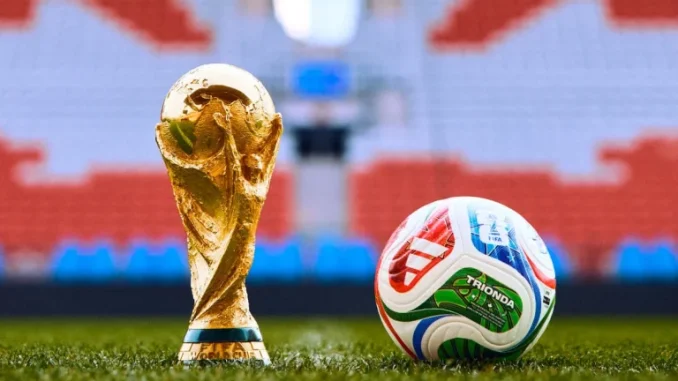
The FIFA World Cup is often presented as a tournament that brings countries together through football.


However, politics, war, international sanctions and government interference have repeatedly affected which nations are allowed to participate.

Over the years, several countries have been prevented from taking part in the World Cup or its qualifying process because of political conflicts or actions involving their governments.

Here are seven notable examples.

Advertisement

1. South Africa

South Africa is one of the clearest examples of politics influencing World Cup participation.

FIFA suspended the country in 1961 because of its apartheid system, which enforced racial segregation. The suspension was later reinstated, and South Africa was expelled from FIFA in 1976.

The country’s exclusion lasted for several World Cup cycles until it was readmitted in 1992, following the dismantling of apartheid. South Africa eventually returned to the World Cup in 1998 and hosted the tournament in 2010.

Advertisement

2. Yugoslavia

Yugoslavia was prevented from playing at the 1994 World Cup because of international sanctions imposed during the Yugoslav Wars.

The United Nations imposed sanctions on Yugoslavia that included a prohibition on participation in international sporting events. As a result, the country was removed from the 1994 World Cup despite having a strong football tradition.

The political break-up of Yugoslavia eventually resulted in several independent football nations, including Croatia, Slovenia and Bosnia and Herzegovina.

Advertisement

3. Russia

Russia is the most prominent modern example of a country excluded from the World Cup because of an international political and military conflict.

Following Russia’s invasion of Ukraine in 2022, FIFA and UEFA suspended Russian national teams and clubs from international competitions.

The suspension prevented Russia from taking part in the 2022 World Cup play-offs and also kept the country out of the qualification process for the 2026 tournament. Russia remains suspended from FIFA and UEFA competitions.

Advertisement

4. Germany

Germany was excluded from the 1950 World Cup in Brazil following the Second World War.

The country had been defeated in the war just five years earlier, and its football association was not part of FIFA at the time of the tournament.

Germany therefore missed the first World Cup held after the war, before returning to the competition in 1954.

Advertisement

5. Japan

Japan was also excluded from the 1950 World Cup in the aftermath of the Second World War.

Like Germany, Japan had been on the losing side of the conflict and was not permitted to participate in the tournament.

Japan eventually returned to international football and made its World Cup debut in 1998.

Advertisement

6. Indonesia

Indonesia was prevented from continuing in the 2018 World Cup qualifying campaign after FIFA suspended its football association over government interference.

FIFA requires national football associations to operate independently from political authorities. Indonesia’s football association was suspended in 2015 after the Indonesian government intervened in its affairs.

The suspension was eventually lifted in 2016 after the dispute was resolved, but Indonesia had already been removed from the 2018 qualifying process.

Advertisement

7. Kuwait

Kuwait’s national team was also affected by political interference in football administration.

FIFA suspended the Kuwait Football Association in 2015 after the country’s government introduced legislation that FIFA considered incompatible with its rules on the independence of national football associations.

The suspension meant Kuwait could not complete its 2018 World Cup qualifying campaign. The ban was lifted in December 2017 after changes were made to Kuwait’s sports legislation.
Advertisement
Continue Reading
Advertisement

Sports

FCT emerges winner of Abuja zone, book ticket to 1st Bank/Okwaraji U-16 finals

Published

on

ADVERTISEMENT
Zoom Ad
ADVERTISEMENT
Zoom Ad


Team FCT have emerged winners of the Abuja Zone of the ongoing 2026 First Bank/Samuel Okwaraji Foundation Inter-Secondary School Football Competition.


The FCT side finished top of the zonal standings with 10 points to secure the first position, while Plateau State came second with 7 points.
Other teams that participated in the Abuja Zone competition were representatives from Niger, Nasarawa and Kogi states.

Advertisement

Speaking after FCT emerged champions of the zone, 16-year-old Victor Onyebuchi, an emerging star and a student of GSTC Garki, praised the organisers for providing young footballers with an opportunity to showcase their talents.

Onyebuchi said he had hoped and prayed that FCT would emerge winners of the group, expressing delight that his wish had been fulfilled.

He, however, stressed that the team must work harder ahead of the national final, where they will aim to compete for the overall title.

“I am very happy that FCT emerged winners of the group. I prayed for this and my wish has come true. Now, we have to work harder for the national final and hopefully emerge champions,”
Onyebuchi said.

Advertisement

The promising midfielder also revealed that the competition represents an important platform in his ambition to become a professional footballer.
“My dream is to become a professional footballer in Nigeria and later play for the national team. I believe this tournament can give me the opportunity to achieve that dream.”

The Abuja Zone was one of the zonal centres for the 2026 First Bank/Samuel Okwaraji Foundation Inter-Secondary School Football Competition, designed to provide young players with a platform to develop and showcase their football abilities.

Continue Reading

Sports

Ex-Super Eagles Captain William Troost-Ekong Converts To Islam

Published

on

By

ADVERTISEMENT
Zoom Ad
ADVERTISEMENT
Zoom Ad

Former Super Eagles captain and Al-Ahli star, William Troost-Ekong, has converted to Islam.

Troost-Ekong was said to have recited the Shahadah in Doha, Qatar, where he plays for Qatar Stars League club Al-Ahli, as reported by a Qatari press, “Al-Arab” on Wednesday.

A respected Islamic cleric, Dr Muhammad Salah, also shared a video on his verified Facebook account wherein the defender recited the testimonies.

The 33-year-old defender first moved to the Arab region in the summer of 2024, when he signed for Saudi Arabia’s Al-Khaleej.

Advertisement

He joined Qatari side, Al-Ahli in January 2026 on a one-and-a-half-year contract and has since played 14 matches across all competitions, including a single appearance in the current season.

On the international stage, Ekong won 83 caps for Nigeria between 2015 and 2025, scoring 8 goals.

He reached the final of the 2023 Africa Cup of Nations in Côte d’Ivoire and was named best player of that edition.

Troost-Ekong also represented Nigeria at the FIFA World Cup and Olympic Games, establishing himself as one of the country’s most experienced defenders of the past decade.

Advertisement

He enjoyed a distinguished international career with Super Eagles, making more than 70 appearances for the Super Eagles.

Continue Reading

Sports

Sadio Mane Builds $20.4m Mango Processing Plant In Hometown

Published

on

By

ADVERTISEMENT
Zoom Ad
ADVERTISEMENT
Zoom Ad

Senegalese football star, Sadio Mane, has launched a CFA11.7 billion ($20.4 million) agro-industrial project in his hometown of Bambali, southern Senegal, aimed at expanding mango processing and creating jobs.

The project, known as SM10 Agro, was launched on September 19 in Bambali, Sedhiou Region.

The complex will include a processing plant with an annual capacity of 8,500 tonnes of mangoes, producing mango pulp, dried fruit and mango butter.

It will also include a 500-hectare plantation of Kent mangoes.

Advertisement

The project is located in Casamance, Senegal’s leading mango-producing region, where limited processing facilities have contributed to significant post-harvest losses.

Senegal loses an estimated 30 to 45 percent of harvested fruit annually, with poor farming practices, harvesting and transportation challenges, and limited processing outlets among the factors contributing to the losses, Ecofin Agency reported.

Speaking at the launch, Mane said he wanted his legacy to extend beyond football.

“I don’t want to be remembered only for the goals I scored. Before the stadiums, the lights and the victories, there was, of course, Bambali. This is where my dreams began… We want to help create jobs and develop agriculture,” Mane was quoted as saying.

Advertisement

The facility is expected to allow more mangoes to be processed locally, including fruit that may not qualify for export to European Union markets because of phytosanitary requirements.

A 2023 study by the Initiative Prospective Agricole et Rurale, cited by Ecofin Agency, found that existing mango processing facilities in Casamance were concentrated mainly in the Ziguinchor region, while Sedhiou and Kolda remained poorly equipped despite producing local mango varieties.

The study also identified limited access to packaging and labelling services in Casamance as a challenge for processors, forcing some businesses to depend on Dakar for the services.

Mane’s investment comes as Senegal’s mango export industry recovers from recent difficulties linked to fruit-fly infestations and other phytosanitary problems.

Advertisement

Senegal exported about 27,000 tonnes of mangoes in 2021, but export volumes subsequently declined following problems that affected access to the European market.

Exports to Europe reportedly rose to more than 19,000 tonnes in 2026, up from about 14,000 tonnes the previous season, following improved phytosanitary measures, particularly efforts to control fruit flies.

Continue Reading

Trending

Copyright © 2024 Naija Blitz News