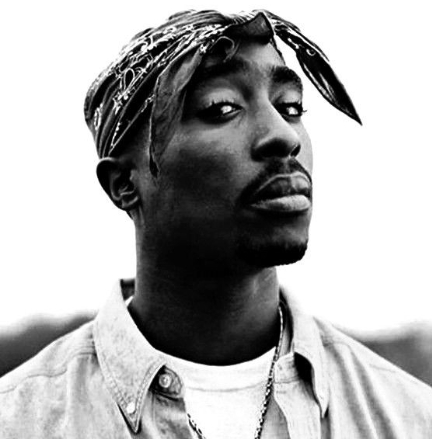
The conviction of former gang leader Duane “Keffe D” Davis by a Las Vegas jury has reopened an old wound in American popular culture — the 1996 murder of Tupac Amaru Shakur, better known to the world as 2Pac.


For those of us who encountered 2Pac during our secondary school days, his music was more than entertainment. His lyrics spoke of struggle, injustice, poverty, violence, ambition and the contradictions of life.
Decades after his death, his voice remains remarkably alive, particularly among a generation that grew up listening to his songs and debating the circumstances surrounding his death. 
He died six days later, leaving behind a career that had barely reached its peak and a murder mystery that would remain unresolved for decades.
A Las Vegas jury found Davis guilty of first-degree murder with use of a deadly weapon in connection with the killing. He was the only person ever charged in the case.
But Davis was not accused of being the man who pulled the trigger.
Instead, prosecutors presented him as the person who orchestrated the attack and supplied the firearm used in the shooting.
That distinction is important.
The prosecution’s case reportedly leaned heavily on Davis’s own public statements over the years, including admissions he made in his 2019 memoir, Compton Street Legend. His words, once part of his attempt to tell his own story, ultimately became important pieces of evidence against him.
Under Nevada law, a person who aids and abets a killing can face the same legal consequences as the person who physically pulls the trigger. And unlike many lesser offences, murder does not have a statute of limitations in Nevada.
In other words, time does not automatically erase accountability for the most serious crimes.
How many murder cases remain unresolved because investigators ran out of leads, witnesses remained silent, evidence disappeared or perpetrators simply believed that enough years had passed for the law to forget?
2Pac’s murder became one of the most famous unsolved killings in modern American popular culture. His fame ensured that the case never completely disappeared from public consciousness.
Fans continued to ask questions. Investigators continued to revisit the evidence. And theories — some credible, others wildly speculative — proliferated for nearly three decades.
This conviction is therefore more than a legal development concerning one defendant.
It is a reminder that unresolved does not necessarily mean forgotten.
Justice can be painfully slow. Sometimes it takes years. Sometimes decades. And in some cases, it may arrive long after the victim’s family has stopped expecting it.
For 2Pac’s family, friends and millions of admirers around the world, nothing can bring back the young rapper whose life was cut short at 25.
But accountability, whenever it comes, still matters.
There is also a lesson here for societies everywhere: a cold case is not necessarily a closed case.
Evidence can resurface. Witnesses can eventually speak. Investigative techniques can evolve. And, sometimes, the people who once believed they had escaped justice can become the very witnesses against themselves.
2Pac once rapped extensively about life, death, injustice and survival. Nearly 30 years after his death, his story has once again reminded the world that some questions refuse to die.
Justice delayed may be frustrating. But when justice finally arrives, it still matters.
For Tupac Amaru Shakur, perhaps this conviction represents another step toward closing one of the most enduring chapters in the history of American music and crime.
Justice delayed, but not denied.