Connect with us

News

Catholic Diocese of Warri Announces Passing of Ughelli Episcopal Vicar, Fr. Anthony Ozele, at 60

Published

on

ADVERTISEMENT
Zoom Ad
ADVERTISEMENT
Zoom Ad

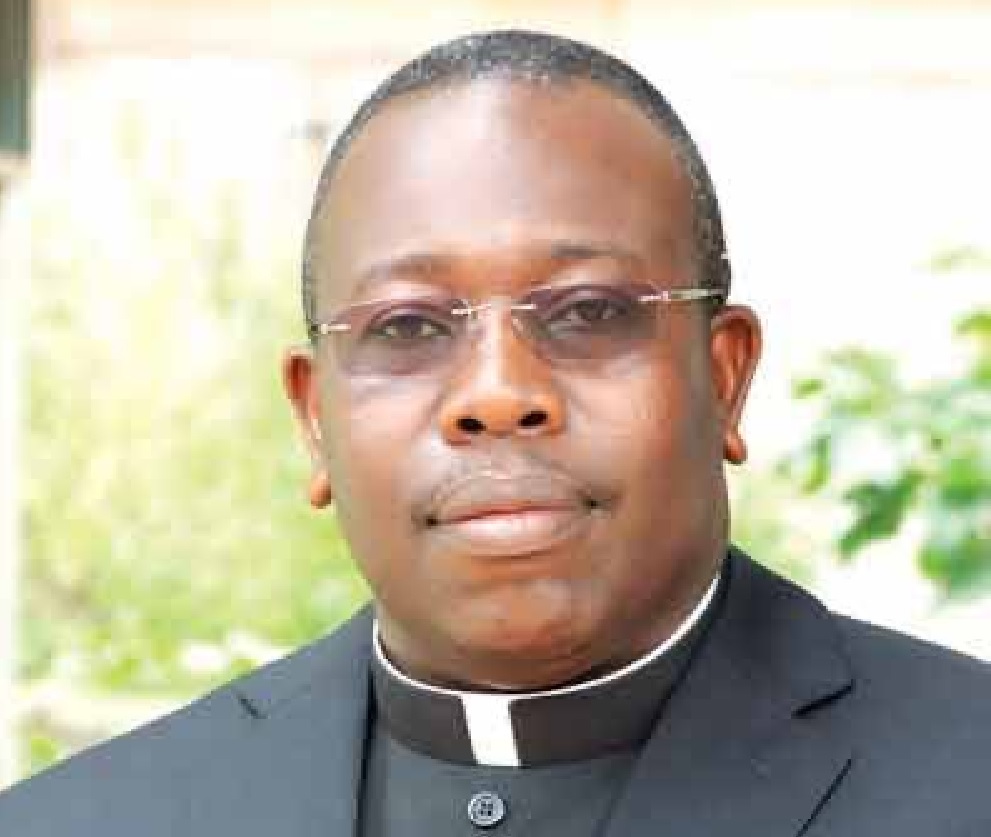
The Catholic Diocese of Warri has announced the death of Very Rev. Fr. Anthony Mario Ozele, Episcopal Vicar of the Ughelli Pastoral Region and Parish Priest of Saints Peter and Paul Catholic Church, Ughelli.


Fr. Ozele, who was aged 60, died in the early hours of Tuesday, September 15, 2026, following an illness, according to a notification issued by the Diocese.

The announcement was contained in a statement signed by the Diocesan Chancellor, Rev. Fr. Jude Nwabuokei, and addressed to all priests, religious and lay faithful of the Catholic Diocese of Warri.

The Diocese described the deceased priest as a highly revered, cherished and devoted servant of God who bore his illness with exemplary faith and courage.

Advertisement

“It is with profound sorrow and total submission to the will of God that I announce to you, by the directive of our Chief Shepherd, Most Rev. Anthony Ovayero Ewherido, the passing unto glory of our highly revered, cherished and devoted priest, Very Rev. Fr. Anthony Mario Ozele,” the statement read.

The notification added that Fr. Ozele was called to eternal rest after bearing his illness with “exemplary faith and courageous resignation to the will of God his Creator.”

Until his death, the late priest served as Episcopal Vicar of the Ughelli Pastoral Region and Parish Priest of Saints Peter and Paul Catholic Church, Ughelli.

His leadership and pastoral service in the Ughelli Catholic community had previously been documented by the Diocese, which identified him as the Dean of Ughelli Deanery and Parish Priest of Saints Peter and Paul Catholic Church.

Advertisement

The Diocese urged its members to remember the deceased priest, his immediate family and the Church in their prayers.

“We commend his soul to the mercy of God and implore you to keep him, the Diocese, and his immediate family in your prayers,” the statement said.

It further announced that funeral arrangements would be communicated in due course.

Fr. Ozele was ordained a Catholic priest on December 12, 1992, according to records published by the Catholic Secretariat of Nigeria. He had served the Diocese in various pastoral and administrative capacities, including roles in evangelisation and parish ministry.

Advertisement

The Catholic Diocese of Warri prayed that God would grant eternal rest to the soul of the late priest.

“May his priestly soul, through the mercy of God, rest in peace. Amen,” the notification concluded.
Continue Reading
Advertisement

News

ICPC, NFIU open stocktake on financial intelligence, asset recovery

Published

on

By

ADVERTISEMENT
Zoom Ad
ADVERTISEMENT
Zoom Ad

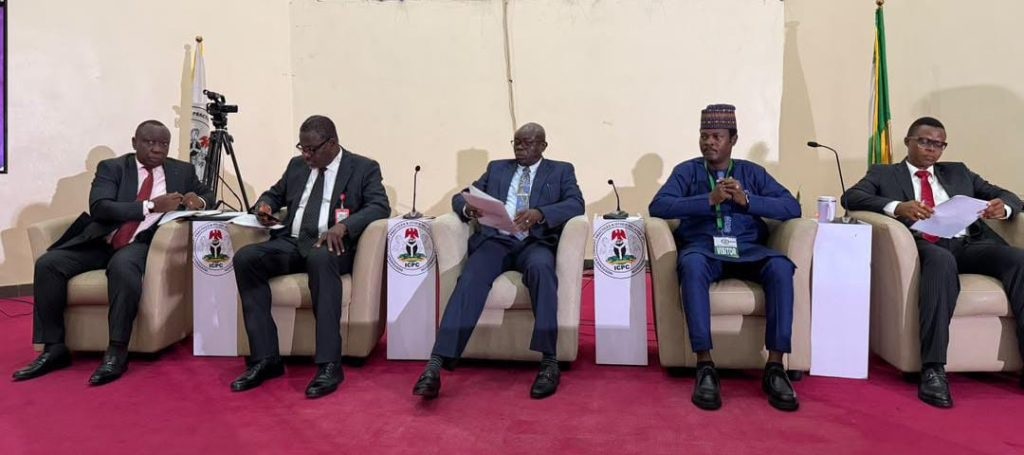
The Independent Corrupt Practices Commission (ICPC) a has commenced a three-day stocktake meeting focused on converting financial intelligence into prosecutions and asset recovery.

The ICPC Chairman, Dr Musa Aliyu, SAN, said this at the opening of the exercise, held in preparation for Nigeria’s Financial Action Task Force (FATF) 3rd Round Mutual Evaluation Exercise.

The meeting was organized in conjunction with the Nigerian Financial Intelligence Unit (NFIU)

Represented by the Commission’s Secretary, Mr Clifford Oparaodu, Aliyu said the exercise would test how effectively ICPC investigations were converting financial intelligence into prosecutions, asset recovery and stronger enforcement outcomes.

Advertisement

He said the stocktake provided an internal mirror to measure performance under the Money Laundering (Prevention and Prohibition) Act 2022, POCA 2022 and POCR 2024 regulations.

According to him, the Commission had in recent years made parallel financial investigations mandatory in every corruption case to strengthen the tracing of illicit funds and recovery efforts.

While stating that previous reviews focused largely on laws and policies, he said the stocktake would drill deeper into operational performance and assess Nigeria’s enforcement effectiveness.

He listed five Immediate Outcomes as benchmarks, emphasising that the exercise focused on FATF Immediate Outcomes 1, 2, 6, 7 and 8 for institutional assessment.

Advertisement

He said these included risk understanding, international cooperation, financial intelligence use, effectiveness of money laundering investigations and asset recovery, adding that participants would assess operational implementation.

On corruption risks, he said participants would assess whether the ICPC and sister agencies were aligning investigations with Nigeria’s national risk profile and identified priority threats.

“We must show that our operations reflect where the real threats are, including bribery and grand corruption,” he said.

For cross-border crime, he said the team would review formal Mutual Legal Assistance channels and informal intelligence networks to assess Nigeria’s capacity for international cooperation.

Advertisement

The goal, according to him, was to demonstrate that Nigeria could swiftly share information, support investigations and secure convictions through effective cooperation with international partners.

“A major focus will be on financial intelligence under Immediate Outcome 6. The question before the room: are agencies not just generating reports, but actually using them to trace illicit flows and freeze assets before they disappear?”

He said enforcement would receive significant scrutiny under Immediate Outcomes 7 and 8, with Nigeria expected to demonstrate results from relevant money laundering laws and regulations.

“That means convictions, confiscations, and proper management of recovered assets,” he said, urging institutions to provide verifiable evidence of operational effectiveness during the stocktake exercise.

Advertisement

He urged visiting Country Experts to be blunt in their assessment, saying their feedback would help Nigeria close gaps, clean up statistics and sharpen strategies before the main evaluation.

He said the commission had aligned with the NFIU’s strategy by making parallel financial investigations mandatory in every corruption case handled by its investigators.

He added that the ICPC now leveraged the Corporate Affairs Commission Beneficial Ownership Register to expose corporate shells and strengthened systems for managing recovered assets.

He, however, warned that laws alone would not secure a good rating, stressing that effective implementation and measurable enforcement outcomes remained critical to Nigeria’s assessment.

Advertisement

“Technical compliance is only half the battle. What ultimately safeguards our financial system is demonstrating high operational effectiveness across these Immediate Outcomes,” he said.

He charged ICPC investigators and prosecutors to be candid and data-driven, while welcoming country experts to provide objective feedback that would help close gaps before the evaluation.

Speaking, the Chief Executive Officer of NFIU, Hajia Hafsat Bakari, said the exercise was designed to measure how effectively anti-corruption agencies converted financial intelligence into concrete enforcement outcomes.

Represented by Dr Emmanuel Sotande, an NFIU official, Bakari said the exercise was not about fault-finding but about assessing institutional preparedness ahead of Nigeria’s next FATF assessment.

Advertisement

“We want to be able to see how well the information and investigation lead to prosecution, seizure of assets and whether there’s a deterrent mechanism in place,” she said.

According to her, the core objective was to track the full value chain of intelligence use, from information supplied by the NFIU to enforcement outcomes.

“That includes how data supplied by the NFIU is consumed by the ICPC and other agencies, and whether it translates into convictions, asset recovery, and stronger deterrence against illicit financial flows.”

The NFIU boss emphasised that the timing was critical, noting that Nigeria was preparing for its 3rd Round Mutual Evaluation 2027 and needed institutional readiness.

Advertisement

“This is not a witch-hunt exercise but to ensure that we prepare for the next evaluation, which is going to be taking place next year.

“We want all institutional agencies and systems in Nigeria to be ready for the FATF assessors that will be coming from all parts of the world,” she said.

She explained that the framework for the stocktake was developed by the NFIU specifically to enable agencies to evaluate their preparedness and identify areas requiring improvement before assessment.

She said that assessors would demand detailed data and evidence, much of which the ICPC already held, making inter-agency coordination essential to Nigeria’s preparedness.

Advertisement

“It is in that context that the CEO of NFIU deems it fit to put the framework of the stocktake exercise in place for us to evaluate ourselves before the assessors will come,” she added.

She called for stronger collaboration, warning that the goal was to ensure Nigeria did not slip back onto the FATF grey list when the evaluation was concluded in 2027.

“The assessors will be asking for a lot of information, which I am sure the ICPC already have and it is only pertinent for us to work together,” she said.

Advertisement
Continue Reading

News

Suspected Fulani Militias K!ll Christian Leader In Plateau

Published

on

By

ADVERTISEMENT
Zoom Ad
ADVERTISEMENT
Zoom Ad

A Christian leader, identified as Markus Musa, has been k!lled by suspected Fulani bandits in Mangu Local Government Area of Plateau State, amid continuing reprisal attacks in parts of the area.

According to security analyst, Zagazola Makana, Musa was reportedly on his way to attend a meeting of the Christian Association of Nigeria (CAN) when he was ambushed at about 1:30 p.m. on Monday, September 14, 2026, between Rimi and Kaduno communities.

The victim was travelling on a motorcycle with his younger brother, Arum Musa, when suspected Fulani bandits attacked them.

The attackers reportedly shot Musa in the head, k!lling him, while his younger brother escaped unharmed.

Advertisement

The k!lling comes amid renewed tensions and reprisal attacks in Mangu, following a series of violent incidents involving farming and herding communities.

Troops of Sector 8, Sub-Sector 81, Operation ENDURING PEACE, responded to the incident and commenced fighting patrols and a manhunt for the assailants.

Security forces have continued to dominate the affected areas as efforts intensify to prevent further escalation and track down those responsible for the k!lling.

Advertisement
Continue Reading

News

Nigeria-India Deepen Ties as Trade, Consular Issues Dominate BRICS Talks 

Published

on

ADVERTISEMENT
Zoom Ad
ADVERTISEMENT
Zoom Ad

By Gloria Ikibah

Nigeria and India have reaffirmed their commitment to deepening bilateral relations, with trade, consular matters, education and cultural cooperation taking centre stage during talks between their foreign ministers in New Delhi.

Nigeria’s Minister of Foreign Affairs, Ambassador Bianca Odumegwu-Ojukwu, held bilateral discussions with India’s External Affairs Minister, Dr S. Jaishankar, on the sidelines of the 18th BRICS Leaders’ Summit hosted by India.

The summit is being held under the theme, “Building Resilience, Innovation, Cooperation and Sustainability.”

Advertisement

In a statement issued on Sunday, the minister’s Special Assistant on Communication and New Media, Dr Magnus Eze, said the welfare of Nigerians living in India was among the major issues discussed by the two ministers.

A key concern was the situation of Nigerians who have overstayed their visas. Odumegwu-Ojukwu appealed to the Indian authorities for an extension of the existing amnesty arrangement to allow affected Nigerians to return home voluntarily without facing penalties.

The ministers also discussed the possibility of concluding a bilateral Memorandum of Understanding on the Transfer of Sentenced Persons.

The proposed agreement would establish a framework for the humane and orderly transfer of eligible prisoners between Nigeria and India.

Advertisement

On economic relations, the two sides examined opportunities for increasing trade and investment, while stressing the importance of building stronger and mutually beneficial economic partnerships.

Education and cultural exchanges also featured in the discussions, with both countries recognising the sectors as important tools for strengthening people-to-people relations.

Greater cooperation in these areas, the statement said, is expected to promote mutual understanding while creating more opportunities for citizens of Nigeria and India.

The meeting formed part of Nigeria’s efforts to use its participation in the BRICS platform to strengthen bilateral partnerships, attract greater economic opportunities and advance South-South cooperation.

Advertisement

Nigeria’s engagement with India comes as both countries seek to broaden their areas of cooperation beyond traditional diplomatic relations, particularly in trade, investment, education and people-to-people exchanges.

Continue Reading

Trending

Copyright © 2024 Naija Blitz News