

Connect with us

Economy

FG, CBN sign pact to tackle inflation, align economic policies

Published

on

ADVERTISEMENT
Zoom Ad
ADVERTISEMENT
Zoom Ad

By Gloria Ikibah

The Federal Government and the Central Bank of Nigeria (CBN) have signed a Memorandum of Understanding (MoU) to strengthen coordination between fiscal and monetary policies as the country steps up efforts to tackle inflation and improve economic stability.

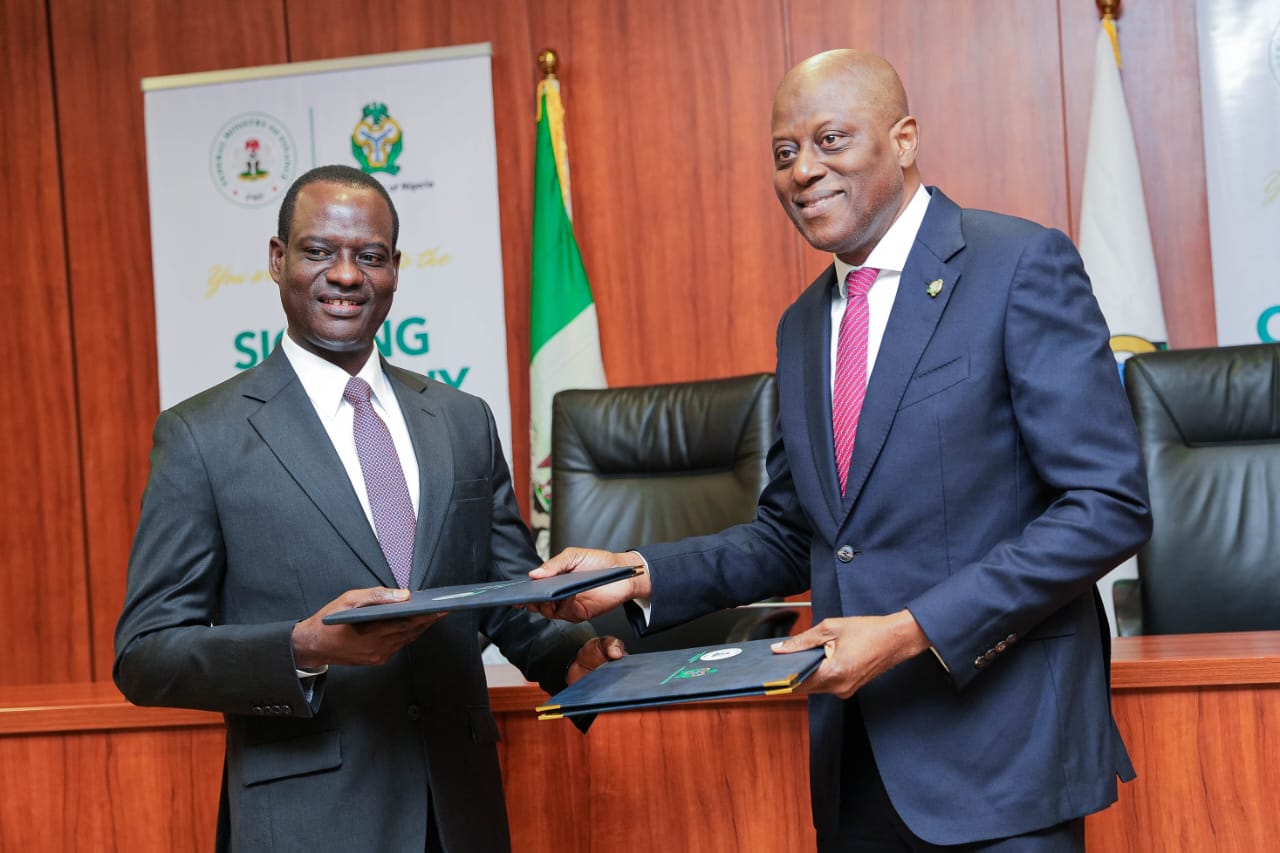
The agreement, signed by the Minister of Finance and Coordinating Minister of the Economy, Taiwo Oyedele, and CBN Governor Olayemi Cardoso, in Abuja on Friday, establishes a structured framework for regular consultation, information sharing and policy coordination between the two institutions.

Speaking at the signing ceremony, Oyedele said the framework will make fiscal-monetary coordination a permanent institutional process rather than one dependent on the personalities occupying key offices.

Advertisement

He stressed that although the Ministry of Finance and the CBN have separate mandates and must retain their independence, their decisions ultimately affect the same economy.

According to him, government borrowing affects liquidity, interest rates and financing costs, while monetary policy also has implications for government finances. Exchange rates, tariffs, government spending and agricultural policies, he added, directly affect prices, revenues and economic activity.

According to Oyedele, bringing inflation sustainably into single digits was a major objective of the new framework, but stressed that the task could not be left to monetary policy alone.

“Our objective is to bring inflation sustainably into single digits and keep it there — and that cannot be monetary policy’s job alone,” he said.

Advertisement

The Minister said the Finance Ministry will contribute through disciplined spending, sound cash and liquidity management, efficient government financing and measures aimed at addressing structural causes of inflation, including food, energy, imported costs and logistics.

On food inflation, Oyedele said the government will work with relevant institutions and state governments to strengthen grain reserves, improve agricultural yields and irrigation, build climate resilience and address gaps in farm-to-market infrastructure.

He also ruled out any return to fuel subsidy, saying such a move would place additional pressure on public finances and the naira.
FG, CBN sign pact to tackle inflation

The Minister said improved foreign exchange stability and tax exemptions on fuel had contributed to moderating prices, while efforts to strengthen domestic production would remain important to reducing inflationary pressures.

Oyedele said access to reliable and timely economic data would be central to the new coordination framework.

Advertisement

Under the agreement, the Finance Ministry and CBN are expected to strengthen information sharing on government cash positions, financing plans, credit growth and foreign exchange flows.

“Better coordination starts with a common evidence base,” he said.

The Minister said the framework will provide for aligned macroeconomic assumptions, more consistent forecasts and clearer mechanisms for resolving areas where fiscal and monetary policies could work at cross purposes.

He added that the government was working with the National Bureau of Statistics to expand the quality and range of data available for economic policy decisions.

Advertisement

Oyedele also cited what he described as improving confidence in the Nigerian economy, including a balance of payments surplus of more than $5 billion in 2025 and external reserves of over $54 billion.

He pointed to increased non-oil exports, declining refined-product imports as domestic refining capacity expands, Nigeria’s return to Frontier Market status and its inclusion in JPMorgan’s new frontier local-currency government bond index.

The Minister, however, said the government’s ambition went beyond attracting short-term portfolio funds, stressing the need for patient capital that would support factories, infrastructure, technology and job creation.

He said this will require policy consistency and certainty, as well as a regulatory environment that did not impose unnecessary burdens on businesses.

Advertisement

He added that the framework will also consider the economic consequences of insecurity and illicit financial flows.

Oyedele said the Finance Ministry will continue to pursue fiscal discipline, improved liquidity management, stronger transparency and data systems, more efficient financing and reforms designed to increase production and ease structural inflation.

“Nigeria has one economy. Fiscal policy cannot succeed without price stability; monetary policy cannot deliver price stability if fiscal policy pulls in the opposite direction,” he said.
Cardoso: MoU formalises decades of collaboration
Cardoso described the signing as a significant step towards strengthening Nigeria’s macroeconomic management and economic stability.

He said fiscal and monetary policies were complementary instruments whose combined impact would be stronger when they worked in harmony.

Advertisement

The CBN governor stressed that the MoU did not create a new relationship between the two institutions, noting that they had collaborated for decades on inflation management, debt sustainability, budget financing, exchange rate stability and responses to economic shocks.

Rather, he said, the agreement formalised the longstanding relationship through structured processes for consultation, information exchange and policy coordination.

“This memorandum provides a structured framework for regular consultation, information exchange and policy coordination. It will strengthen collaboration in critical areas such as government cash management, debt issuance planning, liquidity forecasting, macroeconomic analysis and periodic policy consultations, thereby enhancing policy coherence and the effectiveness of economic management,” Cardoso said.

He said the framework would transform a relationship built largely on established practice into one anchored by clear processes and enduring institutional commitment.

Advertisement

According to Cardoso, the new arrangement would create predictable mechanisms for engagement, improve decision-making and strengthen the institutions’ capacity to respond to emerging economic challenges.

The CBN governor said the timing was particularly important as the apex bank advances its transition towards an inflation-targeting framework, noting that the effectiveness of such a framework also depends on a supportive fiscal environment.

He said the MoU will provide the foundation for an operational framework through which both institutions could align their actions, minimise policy trade-offs and pursue shared economic objectives.

Cardoso commended Oyedele and the technical teams from both institutions for their roles in bringing the agreement to fruition.

Advertisement

He reaffirmed the CBN’s commitment to sound monetary policy, macroeconomic stability and financial system resilience, saying the strengthened partnership would contribute to building a more stable and productive Nigerian economy.

The agreement is expected to deepen cooperation in government cash management, debt issuance planning, liquidity forecasting, macroeconomic analysis and periodic policy consultations, while preserving the distinct mandates and institutional independence of the Finance Ministry and the CBN.

Economy

Nigeria-India deepen economic and consular ties at BRICS summit

Published

on

ADVERTISEMENT
Zoom Ad
ADVERTISEMENT
Zoom Ad

By Gloria Ikibah.


Nigeria and India have reaffirmed their commitment to deepening bilateral relations, with economic cooperation, consular matters, education and cultural exchanges featuring prominently in talks between their foreign ministers.

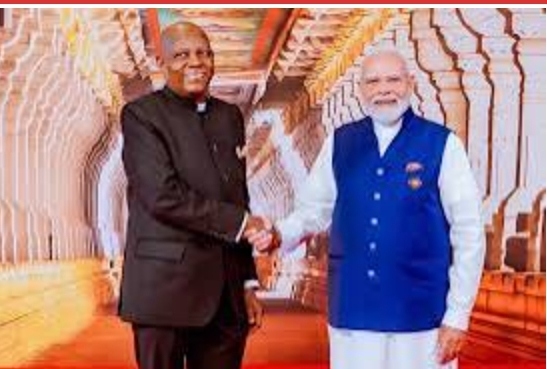
Nigeria’s Minister of Foreign Affairs, Ambassador Bianca Odumegwu-Ojukwu, held bilateral discussions with her Indian counterpart, Dr S. Jaishankar, on the sidelines of the 18th BRICS Leaders’ Summit in New Delhi.

Advertisement

The summit was hosted by India under the theme, “Building Resilience, Innovation, Cooperation and Sustainability”.

A major issue discussed was the welfare of Nigerians living in India, particularly those who have overstayed their visas.

Odumegwu-Ojukwu sought a further extension of the existing amnesty arrangement to allow affected Nigerians to return voluntarily without facing penalties.

The two ministers also discussed the possibility of concluding a bilateral Memorandum of Understanding on the Transfer of Sentenced Persons.

Advertisement

Such an agreement will establish a framework for the humane and orderly transfer of eligible prisoners between Nigeria and India.

Economic relations also featured prominently during the meeting, with both sides exploring opportunities to expand trade and investment and strengthen mutually beneficial economic partnerships.

The ministers further identified education and cultural exchanges as key areas for improving people-to-people relations between the two countries.

Greater cooperation in these areas is expected to promote mutual understanding and create more opportunities for citizens of Nigeria and India.

Advertisement

The meeting formed part of Nigeria’s efforts to use its participation in the BRICS platform to advance bilateral partnerships, open up new economic opportunities and strengthen South-South cooperation.

Nigeria became a BRICS partner country in January 2025, providing a platform for Abuja to deepen engagement with major emerging economies while pursuing its broader economic and diplomatic interests.

The bilateral talks with India therefore added a practical dimension to Nigeria’s participation in the New Delhi summit, particularly in areas directly affecting Nigerians in India and the wider economic relationship between both countries.

Advertisement
Continue Reading

Economy

See Black Market Dollar To Naira Exchange Rate Today 18th September 2026

Published

on

ADVERTISEMENT
Zoom Ad
ADVERTISEMENT
Zoom Ad

The Black Market Dollar-to-Naira Exchange Rate for 18th September 2026 Can Be Accessed Below.

NOTE: The exchange rate changes hourly. It depends on the volume of dollars available and the Demand. This means…you can buy or sell 1 dollar at a certain rate, and the price can change (high or low) within hours.

The official naira black market exchange rate in Nigeria today, including the Black Market rates, Bureau De Change (BDC), and CBN rates.

The exchange rate fluctuates hourly based on the supply and demand of dollars in the market.

Advertisement

What’s the dollar to naira black market today, 18th September 2026?
The exchange rate for a dollar to naira at Lagos Parallel Market (Black Market) players sell a dollar for ₦1375 and buy at ₦1380 on Friday, 18th September, 2026, according to sources at Bureau De Change (BDC).
Please note that the Central Bank of Nigeria (CBN) does not recognize the parallel market (black market), as it has directed individuals who want to engage in Forex to approach their respective banks.
Dollar to Naira Black Market Rate Today
Dollar to Naira (USD to NGN) Black Market Exchange Rate Today
Selling Rate ₦1375
Buying Rate ₦1380
Dollar to Naira CBN Rate Today
Dollar to Naira (USD to NGN) CBN Rate Today
Highest Rate ₦1332
Lowest Rate ₦1324

Continue Reading

Economy

Iran war triggers cooking gas supply crunch, Nigeria hit

Published

on

By

ADVERTISEMENT
Zoom Ad
ADVERTISEMENT
Zoom Ad

A supply crunch triggered by the Iran war has tested the resilience of emerging Liquefied Petroleum Gas (cooking gas) markets across sub-Saharan Africa, with Nigeria suffering the sharpest disruption as import constraints and lower domestic production pushed demand down by almost 23 per cent.

This was disclosed in a latest report by energy intelligence provider Argus, which said African LPG markets had largely withstood the price volatility and global supply tightness caused by the conflict, although the disruption exposed vulnerabilities in some of the region’s nascent markets.

Nigeria, the region’s largest LPG consumer, recorded the most severe impact, with demand falling to a seven-month low of 123,000 tonnes in June, according to data from the Nigerian Midstream and Downstream Petroleum Regulatory Authority.

The decline represented an almost 23 per cent drop from the March level. Argus reported that domestic production also fell by more than 20 per cent during the period, following lower output from inland gas processing plants and maintenance at the Dangote refinery’s 218,000 barrels-per-day residual fluid catalytic cracker.

Advertisement

The supply shortfall prompted Nigerian LPG operators to increase imports. Argus reported that imports surged to a six-month high of 46,000 tonnes in June, compared with 3,000 tonnes in May and no imports in April.

The market subsequently received some relief after international LPG prices declined following the United States-Iran peace deal in June and weaker competition from Asian buyers.

The Argus butane West Africa index fell by more than 40 per cent to $513.50 per tonne on June 24, from a March peak of $860.50. The lower prices, it was learnt, helped the Nigerian market move to a 30,000-tonne surplus after four consecutive months of deficit.

Local production also rebounded in July, helping to ease the pressure on the market. Supplies from the Dangote refinery increased by 71 per cent to 25,800 tonnes, while supplies from gas processing plants rose by 88 per cent to 47,000 tonnes.

Advertisement

The improved domestic supply allowed Nigeria to cut imports just as hostilities between the United States and Iran resumed and international LPG prices began to rise again.

The supply recovery also brought some relief to consumers. Nigeria’s average LPG retail price fell by 10 per cent month-on-month to N1,491.75 per kilogramme in July, while demand increased by seven per cent to 136,500 tonnes, marking the first increase since March.

Elsewhere in the region, Ghana also faced tighter LPG supplies as seaborne imports fell by almost a third year-on-year to about 24,000 tonnes per month between April and August, according to vessel-tracking firm Kpler.

The reduction in imports pushed Ghana’s LPG stocks down by more than three-quarters to 5,500 tonnes in early July, equivalent to about eight days of consumption.

Advertisement

However, higher domestic production helped cushion the impact, with much of the additional supply coming from the new 40,000 barrels-per-day Sentuo refinery, which Argus said was operating at full capacity.

A planned restart of the residual fluid catalytic cracker at the 45,000 barrels-per-day Tema refinery is expected to further increase Ghana’s local LPG supply.

Despite the supply pressure, Ghana’s LPG consumption rose by almost 11 per cent year-on-year to 96,000 tonnes in the second quarter, although this represented a significant slowdown from the 24 per cent growth recorded in the first quarter.

Kenya also recorded continued growth in LPG demand, although at a slower pace. Demand increased by nearly five per cent year-on-year to 125,000 tonnes between April and June, compared with 18 per cent growth in the first quarter.

Advertisement

Seaborne LPG imports into Kenya rose by 15 per cent to 53,000 tonnes per month during the first eight months of 2026, following the opening of Tanzanian company Lake Gas’ 10,000-tonne Vipingo LPG terminal last year.

The increased competition among importers helped contain price increases, with the retail price of a 13kg LPG cylinder rising by just over 11 per cent to 3,471 Kenyan shillings between March and June.

Argus noted that the supply disruptions had occurred against the backdrop of a continuing expansion of LPG infrastructure across sub-Saharan Africa. Tanzanian company Taifa Gas is close to completing a 30,000-tonne LPG terminal at Mombasa, Kenya, which will be capable of receiving very large gas carriers.

Lake Gas also plans to add 15,000 tonnes of storage capacity at its Vipingo terminal by September 2027. According to Argus LPG World, 10 projects are expected to add more than 180,000 tonnes of LPG storage capacity across the region by 2028.

Advertisement

In Cameroon, the state-owned Société Camerounaise de Dépôts Pétroliers increased storage capacity at its Douala terminal by 1,000 tonnes this summer, taking capacity to 3,500 tonnes. Another 2,000-tonne storage sphere is under construction.

The company also plans to double the terminal’s transloading capacity to 1,950 tonnes per day to ease supply bottlenecks. African countries are said to be introducing policies aimed at expanding LPG access as part of efforts to increase clean cooking adoption.

Nigeria launched its National Grassroots LPG Penetration Programme in July, introducing a cylinder recirculation model that requires retailers to own, track and refill cylinders.

The scheme is designed to shift the cost of cylinder ownership and maintenance away from households, with the government targeting five million homes and LPG consumption of about five million tonnes annually by 2030.

Advertisement

Some 54,000 cylinders have been distributed since the programme’s launch. Ghana, which has also promoted the cylinder recirculation model, is seeking to expand LPG access to 50 per cent of the population by 2030.

Argus said the clean cooking drive was also extending into the transport sector, with Nigeria exempting autogas vehicles from value-added tax, while Kenya’s Equity Bank partnered with distributor Proto Energy to finance vehicle conversions.

The developments show that while the Iran war has exposed supply vulnerabilities in Africa’s emerging LPG markets, investment in local production, import terminals, storage and distribution infrastructure continues to expand across the region.

Advertisement
Continue Reading

Trending

Copyright © 2024 Naija Blitz News