By Gloria Ikibah


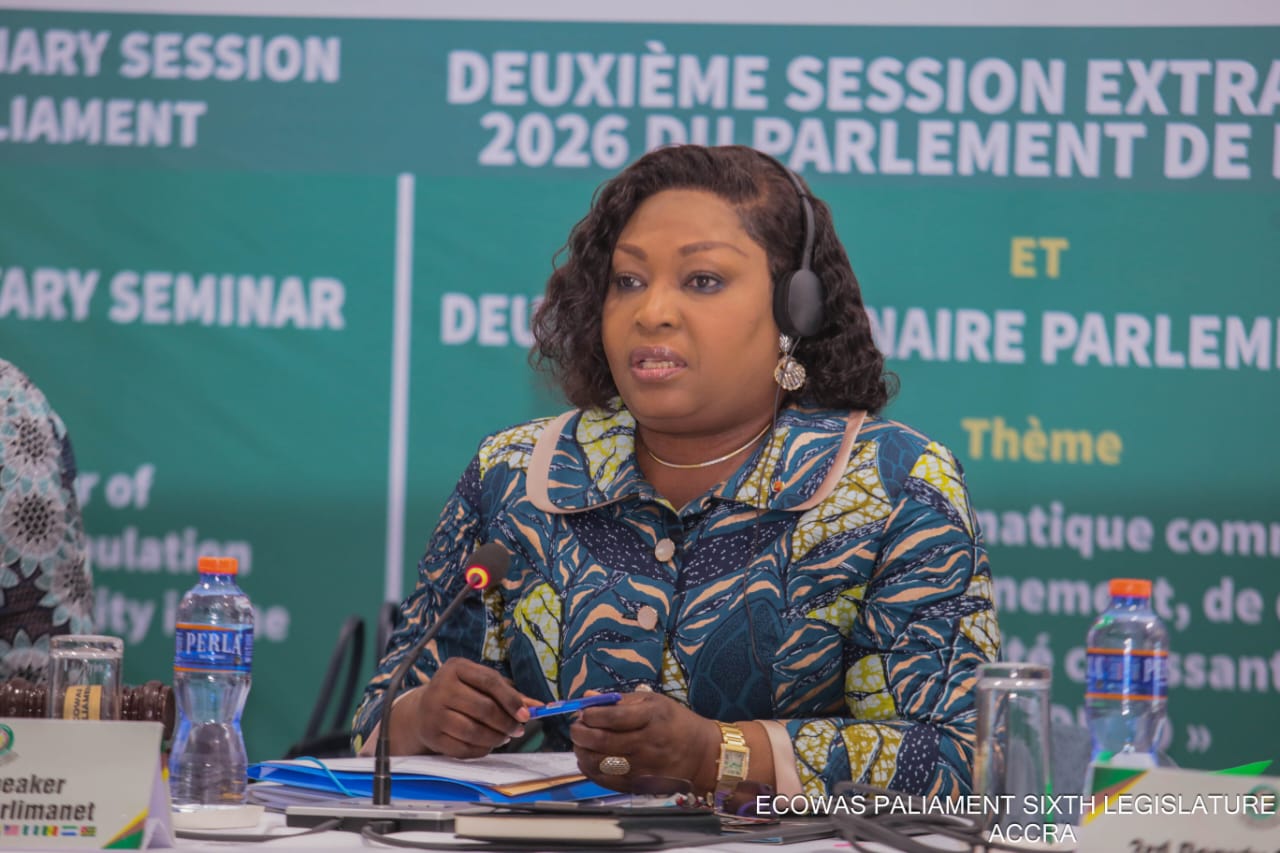
The Speaker of the ECOWAS Parliament, Rt. Hon. Mémounatou Ibrahima, has called for practical and people-centred responses to the growing effects of climate change, warning that environmental disruption is increasingly affecting livelihoods, communities and the security of populations across West Africa.
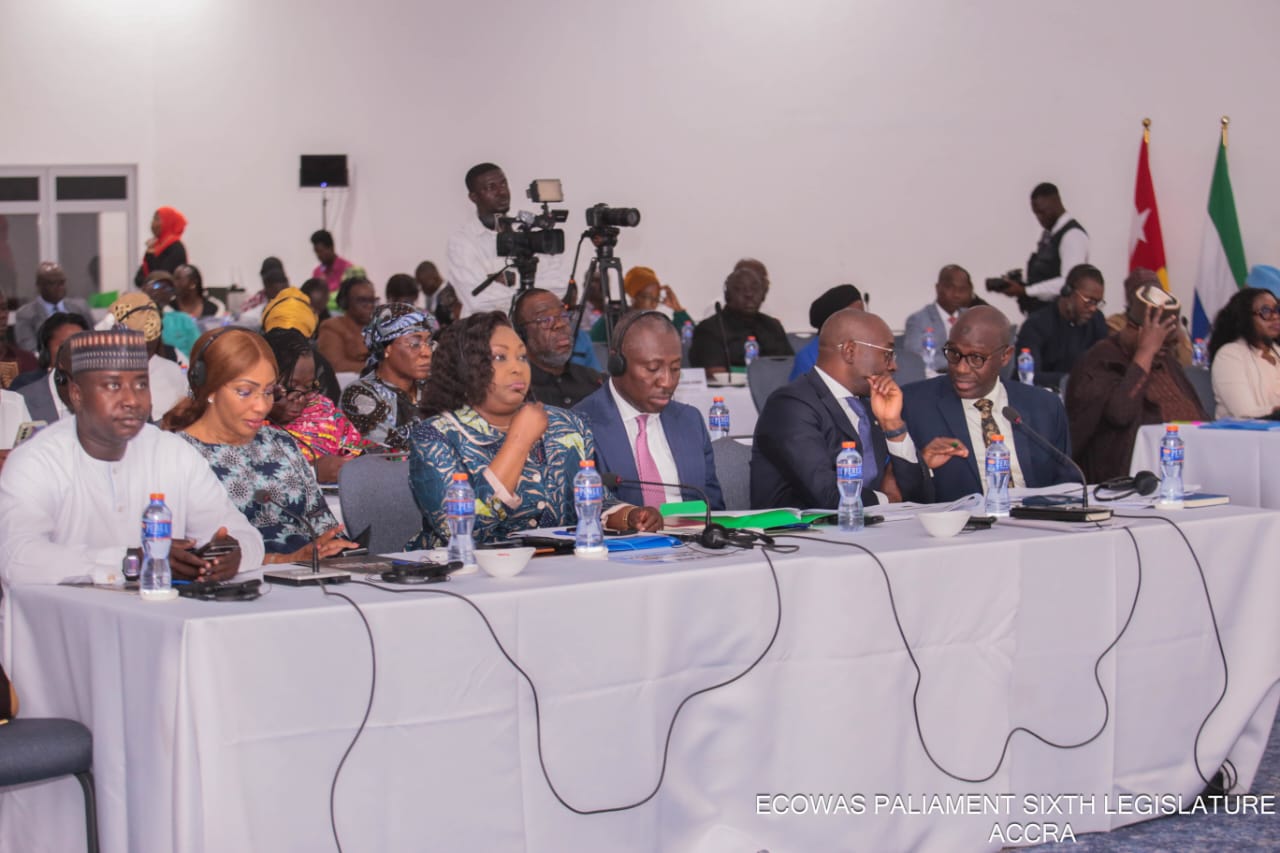
Ibrahima made the call on Monday in Accra, Ghana, while opening the second Parliamentary Seminar of the year under the theme “Focusing on climate change, environmental degradation, population displacement and growing insecurity in the ECOWAS region”. 
The seminar forms part of the activities of the Sixth Legislature of the ECOWAS Parliament and brings lawmakers together to examine the interconnected challenges facing communities across the sub-region. Recent regional discussions by the Parliament have similarly placed climate change, displacement and insecurity at the centre of its agenda.
In her welcome remarks, Ibrahima said the effects of climate disruption can no longer be viewed simply through statistics or scientific projections, as communities were already experiencing its consequences.
She said: “Climate disruption can no longer be measured only in degrees, statistics or projections. It is read in land that yields less, in coastlines that retreat, in flooded neighbourhoods, in families losing their livelihoods, and in communities forced to relocate.
“Behind the climate question lies a profoundly human one: how do we protect the living conditions, dignity and security of our populations when their environment is changing faster than their capacity to adapt to it?”
The Speaker said the responsibility of parliamentarians at the seminar was to connect technical knowledge with the realities experienced by people in their constituencies.
“Our responsibility during this Seminar will be precisely to connect these realities, not to restate here what we already know, but to better understand what is at stake in our territories and to consider the most appropriate responses.”
She said the expertise to be shared during the seminar would be valuable, but stressed that it needed to be combined with the experiences of lawmakers who remained closely connected to their communities.
“The expertise that will be shared with us should inform our discussions. But it must also meet the experience of parliamentarians, who remain in close contact with their territories and their people.
“It is from this dialogue between technical knowledge and lived realities that truly useful proposals can emerge”, she added.
Ibrahima also linked the opening of the seminar to Ghana’s Founder’s Day, which is commemorated on September 21 to mark the birth of Ghana’s first President, Osagyefo Dr Kwame Nkrumah.
She recalled Nkrumah’s contribution to Ghana’s independence and his wider vision of a united and self-reliant Africa.
“The 21st of September carries special resonance in Ghana. The country celebrates today Founder’s Day, a date that coincides with the birth of Osagyefo Dr Kwame Nkrumah.
“Gathered here in Accra, we cannot let this occasion pass without recalling the man whose fight for Ghana’s independence was inseparable from a far greater ambition: that of a free, united Africa, able to take charge of its own destiny.
“On this day of commemoration, I would like us to pause to stand with the people of Ghana and honour the memory of this illustrious African figure. I invite us to observe a minute of silence”, Speaker Ibrahima stated.
The lawmakers observed a minute of silence in honour of Nkrumah.
Ibrahima urged participants to focus on substantive discussions during the seminar, saying the formal opening ceremonies should not distract from the need to address the challenges confronting West African communities.
“Tomorrow we will have time for solemnity. Today, let us choose substance, listening and work.
“It is in this spirit that I invite us to get straight to the heart of our work. Thank you. Thank you. Obrigada”, she noted.
The Accra seminar is expected to examine how climate change and environmental degradation are contributing to population movements and insecurity, as well as possible regional responses.
The ECOWAS Parliament has previously identified climate change and environmental protection among areas within its parliamentary remit, including the development and harmonisation of regional policies on climate change, natural resources and environmental protection.