Connect with us

News

Uba Sani boosts basic education, human capital development

Published

on

ADVERTISEMENT
Zoom Ad
ADVERTISEMENT
Zoom Ad

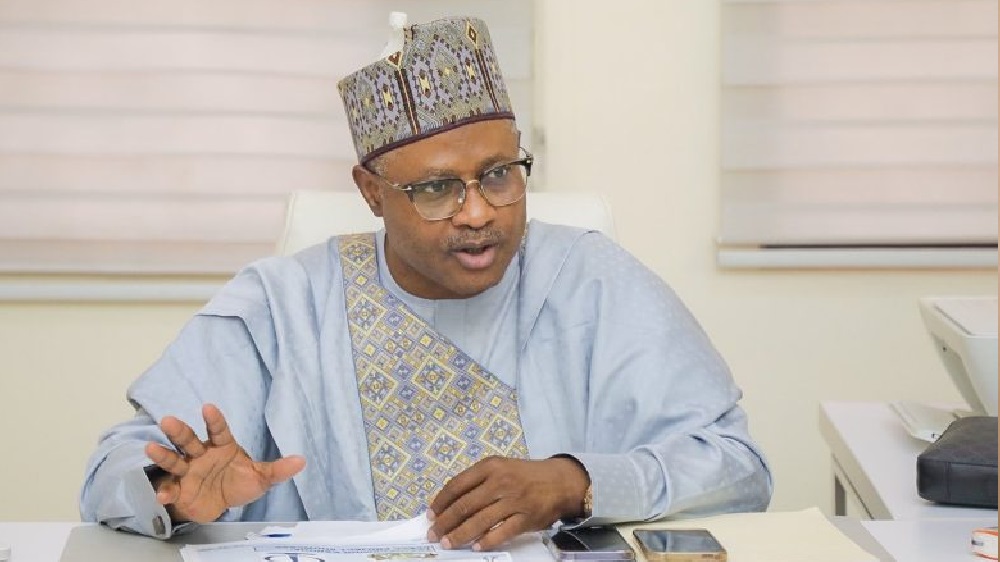
Kaduna State Governor, Senator Uba Sani has commissioned Basic Education Schools Infrastructure and Educational Interventions across the 23 local government areas in furtherance of the Government Human Capital Development vision.


Sani who was represented by the Deputy Governor, Dr Hadiza Balarabe spoke at the commissioning held at Sultan Bello Primary School, Unguwan Sarki, in Kaduna North local government.

The Governor emphasized the importance of basic education, arguing that ‘’primary education is where the foundations are laid. It is where a child learns to read, write, count, reason and relate with others.’’

While noting that discipline, curiosity and confidence also begin at the primary school level, he pointed out that ‘’if the foundation is weak, the structure of learning becomes fragile.’’

Advertisement

‘’ This is the very reason why this administration has treated investment in basic education as an investment in the future, rather than simply expenditure on infrastructure. The scale of what we are commissioning reflects this conviction,’’ he added.

Governor Uba Sani recalled that his administration has constructed or rehabilitated 3,267 classrooms, built 2,232 toilet facilities, providing greater dignity and better hygiene, particularly for the girl-child.

According to him, 180 hand-pump boreholes have been sunk to bring clean water closer to pupils and teachers and help to create healthier school environments.

Governor Uba Sani further said that his Government has built 87 science laboratories and provided 29 computer centres to enable students have ‘’the knowledge and skills required in a changing world driven by science, technology and innovation.’’

Advertisement

‘’We have also supplied 81540 sets of furniture, to ensure that children do not have to sit on bare floors while learning. We have also provided project monitoring vehicles to strengthen supervision, quality assurance and accountability across the 23 Local Government Areas”, he said.

‘’In Igabi, Zaria, Kubau and Giwa, four state-of-the-art Bilingual Education Schools have been delivered in partnership with UBEC and the Islamic Development Bank, to provide 192 classrooms with capacity to cater and impact 7680 learners, particularly children who are out of school,’’ he added.

According to the Governor, his administration is not only focused on improving schools for children who are already enrolled, it also aims ‘’to bring more children into the education system.’’

‘’Beyond infrastructure, the substance of learning matters. We have distributed 545,748 teaching and learning materials covering literacy, numeracy, science and other core subjects,’’ he argued.

Advertisement

Governor Uba Sani disclosed that 33,137 teachers, head teachers and School Support Officers have received training in areas, including computer skills, classroom management, literacy, numeracy and school management.

Speaking at the occasion, the Commissioner of Education, Prof Abubakar Sani Sambo disclosed that ‘’to sustain this culture of excellence, the State has ‘’instituted an annual Kaduna Best Teacher of the Year Award, publicly recognising educators who go beyond what is asked of them.’’

Prof Sambo emphasized that the Governor Uba Sani administration has approved a review of the minimum wage for primary school teachers, from N38,000 to N72,000.

According to him, the Governor has resolved the long-outstanding NUT Endwell Scheme dispute, releasing N548,000,000.00 to retired teachers.

Advertisement

‘’Government has further approved a longer runway in service for our teaching workforce, extending the service period from 35 to 40 years and the retirement age from 60 to 65,’’ he added.

The Commissioner of Education further advised all stakeholders to take responsibility for the upkeep of every classroom, toilet, borehole and every item of furniture.

In his welcome remarks, the Executive Chairman of Kaduna State Universal Basic Education Board (KADSUBEB), Mubarak Mohammed, pointed out that the commissioning ceremony at Sultan Bello Primary School was only the physical setting but the state-wide interventions are spread across all local governments.

The Executive Chairman disclosed that KADSUBEB has distributed 545,748 teaching and learning materials across schools, adding that ‘’today, we are commissioning 1,100,000 Teaching Learning Materials (TLMs), 18 Smart Boards, 55 motorcycles and 3 golf wagons.’’

Advertisement

‘’The Smart Boards are intended to support digital learning. The vehicles and motorcycles will strengthen the ability of our Quality Assurance officers to reach schools, observe classrooms and understand what is happening on the ground, speak with teachers, understand challenges and provide information that allows the system to respond”, he explained.

‘’If we cannot see what is happening, we cannot properly improve it. This matters because providing resources is only one part of improving education. We must also know whether those resources are reaching the classroom and making a difference,’’ he added.

Continue Reading
Advertisement

News

JAMB sacks staff member over extortion of candidates

Published

on

By

ADVERTISEMENT
Zoom Ad
ADVERTISEMENT
Zoom Ad

The Joint Admissions and Matriculation Board, JAMB, has sacked one of its staff members for allegedly extorting unsuspecting candidates.

The Board made this known on Monday in its bulletin, stating that the action was part of its renewed efforts to eliminate fraudulent practices within the admission and examination system.

According to JAMB, the sanction against the unnamed staff member showed that its fight against exploitation was not limited to external fraudsters but also applied to employees found abusing their positions.

“The Joint Admissions and Matriculation Board, JAMB, has terminated the appointment of one of its staff members for extorting unsuspecting candidates, in further demonstration of its renewed commitment to flushing out bad eggs from the system,” the board stated.

Advertisement

It further cautioned its employees against engaging in activities capable of undermining its credibility or exploiting candidates and members of the public.

The Board stressed that any staff members found guilty of misconduct would face severe consequences in line with established regulations.

“The Board noted that the action sends a clear and unequivocal message that its zero-tolerance policy on corruption and misconduct applies to everyone, irrespective of status or position,” it added.

The tertiary examination body reiterated that it would not shield any employee who abuses the trust placed in them by candidates or members of the public.

Advertisement
Continue Reading

News

UNICAL suspends nine students over exam misconduct

Published

on

By

ADVERTISEMENT
Zoom Ad
ADVERTISEMENT
Zoom Ad

The Senate of the University of Calabar (UniCal) has suspended nine students for one academic session over their involvement in examination misconduct.

According to a statement by the university’s public relations unit and made available in Calabar on Monday, the suspension was conveyed to the affected students in letters signed by the registrar, Chukwuka Icha.

The action, the university said, followed approval by the Senate following recommendations by its Examination Misconduct Committee (SEMC).

“The affected students have been suspended for the 2026/2027 academic session and are expected to resume their studies in the 2027/2028 academic session.

Advertisement

“Five of the affected students are from the Department of Theatre and Media Studies, Faculty of Arts,” it said.

The others are in the Department of Human Nutrition and Dietetics, Faculty of Basic Medical Sciences; the Department of Geology, Faculty of Physical Sciences; the Department of Pharmacology, Faculty of Basic Medical Sciences; and the Department of Sociology, Faculty of Social Sciences,” the statement said.

The university directed the acting chief security officer, deans, heads of departments, and other relevant units to take note of the suspension and ensure full compliance with the directive.

(NAN)

Advertisement
Continue Reading

News

FCT residents lament fresh hike in cooking gas price

Published

on

By

ADVERTISEMENT
Zoom Ad
ADVERTISEMENT
Zoom Ad

Residents of the Federal Capital Territory (FCT) have lamented a fresh increase in cooking gas prices, saying the development is forcing households to cut consumption, adjust budgets and resort to alternative cooking fuels.

Market checks across Abuja showed that Liquefied Petroleum Gas (LPG) is selling for between N1,380 and N2,000 per kilogramme, depending on location and outlet, after prices had dropped to as low as N1,250 in some areas earlier in September.

The latest increase has reversed some of the relief recorded in July, when improved supply and increased imports reportedly pushed prices down in several parts of the FCT.

For Mrs Rukayyah Muhammed, the increase has already disrupted her household budget.

Advertisement

She said she usually bought a kilogramme of cooking gas for about N1,300 but paid N1,700 at a black-market outlet around Idu Furniture area during at the weekend.

Muhammed said she had to use money set aside for transportation to make up the difference, adding that the rising cost had forced her to consider charcoal as an alternative.

“Now, I have to improvise with a coal stove and use charcoal. Sometimes, that is what I have to do,” she said.

Expressing frustration over the development, she appealed to the government to intervene, saying the rising cost of basic necessities had become unbearable for ordinary households.

Advertisement

“Honestly, I was heartbroken. Please, government should do something about it because the thing is tiring,” she said.

Another resident, Mrs Tunde, said she had noticed a sharp increase in cooking gas prices in recent times.

She said a 12kg cylinder, which previously cost her N16,500 to refill, now cost about N18,750.

Tunde said the increase had affected her household budget, adding that she sometimes resorted to an electric cooker because the gas did not last as long as she expected.

Advertisement

“The gas doesn’t even last for a month. For something that is that expensive, it should be able to serve us much longer,” she said.

She called on the government to make cooking gas more affordable and urged relevant authorities to ensure that weighing metres used by retailers were properly maintained so consumers received the exact quantity they paid for.

Similarly, Mrs Salaudeen said the increase had forced her to adjust her household spending after she had to refill her cylinder earlier than planned.

She said she usually cooked in bulk and stored food in a freezer but had resorted to charcoal for meals such as beans to reduce gas consumption.

Advertisement

“The increase is really affecting me. I can’t cook beans with gas; I have to use charcoal,” she said.

Another resident, Abdulwahab, said the price of cooking gas had risen from between N1,200 and N1,250 to about N1,500 per kilogramme in some locations.

He said he had noticed the increase since the previous week, expressing concern that salaries and purchasing power had not increased in line with the rising cost of basic necessities.

“People’s purchasing power has not increased, and salaries remain the same, while the cost of basic necessities continues to rise. This is very troubling,” he said.

Advertisement

Abdulwahab urged the government to consider measures, including subsidies, to make cooking gas more affordable.

The price fluctuation has also affected retailers, who said the increase had reduced patronage as customers now buy smaller quantities.

A gas operator with E. Adeboluwa International Limited in Life Camp, Mr Andrew, said the price rose from N1,350 to N1,500 per kilogramme.

Andrew said he noticed the increase when he resumed work recently, attributing it partly to transportation costs.

Advertisement

According to him, poor road conditions and rising fuel prices had increased the cost of transporting gas to Abuja.

He said the development had affected sales, as many customers could no longer afford to buy the quantities they previously purchased.

“Many customers now buy smaller quantities. There is no market like before,” he said.

A black-market operator, Muhammed Musa, said he noticed the latest increase about a week ago, adding that he had raised his price from N1,500 to N1,700 per kilogramme after buying from gas stations.

Advertisement

Musa said the increase had led to a decline in patronage, with some customers complaining that the commodity had become too expensive.

He said operators usually added about N200 to cover their costs, while the difference between black-market and gas station prices was generally between N200 and N300 per kilogramme.

Another black-market operator, Usman Haladu, said the price had increased from N1,400 to N1,800 per kilogramme.

Haladu, who said he noticed the increase about four days ago, explained that he was still selling his existing stock at the old price because he had yet to purchase a new supply.

Advertisement

At AA Rano Gas Station in Jabi, the manager, Nuru Sani Adam, said cooking gas was selling for about N1,380 per kilogramme.

Adam described the increase as a concern for consumers who depend on the commodity for their daily cooking needs, calling on the government to provide relief for households.

“We need things to become easier for us. I also use gas for cooking, and we need support because of the difficulties we are facing,” he said.

Small businesses that depend on LPG have also been affected by the rising cost.

Advertisement

Isyaka Mai Shayi, an Indomie and tea seller in Jabi, said he currently bought cooking gas for N1,300 per kilogramme, with 2kg costing him N2,600.

He said when he started the business about three to four years ago, a kilogramme of gas cost about N600.

Mai Shayi said the increase had raised his operating costs, as he relied on LPG to prepare Indomie and tea for customers.

He said some customers had complained about rising prices but continued to patronise his business because they had limited alternatives.

Advertisement

The vendor said he had previously increased the price of his Indomie when gas rose to about N1,100 per kilogramme but was reluctant to raise it again for fear of losing customers.

He called for measures to ease the burden on both consumers and small business owners.

The renewed increase comes barely two months after residents recorded some relief following a drop in LPG prices in parts of Abuja.

In July, market checks showed that the commodity sold for about N1,600 per kilogramme, down from as high as N2,000 in some locations. Outlets in Dutse and Gwarimpa were selling between N1,450 and N1,500, while some retailers in Kubwa, Dawaki, Bwari and Lugbe sold at between N1,650 and N1,700.

Advertisement

Prices reportedly declined further in some areas in early September, with improved supply and increased imports easing pressure on the market.

However, the latest market checks suggest that the relief has not been sustained uniformly, with prices now reaching as high as N2,000 per kilogramme in some parts of the FCT.

At the current price range, refilling a 12.5kg cylinder could cost between N17,250 and N25,000, depending on the outlet.

For households already grappling with high food, transportation and electricity costs, residents said the latest increase had made cooking gas a growing burden on their monthly budgets.

Advertisement

They called on the government and stakeholders in the LPG supply chain to address factors contributing to repeated price fluctuations and ensure more stable supply and affordable prices.

Credit: Daily Trust

Continue Reading

Trending

Copyright © 2024 Naija Blitz News