By Gloria Ikibah


Minister of State for Foreign Affairs, Ambassador Sola Enikanolaiye, has said Nigeria’s grassroots development and mobilisation are central to the country’s foreign policy projection and international image.
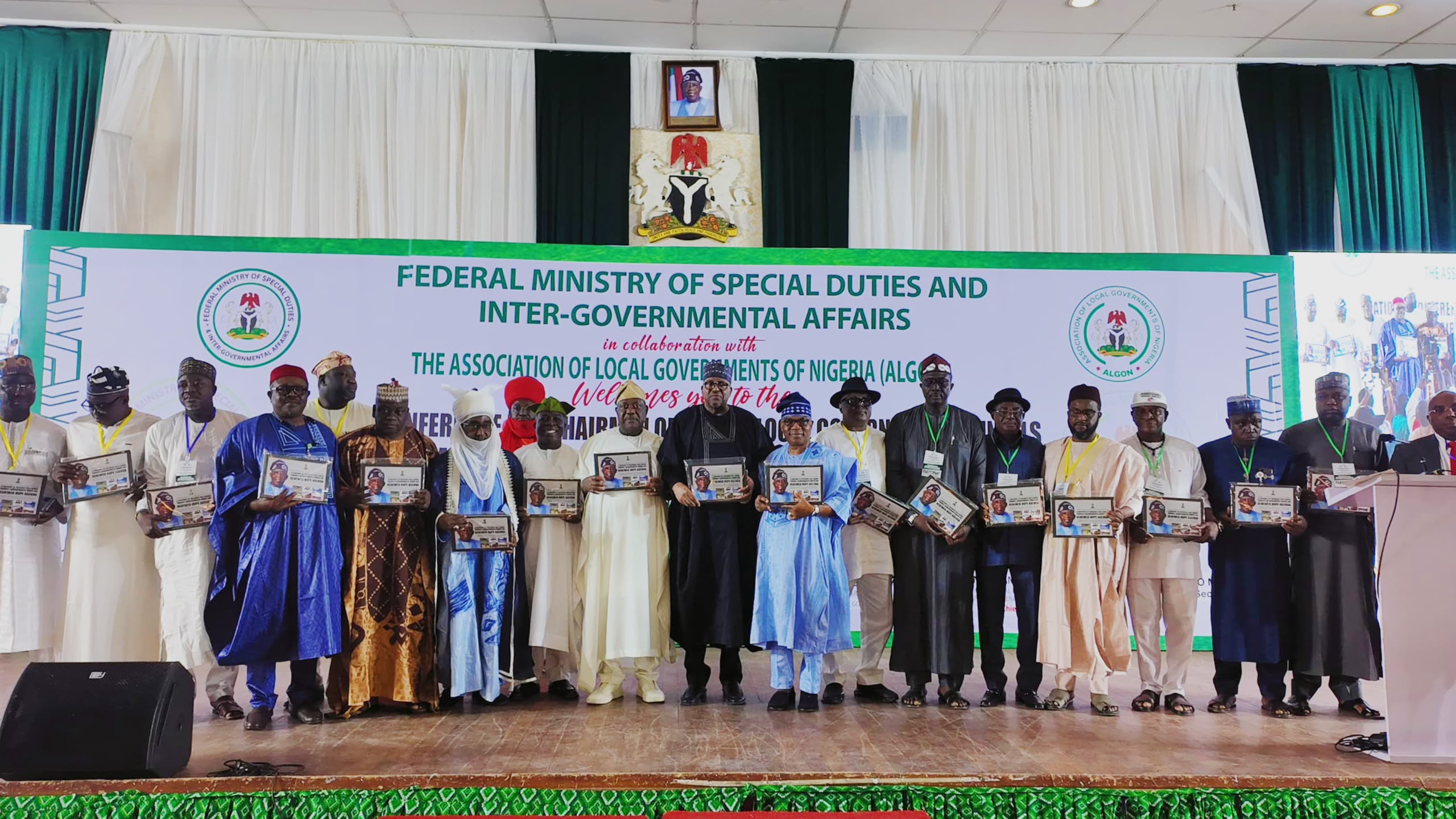
The Minister stated this on Tuesday in Abuja while delivering a goodwill message at the 2026 maiden National Conference of the 774 Local Government Chairmen and Chairmen of Traditional Rulers’ Councils at the State House Banquet Hall. 
The conference, convened by the Federal Ministry of Special Duties and Inter-Governmental Affairs, was themed, “Cascading President Bola Ahmed Tinubu’s Renewed Hope Agenda to the Grassroots.”
Enikanolaiye said policies implemented at the local level could have implications for Nigeria’s image and relations with other countries.
He said: “For us in the Ministry of Foreign Affairs, we believe that every aspect of our government policy at home has implications for foreign policy and Nigeria’s international relations. Which is why we are interested in everything that goes on domestically because foreign policy is also a projection of domestic policy. And in this context, grassroots mobilization and development is critical to what we do abroad”.
He argued that inclusive governance should be built from the grassroots upwards, rather than imposed from the top, while describing traditional rulers as an important component of Nigeria’s governance structure.
Enikanolaiye commended President Bola Ahmed Tinubu for approving the conference and for recognising the roles of local governments and traditional rulers in the ongoing constitutional amendment process.
Linking his remarks to President Tinubu’s four-D foreign policy doctrine of demography, development, democracy and diaspora, the minister said the success of the Renewed Hope Agenda would ultimately depend on its impact at the grassroots.
On demography, he said Nigeria’s youthful population across the 774 local government areas represented a major asset that could strengthen the country’s position globally if properly empowered.
“On Demography, Nigeria’s youth in the 774 LGAs is our greatest global asset – empower the LGAs, convert numbers to power,” he said.
On development, Enikanolaiye said productive local governments were essential to achieving Nigeria’s economic ambitions, citing agriculture, mineral resources and major infrastructure projects as areas with potential to attract foreign investment.
“On Development, a $1 trillion economy is impossible without productive LGAs. With agriculture booming, 44+ minerals across 500 sites, and massive infrastructure like the Lagos-Calabar and Sokoto-Badagry highways, grassroots stability is what attracts FDI,” he stated.
The minister also linked stronger local governance to democracy, saying empowered local governments and traditional institutions would demonstrate the practice of participatory governance.
“Speaking On Democracy, empowering LGAs and traditional rulers proves Nigeria practises real, bottom-up democracy,” he said.
On the diaspora component of the doctrine, Enikanolaiye said improved conditions at home could encourage Nigerians living abroad to invest in the country and promote a positive image of Nigeria internationally.
“On Diaspora, when home is secure and working, the Diaspora will invest and sell the Nigerian story with confidence,” he noted.
He said the Ministry of Foreign Affairs would support the foreign policy component of grassroots development through investment matchmaking via Nigeria’s 110 diplomatic missions abroad and partnerships with Nigeria’s international partners.
The ministry, he added, would also leverage the community-level knowledge of traditional rulers in support of national security.
In a separate goodwill message, the Head of the Civil Service of the Federation, Mr Olumuyiwa Enitan Abel, represented by Dr Vitalis Obi, said local governments remained the closest tier of government to the people and were central to service delivery.
He also described traditional rulers as important actors in peacebuilding and reaffirmed the commitment of the civil service to accountability and measurable results.
Earlier, the Permanent Secretary, Special Duties and Inter-Governmental Affairs, Dr Onwusoro Maduka Ihemelandu, said the government lacked timely and verifiable data on interventions at the local government level.
He said the ministry had consequently developed an E-Tracking Framework to monitor projects, including their locations, values, timelines and verification status.