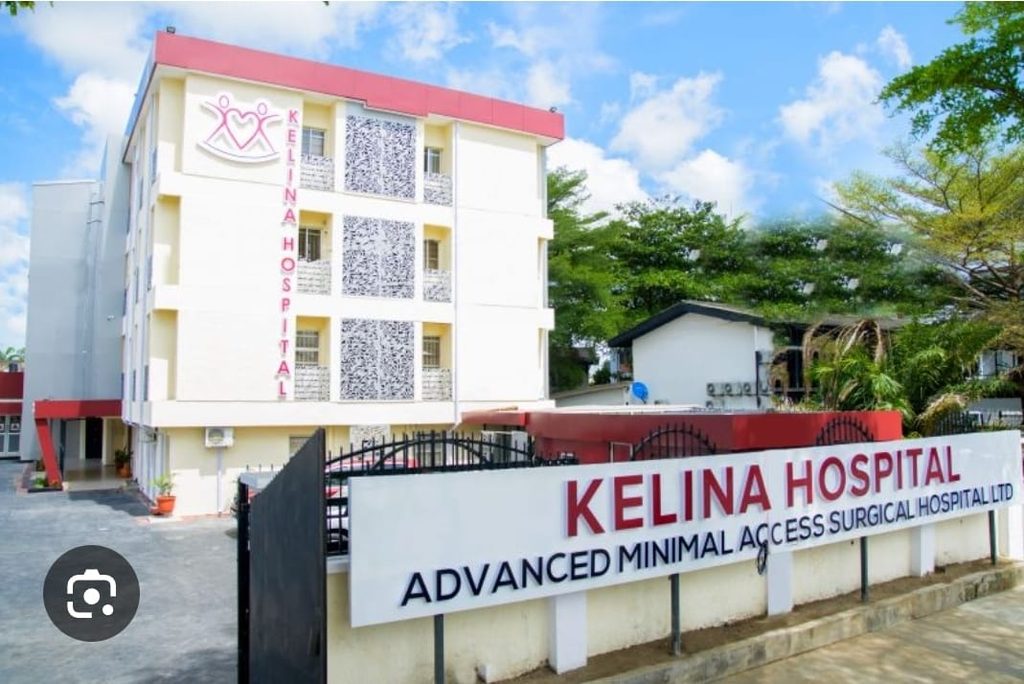
Kelina Hospital has performed more than 50 robotic radical prostatectomy surgeries within one year, providing prostate cancer patients with minimally invasive treatment and faster recovery.


The hospital’s President, Dr Celsus Undie, disclosed this on Saturday in Lagos at a news conference where he highlighted the medical milestones recorded by the facility.
Robotic-assisted radical prostatectomy is a minimally invasive procedure in which the prostate gland and surrounding tissues are removed using a surgeon-controlled robotic system to treat prostate cancer. 
Undie, a Consultant Urological Surgeon, said prostate cancer remained the most common cancer affecting Nigerian men, noting that advances in medical technology had reduced the need for patients to travel abroad for treatment.
He said early diagnosis and treatment were critical because the chances of successful treatment were significantly higher when the cancer remained confined to the prostate.
“There is a lot of technology available now, and people do not have to wait until cancer has advanced or spread around the body.
“When cancer is confined to any organ, the best treatment is to take it out, along with that organ, so the person could survive without that part of the body.
“Once it spreads, treatment is not so effective.
“For prostate cancer, robotic surgery is less mutilating and much easier to do,” he said.
Undie said Kelina Hospital had been performing robotic prostate surgeries weekly since June 2026 and had not required a blood transfusion for any patient undergoing the procedure during the period.
He acknowledged that prostate cancer surgery could affect erectile function because the nerves responsible for erection run close to the prostate gland, but stressed that saving the patient’s life remained the primary objective.
According to him, many patients could eventually regain erectile function naturally, while others might require medication, injections or penile implants.
“We cannot put an erection ahead of the need to save a life,” he said.
Undie also disclosed that Kelina Hospital performed Nigeria’s first robotic radical nephrectomy in 2025, describing the feat as another milestone in the hospital’s development of robotic surgery.
Robotic radical nephrectomy is a minimally invasive procedure used to remove an entire kidney and surrounding tissues, and in some cases nearby lymph nodes or the adrenal gland.
He said more than half of the hospital’s urological surgery patients were discharged within 24 hours, attributing the development to the efficiency of its minimally invasive surgical approach.
Undie further disclosed that the hospital’s robotic surgery programme was being conducted entirely by Nigerian surgeons based in the country.
He called for greater government support and access to affordable financing for private hospitals to enable them acquire advanced medical equipment, improve healthcare delivery and reduce medical tourism.
The Chairman of the hospital’s Board of Directors, Mr Ifeanyi Anago, said Kelina had recorded more than 7,000 surgeries, including complex procedures involving patients with diabetes, heart failure and kidney failure who had previously been rejected by other hospitals.
He said the hospital had maintained a mortality rate of not more than 0.0007 per cent while performing the procedures.
The Chief Medical Director of Kelina Hospital, Abuja, Dr Kenechi Nedosa, said the hospital’s adoption of robotic surgery had contributed to improved outcomes and quality of life for many patients.
Nedosa also introduced Mr Joseph Ogah, who underwent the hospital’s first laparoscopic radical prostatectomy for prostate cancer in Nigeria in 2012.
Ogah said he remained healthy and sexually active more than a decade after the procedure.
“Before I performed the surgery in 2012, many people cautioned me that I would suffer erectile dysfunction after the procedure.
“I said, ‘I would rather die than not being able to perform sexually’. I can tell you authoritatively that I haven’t taken drugs since 2012; I am okay and sexually active,” he said.
Prostate cancer remains a major public health challenge in Nigeria and is the most commonly diagnosed cancer among Nigerian men.
Data from the World Health Organisation and the International Agency for Research on Cancer estimate that about 24,396 new prostate cancer cases are diagnosed annually in Nigeria, while approximately 15,176 men die from the disease each year.
The figures translate to an average of about 26 prostate cancer-related deaths among Nigerian men every day, underscoring the need for early detection and access to advanced treatment.