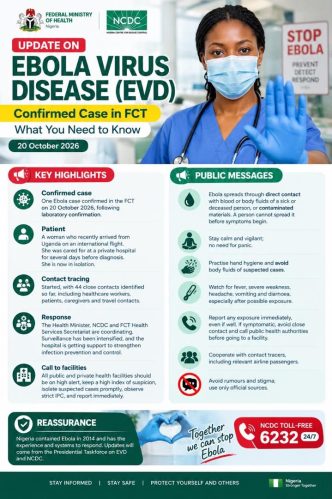
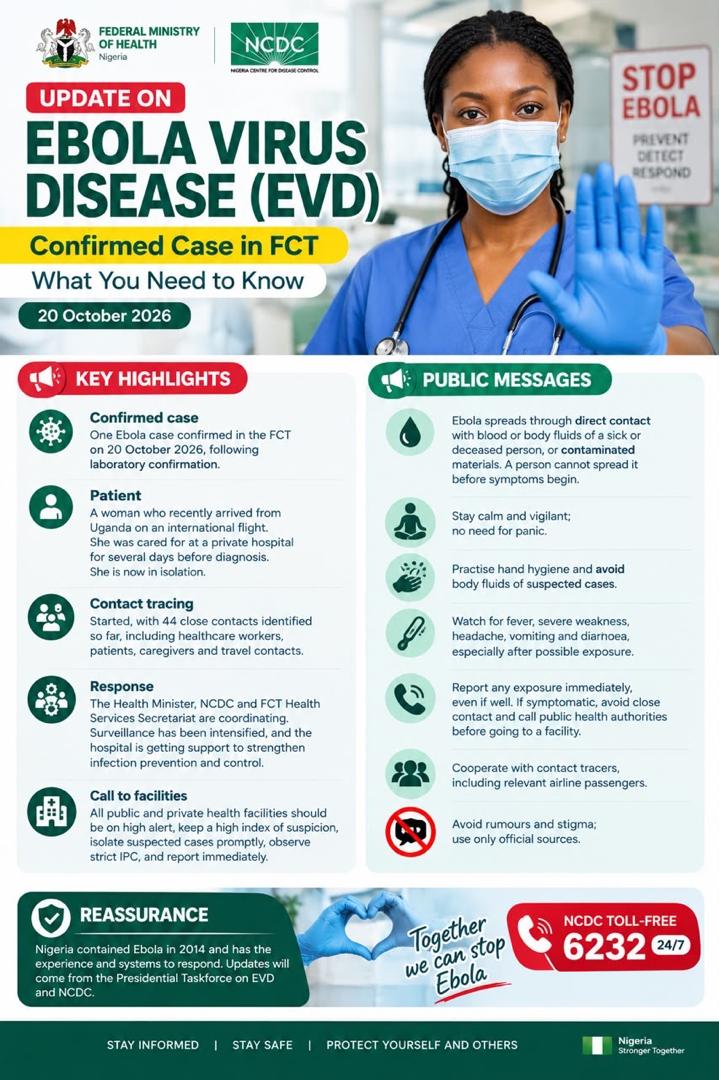


Following reports of a confirmed Ebola case in Abuja and 44 contacts being traced, let us remain calm, vigilant and informed.
✅ 1. Wash your hands regularly with soap and running water, especially before eating and after using the toilet. 
✅ 2. Avoid contact with bodily fluids such as blood, vomit, saliva, urine and faeces from anyone suspected of having Ebola.
✅ 3. Know the warning signs: fever, severe headache, weakness, muscle pain, vomiting, diarrhoea and unexplained bleeding.
✅ 4. Report suspected symptoms immediately. If you have symptoms after possible exposure, call the NCDC on 6232 before visiting a hospital.
✅ 5. Cooperate with contact tracing. Anyone identified as a contact should follow health officials’ instructions and complete the recommended 21-day monitoring period after their last exposure.
✅ 6. Avoid touching dead or sick wild animals, particularly bats and non-human primates. Handle and cook meat safely.
✅ 7. Do not share items contaminated with bodily fluids,* including clothing, bedding, needles or personal-care items.
✅ 8. Practise safe caregiving. Do not attempt to care for a suspected Ebola patient without proper training and protective equipment.
✅ 9. Avoid spreading rumours. Share information only from credible sources such as the NCDC and the World Health Organization (WHO).
✅ 10. Do not panic or stigmatise anyone. Ebola is not spread simply by being in the same city or sharing ordinary public spaces with someone who has no symptoms.
📌 IMPORTANT: Ebola is primarily transmitted through direct contact with the bodily fluids of an infected person who has developed symptoms, or contaminated materials. Early reporting, proper hygiene and effective contact tracing are essential.
📞 NCDC Emergency Number: 6232
🔗 NCDC: https://ncdc.gov.ng/
🔗 WHO Ebola Guidance: https://www.who.int/news-room/fact-sheets/detail/ebola-disease
Please share this message to promote awareness, not fear. Stay safe and follow official health advisories.