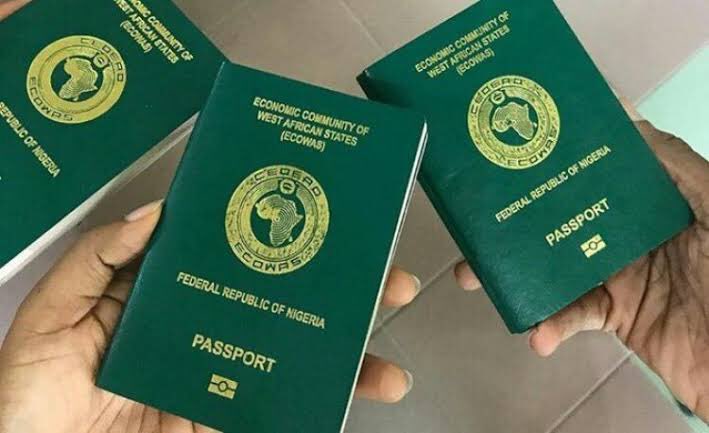
Nigeria’s passport ranking has declined, leading to a drop in access to twenty destinations, according to the latest release of the Izi Visas Passport Ranking Index, as its global mobility standing plummeted to 181st position out of 196 evaluated nations.


This marks a sharp plunge from its 90th-place standing recorded in mid-2026, underlining an eroding level of international access for holders of the green passport.
With the new passport ranking, Nigeria has lost visa free access to other countries that have now been reclassified under visa-on-arrival. 
They are: Burundi, Comoro Islands, Djibouti, Madagascar, Mozambique, Rwanda, Seychelles (visitor’s permit on arrival), Tanzania, Uganda, Cambodia, Iran, Lebanon, Maldives, Timor-Leste, Niue (entry permit on arrival), Tuvalu.
Others are countries that require electronic travel authorizations (ETAs) and special clearance:
Kenya (electronic travel authorization), Suriname (entry fee/e-visa clearance), Kiribati, Cook Islands.
The swift reduction in visa-free access cuts the core of Nigeria’s global trade and diplomatic presence. Nigerian passport holders can now access only 83 countries across all entry categories.
Unconditional visa-free entry has shrunk to just 24 nations, while 16 destinations offer visas on arrival and 43 require electronic visa pre-authorisation. The drop in direct visa-free clearance from 44 down to 24 countries highlights a shrinking perimeter of hassle-free travel for citizens.
For Africa’s largest economy, this mobility squeeze carries direct economic costs. Unhindered movement is not merely a convenience for leisure travellers; it is a critical driver of cross-border trade, foreign direct investment sourcing, corporate expansion, and scientific and academic collaboration.
When business leaders, investors, and technical experts face heightened visa friction, market entry costs escalate, transaction timelines stretch, and local enterprises face competitive disadvantages against regional counterparts.
Stronger passports
The global landscape indicates how far Nigeria trails leading economic hubs in facilitating travel freedom. In the same 2026 assessment, the United Arab Emirates leads worldwide by offering its citizens streamlined border access to 185 out of 198 tracked destinations.
European nations such as Switzerland follow closely, providing visa-free access to 120 locations alongside generous port-of-entry and digital visa arrangements.
Figures from alternative benchmarks, such as the Henley Passport Index, show African nations securing significantly broader access for their citizens. South Africa ranks 49th globally with access to 101 destinations, while Botswana occupies 61st position with 81 destinations. Morocco, Kenya, and Ghana also maintain higher rankings, providing their business communities with superior international reach.
Reversing this decline requires deliberate, institutional policy interventions from federal authorities, as a nation’s passport strength serves as a direct proxy for its perceived economic stability, internal security management, global reputation, and bilateral diplomatic leverage.