BY


BOLAJI AFOLABI
Across different countries in Africa, proverbs are not just “old people talk,” they can be described as the continent’s oldest school, court, and library. From the various ethnic groups, and sub-nationalities in Nigeria to the Zulus in South Africa, Bemba in Zambia, Swahili in East Africa, Amharic in Ethiopia, and others, the region is replete with popular sayings that shapes everyday living, realities, and the future. African proverbs (or sayings) educate, correct, unite, and preserve. They teach without preaching; make complex ideas simple; resolve conflicts and build peace; preserve culture and identity. Also, they create unity; they are memorable and shareable; build wisdom and critical thinking; guide moral choice; cheap to learn, hard to forget, and powerful to use or adapt in decision making. 
One of these is that, “until a woman marries another husband before she appreciates the previous one.” Further extrapolation of this proverb will reveal its potency in describing the challenges associated with choices, preference, and related situations. For many people, this may just be one of those popular sayings, but not for others. For now, it resonates with the people of Takum, Donga, Ussa, Yangtu Federal Constituency. Described as a constituency, though with four different towns, four different histories – yet, speak with One Voice in Abuja.
Located in the southern part of Taraba State, given its political significance, it is believed to be the one that, largely decides who becomes the Senator of the District; who becomes the Speaker of the State Assembly; and who becomes the Governor. It is the home-constituency of General T. Y Danjuma, (Retd); Late Emeritus Ambassador Emmanuel Njimah, presidential aspirant in 1993; His Excellency, Arc. Darius Ishaku, immediate past Taraba State Governor; Mrs. Hauwa Kwena, former Deputy Women Leader of the Peoples Democratic Party, (PDP). Others include Senator Emmanuel Bwacha, PDP Governorship candidate for the 2027 elections; Hon. Albert Sam-Tsokwa, former Member, House of Representatives, and many other.
Given one’s “loose attachment” to the old Gongola State (the present day Adamawa and Taraba), the writer is always interested in any issue, particularly development as it relates to the two states. Moreso, one still have a few friends from both states – relationships mutually built and sustained for many years. A visit to one of such, few weeks ago, brought back the moral of the proverb about ‘the woman and two husbands.’ For the purpose of confidentiality – the name of my host, who is in the Directorate cadre of a federal agency – remain anonymous. After discussions on respective families, career, and a range of other matters, then came politics. He said, “every politics is local, and for next year’s general elections, I am interested in who represents us (the federal constituency) in the House of Representatives.”
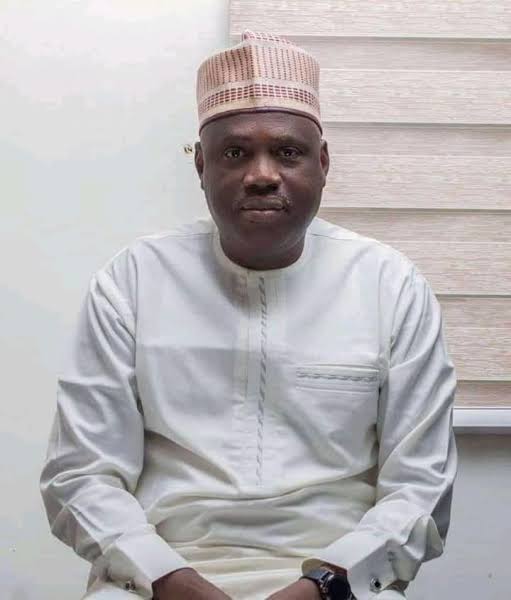
Aware of his position and preferences in the 2015, 2019, and 2023 elections, the writer was shocked when he announced his choice for 2027. Why? Why the shift? What happened? What has changed? He declared, “friend, having tried Rimamnde Shawulu, whose victories in 2015 and 2019 did not bode with me, and Mark Useni in 2023, I think many of us now know better.” Probed further, he said, “sentiments and emotions aside, it is very obvious that Shawulu impacted on our people more than others.” To emphasize the growing momentum and choice-switch by many people in the constituency, he invited three public servants, whose offices are whistle distances from his. Taking turns, the bureaucrats (from Donga, Takum, and Yangtu) did not only talk about the mood of electorates but also rated Shawulu as the best legislator to have represented the constituency since 1999. One of the triumvirate declared that, “he was very outspoken, regularly projecting the constituency, and attracted many projects that are easily verifiable.”
What are these achievements? What are the milestones that has made my friend, who by the way was very critical of Shawulu in the past elections now turn a new leaf – rooting for him? How about the open endorsement of Shawulu by the other public servants? The constitutional roles of the Legislative arm of government are Lawmaking, Oversight, and Representation. Indeed, these are the primary responsibilities of every lawmaker; either at the federal or state assemblies. The delivery of Legislators in these three-pronged functions are veritable compass for assessment.
From empirical reports, Shawulu, in his near-one decade membership of the House of Representatives performed brilliantly in lawmaking. Given his passion for equity, fairness, and justice; without abandoning his citizens-driven ideology, his interventions were pro-people, and geared towards the general well-being of Nigerians. He regularly brought to national focus the various banditry and terrorist attacks in his federal constituency, Southern Taraba, the State, and the North East geo-political zone. His voice and views at different Oversight duties proved useful for legislature-executive relationship, and also provided necessary ideas and strategies towards the improvement, and realization of the mandates of these agencies. In recognition of his worthy contributions to the legislature and democracy, he was adjudged the “Most Active Taraba State Lawmaker” in the 8th and 9th Assembly by reputable NGOs and media platforms.
Shirley Chisholm counsels that, “you don’t make progress by standing on the sidelines, whimpering and complaining…You make progress by implementing ideas.” This, Shawulu did in meeting the Representation-plank of his roles as servant of his constituency in the House. He built relationships with like-minds within and outside the Legislature towards ensuring that meaningful projects and programmes were facilitated to the various Wards that make up the federal constituency. These include fully-equipped ICT Centres at Combined Reformed Secondary School, Mbiya-Takum; Government Day Secondary Schools Gayama-Donga, and Yamusa-Ussa; Construction of several classroom blocks at different schools; Building of infrastructures in some academic institutions; payment of school fees and related fees for some indigent students. He provided transformers and solar street lights in some communities and locations.
For major infrastructures, Shawulu facilitated the following:- Inclusion of the Takum-Lisam Road rehabilitation project into federal budget; provision of Boreholes at various locations in Takum, Donga, Ussa LGAs, and Yangtu Special Development Area such as Kashambila, Shibon, Fete, Akate, Kpambo, Asibiti, Kitanko, Fikyu Kwaesati, ERC Lupwe, Kwambai, Bika. Yearly free healthcare information services; free medical outreaches; donation of essential drugs to hospitals; provision of relief materials to victims of bandit attacks in Takum, Donga, and Ussa LGAs. In partnership with the Federal Government, about 1,000 people accessed loans of between 500, 000 and 7 million naira to start businesses; supported the establishment of 6 functional Rice Mills for food sufficiency, employment, and other value chain benefits; capacity building and empowerment programmes for youths and women; employment generation for some constituents.
Given the preponderance of challenges in the federal constituency, when juxtaposed with the bold initiatives and courageous steps taken by Shawulu – during his time at the House – the shift in support for his aspiration can be understood. It thus appear that, for now, and with the January 2027 barely 60 days ahead, the popular opinion and choice among the generality of the people is the journalist-politician. Many are convinced that, as a political dynasty built on history, sustained by commitment, the people of Takum, Donga, Ussa, and Yangtu are tired of words not backed with actions – as seen in the last three years – but have resolved to stand behind Shawulu; who has proven records of capacity, competence, and character. The words of my friend that, “many people back home, are convinced that he is the natural choice to continue from where he stopped in June 2023,” encapsulates it all.
- BOLAJI AFOLABI, a Development Communications specialist was with the Office of Public Affairs, The Presidency, Abuja.