Connect with us

News

INEC Parleys With Parties, Defends Decision To Appeal Court Ruling On Primary Deadlines

Published

on

ADVERTISEMENT
Zoom Ad
ADVERTISEMENT
Zoom Ad

The engagement is one of the consultative meetings scheduled by the electoral umpire to review preparations for the Ekiti election.


The chairman of the Independent National Electoral Commission (INEC), along with national commissioners, is meeting with chairmen and secretaries of political parties, ahead of the forthcoming Ekiti governorship election

Tuesday’s engagement is one of the consultative meetings scheduled by the electoral umpire to review preparations for the Ekiti election.

It is holding exactly eleven days to the governorship election, which is scheduled for June 20th, 2026.

Advertisement

The meeting hopes to enable the political parties and the electoral umpire to put finishing touches on all the preparations for the Ekiti governorship election.

Amupitan Defends Appeal
In his opening remarks, the INEC chairman, Joash Amupitan, defended the commission’s decision to appeal the recent court judgment on the powers of the commission to set a timetable for elections, including that of setting timelines for pre-election activities for political parties, such as the conduct of primaries and the submission of the lists of candidates.

The chairman maintained that the decision, which upheld the powers of INEC to issue the election timetable on the one hand and, on the other hand, struck out the powers of INEC to set the timeline for political parties’ primaries, was inconsistent and therefore sought a clearer judicial pronouncement.

He said in Suit No. FHC/ABJ/CS/517/2026 — Youth Party v. INEC, delivered on 20 May 2026, the Federal High Court questioned certain timelines in the Commission’s timetable.

Advertisement

In a subsequent judgment in Suit No. FHC/ABJ/CS/720/2026 — Social Democratic Party (SDP) v. INEC, delivered on 26 May 2026, a separate court affirmed the Commission’s authority to issue an electoral timetable but nullified certain timelines relating to the nomination and substitution of candidates.

The INEC chief said the Commission had filed appeals against both decisions and taken the necessary legal steps to obtain authoritative pronouncements from the Appellate Courts.

According to him, the activities contained in the timetable were not isolated events but interrelated operational processes essential to the orderly conduct of elections.

Amupitan listed critical electoral activities for which the Electoral Act prescribed no express statutory timelines but which must nonetheless be accommodated within the overall electoral calendar.

Advertisement

These include the submission and verification of party membership registers, the monitoring of party primaries across the Federation, the pre-upload of primary results on the Commission’s portal, the printing of ballot papers and result sheets, quality assurance procedures, the configuration of BVAS machines, and compliance with statutory obligations such as inviting political parties to inspect election materials pursuant to Section 42 of the Electoral Act 2026.

“The Commission therefore considers it imperative that all electoral activities be harmonised within a coherent and workable framework that promotes certainty, transparency, administrative efficiency and equal treatment of all political parties,” he said, assuring the public that, notwithstanding the pending appeals, INEC remained firmly committed to conducting the 2027 elections in strict compliance with the Constitution and the Electoral Act.

Continue Reading
Advertisement

News

SEDC Defends Record Before Senate, Says Less Than 10% of ₦140bn Budget Released

Published

on

ADVERTISEMENT
Zoom Ad
ADVERTISEMENT
Zoom Ad

…highlight major projects, Programme,Regional Development Plans Amid Funding Challenges

By Gloria Ikibah

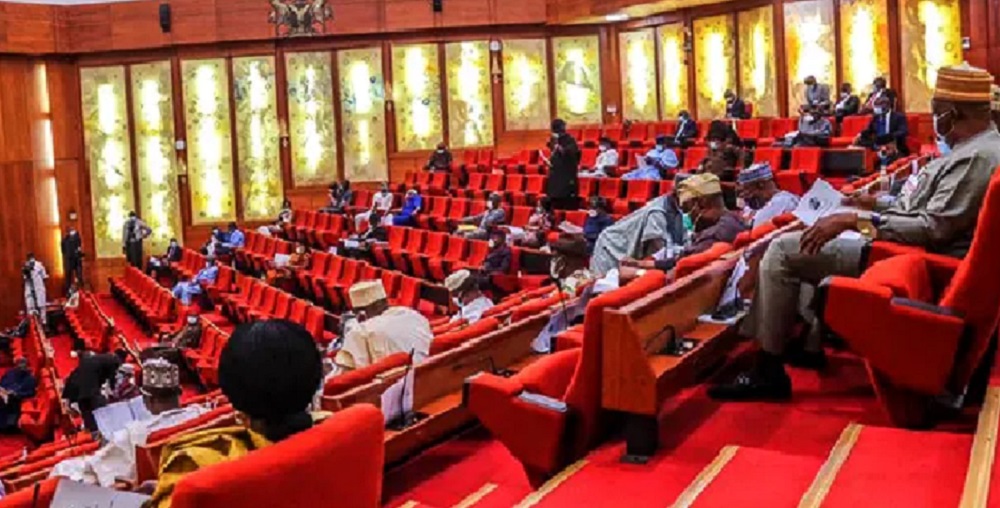
The South East Development Commission (SEDC) has reiterated its commitment to transparency, accountability and regional development following an oversight session with the Senate Committee on South East Development Commission at the National Assembly.

The interactive session, chaired by the Committee Chairman, Senator Orji Uzor Kalu, formed part of the National Assembly’s constitutional responsibility to oversee the activities of government agencies.

Advertisement

During the engagement, the Commission presented a detailed report of its activities since the inauguration of its Board in February 2025, covering its financial performance, institutional development, procurement processes, staffing, partnerships and ongoing programmes across the South-East.

The Commission also briefed lawmakers on its engagements with state governments, federal institutions, development finance organisations and other stakeholders involved in driving development across the region.

As part of its review, the Senate Committee requested additional documentation relating to certain aspects of the Commission’s operations and programme implementation.
Responding to the request, the Commission welcomed the move and sought a short extension to collate and submit the required materials.

Following discussions, the Committee adjourned proceedings to a later date pending receipt of the requested submissions, which the Commission is expected to provide on or before 23 June 2026.

Advertisement

SEDC used the opportunity to highlight progress recorded despite what it described as significant funding constraints.
According to the Commission, preparatory work has advanced on several major regional projects since the Board was inaugurated, including strategic infrastructure initiatives such as gas pipeline and railway projects designed to drive economic growth and regional integration.

The Commission also disclosed that it had established partnerships with a number of national and international institutions, including the United Nations Development Programme (UNDP), Afreximbank, Rural Electrification Agency, the Bank of Industry, Presidential Initiative on Compressed Natural Gas and Gas Aggregator Company of Nigeria.

It added that extensive consultations had been held with the governments of the five South-East states, federal ministries, development partners, academic institutions and private sector stakeholders to create a coordinated approach to regional development.

One of the major achievements highlighted during the session was the South East Vision 2050 stakeholder consultations, which brought together government officials, development experts, business leaders, academics and civil society groups to develop a long-term blueprint for the economic transformation of the region.

Advertisement

The Commission also spotlighted the successful rollout of the inaugural South East Venture Capital Programme (SEVCP), which it described as a flagship initiative aimed at promoting innovation, entrepreneurship and investment.

According to SEDC, 25 start-ups from across the South-East received equity investments through a transparent and competitive selection process under the programme.

The Commission said the initiative aligns with President Bola Ahmed Tinubu’s Renewed Hope Agenda and reflects efforts to strengthen entrepreneurship, private sector growth and investor confidence.

“Anchored within the South East Investment Company, the Programme represents a strategic effort to move beyond fragmented interventions towards a more structured and credible venture capital ecosystem for the South East, combining capital deployment with venture development, institutional partnerships, and pathways for attracting institutional capital into early-stage, high-growth enterprises across the region,” it stated.

Advertisement

However, the Commission expressed concern over the pace of funding releases, warning that implementation of critical projects could be affected if appropriated funds are not released promptly.

It disclosed that despite the Federal Government and National Assembly approving ₦140 billion for the Commission in the 2026 budget, less than 10 per cent of the allocation has so far been released.

The statement further read: “Of the N140 billion appropriated to the Commission in the 2026 budget, less than 10% has been released to date across all budget lines.”

SEDC stressed that accelerated releases are essential to enable the execution of key infrastructure, agricultural transformation, youth empowerment, economic development and regional security initiatives captured within its mandate.

Advertisement

“The scale of development required across the South East demands sustained funding, institutional coordination, and continued collaboration among all stakeholders,” the Commission noted.

Reaffirming its commitment to openness and accountability, the Commission pledged full cooperation with the National Assembly and all relevant oversight institutions.

“SEDC remains committed to full cooperation with the National Assembly and all relevant oversight institutions. The Commission views accountability, transparency, and constructive engagement as fundamental to the successful delivery of its mandate and will continue to provide all information required to support effective legislative oversight.

“The Commission remains focused on its responsibility to deliver meaningful and measurable impact for the people of the South East through disciplined planning, transparent governance, strategic partnerships, and the effective deployment of public resources. The Commission appreciates the continued support of the National Assembly and looks forward to sustained collaboration in advancing inclusive growth, shared prosperity, and long-term development across the region.”

Advertisement
Continue Reading

News

NDC leader, Dickson in closed door session peace talks to stop party crisis in Kano

Published

on

ADVERTISEMENT
Zoom Ad
ADVERTISEMENT
Zoom Ad

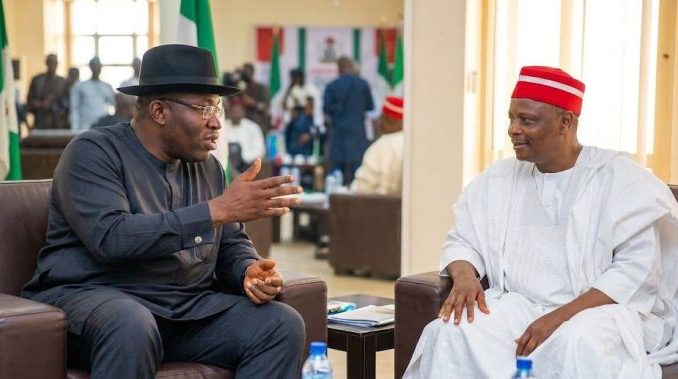
The National Leader of the Nigeria Democratic Congress (NDC), Seriake Dickson, and other leaders of the NDC, on Monday, held a closed-door peace talks with aggrieved members of the party in Kano State.

Osa Director, the national spokesperson of the NDC, disclosed this in a statement on Tuesday.

Mr Director explained that the closed-door peace talks were part of efforts to resolve the primary election-related crisis between Kwankwasiya Movement and other NDC members in the North-western state.

Kwankwasiya Movement is a political support group founded by the NDC vice-presidential candidate and former Governor of Kano State, Rabiu Kwankwaso.

Advertisement

The national spokesperson said the meeting, which lasted for several hours, was “productive.”

Senator Dickson and the NDC leadership are mediating in the process in order to enhance inclusion and participation by every party member.

According to Oda Director the NDC leadership will not impose candidates in Kano State, and indeed across the nation as the party cherishes the virtues of internal democracy,” he said.

He stressed that the NDC has not released any official results of its 2027 primaries in any state.

Advertisement

He urged members to disregard any such list in circulation.

The cause of the crisis

It was gathered that some NDC members in North-west Nigeria recently alleged Mr Kwankwaso was plotting to facilitate the dominance of members of Kwankwasiya Movement in the region’s party structure while dropping other key party leaders.

The Vice-Chairman of the NDC in the North-west, Mohammed Serina, and the Chairman of the party in Kano State, Hussaini Mariga, made the allegations against Mr Kwankwaso in a petition recently submitted to the party’s national leadership.

Advertisement

The petition followed purported results of NDC’s primaries in North-west circulating on Facebook in which the majority of winners were linked to the Kwankwasiya Movement.

Continue Reading

News

PDP logjam: INEC updates portal, names new treasurer, financial secretary

Published

on

ADVERTISEMENT
Zoom Ad
ADVERTISEMENT
Zoom Ad

The Independent Electoral Commission, INEC, has removed the names of Ahmed Yayari and Daniel Woyengikuro from its portal as Peoples Democratic Party, PDP, National Treasurer and National Financial Secretary, respectively.

According to a check by DAILY POST shows that both names have also been replaced with Odeyemi Mackson Oladiran and Eyim Donatus Henry as the new executives.

Yayari and Woyengikuro who are part of the Makinde-backed Turaki faction while Odeyemi and Eyim are members of the FCT Minister Nyesom Wike’s faction, which is also the recognised faction of the PDP.

INEC had earlier recognised Wike’s faction by putting the names of Abdulrahman Mohammed as the National Chairman and Samuel Anyanwu as the National Secretary, but had left the names of Yayari and Woyengikuro as part of the executives.

Advertisement

With the recent update on its portal, all executives of the PDP on INEC’s portal are now aligned with FCT Minister Nyesom Wike.

Continue Reading

Trending

Copyright © 2024 Naija Blitz News