Connect with us

News

Umahi gives Abuja-Lokoja highway contractors 72 hours to mobilise

Published

on

ADVERTISEMENT
Zoom Ad
ADVERTISEMENT
Zoom Ad

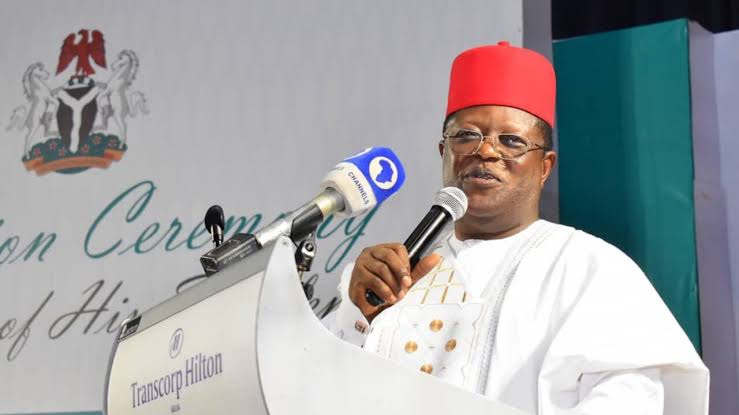
The Minister of Works, David Umahi, has given contractors handling sections of the Abuja-Lokoja highway rehabilitation project 72 hours to fully mobilise to site or risk sanctions, including possible prosecution by anti-graft and law enforcement agencies.


Umahi issued the ultimatum on Tuesday during a joint inspection of the highway alongside members of the Senate and House of Representatives Committees on Works.

The minister warned that contractors who had received government funds but failed to execute projects in line with agreed timelines would no longer be tolerated.

“If you are holding the money of the Federal Government, you have to bring it out and do the job, or we start going to the police and the EFCC.

Advertisement

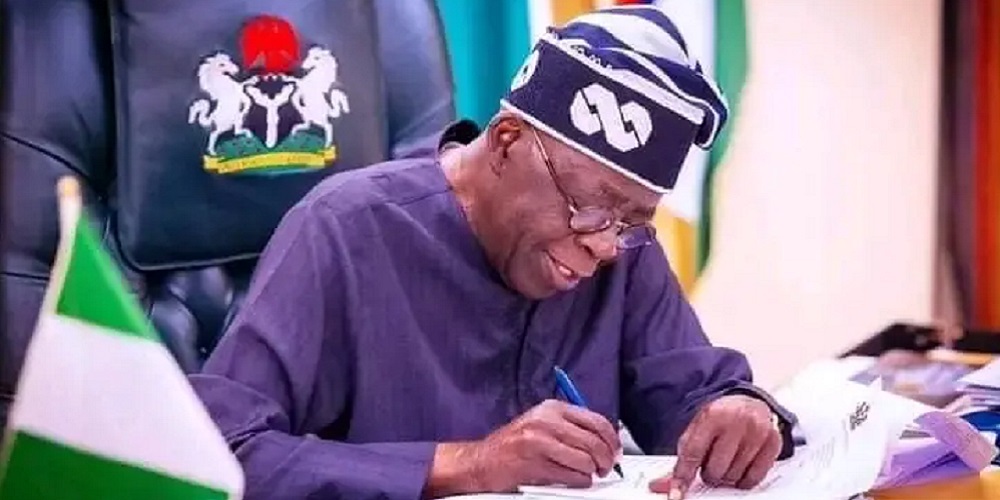
“I’m giving you 72 hours to effectively deploy on this road and utilise the money. The President has graciously approved the funds, and everyone involved must fulfil their obligations,” Umahi said.

He disclosed that President Bola Tinubu had approved funds for the project and urged contractors to immediately deploy equipment, personnel and resources to their respective sections of the road.

The minister expressed dissatisfaction with the pace of work by GELD Construction Limited, noting that only 8.2 kilometres of continuously reinforced concrete pavement had been completed on a 28-kilometre stretch despite the contractor spending several years on the project.

“GELD is not doing well at all on this project. The contractor has been on this job for years, and the progress recorded is not commensurate with the time spent on site,” Umahi said.

Advertisement

According to Umahi, the original contract covered 49.28 kilometres but was later reduced to 28 kilometres because of funding constraints.

He directed officials of the Federal Ministry of Works to identify the worst sections of the highway for immediate intervention using available funds, insisting that motorists should not continue to suffer the consequences of project delays.

The minister also warned ministry officials against poor supervision of projects, stating that engineers and project managers who fail to effectively monitor contractors could be removed from their positions.

“We can no longer keep quiet and allow contractors to do whatever they want to do. Contractors who have received government funds must utilise them for the intended purpose and ensure that critical sections of the road are attended to immediately,” he said.

Advertisement

Umahi lamented the hardship experienced by commuters due to prolonged construction activities and warned contractors against unnecessarily obstructing traffic flow.

“I feel very sad whenever I see this road completely blocked. Contractors have no right to keep road users suffering, and ministry officials have no right to keep quiet while that happens,” he stated.

While acknowledging that delayed payments had posed challenges for contractors, the minister appealed to the Nigerian National Petroleum Company Limited to accelerate the release of funds for projects being financed under its tax credit arrangement with the Federal Government.

He maintained that the Tinubu administration remained committed to completing strategic road infrastructure projects across the country and warned that contractors unwilling or unable to continue work after receiving public funds could be replaced.

Advertisement

Speaking during the inspection, Chairman of the House of Representatives Committee on Works, Akin Alabi, backed the minister’s position, saying infrastructure delivery required commitment from contractors, supervising engineers and funding agencies.

“The President cannot be everywhere, and neither can the minister. That is why there are engineers, controllers and supervisors on site. What we have seen here suggests that reports reaching the minister do not fully reflect realities on the ground,” Alabi said.

Similarly, Chairman of the Senate Committee on Works, Onyekachi Nwaebonyi, urged ministry officials to discharge their responsibilities diligently and called for timely payment for completed projects.

The Abuja-Lokoja highway is a major transport corridor linking the Federal Capital Territory with parts of the North-Central, South-East and South-South regions. Motorists have repeatedly complained about its deteriorating condition, frequent accidents and traffic congestion.
Advertisement
Continue Reading
Advertisement

News

Kogi varsity expels two students over gay practice, rusticates four for fighting

Published

on

By

ADVERTISEMENT
Zoom Ad
ADVERTISEMENT
Zoom Ad

The Management of Confluence University of Science and Technology, Osara, has expelled two students for alleged involvement in gay practice and rusticated four others for one academic session over a campus fight.

According to a statement issued on Friday by the university’s Information and Protocol Unit, the sanctions were ratified during the 31st Regular Meeting of the University Senate following recommendations from the Students’ Disciplinary Committee.

The statement read, “The Management of Confluence University of Science and Technology (CUSTECH), Osara, has approved the expulsion of two students for involvement in gay practice and the rustication of four others for one academic session over acts of fighting on campus.”

The affected students were notified in letters signed by the Deputy Registrar, Academics, Eli Gbadafu, copies of which were made available to the Information, Public Relations and Protocol Unit of the university.

Advertisement

The statement further read, “The institution stated that the disciplinary actions were taken in accordance with the provisions of the Students’ Handbook, Second Edition, as amended in 2025.”

Onumoko Hamza of the Biology Education department and Abdulazeez Eneji of the Mining Engineering department were expelled over gay practice.

Four other students were rusticated for one academic session over fighting. They are Favor Akowe of the Microbiology department, Simbiat Babamuharuna of the Biology department, Zainab Omayoza of the Biochemistry department, and Sukura Bukola, also of the Biochemistry department.

The statement read, “The University Management reiterated its commitment to maintaining discipline, order and a conducive environment for teaching and learning.”

Advertisement

It added, “Management warned that it would not hesitate to take decisive disciplinary action against any student found guilty of violating the rules and regulations of the University.”

The statement read further, “Students are therefore advised to familiarise themselves with the provisions of the Students’ Handbook and conduct themselves in accordance with the established rules and regulations of the University.”

Continue Reading

News

CAN faults FRSC amendment bill, seeks Tinubu’s intervention

Published

on

By

ADVERTISEMENT
Zoom Ad
ADVERTISEMENT
Zoom Ad

The Christian Association of Nigeria (CAN) in the South-West region has appealed to President Bola Ahmed Tinubu to withhold assent to the proposed Federal Road Safety Corps (FRSC) Act (Amendment) Bill, 2026.

The Senate had passed an amendment to the FRSC Act, proposing tougher penalties for a range of traffic offences as part of efforts to improve road safety and strengthen compliance with traffic regulations.

One of the major provisions of the amendment bill introduces a N100,000 fine for motorists who fail to obey traffic lights, road signs, road markings, or other traffic control devices.

In a statement signed by its Chairman, Bishop Dr. Barnabas Tunde Akinsanya, CAN said it supports the Federal government’s efforts to improve road safety and reduce accidents.

Advertisement

It explained that it is concerned about the provisions prescribing sanctions for preaching in commercial buses and prohibiting hawking in such vehicles.

The association further argued that the measures could also infringe on the constitutional rights to freedom of thought, conscience, religion and expression.

According to the association, although the government has a responsibility to protect lives and ensure public safety, it must also uphold the fundamental rights guaranteed under the Constitution.

“We therefore respectfully appeal to the President of the Federal Republic of Nigeria to withhold assent to the Bill in its present form and encourage further consultation with relevant stakeholders, including religious bodies, civil society organisations, legal experts, transport unions, and road safety professionals.

Advertisement

“Such dialogue will help produce legislation that effectively promotes road safety while preserving the constitutional rights and dignity of every Nigerian,” the statement said.

The association also warned that an outright ban on hawking in commercial buses could worsen the economic hardship facing many Nigerians who rely on informal trading for their daily livelihood.

Rather than introducing measures that could further reduce people’s means of survival, CAN urged the government to focus on creating employment opportunities, reducing poverty, improving public transportation, strengthening security and enhancing citizens’ welfare.

The Christian body appealed to President Tinubu to decline assent to the bill in its current form and instead facilitate broader consultations involving religious organisations, civil society groups, legal experts, transport unions and road safety professionals.

Advertisement

It maintained that such engagement would help produce legislation that enhances road safety without undermining the constitutional rights and dignity of Nigerians.

CAN stressed that Nigeria needs laws that promote national unity, safeguard lives without unnecessarily restricting fundamental freedoms, and strengthen public confidence in democratic governance.

The association, however, reaffirmed its commitment to constructive engagement with government to advance justice, peace, constitutional democracy and national development.

Advertisement
Continue Reading

News

Court Of Appeal Upholds Refusal To Restrain NCC, Dismisses COSON’s Appeal

Published

on

By

ADVERTISEMENT
Zoom Ad
ADVERTISEMENT
Zoom Ad

The Court of Appeal, Lagos Judicial Division, has dismissed an interlocutory appeal filed by the Copyright Society of Nigeria Ltd/Gte (COSON) against the Nigerian Copyright Commission (NCC), affirming an earlier decision of the Federal High Court refusing to grant an injunction restraining the Commission.

In a unanimous judgment delivered on July 9, 2026, the appellate court also awarded ₦200,000 in costs against COSON.

According to a statement on Saturday, the three-member panel, led by Justice Polycarp Terna Kwahar, with Justice Folasade Ayodeji Ojo and Justice Muslim Sule Hassan concurring, held that there was no existing operating approval that could be preserved through an interlocutory injunction.

The appeal stemmed from COSON’s substantive suit challenging aspects of the Copyright (Collective Management Organisations) Regulations, 2007.

Advertisement

Pending the determination of the case, COSON had sought an interlocutory injunction restraining the NCC from revoking its operating approval or interfering with its management, finances, bank accounts, audits and royalty collection activities.

However, the Federal High Court, in a ruling delivered on December 1, 2021, declined the application, holding that an interlocutory injunction cannot be granted to restrain an action that had already been completed.

The court noted that COSON’s operating approval had been suspended by the NCC in April 2018 and subsequently expired in May 2019, before the substantive suit and the application for injunction were filed.

In affirming the lower court’s decision, the Court of Appeal ruled that the legal status existing before the commencement of the suit was that COSON’s operating approval had already become inoperative.

Advertisement

Justice Kwahar, in the lead judgment, stated: “Both the Appellant and the Respondent have demonstrated vide their affidavit evidence that the Appellant’s operation had prior to the commencement of the suit become inoperative by virtue of the suspension of the Appellant’s licence and expiration by effluxion of time. That is the status quo ante bellum before the commencement of the suit at the lower Court.”

The appellate court emphasized that the purpose of an interlocutory injunction is to preserve the status quo pending the determination of a substantive case, not to reverse actions that had already taken effect before litigation commenced.

It therefore held that granting the relief sought by COSON would have altered, rather than preserved, the existing legal position, and consequently dismissed the appeal for lacking merit.

Reacting to the judgment, the Nigerian Copyright Commission described the ruling as a reaffirmation of its position that there was no subsisting operating approval for the court to preserve through an injunction.

Advertisement

The Commission further reiterated that COSON is currently not approved to operate as a Collective Management Organisation (CMO) in Nigeria.

The judgment is regarded as a significant legal victory for the NCC, reinforcing the Commission’s regulatory authority over collective management organisations and clarifying the legal limits of interlocutory injunctions in disputes involving expired or suspended regulatory approvals.

Continue Reading

Trending

Copyright © 2024 Naija Blitz News