Connect with us

Foreign

US Supreme Court Upholds State Bans On Transgender Athletes In School

Published

on

ADVERTISEMENT
Zoom Ad
ADVERTISEMENT
Zoom Ad

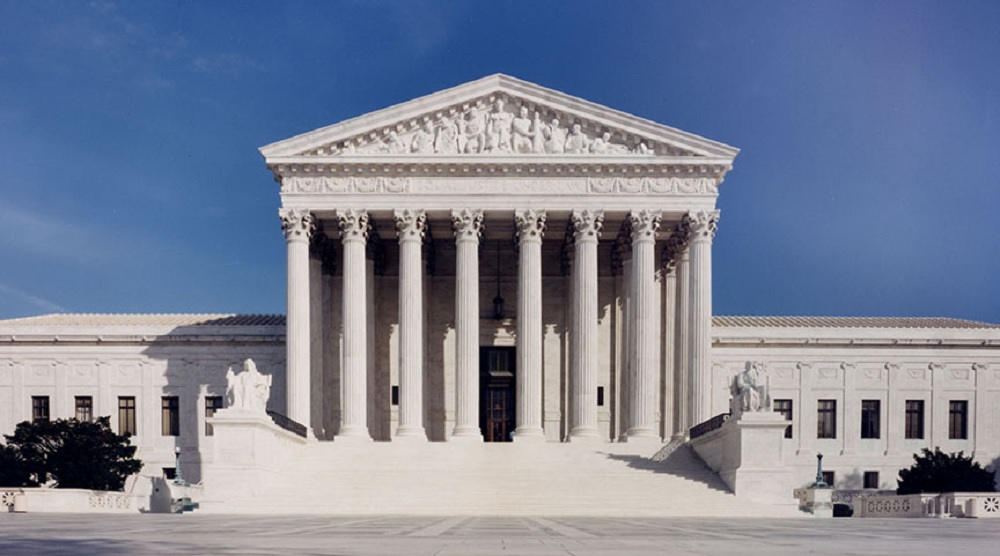
The US Supreme Court on Tuesday upheld state laws barring transgender athletes from competing in girls’ and women’s school sports, delivering a major victory to conservatives in one of the country’s most fiercely contested culture-war battles.


The decision allows Idaho, West Virginia and more than two dozen other Republican-led states to enforce measures requiring students to compete in public school and college teams according to their sex assigned at birth rather than their gender identity.

The ruling is the latest sign of the conservative-dominated court’s willingness to side with states on the issue, following last year’s decision upholding Tennessee’s ban on gender-affirming care for minors.

The cases before the court were brought by transgender students who argued that the bans violated the US Constitution’s equal protection guarantee and Title IX, the federal civil rights law barring sex discrimination in education.

Advertisement

Fair competition?

Supporters of the laws say they are needed to preserve fair competition and protect athletic opportunities for girls and women.

Opponents say they single out a tiny number of vulnerable students for exclusion and discrimination, turning children’s participation in school sports into a national political battleground.

Writing for the majority, Justice Brett Kavanaugh rejected arguments that restrictions on biological males in sports for women and girls unconstitutionally discriminate on the basis of sex or gender identity.

Advertisement

“May schools determine eligibility for women’s and girls’ sports based on biological sex? The answer is yes,” Kavanaugh wrote.

“Consistent with Title IX and the Equal Protection Clause, we hold that the States may maintain women’s and girls’ sports for biological females. They may determine eligibility for women’s and girls’ sports based on biological sex,” he added.

The court was largely divided 6-3, although three justices who opposed the decision concurred in part.

The Idaho case arose from the state’s 2020 Fairness in Women’s Sports Act, which was challenged by a transgender athlete at an Idaho university. Lower courts found the law unconstitutional.

Advertisement

Idaho Solicitor General Alan Hurst told the justices during arguments in January that “sex is what matters in sports,” citing differences in size, strength, muscle mass and lung capacity.

The West Virginia case involved a teenage transgender girl who was barred under a 2021 state law from running on her middle school girls’ track team.

Her lawyers argued that transgender girls who receive testosterone-suppressing treatment do not retain an unfair athletic advantage and that the laws are broad bans driven more by politics than evidence.

‘Zero-sum game’

Advertisement

But several conservative justices had voiced skepticism during arguments.

Kavanaugh said he sympathized with transgender students who wanted to play sports, but described many sports as a “zero-sum game,” in which one athlete’s inclusion can mean another loses a roster spot, playing time or a medal.

“Someone who tries out and makes it who is a transgender girl will bump from the starting lineup, from playing time, from the team… someone else,” he said. “There’s a harm there.”

The ruling lands amid an escalating national push by conservatives to regulate transgender participation in school life, health care and public accommodations.

Advertisement

President Donald Trump issued an executive order in last year allowing federal agencies to deny funding to schools that permit transgender athletes to compete on girls’ or women’s teams.

The issue has been politically charged since Lia Thomas, a transgender swimmer at the University of Pennsylvania who had previously competed on the men’s team, became a flashpoint after racing in women’s collegiate meets in 2022.

Supporters of transgender rights say the debate has been distorted by a handful of high-profile cases.

Seventy percent of voters in a new Quinnipiac University poll think transgender women and girls should not be allowed to play on women’s and girls’ school sports teams.

Advertisement

AFP

Continue Reading
Advertisement

Foreign

US: How 17-year-old Boy Allegedly Killed Mother, Brother After ChatGPT Searches

Published

on

By

ADVERTISEMENT
Zoom Ad
ADVERTISEMENT
Zoom Ad

A 17-year-old boy in Massachusetts, United States, allegedly killed his mother and 14-year-old brother after using ChatGPT to search for “theoretical ideas or fantasy stories regarding the killing of his family,” prosecutors said.

Arjun Aravind, 17, of Acton, a Boston suburb, was charged with two counts of murder over the deaths of his mother, Sudha Venkatesan, 45, and his brother, Siddharth Aravind, 14.

He was also charged with assault and battery for allegedly using “a dangerous weapon, a Laptop,” to attack the two victims, according to a criminal complaint filed in Concord.

Advertisement

Advertisement

Investigators said they found “a heavily damaged bloody laptop computer” at the family’s home, which they believed was used during the attack.

Police also found what appeared to be a knife.

“A bent utensil, possibly a knife with an orange handle, was also found in the area of the disturbance,” the complaint said.

What happened
Acton police officers went to the family’s home on Martha Lane at about 6:37 p.m. Tuesday for a welfare check.

Advertisement

Aravind’s tutor, who had a 4 p.m. appointment at the home, “was unable to make contact with residents upon arrival,” prosecutors said.

Shortly afterwards, Aravind’s father, who had left for work hours earlier, called police.

Officers then “found both victims dead inside,” Middlesex County District Attorney Marian Ryan said.

Siddharth was found on the first floor, while his mother was found in the basement.

Advertisement

The complaint said the boy was found “with massive trauma to the head” and “lying in a pool of blood.”

Venkatesan was found with “heavy trauma” to her head and face. She also had “a puncture rod to her stomach consistent with some object being used as a weapon,” according to the complaint.

“As officers cleared the residence, significant biological evidence was observed in and around the bodies,” the probable cause statement said.

ChatGPT searches before the killings

Advertisement

Prosecutors said Aravind had used ChatGPT hours before the killings to write about fictional characters killing their parents.

According to the complaint, he typed: “wait when Adrian kills parents I could see him luring one to convo in basement as they have always forced him to do but what excuse would he use to take their phone”

He also wrote: “maybe before killing mom Adrian coldly reveals,” according to the complaint.

Ryan said Aravind had recently shown what investigators described as concerning behaviour involving the internet and ChatGPT.

Advertisement

“The investigation has so far shown that Arjun had recently been demonstrating some concerning behavior, including using the internet and ChatGPT to make searches for theoretical ideas or fantasy stories regarding the killing of his family,” Ryan told reporters on Wednesday.

A representative for OpenAI, the developer of ChatGPT, could not immediately be reached for comment.

Ryan said the searches appeared to involve fictional stories and characters but were linked to threats involving Aravind’s family.

“He was engaged in the use of ChatGPT in creating fantasy stories, kind of the gothic novel kind of stories, asking questions, creating characters, asking what about this if this happened to that, and they seem to appear to relate to threats to his family,” Ryan said.

Advertisement

Family had reportedly hidden knives
According to the complaint, Aravind had been experiencing “behavioral issues” and had been involved in “concerning internet activities.”

The family had reportedly been hiding knives in the house to stop him from getting access to them.

Ryan said it was unclear which victim was killed first.

Siddharth had gone to a recreational facility at about 9 a.m. and returned home shortly after noon on the day of the killings.

Advertisement

“This is an unspeakable tragedy,” Ryan said. “It is an incredibly dark day. Obviously, an insurmountable tragedy for the dad in this case.”

After the killings, Aravind and his mother’s 2014 green Honda Accord were missing from the home.

An alarm was triggered at a parking lot about 13 miles away in Wayland early Wednesday.

Officers “recognized that license plate, and Arjun was inside that car,” Ryan said.

Advertisement

“He was taken into custody by police without incident,” she added.

Aravind was found asleep inside the vehicle. Police also found bedding and “large amounts of cereal and protein energy bars.”

According to the complaint, a person whose name was redacted from the court document had gone to a nearby supermarket at about 4 p.m. Tuesday and bought “an enormous” amount of cereal and energy bars.

“This employee reported this purchased was in excess of $2,000 and when questioned, he reported he had plans to sell the items,” the complaint said.

Advertisement

Previous contact with police

Police had previously dealt with the family after Aravind was reported missing in 2025.

Acton Police Chief Douglas Sturniolo said the incident was treated as a runaway case and involved no threats of violence.

Aravind’s lawyer, Debra DeWit, urged the public not to reach conclusions before the case is heard.

Advertisement

“My client is distraught and confused,” she said. “It’s a tragedy for everyone.”

Aravind pleaded not guilty on Thursday and was ordered to remain in custody without bail.

Continue Reading

Foreign

Iran slams Trump’s threat to declare Hormuz US territory

Published

on

By

ADVERTISEMENT
Zoom Ad
ADVERTISEMENT
Zoom Ad

Iran on Saturday fired back at US President Donald Trump’s claim that he would soon declare the Strait of Hormuz part of US territory, saying the crucial energy waterway it has blockaded “will remain Iranian”.

Trump has repeatedly insisted that the strait, which Tehran effectively closed at the start of the Middle East war in late February, is under US control despite traffic remaining throttled.

“The Strait of Hormuz has been Iranian, is Iranian, and will remain Iranian,” Iranian Deputy Foreign Minister Kazem Gharibabadi said on X.

“This strait will only be closed and opened under Iran’s command.”

Advertisement

Trump told a political rally in New York state on Friday that after the US defeats Iran, “pretty soon I’ll be declaring the Hormuz Strait a territory of the United States”.

“It’s true,” he added.

An unnamed White House official later clarified that Trump was joking, the Wall Street Journal reported.

Last week, a top Iranian official set out a list of conditions for reopening the strait, including an end to the “war and aggression against Iran and its allies in Lebanon, Palestine, Yemen, and Iraq”.

Advertisement

Mohammad Bagher Zolghadr also demanded the end of crippling sanctions, the release of frozen assets and compensation for wartime damage.

– Ongoing attacks –

As diplomacy stalls between the longtime foes, attacks in the Hormuz strait have continued, highlighting the continued risks to regional shipping.

The United Arab Emirates’ state-owned oil giant ADNOC said on Saturday that one of its vessels came under attack the night before.

Advertisement

Abu Dhabi’s foreign ministry later blamed Tehran, and said that Iran’s Revolutionary Guards were engaged in “acts of piracy” in the strait.

On Friday the Gulf nation blamed Iran for other attacks on two vessels linked to ADNOC as they passed through the waterway.

Such attacks led to the collapse of an April ceasefire between the United States and Iran.

As Iran chokes traffic in Hormuz, its Houthi allies in Yemen have also declared a parallel maritime blockade on Saudi ports in the Red Sea, the oil-exporting giant’s only other maritime route.

Advertisement

A June deal between Washington and Tehran — meant to serve as a jumping-off point for negotiations on a permanent settlement — had said Iran and Oman would hash out future arrangements for the Hormuz in discussion with other Gulf countries and “in line with the applicable international law”.

Before the war, the strait carried around a fifth of the world’s oil and LNG exports, and prices have repeatedly surged since the dispute over the waterway erupted, piling economic and political pressure on Washington.

Iran wants to control the strait and charge tolls, powers it did not exercise before the war and ones that the US fiercely opposes.

The closure of Hormuz has driven up prices for US voters, creating a political headache for Trump as November’s midterm elections near.

Advertisement

US Vice President JD Vance said this week that Washington’s top priority in the Iran war was keeping energy prices low for Americans, while preventing Tehran from acquiring a nuclear weapon ranked second.

Tehran signalled last week that it had agreed with Oman on a route for ships to transit the strait and were finalising arrangements to jointly manage the waterway.

The US has imposed its own retaliatory blockade of Iranian ports in an attempt to cripple its economy.

“We have the blockade. No ships get through unless we want them to,” Trump said to a cheering crowd of supporters on Friday.

Advertisement

AFP

Continue Reading

Foreign

SAD! Professor’s lifeless body found in London apartment days after receiving sack letter

Published

on

ADVERTISEMENT
Zoom Ad
ADVERTISEMENT
Zoom Ad


Who Was Jason Arday, the sociologist whose remarkable rise through academia made him one of Britain’s most prominent Black scholars, has died at the age of 41.

Arday was found unresponsive at an address in Battersea, south London, on Friday afternoon. Police said his death was unexpected but is not currently being treated as suspicious. His cause of death has not been made public, with a report expected to be prepared for the coroner.

His death came days after he was fired from Cambridge University and Jesus College raising dust that something must be amiss.

Advertisement

But before the controversy, Arday had built a career around an extraordinary personal and academic journey.

Despite those early challenges, he went on to pursue higher education, earn a doctorate and establish himself as a sociologist whose work focused on race, inequality, social mobility and education.

Arday’s family said in a statement that they were “in shock to have lost this amazing father, partner, brother, uncle and son”.

They added: “The campaign of misinformation was too much for Jason, who was a gentle man and who always wanted to see the best in everyone.”

Advertisement

Earlier on Friday, police officers were called to an address in Battersea by the London Ambulance Service.

In a statement, the Metropolitan Police said: “At this time his death is being treated as unexpected, but is not believed to be suspicious.”

Cambridge University vice-chancellor Prof Deborah Prentice said: “We are desperately saddened to hear this tragic news.”

“Our heartfelt sympathies go to Jason Arday’s family and friends at this incredibly difficult time,” she said.

Advertisement

Education Secretary Lucy Powell said she was “deeply shocked and saddened” to hear about the death and she urged people to “remember there are real people with loved ones involved”.

Arday, 41, had denied any plagiarism – but admitted errors in his work – and last week said the recent controversy about his work had led to “an unrelenting level of public scrutiny and personal attack”.

The row first erupted after another academic – self-defined “race realist” Nathan Cofnas, who was sacked from his Cambridge role in 2024 – said he found numerous instances of plagiarism in the professor’s work.

Arday said some errors in his early academic work arose because of his autism, as he relied on using mimicry to make sense of information.

Advertisement

Similar scrutiny would find similar errors in work by other academics, he said.

Continue Reading

Trending

Copyright © 2024 Naija Blitz News