Connect with us

News

Just in: Tinubu appoints seasoned banker, Jim Ovia, chairman, Student Loan Board

Published

on

ADVERTISEMENT
Zoom Ad
ADVERTISEMENT
Zoom Ad

The President, Bola Tinubu has approved the appointment of renowned banker, Jim Ovia, as the Chairman, Board of the Nigerian Education Loan Fund.


This was contained in a State House statement issued on Friday by the Special Adviser to the President, Media & Publicity, Ajuri Ngelale, titled, ‘President Tinubu appoints Jim Ovia as Chairman of the Nigerian Education Loan Fund”.

According to the statement, “Ovia is the founder of one of Nigeria’s leading banks and a respected business leader, with a surfeit of efforts and benefaction towards nurturing and empowering young Nigerians.

The National Student Loan Programme is a pivotal intervention that seeks to guarantee sustainable higher education and functional skill development for all Nigerian students and youths.
The President believes Mr. Ovia will bring his immense wealth of experience and professional stature to this role to advance the all-important vision of ensuring that no Nigerian student suffers a capricious end to their pursuit of higher education over a lack of funds”

Advertisement

Also, Ovia’s appointment will ensure, “that Nigerian youths, irrespective of who they are, have access to higher education and skills that will make them productive members of society and core contributors to the knowledge-based global economy of this century.”

News

Canada announces recruitment of nurses, dentists, pharmacists, psychologists from Nigeria, other nations

Published

on

By

ADVERTISEMENT
Zoom Ad
ADVERTISEMENT
Zoom Ad

Canadian authorities have announced the recruitment of nurse practitioners, dentists, pharmacists, psychologists and social workers from Nigeria and other parts of the world.

Immigration, Refugees and Citizenship Canada (IRCC), on Monday, announced, “Canada is looking for skilled health care and social service professionals—nurse practitioners, dentists, pharmacists, psychologists and social workers—to fill shortages in our health care system and provide essential services to Canadians!.”

The IRCC said Nigerians and other foreign nationals who have the training, credentials, and experience in health care and social services can explore its “immigration pathways and build your future in Canada.”

The categories of skilled people needed to meet Canada’s growing economic needs and emerging industries include STEM—science, technology, engineering, and mathematics—health care, skilled trades, defence and cybersecurity, critical minerals, and education.

Advertisement

Highlighting the benefits that come with working in Canada, the IRCC said, “Canada offers many benefits to top international talent, including exciting career opportunities with a wide range of employers and a safe, stable communities where prospective employee and family can thrive.”

Other benefits include access to high-quality education and training opportunities, as well as communities with dedicated services that support French-speaking newcomers, among others.

Continue Reading

News

Nigerian Council Of Legal Education Bans Atiba University From Offering Law For 10 Years

Published

on

By

ADVERTISEMENT
Zoom Ad
ADVERTISEMENT
Zoom Ad

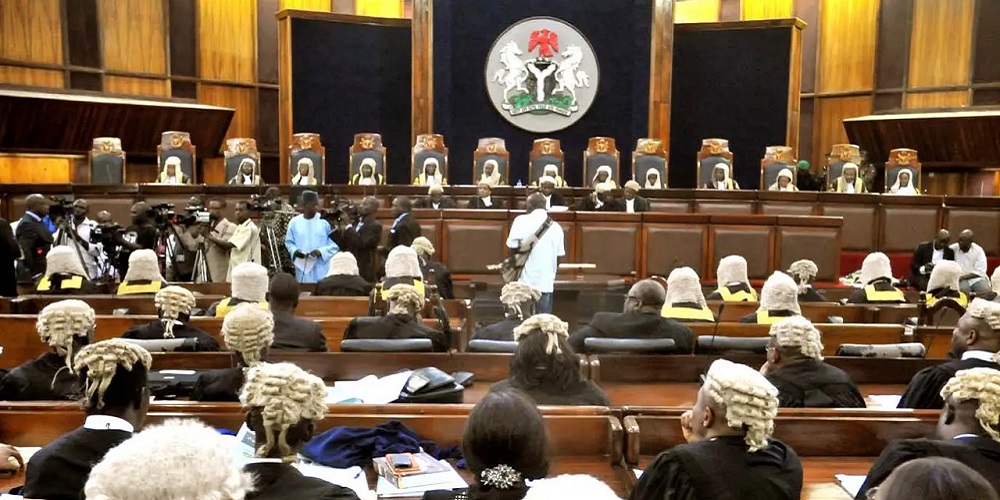
The Council of Legal Education (CLE) has imposed a 10-year moratorium on the Atiba University, Oyo State, over deficiencies in its facilities and violations of regulations governing legal education.

The decision was contained in resolutions adopted at the Council’s Third Quarter Hybrid Meeting held on August 13, 2026, at the headquarters of the Nigerian Law School in Bwari, Abuja.

In a statement signed by Aderonke O. Osho, Secretary to the Council and Director of Administration, and posted on the Council’s official page on Monday, the Council said the moratorium followed its finding that Atiba University’s facilities were “inappropriate and inadequate” for the establishment and operation of a Faculty of Law.

It also said the university violated its admission policy by admitting and graduating students without obtaining the requisite approval.

Advertisement

“The Council also approved a ten-year moratorium in respect of Atiba University, Oyo State, following its finding that the institution’s facilities were inappropriate and inadequate for the establishment and operation of a Faculty of Law,” the Council said.

It added that the institution had admitted and graduated students without obtaining the requisite approval.

“The Council further found that the institution had violated its admission policy by admitting and graduating students without obtaining the requisite approval,” it stated.

According to the Council, the 10-year moratorium was imposed as a regulatory measure to ensure compliance with prescribed standards for legal education.

Advertisement

The Council said the decision was also aimed at reinforcing adherence to the regulatory framework and protecting the quality, integrity and standards of legal education in Nigeria.

Meanwhile, the Council approved five universities to commence the study of Law from the 2026/2027 academic session.

The institutions, each approved with an initial admission quota of 50 students for their 100-level intakes, are Amadeus University, Amazi, Abia State; Akwa Ibom State University; European University of Nigeria, Abuja; Oduduwa University, Ipetu-Modu, Osun State; and Peaceland University, Enugu.

The Council, however, declined to grant approval to Maranatha University, Ibeju-Lekki, Lagos State, to commence a Law programme, citing “numerous deficiencies” identified during its verification exercise.

Advertisement

It also approved upward reviews of admission quotas for several universities.

Bowen University, Ajayi Crowther University and Topfaith University had their quotas increased from 50 to 100 students for the 2026/2027 academic session.

North-Eastern University’s quota was increased from 50 to 75 students, while Elizade University’s was raised from 70 to 120. Chrisland University’s quota was also increased from 50 to 70 students.

Joseph Ayo Babalola University’s quota was raised from 50 to 100 students, while Olabisi Onabanjo University’s was increased from 170 to 220, with both changes taking effect from the 2027/2028 academic session.

Advertisement

The Council said the decisions followed reports from its Facilities Verification and Accreditation Panel after visits to the affected universities.

Continue Reading

News

Oby Ezekwesili Reveals ‘Only Achievement’ Recorded Under Tinubu

Published

on

By

ADVERTISEMENT
Zoom Ad
ADVERTISEMENT
Zoom Ad

Former Minister of Education, Oby Ezekwesili, has admitted that President Bola Tinubu’s government has achieved some headway in stabilizing the foreign exchange market by following standard market forces.

During a discussion on News Central Television, Ezekwesili pointed out that this single positive step has unfortunately failed to improve the day-to-day living standards of ordinary citizens.

She emphasized that the general populace is yet to experience the tangible benefits of the administration’s broader financial overhaul.

In her view, the country remains in a difficult position as severe poverty persists and the cost of living continues its upward trend.

Advertisement

“The only thing that, as I said at the beginning, we can give to them is that they are getting a handle on macroeconomic stability. So, for example, the volatility we have with foreign exchange rate is quieter because they are abiding by market principles for foreign exchange policy.

“Then you look at inflation. Inflation, even though they use the methodology to crash it in terms of the numbers, but the real thing is that the cost of living for the average citizen is still pretty high,” she stated.

The former minister also criticized how the administration has managed inflation, arguing that the dramatic surge in commodity prices could have been avoided through better policy coordination.

She stressed that broader economic indicators must be analyzed alongside the core structural hurdles currently burdening the Nigerian economy.

Advertisement

Furthermore, she pointed to sluggish productivity levels as a primary barrier holding back sustainable economic expansion, job creation, and household income growth.

Ezekwesili concluded by linking the nation’s ongoing financial struggles to foundational policy misalignments that have neglected to unlock productivity and genuine economic opportunities.

Continue Reading

Trending

Copyright © 2024 Naija Blitz News