
News
Reps Probe Alleged Fake Presidential Council as Head of Civil Service Confirms Budget Participation, Approval for 314 Posts


- /home/naijuinz/public_html/wp-content/plugins/mvp-social-buttons/mvp-social-buttons.php on line 27
https://naijablitznews.com/wp-content/uploads/2026/07/IMG-20260720-WA0052-1000x600.jpg&description=Reps Probe Alleged Fake Presidential Council as Head of Civil Service Confirms Budget Participation, Approval for 314 Posts', 'pinterestShare', 'width=750,height=350'); return false;" title="Pin This Post">
- Share
- Tweet /home/naijuinz/public_html/wp-content/plugins/mvp-social-buttons/mvp-social-buttons.php on line 72
https://naijablitznews.com/wp-content/uploads/2026/07/IMG-20260720-WA0052-1000x600.jpg&description=Reps Probe Alleged Fake Presidential Council as Head of Civil Service Confirms Budget Participation, Approval for 314 Posts', 'pinterestShare', 'width=750,height=350'); return false;" title="Pin This Post">


By Gloria Ikibah
The House of Representatives on Monday intensified its investigation into the controversial Presidential Economic Advisory Council/Presidential Foreign Intervention Promotion Council (PEAC/PFIPC), as the Head of the Civil Service of the Federation (HCSF), Didi Walson-Jack, confirmed that representatives of the body participated in the 2025 Annual Manpower Budget Defence and obtained approval for 314 positions.
The disclosure came during the inauguration of the House Ad-hoc Committee investigating the circumstances surrounding the existence and operations of the council, chaired by Rep. Yusuf Gagdi.
The probe follows growing public concern over reports that the council, whose legal status has been questioned, appeared in official government processes, including budget preparations and personnel planning, despite uncertainty surrounding its establishment and operational mandate.
Appearing before lawmakers in Abuja, Walson-Jack explained that while the Office of the Head of the Civil Service of the Federation (OHCSF) has no authority to establish government agencies, it received a request from the council seeking approval of its organisational structure.
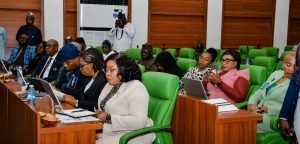
She said the request was first submitted on 6 August 2025 but was initially rejected because the required supporting documents were not attached.
According to her, after the necessary documentation was later presented, approval was granted for a workforce comprising 14 existing personnel already engaged by the council and an additional 300 positions.
She said: “The Council in question submitted a request to the OHCSF for approval of its organisational structure on the 6th of August 2025 without providing the requisite documents.
“The request was earlier declined due to non-submission of relevant documents. However, after the required documents were submitted, approval for a total workforce of 314 positions, comprising 14 existing officers engaged by the Council and 300 additional positions, was issued.”
The Head of Service also disclosed that official records showed the approved establishment was collected by a representative of the council.
“The records of the Organisation Design and Development Department further confirmed that the authorised establishment was collected on behalf of the Council by a certain gentleman who represented the PEAC/PFIPC,” she stated.
Walson-Jack further revealed that officials representing the council took part in the 2025 Annual Manpower Budget Defence Exercise.
According to her, “Representatives of the Council participated in the 2025 Annual Manpower Budget Defence Exercise. They were led by a lady who identified herself as the Deputy Director of Administration and appeared before officers of the Organisation Design and Development Department during the organisation’s bilateral manpower defence.”
She explained that following the engagement, the request was processed in line with existing administrative procedures and subsequently approved.
However, she insisted that the Office of the Head of Service never posted any civil servants to the council.
“Following the bilateral engagements with the Council’s representatives during the 2025 Annual Manpower Project Defence Exercise, the request was reviewed by officers of the Organisation Design and Development Department and, in accordance with the Office’s established administrative procedure, the fourth batch, comprising 88 Ministries, Extra-Ministerial Departments and Agencies, including the Agency in question, was approved on the 18th of July 2025 by the Permanent Secretary, Common Services Office, who was overseeing the Office of the Head of the Civil Service of the Federation at that time.
“There was no deployment of officers by the OHCSF to the Council because recruitment and placement of staff in agencies are not within the responsibility of the Office,” she said.
She also clarified that staff salaries and allowances are handled by other statutory agencies.
“Remuneration and emoluments of personnel are under the purview of the National Salaries, Incomes and Wages Commission, while the Revenue Mobilisation Allocation and Fiscal Commission is responsible for the remuneration of political appointees and chief executive officers,” she explained.
Walson-Jack further disclosed that the office occupied by the council at the Federal Secretariat belonged to the Office of the Secretary to the Government of the Federation (OSGF).
“The office occupied by the Council in Phase Three of the Federal Secretariat forms part of the office spaces allocated to the Office of the Secretary to the Government of the Federation through a letter dated 16 November 2023,” she said.
She maintained that every matter relating to the council’s establishment, administration and supervision falls under the jurisdiction of the OSGF and other relevant government institutions.
The Head of Service also confirmed that two officials linked to the approval process had been released to the Nigeria Police for questioning.
According to her, Mrs Patricia Akhigbe, under whose supervision the approval was processed, alongside Mr Jacob Oluwafemi David, are currently assisting investigators.
She disclosed that the approval process was carried out manually because the electronic document management system was not functioning at the time.
“The approval was done using physical files because the management system was down during the period. I personally discovered that all the documents relating to the Council were fake, although this was after the matter became public,” she added.
Also testifying before the committee, Governor of the Central Bank of Nigeria (CBN), Yemi Cardoso, represented by the Director of Banking Services, Hamisu Abdullahi, disclosed that the apex bank opened two accounts for the council.
He said one was a domiciliary dollar account while the other was a pound sterling account.
According to him, both accounts have remained inactive since they were created.
“The mandate to open the accounts was received on 30 July 2025 from the Office of the Accountant-General of the Federation through a letter dated 29 July 2025. The necessary verification was conducted, but no further instruction followed. There has been no inflow or outflow on both accounts from inception till date,” he said.
Chairman of the Independent Corrupt Practices and Other Related Offences Commission (ICPC), Dr Musa Aliyu, informed lawmakers that the anti-graft agency had already launched its own investigation.
He appealed for more time to conclude preliminary findings.
“We have commenced investigation and collecting documents as well as interacting with officials that we feel are necessary in order to help us unravel this issue.
“I urge the Ad-hoc Committee to give the Commission a little time, maybe between today, tomorrow and the next day, so that we can return and inform the House how far we have gone and what we have discovered,” he said.
Declaring the investigative hearing open, Speaker of the House of Representatives, Rt. Hon. Tajudeen Abbas, represented by the House Majority Leader, Rep. Julius Ihonvbere, said the investigation was aimed solely at establishing the facts.
“The discussions surrounding the Presidential Foreign Investment Promotion Council have dominated media reports, public commentary and policy debates regarding its legal status, institutional mandate, operational framework, relationship with existing agencies and, importantly, its appearance within the Federal Budget Framework despite widespread uncertainty regarding its establishment.
“These questions deserve clear, factual and authoritative answers. The House of Representatives has therefore not constituted this Committee to validate speculation or amplify controversy. Neither is this a political exercise. Our objective is simply to establish the facts,” he said.
He stressed that the investigation was about safeguarding public institutions rather than targeting individuals.
“This investigation is not about any individual. It is about the integrity of public administration. Conduct your proceedings with fairness and, as much as possible, protect the rights of every witness. Give every interested party an opportunity to be heard. Follow the evidence wherever it leads. Let your conclusions be guided neither by public pressure nor political convenience, but by facts, the Constitution and the law.
“The credibility of parliamentary oversight rests not on the conclusions it reaches, but on the integrity of the process by which those conclusions are reached. As the People’s House, we are committed to ensuring that every institution entrusted with public authority is subject to public accountability,” he said.
At the close of proceedings, the committee resolved to invite the Secretary to the Government of the Federation, Ministers of Finance, Budget and Economic Planning, Attorney-General of the Federation, Accountant-General of the Federation, Director-General of the Budget Office, Inspector-General of Police, as well as heads of several key agencies, including the Federal Character Commission, Revenue Mobilisation Allocation and Fiscal Commission, and Fiscal Responsibility Commission.
The committee also directed the Inspector-General of Police to ensure the appearance of the two officials from the Office of the Head of the Civil Service to provide further explanations on their roles in the matter when the investigation resumes on Tuesday.


The Central Bank of Nigeria has commenced applications for the second cohort of its regulatory sandbox programme, inviting innovators, financial institutions, virtual asset service providers, fintechs and technology companies to submit proposals for supervised testing of new financial products and services.
The application window opened on August 12, 2026, and will close on August 31, 2026, according to a statement signed by the acting Director of Corporate Communications and Investor Relations Department, Hakama Sidi-Ali.
The CBN said the second cohort builds on its efforts to promote responsible innovation within Nigeria’s financial system while maintaining consumer protection, financial stability and market integrity.
Under Cohort 2, the programme will operate through two dedicated testing tracks.
The first is the virtual asset service provider track, which is designed to support innovative solutions involving virtual assets, stablecoins, payments, settlement, custody, wallets and related financial infrastructure that require supervised live testing.
The second is the data-enabled financial services track, which will support innovations that use secure digital infrastructure and permission-based data sharing to improve financial inclusion, payments, credit, risk management, operational efficiency and consumer outcomes.
The CBN explained that its regulatory sandbox provides a controlled environment where eligible participants can test innovative financial products, services, business models and enabling technologies under the supervision of the apex bank.
According to the bank, the arrangement allows regulators and innovators to engage throughout the testing process, enabling the CBN to better understand emerging technologies while allowing companies to test their solutions within clearly defined regulatory parameters.
The apex bank said the launch of the second cohort reflects its commitment to developing a transparent, proportionate and risk-based regulatory framework capable of encouraging innovation without compromising monetary and financial stability.
It added that lessons gathered from supervised testing would contribute to the development of regulatory and supervisory frameworks for Nigeria’s evolving digital financial ecosystem.
Eligible applicants will be assessed based on several criteria, including the level of innovation, readiness for controlled live testing, potential benefits to consumers or the market, governance structures, risk management capacity and the suitability of their proposed testing plans.
Successful participants will conduct supervised testing within parameters agreed with the CBN.
The bank said the testing process would include safeguards covering consumer protection, operational resilience, cybersecurity and regulatory reporting.
However, the CBN stressed that participation in the regulatory sandbox should not be interpreted as a licence or approval to operate outside the specific testing parameters approved by the bank.
It said the programme is intended to facilitate responsible experimentation, strengthen engagement between regulators and innovators, and support evidence-based policymaking in accordance with the CBN’s statutory mandate.
Interested organisations are required to submit their applications through the CBN regulatory sandbox portal before the August 31 deadline.
The latest initiative comes as Nigeria’s financial sector continues to see rapid development in digital payments, fintech services, virtual assets and data-driven financial products, increasing the need for regulatory frameworks that can accommodate emerging technologies while managing associated risks.

Finally, Cross River State has recorded a significant breakthrough in its long-running quest for recognition as an oil-producing state, following the emergence of its onshore petroleum assets within the Nigerian Upstream Petroleum Regulatory Commission’s (NUPRC) 2025 Licensing .
This development has opened a new chapter in oil and gas exploration in the state, with three petroleum blocks in the Calabar Flank—PPL 2A61, PPL 2A62 and PPL 2A45—included in the licensing process. The NUPRC has described the Calabar Flank as a historically underexplored geological province with significant potential for future petroleum discoveries.
The development is particularly significant for the Ikang, Calabar and Odukpani–Mbiabo petroleum corridors, where previous exploration activities produced wells, including Ikang-1 and the Calabar wells, as well as long-documented capped and abandoned wells around Mbiabo Ikot Offiong. With the latest licensing cycle, these historical petroleum frontiers could now be subjected to modern seismic interpretation, subsurface modelling, exploratory drilling and contemporary oil and gas technologies.
At the NUPRC commercial bid conference held on July 21, 2026, 31 companies emerged winners of 37 oil and gas blocks. Saratoga emerged as the successful bidder for PPL 2A45, Clinton Oil Field for PPL 2A62, while Nikstallis won PPL 2A61.
Final awards have been made, while payment of the applicable signature bonuses is ongoing and said to be nearing completion in line with the provisions of the Petroleum Industry Act.
The successful companies are also processing their entry into Cross River State.
The development represents more than another licensing exercise for Cross River. It signals a shift in the state’s petroleum narrative from historical evidence and political agitation towards regulated investment, exploration and potential commercial production.
The participation of new investors in the Calabar Flank indicates that the area is increasingly being recognised within Nigeria’s upstream petroleum architecture as a legitimate frontier for oil and gas exploration.Geographic Reference The development is also being viewed as a significant milestone for Governor Bassey Edet Otu, whose administration has consistently pushed for recognition of Cross River’s oil-producing status and greater participation in Nigeria’s petroleum economy.
Governor Otu’s administration has continued to place the state’s petroleum claims within the national policy and development conversation, helping sustain pressure for recognition based on geological, technical and documentary evidence.
The latest development shifts the central question from whether Cross River possesses petroleum potential to how the state can responsibly develop those resources and convert them into revenue, investment, employment and sustainable development.
From Oil Status to an Oil Economy
The next challenge for Cross River will go beyond securing recognition as an oil-producing state.
The state will need to develop the institutional and economic structures required to capture value across the petroleum chain, including exploration, drilling, production, gas development, infrastructure, local content, technical skills, host-community development, environmental protection and petroleum-linked industrial investment. The Ikang–Calabar–Odukpani–Mbiabo corridor could become an important component of this emerging energy economy.
From Petitions to Regulatory Validation Cross River’s campaign for oil-producing-state recognition predates the current licensing round. The state government has made a sustained series of petitions and representations to the President of Nigeria, backed by documentary, geological and technical evidence relating to onshore and offshore oil wells and derivation interests.
The state’s position has consistently been that its petroleum resources and verified well locations deserve appropriate recognition within Nigeria’s derivation and upstream regulatory framework.Geographic Reference The emergence of Cross River’s onshore petroleum potential within the NUPRC licensing architecture therefore represents a major milestone in that long-running campaign. It also strengthens the state’s position as it pursues the next stage of its petroleum claim—offshore recognition.
Offshore Frontier Remains Attention is now expected to shift towards the offshore component of Cross River’s petroleum claim. According to the state’s technical position, more than 119 offshore well coordinates have been verified and are awaiting presidential consideration and approval. If approved and formally incorporated into the relevant national petroleum and derivation framework, the offshore recognition could further strengthen Cross River’s position in Nigeria’s petroleum economy and potentially improve its revenue prospects. The strategic implication is significant: while onshore validation provides an important foundation, offshore accreditation could complete a broader petroleum recognition being pursued by the state.
Cross River will therefore need to consolidate the current momentum through a coordinated petroleum investment and development strategy that links exploration with infrastructure, community development, local enterprise, technical manpower and long-term economic planning. The wells of yesterday may have been capped, but Cross River’s petroleum future is being reopened. The ultimate objective, however, should go beyond crude oil and gas production. The state must ensure that its petroleum resources translate into broad-based economic prosperity, sustainable development and improved opportunities for its people.

The naira remained broadly stable against the United States dollar on Wednesday, August 12, 2026, with the official Nigerian Foreign Exchange Market (NFEM) rate trading around the mid-₦1,360 band while the parallel market hovered in the low-₦1,400 range.
Data from the Central Bank of Nigeria’s NFEM platform showed the official exchange rate at about ₦1,364 per dollar, reflecting only marginal movement from recent sessions. The official rate is derived from the volume-weighted average of trades executed on the market and serves as Nigeria’s benchmark exchange rate.
Currency dealers in Lagos said the parallel market (black market) traded at approximately ₦1,405 per dollar for buying and ₦1,415 per dollar for selling on Wednesday morning, keeping the spread between the official and unofficial markets relatively narrow compared with the sharp gaps recorded in 2024 and early 2025. Recent market trackers have shown street-market quotes clustering around the ₦1,410 region.
At the prevailing official rate, $100 exchanged for roughly ₦136,400, while $1,000 was worth about ₦1.364 million. In the parallel market, the same amounts were valued at about ₦141,500 for $100 and ₦1.415 million for $1,000.
Market participants attributed the relative calm to continued liquidity management by the Central Bank of Nigeria and steady foreign-exchange supply through the formal market. Analysts also noted that importer demand has remained moderate, helping the naira hold within a relatively tight range in recent weeks.
Reuters reported that traders expect the naira to remain broadly stable in the near term, supported by the CBN’s presence in the market and efforts to ease demand pressure for dollars. The report placed recent official-market trading around the ₦1,360 level and street trading near ₦1,425 per dollar.
The official market has traded mostly between ₦1,362 and ₦1,370 per dollar in recent sessions, according to market data compiled by Proshare, underscoring the currency’s recent consolidation around the ₦1,360 range.
For Nigerians monitoring exchange rates for travel, school fees, imports, or international payments, the key levels to watch today are about ₦1,364/$ at the official NFEM window and ₦1,415/$ in the parallel market.

CBN Opens Applications for Second Cohort Of Regulatory Sandbox Programme

Just in: Finally, after years of litigations, Cross River, again becomes oil producing state

Just in: Three days to election, PDP candidate pulls out of guber race




-

 News12 hours ago
Former President, Goodluck Jonathan Gets Chieftaincy Title In Bauchi
-

 News12 hours ago
Osun 2026: ‘Trump’s People Have Reached Out’ — Davido
-

 News12 hours ago
Okpebholo Sacks SUBEB Chairman
-
 News12 hours ago
Shehu Sani Reacts As Davido Appeals To Trump Over Osun Election
-

 News12 hours ago
Osun Poll: Adeleke Demands Fadahunsi’s Arrest Over Alleged Killings Threat Against Accord Members
-

 Foreign12 hours ago
Trump Hid In Catering Truck During Secret Plane Swap Over Iran Threat – Report
-
 News12 hours ago
Katsina deploys 23 APCs, drones, 200 patrol vans against banditry
-

 News11 hours ago
ASUU declares indefinite strike in Ondo varsities