
News
SAD! Absucted victims, 2 babies born in terrorists’ camp d*e

- /home/naijuinz/public_html/wp-content/plugins/mvp-social-buttons/mvp-social-buttons.php on line 27
https://naijablitznews.com/wp-content/uploads/2026/07/Screenshot_20260726-090841.jpg&description=SAD! Absucted victims, 2 babies born in terrorists’ camp d*e', 'pinterestShare', 'width=750,height=350'); return false;" title="Pin This Post">
- Share
- Tweet /home/naijuinz/public_html/wp-content/plugins/mvp-social-buttons/mvp-social-buttons.php on line 72
https://naijablitznews.com/wp-content/uploads/2026/07/Screenshot_20260726-090841.jpg&description=SAD! Absucted victims, 2 babies born in terrorists’ camp d*e', 'pinterestShare', 'width=750,height=350'); return false;" title="Pin This Post">


By Kayode Sanni-Arewa
No fewer than seven victims abducted during the April attack on worshippers in Ariko community, Kachia Local Government Area of Kaduna State, have reportedly died in captivity, as fresh accounts from a recently freed captive paint a grim picture of worsening humanitarian conditions inside a terrorists’ camp where dozens of residents have now spent more than three months.
The latest revelation was made by former media aide to the late Kaduna State Governor, Sir Patrick Ibrahim Yakowa, Mr. Reuben Buhari, in a post on his Facebook page, citing information obtained from one of the victims who recently regained freedom. Blueprint reports
According to Buhari, the freed captive disclosed that seven of the 37 persons kidnapped from Ariko village have died since they were taken away during the Easter Sunday attack.
The deceased were said to include two men, two women and three children.
*Bodies allegedly dumped on hillside*
According to the survivor’s account, the deceased victims were not given proper burials.
Instead, the bodies were allegedly dragged to a nearby slope and abandoned.
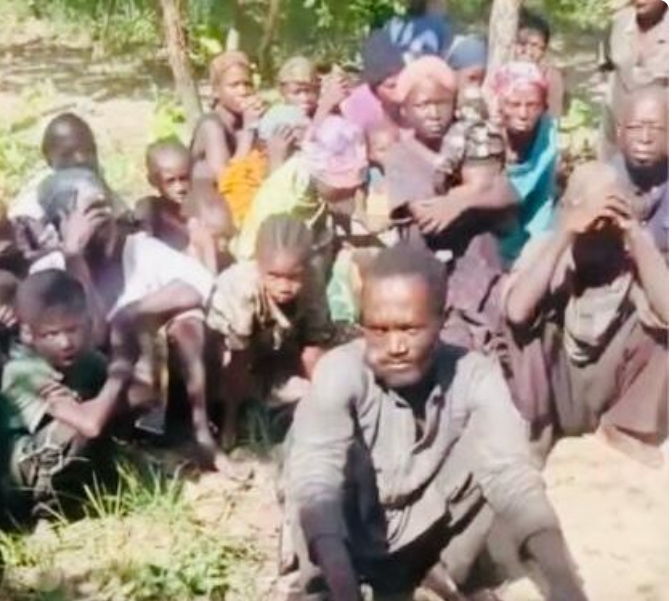
Buhari also shared a photograph of the 37 abducted worshippers which he said was released by the kidnappers six days after the abduction, identifying one of the men in the image as among those who had reportedly died in captivity.
The latest account could not be independently verified as of the time of filing this report.
*Babies born in captivity do not survive*
The survivor also disclosed that the baby delivered by one of the abducted women inside the terrorists’ camp has died.
The birth had earlier drawn widespread attention after another escapee recounted how fellow female captives were forced to assist the woman during labour without medical supplies or professional care.
According to the earlier testimony, the captors allegedly refused to provide a knife or blade to cut the baby’s umbilical cord, forcing one of the women to use her teeth.
The newborn reportedly survived for almost three weeks before dying in the camp.
The latest account further revealed that another pregnant woman abducted from Awon village on April 20 also gave birth while in captivity about two weeks ago.
However, the baby reportedly died the following day.
The 11 victims abducted from Awon village are now said to be held in the same camp as the Ariko victims.
*Victims sleep in the open*
The recently freed captive described extremely harsh living conditions inside the camp.
According to the account, the abductees sleep in the open without any form of shelter, leaving them exposed to rain, cold and harsh weather conditions.
Whenever it rains, they are said to spend the night on wet ground.
The survivor added that many of the remaining children in captivity are ill, with deteriorating health conditions caused by prolonged exposure, hunger and lack of medical attention.
Earlier testimonies from other escapees had also described widespread malnutrition, skin infections and poor sanitation inside the camp.
One 65-year-old woman who escaped after spending 54 days in captivity had narrated how captives survived on boiled leaves, mangoes and stream water, while many were deliberately kept barefoot to prevent escape attempts.
She eventually regained freedom after trekking barefoot through the forest for three days.
*More than 100 days in captivity*
According to Buhari, the 37 victims abducted from Ariko village have now spent 110 days in captivity, while the 11 residents kidnapped from neighbouring Awon village have remained in the same camp for 95 days.
He appealed to Nigerians to continue praying for the victims and their families, expressing hope that they would soon regain their freedom.
The latest development comes amid persistent attacks on communities in Kachia Local Government Area.
Only recently, terrorists invaded Ungwan Atiku village, killing one resident and abducting 11 others, including three nursing mothers and their suckling babies, further deepening concerns over the worsening security situation in Southern Kaduna.
Residents have repeatedly called on security agencies to intensify rescue operations and dismantle criminal camps operating in forests across the area to secure the release of those still being held.
Efforts to obtain the reaction of the Kaduna State Police Command were unsuccessful, as the Command’s Public Relations Officer, DSP Mansir Hassan, neither answered telephone calls nor responded to a text message seeking his comments before this report was filed.
News
ISWAP Snr Finance Chief Surrenders With Two Sons, AK-47 as 46 Terrorists, Families Lay Down Arms – Army


A senior finance commander of the Islamic State West Africa Province (ISWAP) has surrendered to troops of the Nigerian Army alongside his two sons and an AK-47 rifle, in what military authorities described as another significant breakthrough in the ongoing counter-insurgency campaign in the North-East.
The Army revealed that the high-ranking ISWAP operative was among 46 terrorists and their family members who voluntarily laid down their arms following sustained military offensives against insurgent strongholds.
According to military authorities, the surrender is part of the continued success of coordinated land and air operations that have weakened the operational capabilities of terrorist groups across Borno State and adjoining areas.
The surrendered individuals reportedly included fighters, women and children, with the senior ISWAP finance chief arriving with his two sons and a serviceable AK-47 rifle.
Military sources said preliminary intelligence indicates that persistent offensives, destruction of terrorist logistics bases, and mounting pressure from troops have continued to force insurgents to abandon their camps and surrender.
The Nigerian Army reaffirmed its commitment to sustaining ongoing operations aimed at dismantling terrorist networks, restoring peace to affected communities, and encouraging more insurgents willing to renounce violence to surrender through established deradicalisation and rehabilitation programmes.
Security analysts have described the latest surrender as another indication that sustained military pressure is disrupting the command structure and financial operations of terrorist organisations operating in the North-East.
…as NDLEA nabs kingpins
. Recovers 401 military grade ammunition concealed in palm oil kegs, others in Kaduna, Katsina; seizes UK-bound tramadol consignment in black soup containers
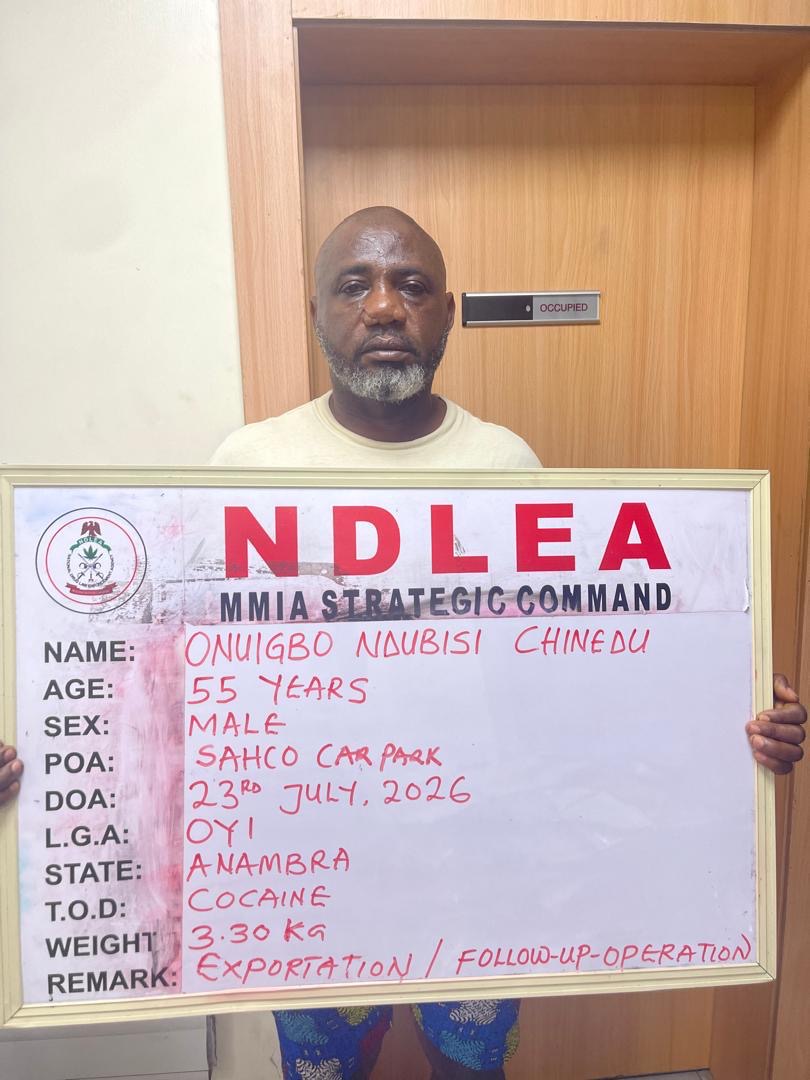
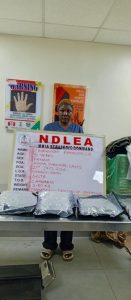
A 55-year-old businessman, Onuigbo Ndubisi Chinedu who deals in clothing at the popular Balogun market, Lagos Island, has been arrested by operatives of the National Drug Law Enforcement Agency (NDLEA) over attempt to export 3.30 kilograms of cocaine concealed in walls of cartons used to package foodstuffs going to the United kingdom.
Onuigbo was arrested on Thursday 23rd July 2026 following the interception of his cocaine consignment at the export shed of the Lagos airport the previous day, Wednesday 22nd July by NDLEA operatives. In the course of investigation, three cargo agents: Nkwor Onyekachukwu Justina; Adeleke Abiola Taoheed; and Ukanwa Grace Pilgrim, who handled the shipment were initially arrested leading to the arrest Kenneth Okakpu who delivered the consignment to the cargo agents for shipment to the UK.
Okakpu’s arrest provided the lead to identifying Onuigbo as the kingpin behind the syndicate and his eventually arrest while attempting to send another consignment of cocaine to the UK.
A 31-year-old entrepreneur Emmanuella Chukwu-Edo also involved in illicit drug trafficking was on Tuesday 21st July arrested at her Surulere Lagos residence by NDLEA operatives following the seizure of her consignment of 2.80kg Loud, a synthetic strain of cannabis, which arrived from the United States aboard a United Airlines flight on Monday 20th July.
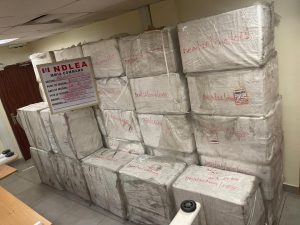
In another interdiction operation at the Lagos airport, a total of Two Million Two Hundred and Forty (2,240,000,000) pills of Tapentadol 250mg worth over N2.2 billion in street value were recovered from a shipment from India aboard an Air Maroc flight during a joint examination of the cargo on Friday 24th July. The exercise was based on an intelligence received and processed by NDLEA. This came on the heels of the seizure of a consignment of tramadol buried in containers of black soap heading to the UK. The shipment was intercepted by NDLEA operatives at a courier firm in Lagos on Wednesday 22nd July.
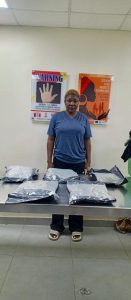
At the Apapa seaport in Lagos, a container of three vehicles used to conceal a total number of 4,777 sachets of Canadian Loud weighing 2,388.5kg worth over N7.1 billion in street value, was uncovered during a joint examination of the shipment on Monday 20th July.
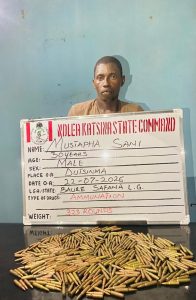
A suspect Mustapha Sani, 30, was on Wednesday 22nd July nabbed by NDLEA operatives
on patrol operation at Baure, Safana LGA, Katsina state where he was found with 323 rounds of military grade ammunition consisting of 200 pieces of 7.62mm and 123 rounds of 7.6mm neatly concealed.
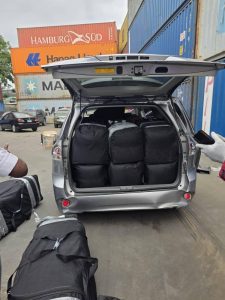
Another suspect, Abubakar Amadu, 30, was arrested by NDLEA officers on stop and search operation at Jere, along Abuja-Kaduna expressway where he was found with 73 RLA, 7.62mm ammunition hidden in kegs of red oil. Both suspects have been handed over to the relevant security agency for further investigation.
In Edo state, raid operations at Ilushi community, Esan South East LGA, on Sunday 19th July led to the seizure of 1,286kg cannabis and 86kg cannabis seeds from a warehouse while Ojore Onweze, 45, was caught with 60kg skunk and George Agwumede, 30, nabbed with 13kg of the same substance.
With the same vigour, Commands and formations of the Agency across the country continued their War Against Drug Abuse (WADA) sensitization activities to schools, worship centres, work places and communities among others in the past week. These include: WADA sensitization lecture to students and staff of Government Day Secondary School, Sabon Wuse, Niger state; Government Girls Secondary School, Shekara, Kano; and Otto Primary School, Ebute Metta, Lagos state, among others.
While commending the officers and men of DOGI, MMIA, Apapa, Edo, Kaduna, and Katsina Commands for the various successful operations, Chairman/Chief Executive Officer of NDLEA, Brig. Gen. Mohamed Buba Marwa (rtd) enjoined them and their colleagues across the country to continue with the ongoing balanced approach to the drug control efforts of the Agency.


The Management of Confluence University of Science and Technology, Osara, has expelled two students for alleged involvement in gay practice and rusticated four others for one academic session over a campus fight.
According to a statement issued on Friday by the university’s Information and Protocol Unit, the sanctions were ratified during the 31st Regular Meeting of the University Senate following recommendations from the Students’ Disciplinary Committee.
The statement read, “The Management of Confluence University of Science and Technology (CUSTECH), Osara, has approved the expulsion of two students for involvement in gay practice and the rustication of four others for one academic session over acts of fighting on campus.”
The affected students were notified in letters signed by the Deputy Registrar, Academics, Eli Gbadafu, copies of which were made available to the Information, Public Relations and Protocol Unit of the university.
The statement further read, “The institution stated that the disciplinary actions were taken in accordance with the provisions of the Students’ Handbook, Second Edition, as amended in 2025.”
Onumoko Hamza of the Biology Education department and Abdulazeez Eneji of the Mining Engineering department were expelled over gay practice.
Four other students were rusticated for one academic session over fighting. They are Favor Akowe of the Microbiology department, Simbiat Babamuharuna of the Biology department, Zainab Omayoza of the Biochemistry department, and Sukura Bukola, also of the Biochemistry department.
The statement read, “The University Management reiterated its commitment to maintaining discipline, order and a conducive environment for teaching and learning.”
It added, “Management warned that it would not hesitate to take decisive disciplinary action against any student found guilty of violating the rules and regulations of the University.”
The statement read further, “Students are therefore advised to familiarise themselves with the provisions of the Students’ Handbook and conduct themselves in accordance with the established rules and regulations of the University.”

ISWAP Snr Finance Chief Surrenders With Two Sons, AK-47 as 46 Terrorists, Families Lay Down Arms – Army

SAD! Absucted victims, 2 babies born in terrorists’ camp d*e

Heavy haul: N10bn Cocaine, Loud, opioids intercepted at Lagos ports(PHOTOS)




-

 News18 hours ago
‘One of my outstanding ministers’ – Tinubu hails Umahi at 63
-

 News18 hours ago
Obi is a man of integrity, nobody should doubt his one term promise- Kwankwaso
-

 Entertainment8 hours ago
Nigeria’s Education Threshold Should Be Beyond Akara & Kuli Kuli – Seyi Awolowo
-

 News8 hours ago
Gumi Questions Why No One Has Visited Boko Haram, Bandits to Negotiate Peace
-

 Metro8 hours ago
Police Return Stolen Toyota Highlander to Owner 5 Years After Theft
-
 Foreign8 hours ago
Iranian Commander Issues “One-for-One” Threat to US Over Citizen Deaths
-

 Sports18 hours ago
Arsenal in surprise drive for Vinícius Jr. amid Real Madrid contract uncertainty
-

 Foreign8 hours ago
Biya’s Long Absence Raises Fresh Questions In Cameroon