
News
ECOWAS Parliament Pushes Bold Reforms to Unlock MSME Growth Across West Africa

- /home/naijuinz/public_html/wp-content/plugins/mvp-social-buttons/mvp-social-buttons.php on line 27
https://naijablitznews.com/wp-content/uploads/2026/07/IMG-20260727-WA0010-1000x600.jpg&description=ECOWAS Parliament Pushes Bold Reforms to Unlock MSME Growth Across West Africa', 'pinterestShare', 'width=750,height=350'); return false;" title="Pin This Post">
- Share
- Tweet /home/naijuinz/public_html/wp-content/plugins/mvp-social-buttons/mvp-social-buttons.php on line 72
https://naijablitznews.com/wp-content/uploads/2026/07/IMG-20260727-WA0010-1000x600.jpg&description=ECOWAS Parliament Pushes Bold Reforms to Unlock MSME Growth Across West Africa', 'pinterestShare', 'width=750,height=350'); return false;" title="Pin This Post">


By Gloria Ikibah
The Parliament of the Economic Community of West African States (ECOWAS) has called for urgent policy reforms to strengthen Micro, Small and Medium Enterprises (MSMEs), describing them as the backbone of the region’s economy and a critical driver of job creation, innovation and regional integration.
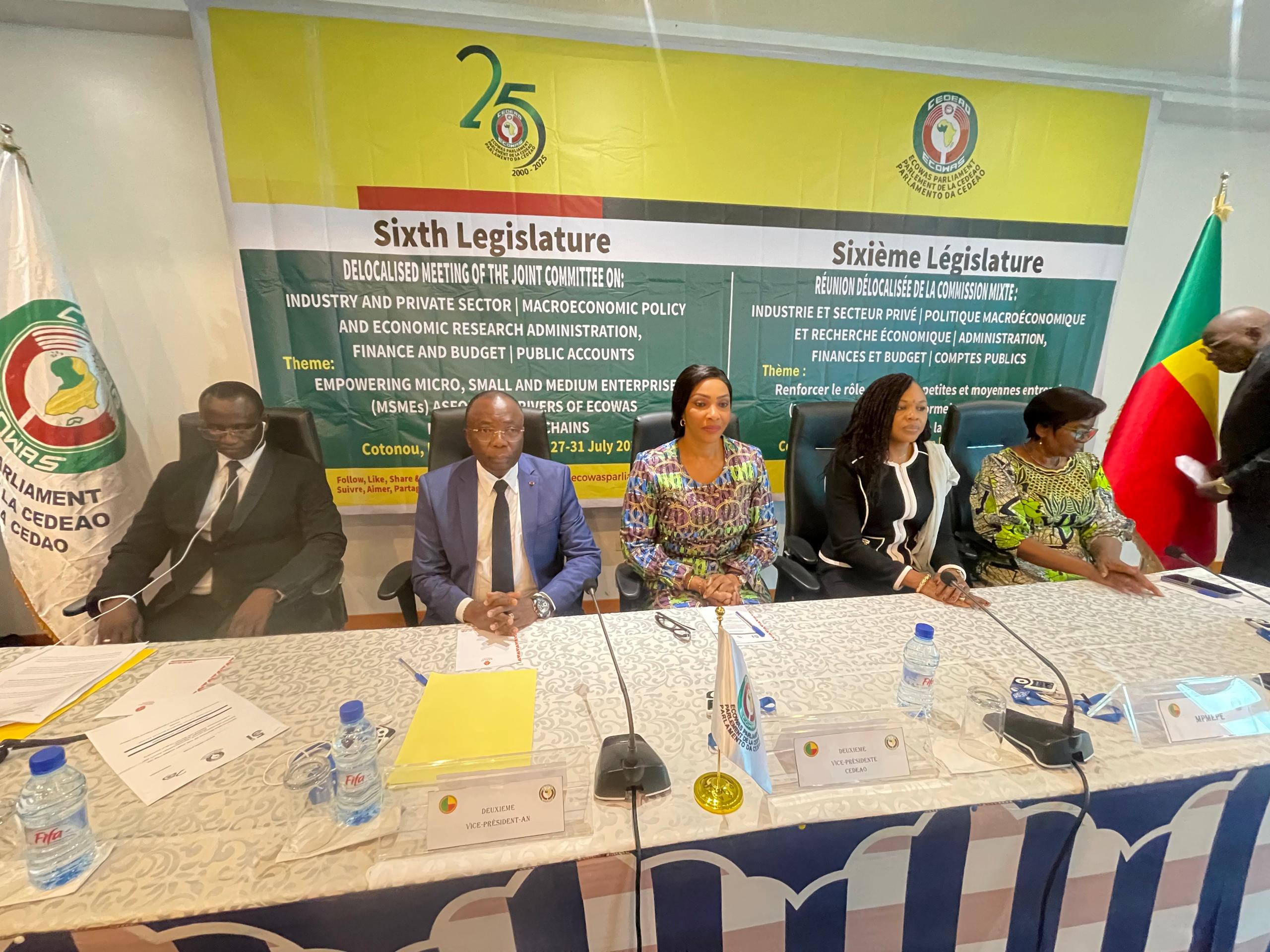
The call was made at the opening of the Joint Committee meeting on Industry and Private Sector, Macroeconomic Policy and Economic Research, Administration, Finance and Budget, and Public Accounts on Monday, in Cotonou, Republic of Benin.
The meeting is focused on developing strategies to empower MSMEs as formal drivers of regional value chains.
Speaking on behalf of the joint committees, Co-Chairperson Hon. Alhagie Darbo said MSMEs play a central role in the economic life of West Africa but continue to face major challenges because many operate outside the formal sector.
He said: “Across our region, Micro, Small and Medium Enterprises constitute the backbone of local economies. It generates employment, stimulate innovation, promote entrepreneurship, empower women and young people, and facilitate cross-border trade.
“Yet, despite their enormous contribution, a significant proportion of these enterprises continue to operate informally, limiting their access to finance, markets, technology, business support services and legal protection.
“It is estimated that the informal sector accounts for nearly 90% of economic activities and employs not less than 60% of our labour force across member states.
“While this demonstrates the entrepreneurial spirit of our people, it also highlights the urgent need to create enabling policies that encourage formalisation, improve productivity and integrate MSMEs into regional and continental value chains.”
Darbo stressed that empowering small businesses goes beyond economic growth, describing it as an essential tool for reducing poverty and achieving sustainable development across the sub-region.
He urged lawmakers and stakeholders to focus on practical reforms capable of removing barriers that continue to limit the growth of small businesses.
“As representatives of the peoples of West Africa, we have a collective responsibility to identify practical policy measures that will remove barriers confronting MSMEs and unlock their full potential. Formalising and strengthening these enterprises is not merely an economic imperative; a pathway to sustainable development and poverty reduction.
“Distinguished Members and other participants, the adoption of ECOWAS Vision 2050 provides us with a clear strategic framework for transforming our Community into a peaceful, prosperous and fully integrated region driven by its people.
“Achieving this vision requires stronger institutions commitment, including enabling business environment where MSMEs can thrive, compete and participate effectively in regional and beyond”, he added.
He also challenged participants to ensure the meeting produces practical recommendations capable of transforming the region’s business environment.
“Our discussions over the coming days should therefore move beyond identifying challenges. We must focus on developing practical recommendations that will support harmonised policies, improve access to finance, enhance digital transformation, facilitate intra-regional trade, strengthen productive capacities, and promote the participation of MSMEs in regional value chains under the ECOWAS Trade Liberalisation Scheme and the African Continental Free Trade Area.
“I am confident that the wealth of experience represented in this room including Honourable Members, policy experts, representatives of the private sector and development partners will generate insightful discussions and actionable recommendations capable of advancing the economic transformation of our Community”, Hon. Darbo stated.
Declaring the meeting open, Speaker of the ECOWAS Parliament, Hon. Hadja Memounatou Ibrahima, represented by the Second Deputy Speaker, Hon. Adjaratou Traore Coulibaly, described MSMEs as indispensable to the region’s economic growth and development.
She noted that strengthening small businesses would not only improve livelihoods but also contribute to tackling insecurity across the region by creating more opportunities for women and young people.
The Speaker observed that empowering entrepreneurs through targeted support and favourable policies would help reduce unemployment, promote inclusive growth and strengthen social stability in ECOWAS member states.
The week-long meeting is expected to produce recommendations aimed at harmonising regional policies, improving access to finance, promoting digital innovation, strengthening intra-African trade and expanding the participation of MSMEs in regional value chains under the ECOWAS Trade Liberalisation Scheme and the African Continental Free Trade Area (AfCFTA).
Participants expressed optimism that implementing the outcomes of the meeting would strengthen the economies of ECOWAS member states, improve regional competitiveness and position West Africa as a stronger player in the global economy.

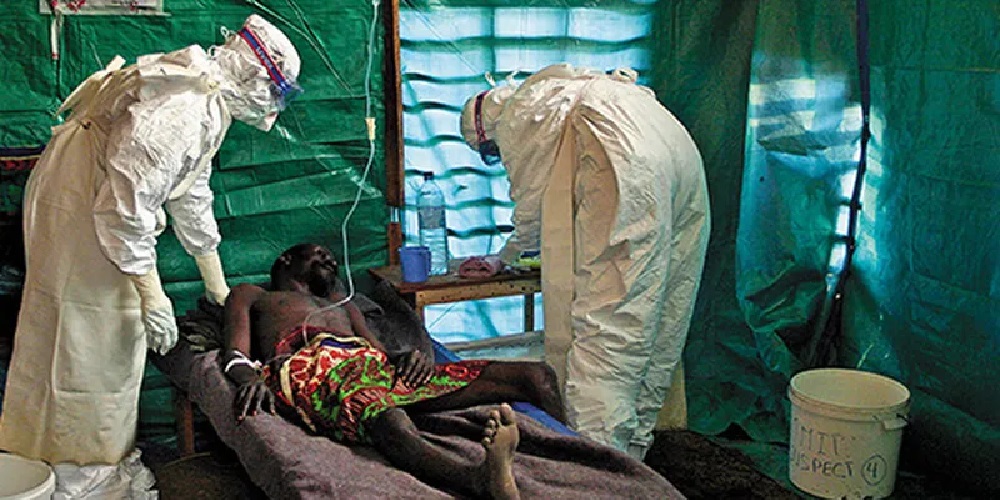
The Democratic Republic of the Congo (DRC) is battling what health officials have described as the fastest-growing Ebola outbreak on record, with more than 1,400 people reported dead and over 3,200 confirmed cases.
According to government figures released on July 6, the death toll had risen to 1,405, while confirmed infections surpassed 3,200 since the outbreak was declared on May 15.
Health officials said the outbreak is spreading faster than any previous Ebola epidemic. During the 2013–2016 West Africa outbreak, which killed more than 11,000 people from over 28,000 confirmed cases, it took approximately eight months for the death toll to reach 1,000.
In the current outbreak, the same milestone was reached in less than 10 weeks.
The outbreak marks the 17th recorded Ebola outbreak in the DRC but only the third caused by the Bundibugyo strain of the virus. There is currently no approved vaccine or treatment specifically for the strain.
The World Health Organisation (WHO) has warned that the actual number of infections could be between two and four times higher than official figures.
Health authorities are also concerned that approximately 80 per cent of newly reported cases are emerging outside known chains of transmission, making it increasingly difficult to trace infections and contain the spread.
The outbreak has been further complicated by industrial action among healthcare workers over unpaid salaries and allowances.
About 100 doctors, nurses and security personnel at the Elikya Ebola Treatment Centre in Bunia, Ituri Province, reportedly stopped work and staged protests over unpaid performance bonuses. The disruption affected one of the region’s key Ebola response centres.
Healthcare workers at Bunia General Hospital, the largest medical facility in the region, also reportedly went on strike over unpaid salaries, with some staff telling the Associated Press that they had not received their wages since joining the Ebola response.
Director-General of the Africa Centres for Disease Control and Prevention, Jean Kaseya, told Sky News that a lack of resources was worsening the situation.
“These are people dying,” he said. “They are dying because we don’t have vaccines, we don’t have medicine, we don’t have funding.”
Ebola is transmitted through direct contact with the blood or bodily fluids of infected people or animals, as well as contaminated objects. The virus can also spread through contact with the bodies of people who have died from the disease.
Symptoms typically develop between two and 21 days after infection and may initially include high fever, severe muscle and joint pain, headaches and a sore throat.
As the disease progresses, patients may experience vomiting, diarrhoea, skin rashes, liver and kidney failure and, in severe cases, internal and external bleeding.
The Bundibugyo strain has an estimated fatality rate of between 30 and 50 per cent.
Despite the absence of an approved vaccine for the strain, researchers have begun testing an experimental vaccine developed using technology similar to that used in the Oxford-AstraZeneca COVID-19 vaccine.
According to the BBC, the first volunteer received the experimental vaccine last week as part of an early-stage clinical trial.
Meanwhile, the International Organisation for Migration (IOM) has warned that the movement of Ebola victims’ bodies between different parts of the country for funerals and burials could further accelerate the spread of the virus.
The organisation stressed that Ebola remains highly infectious after death, making safe and controlled burial practices critical to efforts to contain the outbreak.
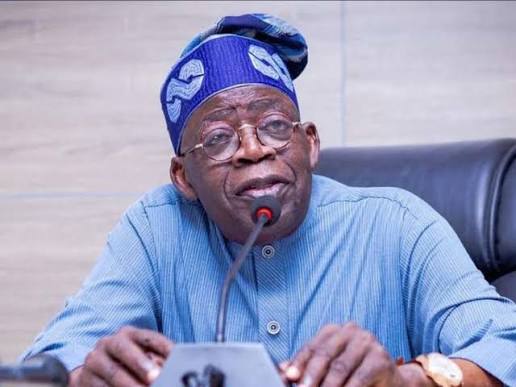
Ex-Secretary to the Government of the Federation (SGF), Babachir Lawal, has claimed that President Bola Tinubu could aim at a third term in office if circumstances allow it.
Lawal made the statement while speaking on The SYMFONI Podcast, where he discussed Nigeria’s political system, elections, and governance.
Reacting to questions if President Tinubu may attempt to extend his tenure beyond the constitutionally allowed two terms, the former SGF said he believed such a move could happen if the opportunity presents itself.
“But Tinubu will go for third term, if God gives him the long life to do it, he will.
What will stop him now? Blind Nigerians or a pliant National Assembly of crooks.”
Babachir Lawal, who served as Secretary to the Government of the Federation under former President Muhammadu Buhari, also criticised Nigeria’s electoral process, alleging that many political parties do not practise true internal democracy during their primaries.
He argued that after elections, aggrieved candidates often resort to legal battles while ordinary Nigerians eventually lose interest in challenging the system.
“The candidates will go to the courts and the lawyers will collect billions of naira and impoverish them further. And then that’s the end.”
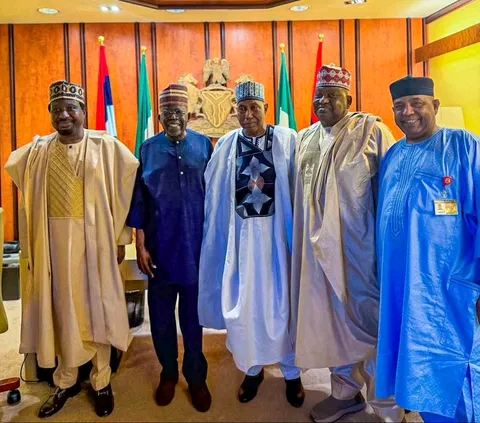
Fresh challenge has surfaced over the political future of Kano Central Senator Rufa’i Hanga after he held a closed-door meeting with President Bola Tinubu at the Presidential Villa in Abuja, sparking widespread speculation that he may soon dump the Nigeria Democratic Congress (NDC) for the ruling All Progressives Congress (APC).
The meeting, which took place on Sunday, has intensified discussions within political circles, especially as Hanga is currently the only NDC senator representing Kano State in the National Assembly. Hanga arrived at the State House alongside former Senator Kabiru Gaya and was ushered into the Presidential Villa by Deputy Senate President Barau Jibrin.
Following the meeting, Barau described the engagement as “fruitful,” although he did not disclose details of the discussions.Government The senator’s visit to the Presidency came shortly after separate meetings with APC National Chairman Nentawe Yilwatda and Kano State Governor Abba Yusuf, further fueling reports that he is preparing to cross over to the APC ahead of the 2027 general elections. Political observers believe the sequence of high-level consultations is a strong indication that Hanga may be set to formally align with the ruling party after his relationship with NDC leader Rabiu Kwankwaso reportedly deteriorated.
The alleged rift between the two politicians became public after Hanga failed to secure the NDC senatorial ticket for another term and was also overlooked for the party’s deputy governorship nomination.
Executive Branch Analysts say welcoming Hanga into the APC would strengthen the party’s influence in Kano, particularly in Kano Central Senatorial District, one of the state’s most politically significant constituencies. Hanga is regarded as an experienced politician with deep roots in northern Nigerian politics.
He previously served as the founding National Chairman of the Congress for Progressive Change (CPC), the political platform established by former President Muhammadu Buhari before it merged with other parties to form the APC in 2013.Africans & Diaspora Over the years, the senator has built a reputation for maintaining close contact with his constituents through grassroots empowerment initiatives and welfare programmes across the 15 local government areas that make up Kano Central, including Kano Municipal, Tarauni, Dala, Nassarawa and Fagge. Although opinions remain divided over his personal political strength, supporters insist he enjoys considerable influence among traditional institutions, community leaders and grassroots supporters.
Many analysts believe that joining the APC could provide Hanga with renewed political relevance, access to federal support and the opportunity to secure a strategic position within the party in Kano State. His fallout with Kwankwaso became more pronounced during a recent radio interview in Kano, where he openly accused the former governor of betraying him by denying him both a return Senate ticket and the NDC deputy governorship slot.
Responding to claims that his age and health influenced the decision, Hanga dismissed the argument and insisted he remained physically fit to continue serving. “How can Kwankwaso cite my age and health condition to deny me the chance? As of today, I am healthier than Kwankwaso.
His frequent references to my leg condition are nothing but a sham. Regarding age, he is two years older than I am,” Hanga said. He maintained that his leg condition has never affected his performance in the Senate and accused the NDC leadership of deliberately sidelining him.
With political realignments gathering momentum ahead of the 2027 elections, Hanga’s latest engagements with President Tinubu and senior APC leaders have further intensified speculation that a formal defection announcement could be imminent.

Sad: Ebola Outbreak In DR Congo Claims Over 1,400 Lives, Cases Surpass 3,200

Tinubu will aim at third term if health permits him- Ex- SGF Babachir Lawal claims

Just in: Ahead 2027, Kano NDC Senators Meet Tinubu over Planned Defection to APC




-
 News17 hours ago
Tinubu smokes silk cigarettes a lot: he can’t do without them: Babachir Lawal
-

 News16 hours ago
PHOTOS: Jay-Jay Okocha’s Daughter, Daniella, Shares Photos From Bachelorette Party in Greece Ahead of Wedding
-

 News3 hours ago
Fugitive drug kingpin, ex-int’l footballer bag 24 years jail term for cocaine importation(Photos)
-
 News16 hours ago
Tinubu Is Tired, Should Be Allowed To Retire In Peace, Says Peter Obi
-
 News16 hours ago
2027: APC uploads 27 governorship candidates to INEC portal ahead of deadline
-

 Foreign16 hours ago
Iran cautions, says Middle East war will expand geographically If US falls for zionists deception
-
 News21 hours ago
ECOWAS Parliament Moves to Strengthen MSMEs as Pillars of Regional Trade
-
 News11 hours ago
Army Nabs Wanted Soldier Accused Of Supplying Uniforms To Terrorists While Escaping to Cameroon