By Gloria Ikibah


For millions of Nigerians living with chronic pain, stroke complications, spinal injuries and other disabilities, rehabilitation remains one of the most overlooked aspects of healthcare.
Many patients travel hundreds of kilometres in search of physiotherapy services, while those who can afford it often spend huge sums seeking treatment abroad. For countless others, the cost of rehabilitation, shortage of specialised equipment and limited access to quality care mean they simply learn to live with pain and disability. 
The World Health Organisation (WHO) estimates that one in every three people globally will require rehabilitation at some point in their lives, making physiotherapy and rehabilitation one of the fastest-growing healthcare needs worldwide. WHO’s Rehabilitation 2030 initiative has repeatedly warned that demand for rehabilitation services is increasing because of ageing populations, road traffic crashes, stroke, cancer, diabetes and other non-communicable diseases, while access to services remains grossly inadequate in many low and middle-income countries. (World Health Organization)
Nigeria mirrors this reality.
A recent national assessment conducted under the WHO Rehabilitation 2030 programme found a significant gap in rehabilitation services across the country, prompting the Federal Government to begin integrating rehabilitation into primary healthcare while expanding services nationwide. (MRTB)
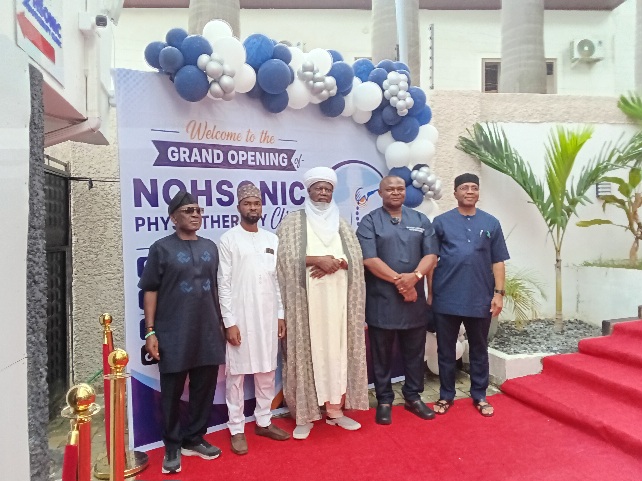
Against this backdrop, the official opening of NOHSONIC Physiotherapy Clinic in Abuja is being seen as another important step towards improving access to modern rehabilitation services and reducing the growing dependence on medical tourism.
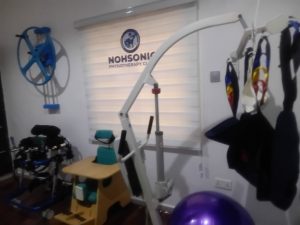
Located in the Federal Capital Territory, the facility is equipped with advanced rehabilitation technology designed to manage chronic pain, neurological conditions, orthopaedic injuries, sports injuries, stroke recovery, cardiac rehabilitation and several other conditions requiring specialised physiotherapy.
Leading guests at the commissioning was the Emir of Argungu, Alhaji Samaila Mera, who described the facility as a welcome development for Nigerians who previously had to seek similar treatment overseas.
After touring the centre, the traditional ruler said he was impressed by what he saw.
“Alhamdulillah, glory be to God. I’ve been around the clinic and what I saw is really pleasing. Most of what we see and experience when we go outside for treatments like this is here now and I believe this will go a long way in providing cheaper and warmer care to Nigerians from all walks of life.
“The proprietor mentioned he’s doing this with the intention of supporting and helping every Nigerian get access to recover from a stroke, pain or whatever they suffer from as easily and cheaply as possible, and the care they provide here is one that is very difficult to access outside.
“Some people cannot even walk, some cannot stand. It takes a long time to get permission to travel from embassies and also from the airlines. Having a centre like this in Abuja and hopefully closer to our states is a wonderful opportunity for all Nigerians.
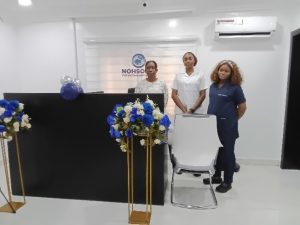
“I’m really happy with what I saw and I believe we are turning the page for all Nigerians to receive the care we need within the shortest time and at the cheapest possible rates.”
Registrar of the Medical Rehabilitation Therapists Registration Board of Nigeria, Prof. Ahmad Alkali, said the facility complements ongoing government efforts to expand rehabilitation services across the country.
He revealed that Nigeria had recently completed a national assessment under the WHO Rehabilitation 2030 programme, which exposed a huge shortfall in rehabilitation services.
“Nigeria has just completed the process of situation assessment and what was found was that there’s a very huge gap in service delivery.
“The government is doing its best to expand the services by increasing the number of secondary and tertiary hospitals and also implementing the integration of rehabilitation into primary healthcare, which is going to help identify people at the grassroots who need those services and refer them to secondary and tertiary facilities.
“But because the number is huge, the public facilities alone will not be able to cater for everyone. Therefore, this centre is going to complement what government has done in providing services when people come to the secondary and tertiary levels of care. So this is a very wonderful development.
“We appreciate what has been done because what has been invested here, if invested in other businesses, could probably have produced double or triple the profit. But investing in health means the person has humanity in mind and that’s very commendable.”
For the founder and Managing Director of NOHSONIC Physiotherapy Clinic, Dr Kingsley Nwankwo, the project represents years of planning driven by one objective—to ensure Nigerians receive world-class rehabilitation without leaving the country.
He said the inspiration came from his daily encounters with people living with disabilities.
“NOHSONIC is something that I’m passionate about. It’s a dream that I’ve lived for years and to the glory of God it’s coming to fruition now.
“Every day of my life I meet people with one disability or another and it gives us concern—not because of lack of expertise, but because of inadequate equipment and limited options for improving recovery.
“We thought, why not bring this equipment into Nigeria? We can rehabilitate patients comfortably here.
“People suffer spinal injuries, disc problems and different kinds of pain. Instead of losing billions annually through medical tourism for services that can be provided here, let’s bring them home.”
He also expressed concern over the migration of Nigerian physiotherapists abroad.
“Nigeria is producing lots of physiotherapists. Most of them are leaving the country probably because of inadequate equipment, and we’re almost running short of manpower.
“If we have this equipment here, we’re going to attract more colleagues to stay back, learn these technologies, improve their practice and ultimately give the best care to patients.
“The most important thing to us is patients, and NOHSONIC is open to every class of patient.”
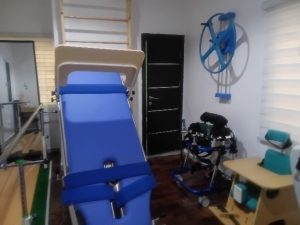
According to him, the centre houses close to 100 specialised machines, including advanced laser therapy systems, electronic tilt tables, electric traction beds, combination therapy units and shortwave diathermy equipment for managing chronic pain and neurological rehabilitation.
He said affordability remained central to the clinic’s philosophy.
“NOHSONIC is open to every class of Nigerians and even non-Nigerians. We are affordable.
“Every treatment room is independently equipped to serve its purpose. We are well prepared and open to receive patients.”
Nwankwo described the investment as part of the organisation’s broader commitment to corporate social responsibility.
“The establishment of this physiotherapy clinic is anchored on our firm belief in Corporate Social Responsibility as a necessary obligation. It demonstrates our conviction that privileged individuals in society must begin to give back through healthcare.
“It stands as a reminder that sustainable national development begins with healthy citizens and that every investment in preventive healthcare is an investment in human capital, productivity and the future of our society.”
He disclosed that the clinic would support vulnerable groups through discounted treatment for its first 50 registered patients, periodic wellness outreach for senior citizens and youth injury-prevention programmes.
“These are reflections of NOHSONIC’s broader social mission, which goes beyond making profits. It demonstrates our people-centred philosophy, our care for humanity and our determination to discourage medical tourism that drains between one and two billion dollars in foreign exchange annually.
“Today’s opening stands as a reminder that sustainable national development begins with healthy citizens, and that every investment in preventive healthcare is an investment in human capital, productivity and the future of our society.”
Healthcare experts say facilities such as NOHSONIC could help close the country’s rehabilitation gap by complementing public health services, retaining skilled professionals and reducing the number of Nigerians travelling abroad for specialised physiotherapy.
Beyond treating patients, the centre is expected to generate employment, support specialist training and strengthen public awareness of rehabilitation as an essential component of healthcare.
As Nigeria continues implementing the WHO Rehabilitation 2030 agenda, investments in modern physiotherapy facilities are increasingly being viewed not merely as private healthcare ventures, but as important contributions towards building a more resilient health system capable of restoring mobility, independence and quality of life for millions of Nigerians. (World Health Organization)