By Gloria Ikibah


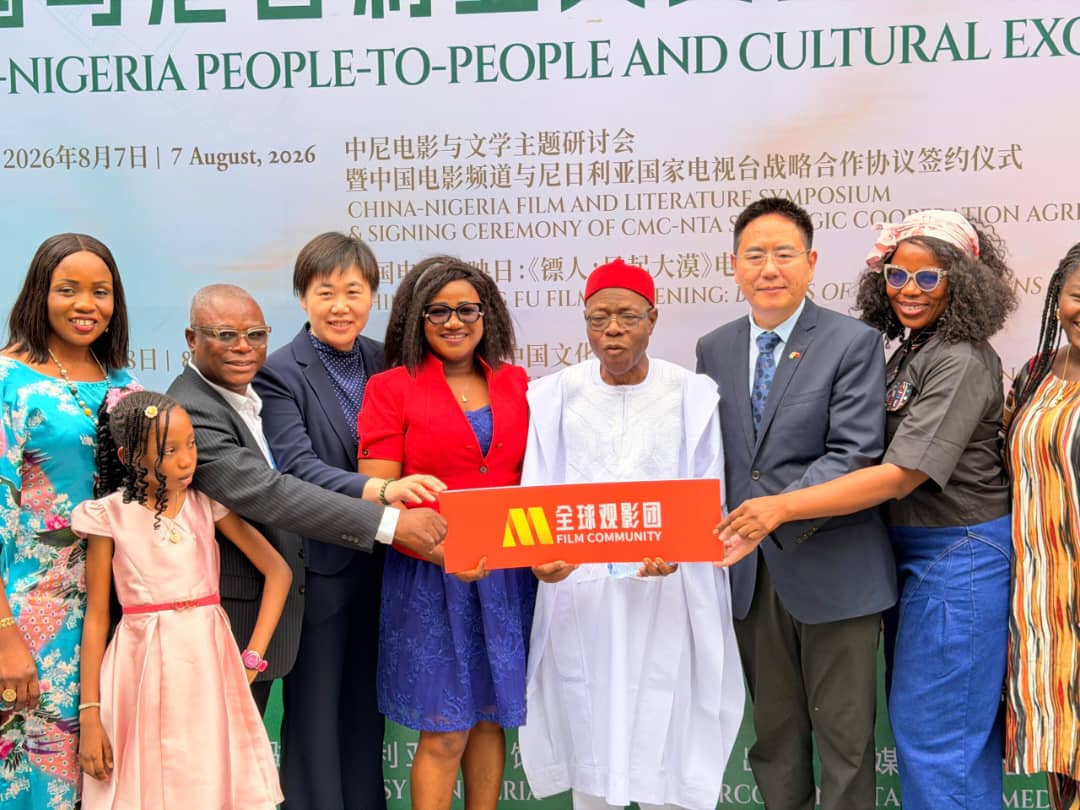
Nigeria and the People’s Republic of China have strengthened their cultural and creative ties with the signing of a Content Exchange and Cooperation Agreement between the China Movie Channel (CMC) and the Nigerian Television Authority (NTA), a move expected to boost film production, media collaboration and cultural diplomacy between both countries.
The agreement was signed in Abuja during the China-Nigeria Film and Literature Symposium, which brought together diplomats, government officials, filmmakers, authors and other stakeholders from the creative industries of both countries. 
Speaking at the event, Chinese Ambassador to Nigeria, Yu Dunhai, described the partnership as another milestone in the long-standing relationship between Nigeria and China, noting that literature and film have remained powerful tools for strengthening mutual understanding between peoples.
He said celebrated Nigerian writers, including Wole Soyinka, Chinua Achebe and Chimamanda Ngozi Adichie, as well as renowned Chinese authors such as Mo Yan, Yu Hua and Mai Jia, have continued to build bridges of friendship through their literary works.
According to the envoy, both countries have established themselves as global forces in visual storytelling, making the collaboration both timely and strategic.
China, he noted, currently operates more than 93,000 cinema screens and produces about 700 films annually, while Nigeria’s thriving film industry releases over 2,000 films each year.
He also pointed to the growing appreciation of each country’s productions, citing the successful screening of the Chinese film My People, My Country in Nigeria and Nigerian productions such as Lionheart and October 1 in China.
“The mutual appreciation of literature and film between the peoples of China and Nigeria is rooted in close friendship and cultural ties,” Ambassador Yu said.
He added that the initiative aligns with Chinese President Xi Jinping’s Global Civilization Initiative and President Bola Ahmed Tinubu’s vision of strengthening cross-border cultural cooperation.
The ambassador further noted that the agreement comes at a significant moment, marking the 55th anniversary of diplomatic relations between Nigeria and China, the China-Africa Year of People-to-People Exchanges and the 105th anniversary of the Communist Party of China.
Representing the Federal Government, Permanent Secretary in the Ministry of Art, Culture, Tourism and Creative Economy, Abdulkarim Ibrahim, described the agreement as a major boost for Nigeria’s creative industry and digital media ecosystem.
“This partnership will create new opportunities for professional development, technological innovation, and co-productions,” Ibrahim stated.
He praised China for its continued support through fully funded educational, technical and capacity-building programmes, which he said have benefited many Nigerian public servants and professionals in the creative sector.
According to him, as the Federal Government intensifies efforts to harness the creative industry as a driver of economic growth and employment, international collaborations such as the one with China will provide the technical expertise and global exposure needed to accelerate that vision.
Also speaking, Director-General of the Nigerian Television Authority, Salihu Abdulhamid Dembos, said the agreement will significantly improve content sharing between both countries and open new opportunities for audiences to access diverse productions.
He explained that the partnership will also promote wider accessibility through emerging technologies, including the possible integration of Artificial Intelligence-powered translation systems to enable viewers in both countries to enjoy films and television content without language barriers.
The symposium ended with interactive panel discussions involving Nigerian and Chinese filmmakers, writers and media experts, who explored opportunities for joint productions, talent development, content exchange and deeper collaboration between the creative industries of both nations.
Stakeholders expressed optimism that the agreement would not only strengthen diplomatic relations but also create fresh opportunities for cultural exchange, innovation and growth in the film and broadcast sectors.