
News
NAPTIP seeks probe of CSOs over alleged child trafficking

- /home/naijuinz/public_html/wp-content/plugins/mvp-social-buttons/mvp-social-buttons.php on line 27
https://naijablitznews.com/wp-content/uploads/2024/03/NAPTIP.jpg&description=NAPTIP seeks probe of CSOs over alleged child trafficking', 'pinterestShare', 'width=750,height=350'); return false;" title="Pin This Post">
- Share
- Tweet /home/naijuinz/public_html/wp-content/plugins/mvp-social-buttons/mvp-social-buttons.php on line 72
https://naijablitznews.com/wp-content/uploads/2024/03/NAPTIP.jpg&description=NAPTIP seeks probe of CSOs over alleged child trafficking', 'pinterestShare', 'width=750,height=350'); return false;" title="Pin This Post">


The National Agency for the Prohibition of Trafficking in Persons, NAPTIP, has called for an investigation into some civil society organisations, CSOs, allegedly being used as fronts by human traffickers to gain access to vulnerable communities and traffic children.
The agency also disclosed that it had recovered 118 children allegedly trafficked from Nasarawa, Benue and three other states in the North-Central region.
NAPTIP’s Head of Press and Public Relations, Vincent Adekoye, disclosed this on Tuesday in Abuja at a joint briefing by security agencies’ spokespersons.
Adekoye said traffickers were increasingly exploiting communities affected by insecurity, including farmer-herder conflicts, by posing as representatives of non-governmental organisations and offering assistance to vulnerable families.
He said some traffickers approached distressed communities under the guise of providing educational and humanitarian support before taking children away.
“Traffickers also now masquerade under the umbrella of Civil Society Organizations and move to communities that are already distressed; moving to communities where you have farmer-herder crises, and promising parents that, ‘we will take your children back to school,’ under a fake back-to-school project. And from there, they harvest children, move them,” he said.
Adekoye disclosed that NAPTIP recently rescued four children in Onitsha, Anambra State, who were allegedly trafficked from Kajuru in Kaduna State in 2023.
He said some of the children were recovered from a high-rise building, while another was found in the custody of a nurse at a Federal Medical Centre in Onitsha.
According to him, the agency is planning to profile CSOs, particularly community-based and faith-based organisations operating in vulnerable areas, to prevent criminal elements from exploiting their credibility.
“We have continued to ensure that we want to profile the Civil Society Organizations in Nigeria. My DG has asked me to convey to them, the leadership of the CSOs in Nigeria, to do an in-house cleansing,” Adekoye said.
He explained that community-based, faith-based and non-governmental organisations were often familiar to residents and could therefore be exploited by traffickers seeking to gain the trust of vulnerable families.
The NAPTIP spokesman said the agency had so far recovered 118 children allegedly trafficked from Nasarawa, Benue and three other North-Central states.
He urged Nigerians to remain vigilant and report suspicious activities involving organisations seeking to take children away from their families.
“As at last count, we have recovered 118 of such children from those that were trafficked from Nasarawa and from Benue, and three other states within the North Central. So, we are appealing to Nigerians to be watchful. When you see them, please contact NAPTIP,” he said.
Adekoye recalled that NAPTIP had earlier disclosed the rescue of more than 180 children from trafficking networks allegedly operating under the guise of civil society organisations offering educational support to vulnerable families.
Traffickers exploit social media
The agency also warned of an increasing technology-driven dimension to human trafficking, saying traffickers were using social media platforms to recruit young Nigerians with promises of lucrative jobs and better living conditions abroad.
Adekoye said NAPTIP recently rescued 16 young Nigerian men from Thailand after they were allegedly lured with attractive employment offers.
He explained that the recruitment process was often designed to appear legitimate, with traffickers offering to arrange travel documents, transportation and other logistics for prospective victims.
“From beginning, it looks so real to them that they have no reason at all to doubt. So, the agency has been inundated in recent times with calls from some of them who are stranded.
“Just in July, we rescued about 16 of them from Thailand. When you hear their story, your emotion will corrupt you of what they pass through. Some of them couldn’t survive. Those who survived have a narrow escape from death,” he said.
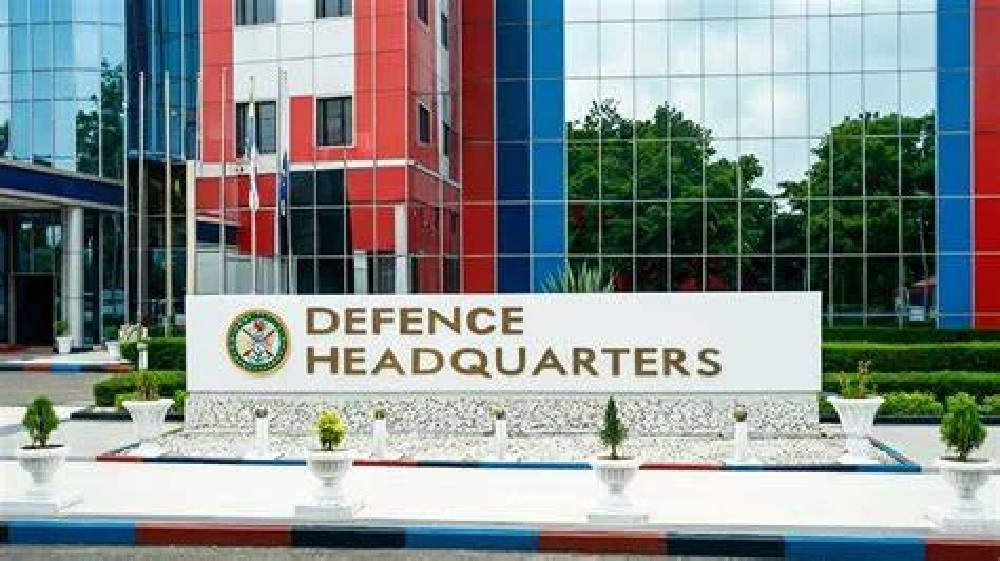
The Defence Headquarters has said the reported withdrawal of about 200 United States personnel from Nigeria will not affect the country’s security cooperation with the US, describing the development as a routine adjustment tied to specific operational objectives.
The Director of Defence Information, Maj Gen S. Uba, stated this on Tuesday while addressing journalists at the joint security spokespersons briefing.
Uba said the withdrawal should not be interpreted as a breakdown or termination of the longstanding security partnership between Nigeria and the United States.
“The Armed Forces of Nigeria wishes to clarify that the reported withdrawal of about 200 United States personnel should not be interpreted as a breakdown or termination of the Nigeria-United States security partnership,” he said.
According to him, the relationship between both countries remains “strong, enduring, and mutually beneficial,” noting that the deployment of American personnel was linked to specific operational and counterterrorism objectives.
“The decision to draw down personnel is therefore part of the evolving nature of that engagement. Elements of the United States security partnership, particularly intelligence cooperation, training and information sharing, will continue,” Uba added.
He stressed that the responsibility for defending Nigeria and protecting its citizens remained primarily with Nigerian security forces, while noting that cooperation with the US aimed to strengthen the capabilities of the Nigerian military.
“The Armed Forces of Nigeria has consistently maintained that the responsibility for the defence of Nigeria and the protection of its citizens rests primarily with Nigerian security forces,” the DDI said.
He explained that the bilateral security partnership covered intelligence sharing, training, technical assistance and other forms of professional military cooperation.
“Our cooperation with the United States is designed to strengthen our capabilities through intelligence sharing, training, technical assistance, and other forms of professional military cooperation,” he said.
Uba said that when Nigeria and the US jointly assessed the need for additional interventions, including joint strikes, they carried them out.
“Where it is jointly assessed that additional efforts, including joint strikes, are required, we do that,” he stated.
The defence spokesman said the partnership had continued to yield positive results in the fight against terrorism and other transnational security threats.
“Indeed, the Nigeria-United States partnership has continued to produce valuable outcomes in the fight against terrorism and other transnational security threats,” he said.
Uba urged the media and members of the public not to interpret the adjustment in the presence of foreign military personnel as an indication of weakening security cooperation or Nigeria’s defence capacity.
“We equally call on the media and the Nigerian public to avoid interpreting a routine or mission-specific adjustment in foreign military presence as evidence of a collapse in Nigerian security cooperation or national defence capability,” he said.
He reiterated that the Nigeria-US security relationship remained enduring and that cooperation in areas of mutual interest was expected to continue.
The clarification came after US officials said most of the additional forces deployed for the Lake Chad operation had returned following the completion of their mission, while intelligence sharing and broader security cooperation with Nigeria would continue.
The Lagos State Parking Authority (LASPA) has commenced enforcement of the 2026 parking permit regulations across its operational zones, warning defaulters of substantial fines and immediate suspension of operations.
LASPA General Manager, Adebisi Adelabu, disclosed this in a statement shared on the state government’s official page on Tuesday, saying the enforcement marked the end of the extended grace period given to customers to regularise their operations and obtain their 2026 parking permits.
Adelabu said the extension was intended to give affected customers sufficient time to meet their obligations and comply with the authority’s requirements.
According to her, the enforcement is aimed at ensuring compliance with approved parking regulations, promoting accountability and strengthening the management of parking activities across Lagos.
She added that the exercise would support compliance with laws governing the transport sector while improving parking management across the state.
The LASPA boss expressed concern that many customers had yet to obtain their 2026 parking permits despite several appeals, direct communications, reminders and the extended grace period.
“The commencement of the enforcement marks the end of the prolonged grace period granted to customers to regularise their activities and obtain their 2026 parking permits,” she said.
Adelabu said LASPA had earlier distributed the 2026 Demand Notices to all registered customers, clearly stating the applicable fees, requirements and procedures for obtaining the permits.
She urged customers who had yet to regularise their operations to do so immediately to avoid sanctions for continued non-compliance.
The general manager stressed that the enforcement exercise was not intended to punish operators but to restore order, accountability and efficiency within the state’s parking system.
“The enforcement exercise is not intended to be punitive, but a necessary measure to restore order, accountability and efficiency within Lagos’ parking ecosystem,” she said.
Adelabu explained that valid parking permits and accurate customer records were essential for LASPA to effectively plan, monitor, regulate and manage parking infrastructure and services across the state.
“Valid parking permits and accurate customer records are essential to enable LASPA to effectively plan, monitor, regulate and manage parking infrastructure and services across the state,” she said.
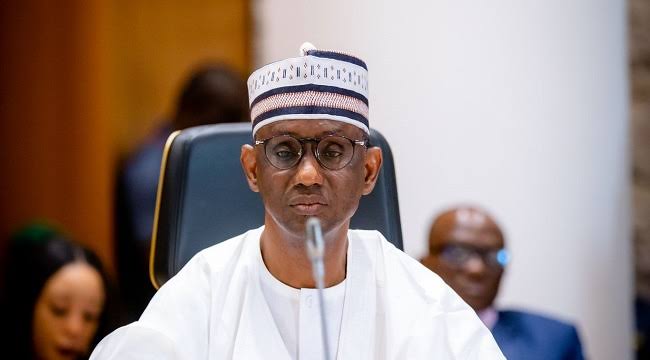
The Director-General of the National Centre for the Control of Small Arms and Light Weapons, DIG Johnson Kokumo (retd), has dismissed allegations contained in a viral video claiming that persons arrested over the seizure of illegal arms at the Tin Can Island Port were allegedly being sponsored by the National Security Adviser, Nuhu Ribadu.
Addressing journalists on Tuesday in Abuja during the joint security spokespersons briefing, Kokumo explained that he was personally present at the Tin Can Island Port when the Nigerian Customs Service handed over 399 assorted automatic weapons intercepted at the port to the centre.
He said, “The story in the video is not correct and cannot be correct.
“I was at the Tin Can Island Port with the Comptroller-General; 399 assorted automatic weapons were intercepted by the Nigerian Customs Service at the port. And this cache of arms, illegal weapons, was handed over to the centre.
“I was not there in a representative capacity; I was there personally. And the Comptroller-General, of course, was also present personally to do the handing over,” he said.
According to him, the seized weapons are currently secured in an armoury, while two suspects arrested in connection with the illegal importation remain in custody.
“As I’m talking to you, the arms are in a secured armoury. Two suspects arrested in connection with the illegal importation are currently in custody.
“Investigation is ongoing with a view to bringing to book the criminal elements in Nigeria and possibly identifying their international criminal partners outside the shores of Nigeria,” Kokumo added.
He further maintained that the allegations contained in the viral video were baseless, noting that the video also called for violence against the NSA and other persons.
“So, what has gone viral in the video is not correct and cannot be correct,” he stated.
Kokumo also disclosed that the Federal Government had continued to destroy recovered illicit weapons to prevent them from being diverted back into the hands of criminal and non-state actors.
He said the destruction of the weapons was in line with international conventions to which Nigeria is a signatory, including agreements under the United Nations, African Union and ECOWAS.
“And of course, another reason for destroying them is to also ensure that the weapons so recovered do not find their way back into the hands of non-state actors for use on innocent citizens of Nigeria,” he said.
The Director-General said the Second Quarter Arms Destruction Exercise for 2026, conducted on July 30 at the Muhammadu Buhari Cantonment, Giri, Abuja, resulted in the public destruction of 1,419 illicit weapons.
He said the latest exercise brought the cumulative number of illicit weapons destroyed by the centre since 2022 to more than 19,000.
Kokumo said the destruction was part of efforts by the Federal Government to prevent the possession and use of illicit weapons by non-state actors involved in terrorism, banditry, kidnapping, armed robbery and other violent crimes.
He also disclosed that the centre had received 5,050 illicit, unserviceable, decommissioned and obsolete assorted automatic weapons retrieved from the Nigeria Police Force in June 2026.
He added that 399 JOJEF automatic guns intercepted by the Nigeria Customs Service were handed over to the centre on August 17, 2026.
Kokumo, however, said the government was not targeting legitimate local arms manufacturers, explaining that some artisanal producers possess skills that could be harnessed for national development.
“From time immemorial, in villages in Nigeria, we have traditional, well-aligned rights where people even fire for joy; they use Dane guns to do all this. We have local hunters who go into the bushes to hunt for rats and rabbits.
“All these guns, of course, are manufactured by local artisanal producers. But what we are seeing now is the introduction of sophisticated weapons,” he said.
He added that the government was particularly concerned about criminal manufacturers producing sophisticated illicit weapons.
“So, we have those who are criminal manufacturers of these illicit weapons; we are really out for them. And we have equally identified talents among the local manufacturers—the talents, those who are naturally talented, of course, will be absorbed into our plans, and we’ll see how they can be most efficient and most productively used in national service,” Kokumo stated.

Russia cannot change Ukraine’s borders after 1,651 days of war — UK

US troop withdrawal won’t affect counterterrorism cooperation – DHQ

Lagos begins enforcement of 2026 parking permits, warns defaulters




-
 News24 hours ago
EFCC sacks over 40 staff for corruption, prosecutes 5 others
-

 Economy24 hours ago
NNPCL Increases Price Of Petrol
-
 Metro24 hours ago
Air Force Officer Narrates How Gunmen Abducted His Wife, Two Children From Kaduna Home
-

 News17 hours ago
Just in: Court fires 2027 APC candidate, orders fresh primaries
-

 Entertainment24 hours ago
Headies dismiss claims of sidelining gospel artistes
-

 News17 hours ago
Breaking Dangote Refinery stops sales of petroleum products to Matrix, AA Rano, others
-

 News17 hours ago
Intoxicated Pilot Crashes Stolen Plane Near Nuclear Site
-

 News17 hours ago
Strange Island Appears And Then Vanishes In Canadian Reservoir