

By Gloria Ikibah
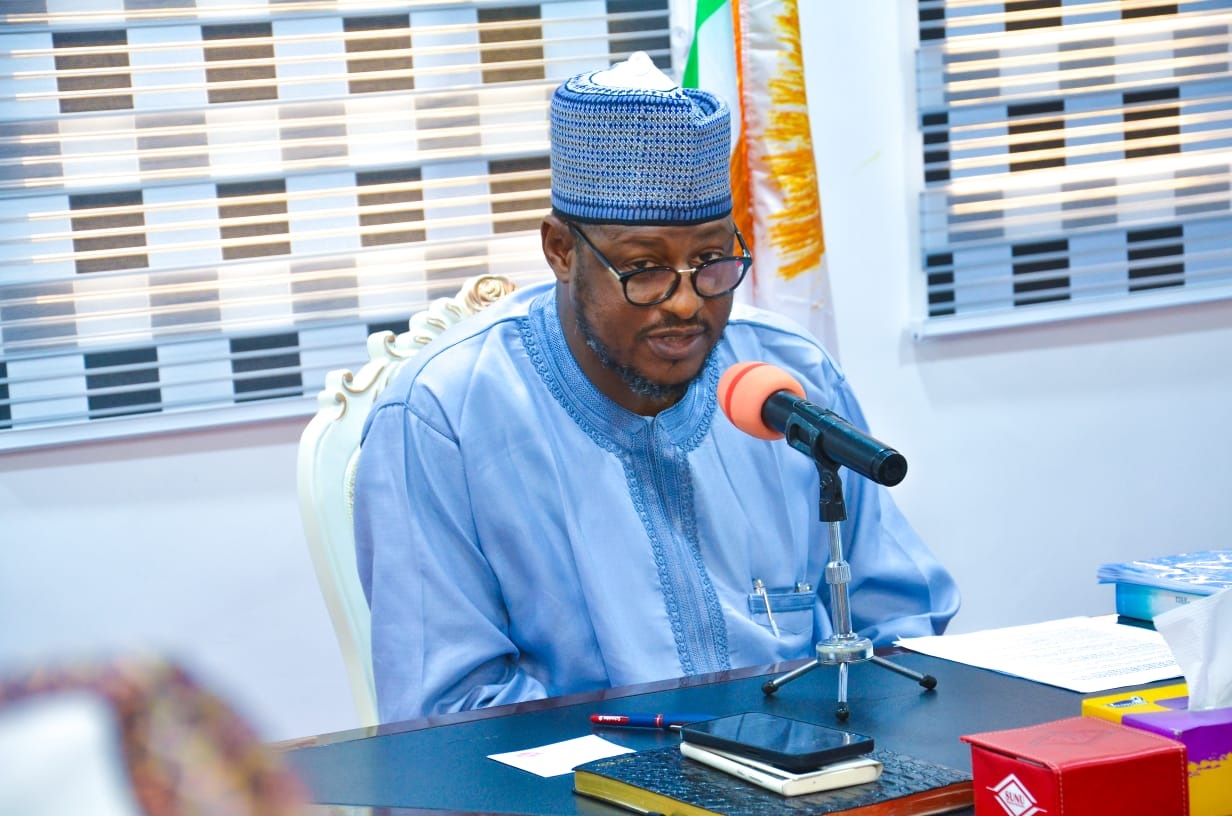
The Director-General of the Maryam Babangida National Centre for Women Development (MBNCWD), Dr Adedayo Benjamins-Laniyi, has urged journalists to give greater attention to women’s leadership and adopt gender-sensitive reporting to promote inclusion and accountability. 
She also called for a formal partnership between the Centre and the Nigeria Union of Journalists (NUJ), Federal Capital Territory (FCT) Council, to amplify women’s voices, improve public understanding of women-focused policies and highlight programmes that improve the lives of women and girls.
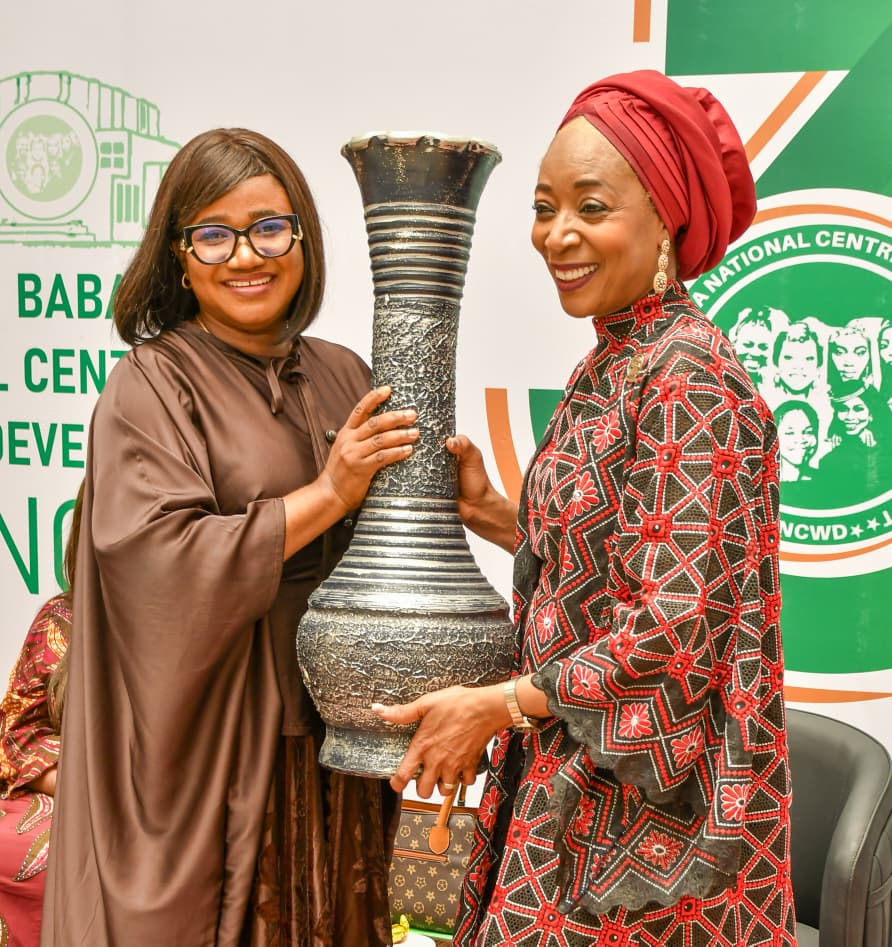
Benjamins-Laniyi made the call at the weekend when the NUJ FCT Council, led by its chairman, Comrade Grace Ike, paid her a courtesy visit in Abuja.
She said the media had a critical role to play in shaping public understanding of women’s development, influencing policy and bringing the experiences of women and girls to the forefront of national discourse.
The director-general proposed regular training sessions, media roundtables and knowledge-sharing engagements to equip journalists to report more effectively on women’s economic empowerment, leadership, gender-based violence, education and social inclusion.
Congratulating Ike as the first female chairman of the NUJ FCT Council in 41 years, Benjamins-Laniyi stressed the need to strengthen journalists’ capacity to report gender issues accurately, sensitively and in greater depth.
“Let us invest in the capacity of journalists to report gender issues responsibly and effectively,” she said.
She emphasised that the proposed partnership must go beyond goodwill and produce concrete commitments and measurable results.
“As the 16th Director-General of the Maryam Babangida National Centre for Women Development, I extend a formal invitation to the NUJ FCT Council to become a strategic media partner in advancing the Centre’s mandate and strengthening the national movement for women’s empowerment,” Benjamins-Laniyi said.
She called for a formal media partnership framework to guide joint advocacy, public enlightenment, media engagement and the promotion of women-focused initiatives.
The director-general also urged journalists to ensure that women’s development remained a regular feature of national conversations rather than receiving attention only during commemorations such as International Women’s Day.
She said issues affecting women, particularly women with disabilities, deserved sustained coverage across print, broadcast and digital platforms throughout the year.
Benjamins-Laniyi further advocated greater visibility for women entrepreneurs, rural women, young innovators, women with disabilities and community leaders whose contributions often receive limited public attention.
To ensure the partnership delivered results, she proposed that the Centre and the NUJ FCT Council appoint focal persons to coordinate activities, identify priorities and periodically assess progress.
“We should be able to look back at the end of each agreed period and point to specific achievements: programmes implemented, women reached, stories published, public awareness raised and opportunities created,” she said.
She added that journalists should be involved in shaping public conversations on women’s development rather than being invited only to report the Centre’s activities.
“The Centre has a mandate to empower women. The media has the power to amplify that mandate. Together, we can turn that power into progress,” she said.
Earlier, Comrade Ike said the council’s visit was intended to establish a “partnership of purpose” focused on placing women’s stories, voices and contributions at the centre of national development.
She congratulated Benjamins-Laniyi on her appointment as the Centre’s 16th director-general and expressed the council’s readiness to collaborate with the institution.
Ike noted that Nigerian women had made significant contributions to the country’s families, economy, culture and democracy, but many of their achievements remained undocumented or inadequately represented in the national narrative.
“Our theme is: Women in Journalism: Centring Women’s Stories, Voices and Contributions for National Development,” she said.
The NUJ FCT chairman urged journalists to amplify women’s voices, showcase their achievements, highlight the challenges they face and promote conversations that advance equal opportunities and participation in national development.
She identified the Nigerian Women Hall of Fame, located within the Centre, as an important platform for preserving the contributions of Nigerian women.
Ike said the council was willing to work with the Centre to document and tell women’s stories in ways that would inspire younger generations, particularly girls and young women.
She also called for increased media attention to grassroots and rural women, women in informal employment, women with disabilities and young women whose contributions often receive little coverage.
Among the proposals put forward by the NUJ FCT Council were regular features, interviews and programmes on women’s leadership, enterprise, innovation and community impact, as well as intergenerational dialogues involving veteran women leaders, emerging professionals and young girls.
The council also proposed public conversations on women’s economic empowerment, digital inclusion, leadership, health, safety and rights, alongside joint capacity-building programmes to promote ethical and gender-sensitive reporting.
Ike called for greater professional development and leadership opportunities for female journalists, urging news organisations to ensure that women were visible in coverage of governance, the economy, technology, security, education, health, climate change, culture and other issues shaping the country.
“Women are not merely beneficiaries of policy. They are experts, employers, innovators, caregivers, peacebuilders, taxpayers, voters, traders, farmers, researchers and leaders.
“Our reporting should connect women to information, opportunities, services and decision making spaces. It should explain policies in clear language, expose barriers, highlight practical solutions and follow up on whether commitments improve women’s lives.” she added.