

…as Just Friends Club Nigeria hold 8th annual lecture
By Gloria Ikibah 
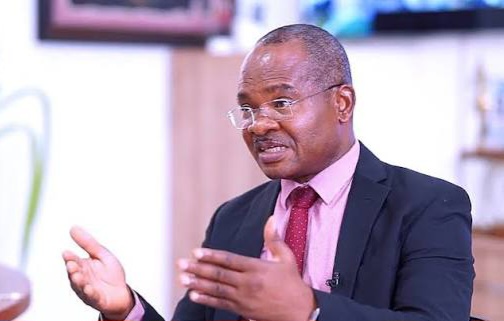
The Country Director of CARE Nigeria, Dr. Hussaini Abdu, has blamed the declining civic engagement of Nigeria’s middle class for weakening collective efforts to demand good governance, warning that citizens are increasingly seeking private solutions to problems that require public action.
Abdu said the middle class, which should be at the forefront of social transformation, had become more concerned about solving its individual problems than confronting the country’s wider challenges.
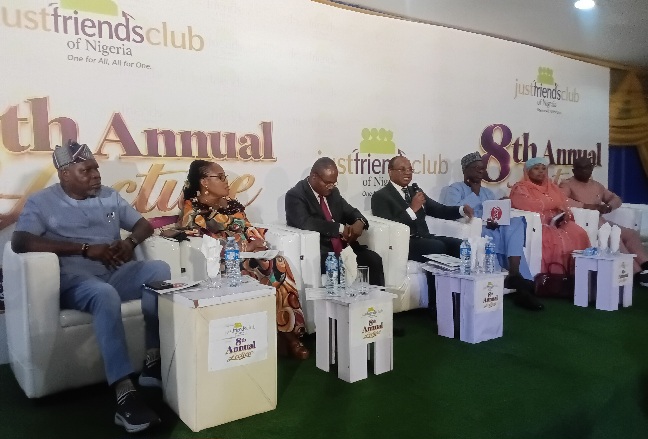
He spoke on Tuesday while delivering his remarks as chairman of the occasion at the eighth annual lecture of the Just Friends Club of Nigeria.
Speaking against the backdrop of the lecture’s theme, “From Concern to Action: Making Our Votes Count in the 2027 General Elections”, Abdu argued that the middle class remained in Nigeria but had lost the vibrancy and collective spirit needed to drive change.
He explained that rather than demanding improvements in public electricity, education, healthcare and water supply, many middle-class Nigerians had turned to private alternatives, leaving the wider population to bear the consequences of failing public institutions.
“The middle class does exist. What we’ve lost is the vibrancy of that class. And it has become a middle class of complete and self-centred class that only responds to its problems.
“You don’t have electricity, you don’t care. You use this, you get generator for yourself, even if it’s as small as what they describe as a pass by neighbour. You disturb your neighbours and all those things, and you lock yourself in your room and you’re fine.
“Now you go for inverter, solar panels, and all those things, and then you’re okay. You don’t have water, you don’t sink bowl, and you’re fine. Public schools are down, you go private,” he said.
Abdu added that the same pattern had spread to healthcare, with those who could afford it turning to private hospitals and medical treatment abroad rather than pushing for improvements in the country’s health system.
“The middle class that we have today are middle class that is selfishly finding alternative to its problem.
“And therefore, collective action has become a significant challenge. And when you have such a middle class, what you get is what we are dealing with in this country today,” he said.
He described the middle class as a historically important force in social transformation, arguing that its economic position and aspirations should motivate it to resist policies and practices that threaten its progress.
Abdu, however, said Nigeria’s middle class had failed to play that role effectively, pointing to what he described as the weakening of professional associations and other groups that once mobilised citizens around common interests.
“The poor, the downtrodden that we always talk about, never leave the struggle. But they are the mass that are always very important for the struggle. Because somebody has to lead the way.
“And for me, that middle class is what is missing,” he said.
He said the issue went beyond voting to the broader question of whether Nigerians were sufficiently concerned about the state of governance to take action at community, local government and national levels.
“How angry are we as citizens? How angry are we? Are we really angry enough about the state of affairs of our country, taken from our local authorities or our neighbourhoods to the nation at the national level?” he asked.
Abdu also questioned whether development and humanitarian organisations were inadvertently allowing governments to neglect their responsibilities by stepping in to provide essential public services.
He said that although such organisations supported poor communities through poverty reduction, education, healthcare and programmes for women and girls, their interventions could create room for governments to withdraw from their obligations.
“And many times, I’ve seen ourselves doing what the government is doing. And I ask, are we making government even more irresponsible? Because the more space you occupy, the more the government withdraws from those spaces.
“The more services you provide, the government just withdraws the abundance for you,” he said.
Turning to the 2027 general elections, the CARE Nigeria director expressed concern over what he described as low voter participation among middle-class Nigerians, particularly in affluent areas of Lagos and Abuja.
He said citizens who were better informed and had greater access to information should be using their knowledge to influence electoral choices and hold political leaders accountable.
However, he lamented that some stayed away from polling units because they believed their votes would make little difference or were unwilling to endure the inconvenience of voting.
“The middle class don’t vote. The middle class in this country, by our data, they don’t vote.
“If your capacity, your knowledge, is not informing the direction of our elections, then we have a challenge,” he said.
He described the annual lecture as an important opportunity for members of the middle class to reflect on their responsibilities and move beyond expressing concern to taking practical steps towards improving governance.
The President of the Just Friends Club of Nigeria (JFCN) has urged Nigerians to translate their concerns about poor governance into active participation in the 2027 general elections.
The president said complaints about insecurity, unemployment, corruption, rising living costs and poor public services must lead to responsible citizenship and meaningful action.
“Concern, by itself does not change a country. It must become knowledge. Knowledge must become participation. Participation must become responsible citizenship. And responsible citizenship must extend beyond election Day. That is the conversation we want to have today,” he said.
The president described the lecture as an opportunity to reflect on citizens’ responsibilities and the kind of democracy Nigerians want to build and leave for future generations.
He explained that beyond its annual lecture, the club also carries out humanitarian and educational interventions, including visits to orphanages and homes for older people and children with disabilities.
It also provides career guidance in public schools and sponsors eight indigent students through their secondary education in Abuja.
This year’s lecture is to equip participants with greater knowledge of their civic responsibilities ahead of the 2027 elections.