

…warn against voter apathy, call on parties to deploy agents to all polling units
By Gloria Ikibah 
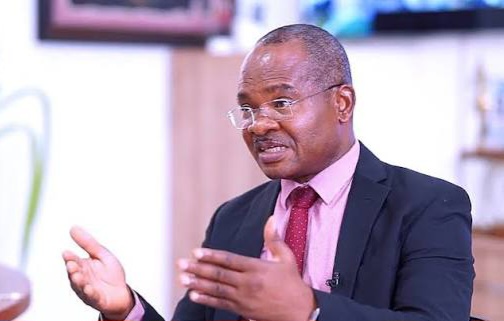
Executive Director of the Policy and Legal Advocacy Centre (PLAC), Clement Nwankwo, has urged Nigerians to turn their concerns over insecurity, economic hardship and poor governance into active participation in the 2027 general elections, warning that votes must be defended to prevent electoral malpractice.
Nwankwo, who spoke at the eighth annual lecture of the Just Friends Club of Nigeria on Tuesday in Abuja, said Nigerians must resist voter apathy, ethnic-based voting and the assumption that their votes do not count.
Delivering a paper titled on the theme: “From Concern to Action: Making Our Votes Count in the 2027 General Elections”, he said citizens should assess candidates based on their records, beliefs and proposed solutions to the country’s problems rather than their political parties or ethnic backgrounds.
He said: “It is important for us that we vote because we know those who are on the ballot.
“It is important for us that we vote because we are looking at the candidates and we are saying, what does this person represent? What has this person done? It’s not an identity issue, voting because you are from one ethnic group or the other. No. What does a candidate believe in? How does a candidate intend to address insecurity? How does a candidate intend to address the issue of unemployment? The educational service or education system that has virtually collapsed”.
The PLAC executive director said the economic challenges facing Nigerians, including high food prices, rising transport costs, unemployment, poverty and increasing rents, had heightened public anxiety ahead of the elections.
He also criticised the pressure faced by small businesses, alleging that some public officials and local government authorities imposed questionable charges on businesses, thereby discouraging investment.
Nwankwo recounted an incident in which officials of the Abuja Municipal Area Council (AMAC) allegedly demanded a N1m radio licence fee for equipment installed to receive internet services at his office.
He said he challenged the demand and insisted that the officials identify the legal provision requiring such a licence.
“And because they saw the case was being taken seriously by a lawyer, the local government of AMAC withdrew from the case because they had nothing to support them,” he said.
He added that such experiences contributed to the difficulties faced by small businesses and undermined efforts to attract investment.
“So when you’re in a small business in this country, the pressure of government, when government says we want to encourage investors, what investor invests in this country?” he asked.
“If you go to the markets, whether it is Garaki Market or any other market, half the stores are shut down because people cannot deal with the menace of public officials. Public officials exist in this country to stall investment, to frustrate investors, to frustrate the ordinary person. So a lot of people are not investing in the country”, he added.
Nwankwo acknowledged the Federal Government’s reported gains in macroeconomic indicators, including foreign reserves, exchange rate stability and government revenue, but said such improvements must translate into better living conditions for ordinary Nigerians.
He argued that citizens should look beyond economic statistics and demand tangible benefits from government policies.
Turning to the electoral process, the PLAC boss expressed concern about the credibility of elections, particularly the appointment of officials associated through family or other relationships with members of the ruling party.
He said such appointments could undermine public confidence in the independence of the electoral management system.
Nwankwo also urged political parties to take the protection of votes seriously by deploying trained agents to every polling unit and ensuring that evidence of results was collected and preserved.
Drawing on his experience observing elections in Nigeria since 1998 and in other countries, he said popularity alone was not enough to secure an electoral mandate without an effective structure for monitoring and defending votes.
“You can make all the claims in the world, you can be as popular as you think you are on social media, but if you have no structure to defend your votes, then you’re wasting everybody’s time,” he said.
He challenged political parties and candidates who claimed to have been denied victory in previous elections to prepare adequately for the next polls.
“So whether it is, as we go ahead, those who claim they won elections in 2023 and continue to make that claim, if you have not gotten your agents ready in all of the, I think it’s more than 200,000 polling units now, if you have not gotten your agents ready in those elections, please stop wasting our time,” he said.
Nwankwo further emphasised the importance of transparency at polling units, arguing that voters and party agents should document results as they are announced.
He expressed concern over what he described as a misunderstanding of electoral law concerning the announcement of polling-unit results.
“Electoral law is quite clear. The results of polling units are announced at the polling units. Results of collated results are announced at the ward level, that’s the first level of collation.
“These are results that citizens must put out to the public. These are results that agents of political parties must put out to the public,” he said.
He also questioned proposals relating to the electronic verification of election results, arguing that the Independent National Electoral Commission (INEC) must operate within the powers granted to it by law.
Nwankwo urged political parties, civil society organisations and citizens to familiarise themselves with the Electoral Act and remain vigilant throughout the electoral process.
He also called on registered voters who had changed polling units or updated their biometric details to collect their Permanent Voter Cards ahead of the elections.
Nwankwo urged Nigerians to remain alert and informed as the country approaches the polls.
“I think we need to make that the demand. And the question for all of us is that we should not go into the 2027 elections with hopeless cynicism. We should enter them with clear eyes,” he said.
He stressed that his presentation was not an endorsement of any political party but a call for citizens to make informed choices and hold elected officials accountable.
“I have not said in all that I have said here today that any particular party is desirable over the other. I’ve simply said that we all need to ensure that we should translate our concerns into knowledge of the electoral system, information. We should translate it into participation.
“We should translate it into accountability. And it is only when we demand accountability that we can get a governance in Nigeria,” he said.