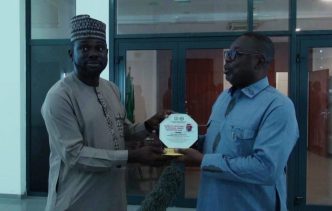
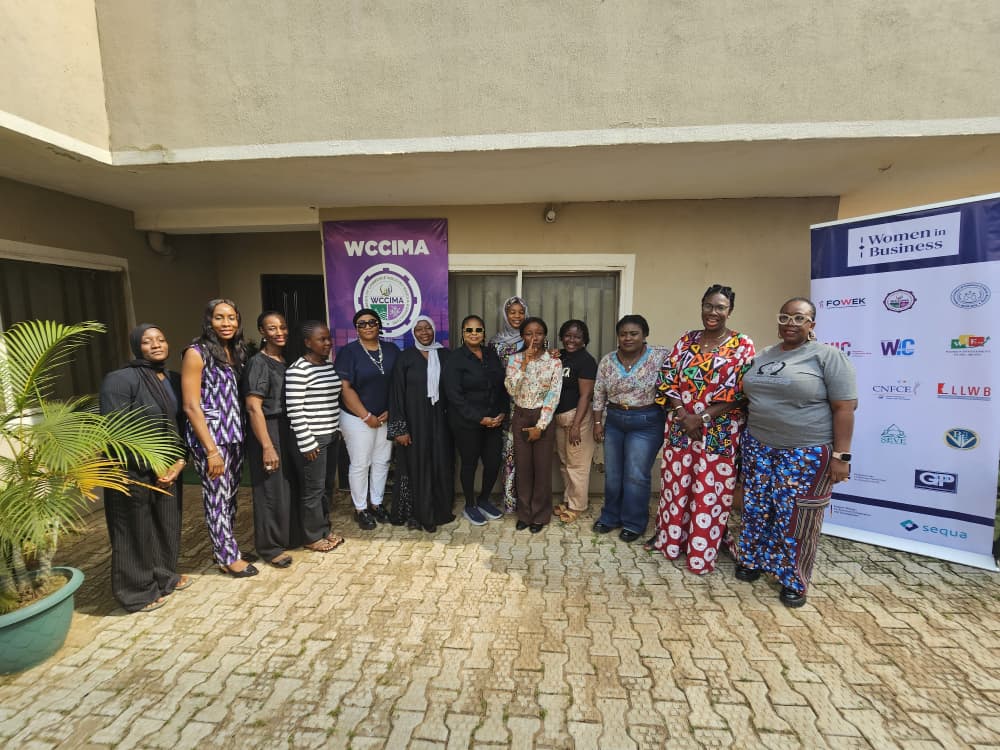


The Women Chamber of Commerce, Industry, Mines and Agriculture (WCCIMA), in partnership with Pleroma Export and Trade Academy (PETA), has urged women entrepreneurs to strengthen their pricing strategies, customer relationships and business structures to improve profitability and achieve sustainable growth.
The call was made during a free business masterclass organised by the two organisations to equip women with practical skills for managing and expanding their businesses. 
The Executive Secretary of WCCIMA, Samirah Saleh, said the chamber was committed to helping women gain access to markets and finance, build their capacity and participate in policy discussions affecting their businesses.
She explained that the organisation’s activities included market access initiatives, mentorship programmes and partnerships designed to connect women entrepreneurs with opportunities within and outside Nigeria.
Saleh cited the chamber’s Fresh Produce Market, held every second Saturday of the month, as one of its initiatives to help women in agriculture and agro-processing sell their products.
According to her, the initiative provides a platform for women to reach customers by partnering with Mona Lisa Park, a fitness centre that attracts people participating in various recreational and sporting activities at weekends.
She said the chamber was also working with international organisations, including the German development agency GIZ, on programmes aimed at improving market access and establishing mentorship networks for women entrepreneurs.
Through the mentorship initiative, Saleh said, the chamber was working with other women’s organisations to identify experienced professionals who could guide members in their respective fields.
She added that its Women in Business partnership, which began in Egypt, was intended to help Nigerian women expand their reach beyond the domestic market and explore international opportunities.
Saleh said WCCIMA was exploring partnerships with financial institutions to help women access loans at single-digit interest rates.
She disclosed that the organisation was also engaging with the African Continental Free Trade Area (AfCFTA) framework to help Nigerian women access wider African markets, including through initiatives aimed at reducing the cost of shipping goods.
Explaining the motivation behind the training, Saleh said the chamber had identified a need among its members for more opportunities to learn directly from industry experts and experienced business owners.
She said the masterclass formed part of WCCIMA’s mentorship series, which also included monthly webinars featuring professionals sharing lessons from their careers and business experiences.
Saleh explained that the programme was designed to help participants identify weaknesses in their operations, learn from peers and develop practical solutions to business challenges.
She added that the initiative was also intended to create opportunities for entrepreneurs at different stages of development to exchange ideas and learn from one another.
“Sometimes you might think your business is doing well, but you don’t actually realise that there are some gaps that you need to address.
“So just to learn from our peers and learn from the experts. So that’s basically. So I’m hopeful that the women today would have some key takeaways that would help them to be able to grow their businesses and hopefully come back and do the same for other people that are coming up behind them,” Saleh said.
PETA Urges Entrepreneurs to Get Pricing Right
Speaking at the masterclass, the Chief Executive Officer of Pleroma Export and Trade Academy, Ellah Omezi, identified pricing, customer management and business growth as critical areas entrepreneurs must understand to build profitable enterprises.
Omezi said many business owners struggled with pricing because they failed to account for all the costs involved in producing and selling their goods.
She explained that entrepreneurs needed to calculate their total production costs before adding an appropriate profit margin to determine their selling prices.
“Normally for you to get your selling price, it has to do with your cost plus your margin. Because cost plus margin is equal to selling price. So you have to know the total cost,” she said.
According to her, seemingly insignificant expenses, including telephone calls, recharge cards and production-related staff salaries, could affect profitability when left out of business records.
She advised entrepreneurs to document all expenses and establish clear pricing policies rather than setting prices arbitrarily.
Omezi also stressed the importance of understanding customer acquisition costs, identifying target markets and maintaining good relationships with customers.
Using advertising as an example, she explained that an entrepreneur who spent N5,000 on an advert that attracted only one customer had effectively spent N5,000 to acquire that customer.
She said business owners needed to assess whether their products delivered sufficient value to encourage repeat purchases.
“The customers are paying for value. That product you are giving them, does it add any value to them? Do they love the value? Are they getting value from that product? Because the value they are getting is what will make them come back always to buy from you,” she said.
Omezi further advised entrepreneurs to maintain customer databases, understand buyers’ needs and improve their delivery services.
However, she warned against making delivery promises that businesses cannot keep, noting that poor customer experiences could undermine loyalty and affect sales.
“If they buy one and don’t come back, then you have to look again. Because your customers are supposed to come back. If they have good value from what they buy from you, they are supposed to come back,” she said.
Entrepreneurs Urged to Embrace Digital Tools
On business expansion, the PETA chief executive urged entrepreneurs to adopt digital tools and artificial intelligence (AI) to automate routine tasks, improve efficiency and support growth.
She said businesses with international customers, in particular, needed systems that can help them respond to enquiries across different time zones.
“Business does not know night or day. It doesn’t know night or day. So what do you do? You leverage on tools that can work for you even when you are sleeping,” she said.
Omezi noted that entrepreneurs could use automation and AI tools to manage certain communications and administrative tasks rather than relying entirely on manual processes.
She also urged business owners to maintain proper records of sales, expenses and other transactions, warning against allowing essential business knowledge to remain undocumented or dependent on individual employees.
“What if Mr. John leaves the office tomorrow? Then Mr. John was gone with all the ideas, you know,” she said, illustrating the risks of running a business without documented procedures and systems.
She maintained that sustainable growth required clear structures, reliable processes and effective record-keeping.
“So these are the things we are looking at. For you to grow, you need structures, you need processes, you need systems in place for you to grow,” Omezi said.
She also emphasised that entrepreneurs seeking to enter international markets needed to understand exporting as a business that required specific knowledge and preparation.
“Export is a business, not what you’re dabbling into. It’s a business, you must learn how to do that business, as an exporter,” she said.
The masterclass formed part of efforts by WCCIMA and PETA to equip women entrepreneurs with practical business skills, improve their competitiveness and prepare them to take advantage of wider market opportunities.