

By Gloria Ikibah
The House of Representatives has commenced moves to repeal and re-enact Nigeria’s Trustee Investment Act, 1957, in a major legislative push to modernise the country’s trust investment framework and align it with developments in the financial market. 
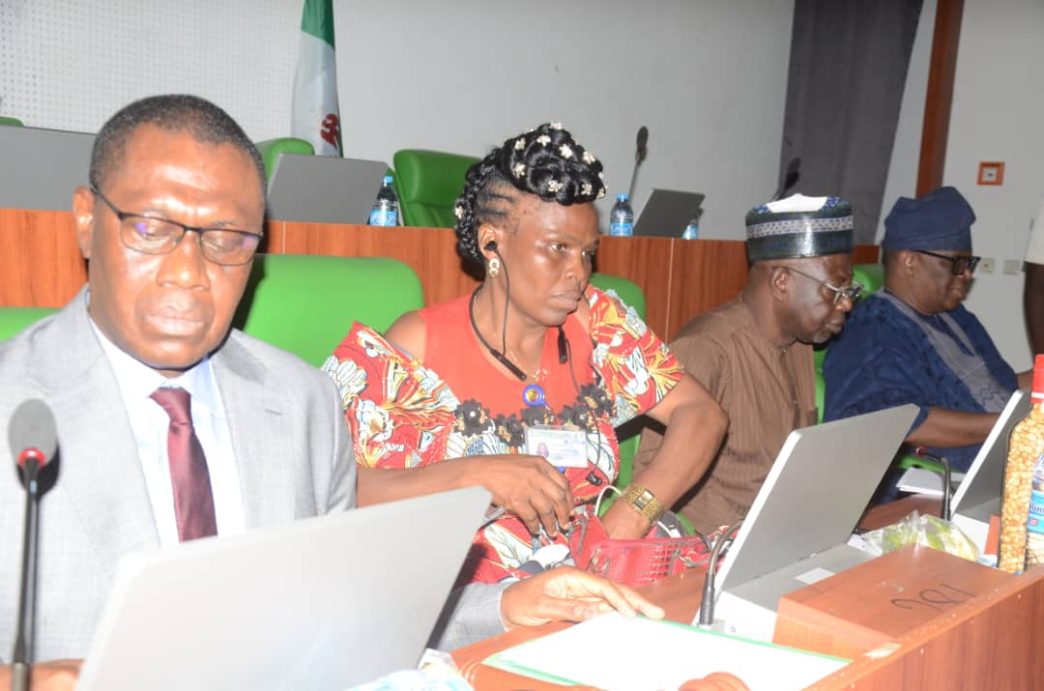
The proposed legislation, titled the Trustee Investment Act (Repeal and Enactment) Bill, 2026 (HB. 2762), came under scrutiny at a public hearing organised by the House Committee on Capital Market and Institutions on Monday in Abuja.
Declaring the hearing open, Speaker of the House of Representatives, Rt. Hon. Tajudeen Abbas, said the existing law had become inadequate after nearly seven decades of significant changes in Nigeria’s economic and investment landscape.
He stressed that reforming the law was necessary to protect trust assets, preserve family wealth and safeguard beneficiaries who depend on trustees to manage assets responsibly.
Abbas said: “The law governing the investment of trust funds carries a responsibility that extends beyond financial management. It concerns the protection of property, the preservation of family wealth and the security of those whose interests depend on the prudent management of assets entrusted to others.
“Behind every trust may be the inheritance of a child, the security of a widow, the resources of a charitable institution or the accumulated wealth of a family. The law must ensure that these interests are adequately protected.
“Nigeria’s Trustee Investments Act of 1957 was enacted in a substantially different economic and financial environment. Capital markets have expanded, financial instruments have become more sophisticated, and new opportunities for investment and wealth creation have emerged. Yet the legal framework governing trust investments has not kept pace with these developments. This makes reform both necessary and timely”.
The Speaker identified the need to strike a balance between protecting trust assets and allowing trustees to pursue reasonable investment returns.
According to him, an overly restrictive investment framework could deny beneficiaries legitimate opportunities for wealth creation, while weak regulation could expose their assets to poor investment decisions and unnecessary risks.
“A modern law must accommodate changing investment realities without weakening the fiduciary obligations of trustees. HB. 2762 seeks to achieve this balance by replacing an outdated framework with a more comprehensive regime for the investment of trust funds.
“Its proposed expansion of permissible investment opportunities reflects the realities of contemporary finance and the need for greater diversification. However, expanded investment freedom must be matched by strong safeguards, clear fiduciary responsibilities, effective risk management and appropriate regulatory oversight”, he added.
Abbas, who was represented by Rep. Dahiru Abubakar Sarki, warned that modernising the law must not undermine the fundamental responsibilities of trustees.
“Their decisions must therefore be guided by prudence, integrity, transparency and an overriding commitment to the interests of beneficiaries. Modernisation must never become a licence for speculation or a justification for exposing trust property to unreasonable risks.
“The national significance of this reform is equally important. Nigeria needs substantial long-term capital to address its infrastructure deficit, expand productive capacity and stimulate enterprise”, he noted.
The Speaker therefore urged stakeholders to make meaningful contributions to the legislative process, particularly on investment categories, diversification requirements, fiduciary responsibilities, professional delegation, regulatory oversight and safeguards for beneficiaries.
He added that the success of the proposed reform should not be judged solely by the investment opportunities it creates, but also by the confidence it inspires, the assets it protects and the lasting value it delivers to beneficiaries.
“The objective should be legislation that is not merely contemporary in its outlook but practical, enforceable and capable of standing the test of time,” he said.
Earlier in his opening remarks, Chairman of the House Committee on Capital Market and Institutions, Rep. Solomon Bob, described the existing legislation as outdated, noting that Nigeria’s financial market had evolved considerably since the law was enacted in 1957.
“The world has moved but the Nigerian law has not,” Bob declared.
He explained that the Trustee Investment Act, Cap T22, Laws of the Federation of Nigeria 2004, was introduced when Nigeria’s investment options were largely limited to Federal Government bonds.
However, he said the country now had a capital market valued at over N80 trillion, pension assets exceeding N30 trillion and several emerging investment opportunities, including Real Estate Investment Trusts, infrastructure funds and green bonds.
“Today, we gather to review a law that has governed trust investments in Nigeria since 1957 – 69 years ago. The Trustee Investment Act, Cap T22, LFN 2004, was made when Nigeria had only Federal Government bonds. Today, we have a sophisticated capital market worth over N80 trillion, pension assets over N30 trillion, and new asset classes from REITs to Infrastructure Funds to Green Bonds. This hearing is to correct that,” he said.
Rep. Bob outlined some of the major provisions of HB. 2762, explaining that the proposed legislation seeks to expand investment opportunities while introducing stricter safeguards to protect trust assets.
Under Clause 3, the Bill proposes an expanded range of permissible investments, including corporate bonds, equities, exchange-traded funds, Real Estate Investment Trusts, infrastructure funds, real property, foreign investments through licensed custodians, private equity, regulated virtual assets and environmental, social and governance-compliant bonds.
Clause 4 introduces diversification requirements, including a proposed 20 per cent limit on investments in a single issuer to reduce concentration risks and prevent excessive exposure of trust assets to one investment.
Clause 5 seeks to codify trustees’ fiduciary duties of loyalty, prudence, care and impartiality, requiring them to manage assets with the same level of responsibility expected of prudent persons handling their own affairs.
The proposed law also provides for professional delegation under Clause 6, allowing trustees to engage fund managers, custodians and other professionals while retaining responsibility for their selection and supervision.
Clauses 7 and 8 introduce requirements for fair valuation and annual reporting to beneficiaries, while Clause 10 seeks to prohibit speculative transactions, futures contracts and investments in unregulated schemes.
Clause 11, according to Bob, empowers the Minister of Finance, in consultation with the Securities and Exchange Commission and other relevant regulators, to make regulations that will enable the law to respond to changes and innovations in the financial market.
The committee chairman said the hearing was deliberately designed to bring critical institutions into the legislative process, adding that 12 key organisations had been invited because of their roles in managing, regulating or advocating for trust assets.
He assured stakeholders that the committee would conduct a transparent and inclusive review, stressing that the protection of ordinary Nigerians must remain central to the proposed legislation.
“I assure you this Committee will be fair, transparent and thorough. No interest is too small. The widow in Sokoto whose husband left N2 million in trust deserves the same protection as billion-naira pension fund,” he said.
The public hearing also featured contributions from the Securities and Exchange Commission, the Debt Management Office and other stakeholders, who offered perspectives on the proposed reforms.
The outcome of the legislative process is expected to shape the future framework for trust investments in Nigeria, particularly in balancing broader investment opportunities with the protection of beneficiaries and the responsible management of entrusted assets.