Procurement officers have been put on notice — stop treating public procurement as paperwork. Start treating it as the lifeline of Nigeria.


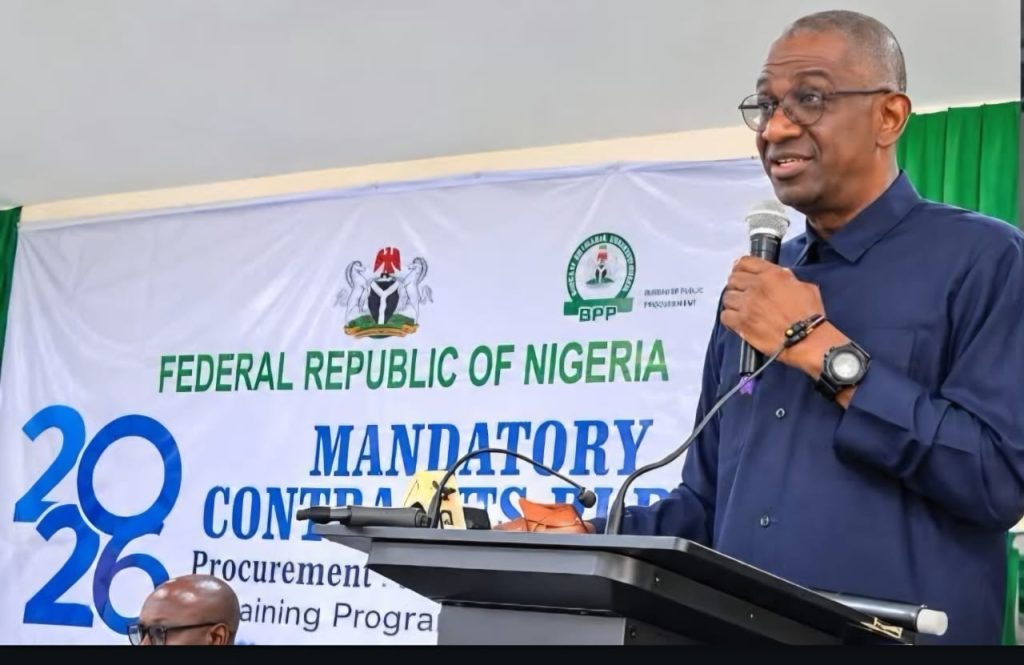
The Director-General of the Bureau of Public Procurement (BPP), Dr. Adebowale A. Adedokun, on Monday threw the challenge at 700 federal procurement officers at the second batch of the 2026 Mandatory Continuous Public Procurement Capacity Development Training Programme (MCPPCDTP) in Port Harcourt.
Represented by Engr. Nasir Bello, Director of Civil Infrastructure, Adedokun said the era of business-as-usual was over. 
He warned that one compromised evaluation, one poorly drafted contract, one unethical signature can translate to collapsed buildings, abandoned schools, unequipped hospitals and roads that fail before commissioning.
“Every naira must deliver value,” he declared.
Adedokun said the training was not a routine workshop but a deliberate assault on wastage, corruption and inefficiency, anchored on the Public Procurement Act, 2007.
He credited President Bola Ahmed Tinubu’s Renewed Hope Agenda for giving the Bureau the political backbone to push hard reforms.
“With the unwavering support of Mr. President, we are dismantling a system where public funds disappear without trace and rebuilding one where public resources deliver public value,” he said.
He reeled out the Bureau’s reform arsenal: Nigeria First Policy to grow local industry, Debarment Policy to blacklist corrupt contractors, Affirmative Procurement to open doors for women, youth and persons with disabilities, digitalisation, Price Intelligence and Benchmarking, and Contractor Classification.
Central to the new push is a national community of practice that will for the first time unite the Federal Government and the 36 states in one procurement ecosystem.
“We can no longer operate in silos. Federal and states must be partners, not strangers, in building a stronger, cleaner procurement system,” he said.
His message to participants was blunt: You are the gatekeepers. You are the bridge between budget and reality, between policy and delivery.
“You decide whether appropriation becomes impact or becomes abandoned projects. You decide whether public money creates jobs and investor confidence or fuels waste.”
He charged them to champion transparency, weaponise technology and data, and have the courage to say no when standards are compromised.
“If we get procurement right, we get service delivery right. If we get it wrong, Nigerians pay the price.”
With that, he declared the second batch open — and the reform battle, fully joined.