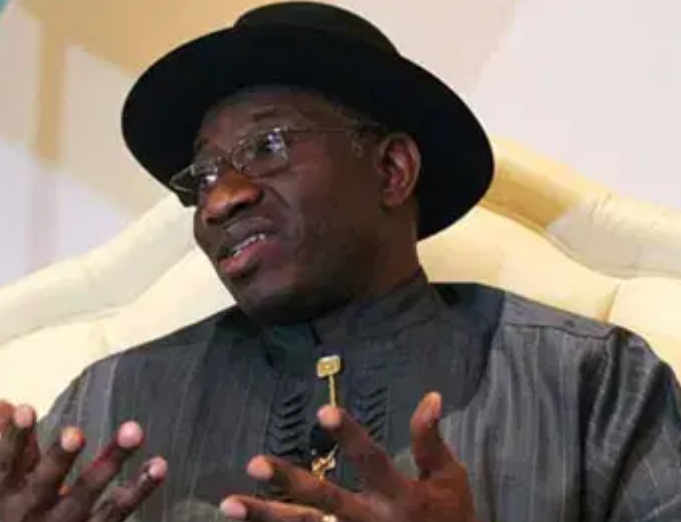
Former President Goodluck Jonathan has expressed concern over Nigeria’s political direction ahead of the 2027 general elections, warning that rising political intolerance, thuggery and ethnic rivalry could threaten national peace and stability.


Jonathan also raised concerns over the growing use of young people as instruments of political violence, alleging that political organisations and campaign teams were increasingly operating like cult groups.
The former president spoke on Tuesday in Abuja at a peace and security conference organised by the Goodluck Jonathan Foundation, with the theme, ‘Safeguarding Peace and Strengthening Social Cohesion in a Competitive Political Environment’. 
He said developments in the country’s political environment were becoming increasingly worrisome, noting that Nigerians and friends of the country abroad had continued to express fears about the possibility of post-election crises.
“As we gradually approach the 2027 general elections, certain developments in our political environment are becoming increasingly worrisome,” he said.
“As a former president, I receive calls from Nigerians and friends of our country across the world who express concern about the direction Nigeria is heading.
“Rather than the confidence and optimism we should be inspiring, there is growing apprehension about the likelihood of crises that may follow the elections. We must not ignore these concerns.”
Jonathan identified political intolerance as one of the major threats to Nigeria’s democratic process, accusing political actors of increasingly showing unwillingness to accommodate opposing views or acknowledge the right of others to contest for political power.
He said the situation had been worsened by political thuggery, brigandage and the exploitation of young people to perpetrate violence during political activities.
“There appears to be an increasing unwillingness among political actors to accommodate opposing views or recognise the legitimate right of others to compete for political power.
“This is compounded by political thuggery, the exploitation of our young people as instruments of violence, and acts of political brigandage.
“It’s becoming obvious. We are running political organisations, campaign teams as cult groups,” he said.
The former president also expressed concern over conflicting court judgments, particularly rulings delivered by courts of coordinate jurisdiction, warning that such developments could undermine public confidence in the judiciary.
While acknowledging the judiciary’s constitutional responsibility to interpret laws and resolve disputes, Jonathan cautioned that contradictory decisions on similar matters could create tension and weaken the credibility of the institution.
“We must protect the integrity and independence of our judiciary. When citizens begin to lose faith in the courts and resort to self-help, the consequences can be disastrous.
“The descent from a loss of confidence in institutions to anarchy is a danger we must collectively prevent,” he said.
On national unity, Jonathan warned against attempts to turn the 2027 elections into contests driven by ethnic rivalry, saying the deliberate promotion of ethnic divisions could endanger Nigeria’s national cohesion.
He expressed concern that the elections could degenerate into destructive ethnic competition at both national and state levels.
“Nothing could be more dangerous to our national existence than the deliberate encouragement of ethnic rivalry.
“We must never allow political ambition to undermine the bonds that hold us together as one nation and in our states,” he added.
Jonathan further called for reforms in Nigeria’s political recruitment process, urging citizens to prioritise competence, credibility and capacity over ethnic, religious and other primordial considerations when choosing their leaders.
Referring to his recent observation in Lagos, the former president argued that the existing political system remained vulnerable to considerations that could prevent capable individuals from emerging as leaders.
“As I observed a few days ago in Lagos, if Nigeria must make meaningful progress, we must review our political recruitment process.
“Our present system remains vulnerable to ethnic, religious and other primordial considerations, which often prevent competent and credible individuals from emerging as leaders,” he said.
He urged Nigerians to make deliberate choices in the 2027 elections, stressing that the country’s future would largely depend on the quality of individuals elected into public offices.
“The future of our country depends on the choices we make. Leadership is very critical in the growth of any nation.
“Let us choose competence over prejudice, service over personal ambition, and national interest over narrow considerations.
“Our democracy must produce leaders capable of uniting our people and advancing our collective development,” Jonathan said.