
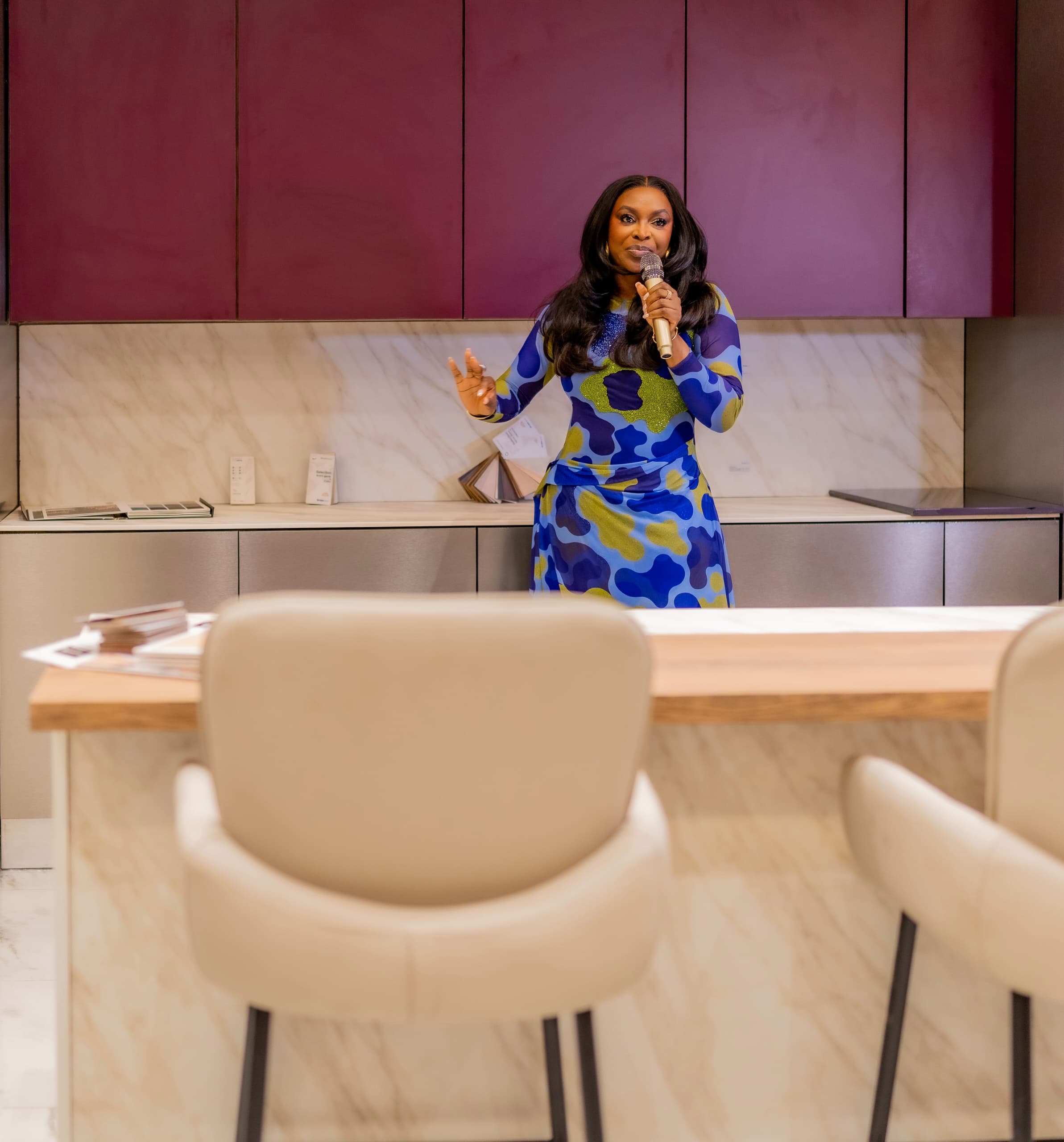

By Gloria Ikibah
In recent decades, rising urban populations, real estate development, hospitality expansion, corporate offices and the growth of the middle class have fuelled demand for professional interior design, furnishing and decoration services.
Despite its employment and economic potential, many practitioners continue to face challenges including limited access to financing, expensive equipment, inconsistent power supply, high material costs, inadequate training and competition from imported furniture and furnishings.
The founder of Teal Culture, a creative firm, Folakemi Oloye, has called for affordable financing and the establishment of innovation hubs to unlock Nigeria’s estimated N18 trillion interior decoration and furniture industry.
Oloye made the call Thursday at the unveiling of the Teal Culture Exhibition Centre in Abuja, saying targeted interventions in the sector could create wealth, expand businesses and provide employment for thousands of young Nigerians.
She said access to low-interest loans will enable entrepreneurs to expand their businesses, improve production capacity, employ more people and contribute more to the nation’s economy.
According to her, the high cost of borrowing in Nigeria remains a major obstacle to business growth, with expensive credit pushing up production costs and making goods and services less affordable.
She said: “Getting credit is really expensive in Nigeria. It would be awesome if we were able to get better, lower rates because lower rates allow businesses to thrive.
“When the interest rates are ridiculous, the entrepreneur bears the cost, the consumer bears the cost, and everything becomes expensive”.
Oloye also identified the high cost of setting up production facilities as a major challenge facing furniture makers, interior decorators and other creative entrepreneurs, particularly those seeking to scale up their operations.
She advocated the establishment of shared innovation and production hubs where practitioners could access facilities, collaborate and manufacture products without having to invest heavily in individual factories.
According to her, such hubs will reduce production costs, improve the quality of locally made furniture and create opportunities for Nigerian businesses to compete in international markets.
“Nigeria should be able to export some of her furniture, but when you think about the cost of setting up a factory, it is really huge.
“If we have innovation hubs that allow people to come together and do their processing without having to bear the enormous cost of setting up individually, I think that would be amazing,” she said.
Describing the industry as largely untapped, Oloye said interior decoration and furniture production offered enormous opportunities for youth entrepreneurship, professional development and wealth creation.
She urged young Nigerians to explore different areas of the industry instead of concentrating on the same business niches, emphasising the importance of specialisation, collaboration and skills development.
She said the sector was broad enough to accommodate business owners, designers, artisans, contractors and other professionals across its value chain, adding that partnerships among practitioners with different skills could strengthen the industry and improve profitability.
Oloye also cautioned aspiring entrepreneurs against seeking overnight success, urging them to embrace patience, consistency and hard work in building sustainable businesses.
She said credibility, quality service and the ability to keep promises remained critical to building a lasting reputation and attracting customers.
The Teal Culture founder therefore called for improved professional training and stronger collaboration among practitioners in the built environment, including artisans and contractors, to promote ethical conduct, better service delivery and mutual respect.
Interior decoration in Nigeria has evolved from traditional practices rooted in local craftsmanship, cultural aesthetics and the use of indigenous materials into a growing commercial industry influenced by modern architecture, urbanisation, lifestyle changes and global design trends. Traditional Nigerian homes and public spaces have long incorporated locally crafted furniture, textiles, carvings, pottery, woven materials and decorative elements reflecting different ethnic identities and cultural values.
About the Author