
BY BOLAJI AFOLABI

Over three decades before Muhammadu Buhari became an elected president – the 4th in the Fourth Republic – he was a military Head of State between December 31, 1983 and August 27, 1985. His core philosophy was anchored on discipline, anti-corruption, and austerity, because he believed that Nigeria’s problem was not lack of money but lack of discipline. A regime that came as response to purported mis-governance and negative public perception of the Shehu Shagari-led democratic government, it had immediate popular endorsement. The romance ended in a jiffy, as criticisms of his regime grew in leaps and bounds. Decrees 2 & 4 was vilified by journalists, activists, union leaders, and politicians; the ban on strikes and unionism was denigrated by students, intellectuals, and the Nigerian Labour Congress; sharp decline in living standards, scarcity of and increase in the prices of essential commodities, the enthronement of jungle justice, and unrealistic jail sentences. It was that bad!
However, the removal of food subsidies in all tertiary institutions across the country was the worst decision by the regime. Announced on his behalf by Lt. Col. Oladayo Popoola, Oyo State Governor at the 36th Foundation Day and Convocation Ceremony of the University of Ibadan, on November 20, 1984, Buhari said it was “the opportunity for students to make sacrifices for the economic survival of the nation.” Back then, many people wondered what informed such rudderless decision. Key players in the sector concluded that it was a negative mark on the regime’s understanding of the role of education in national development. Being a unitary command system, it automatically became a national policy as all state governors complied. The effects were overwhelming, as there was massive financial burdens on parents; students drop-out and postponed acceptance of admissions; rise in cultism and crime; early marriages for girls; increased family tensions; and other negative vices.
Not bothered about the public umbrage, the military government deepened its executive incapacity and unbridled insensitivity to the plight of students. Within spans and space, their recalcitrant miscalculation, lack of depth and zero-sum circumspection about the policy became a major albatross to national development. Sadly, Buhari’s 1984 feeding subsidy withdrawal became the single policy that changed Nigeria’s higher education from welfare-based to market-based, forever. So, the immediate shock on students across the country was indescribable and unimaginable, as they had to evolve smart measures to ward off hunger and likely malnutrition. Painfully, the escalating prices of goods, galloping inflation, accentuating poverty, and economic downturn gave birth to various eating formulas by students such as 0-1-1; 1-0-1; 0-1-0; 0-0-1. The trend of either eating two meals or one meal – in staggered pattern – each day was prevalent in all tertiary institutions.
Students of the Kwara State College of Technology, (KWARATECH) – now Kwara State Polytechnic, (KWAPOLY) Ilorin – were not left out; many suffered the consequences of Buhari’s mindless policy-shift. The vast majority of students running advanced level, diploma, and higher diploma programmes did not, and never came to terms with the in-your-face shenanigans of the military government. Worse hit were the freshers, many of whom were used to having three meals daily, only to be thrown into an academic community where they had to face the realities of missing one or two meals each day. A common trend was seeing students either sleeping or dozing off in lecture rooms – due to lack of feeding. Some aggressive and determined students had spoons in their pockets when visiting friends, coursemates, or relations.
On one of the public holidays – with school still in session – two friends and roommates; out of boredom, walked the short distance from their “K8” hostel to the “G” wing to visit two friends. A few steps away, they perceived nutritious aroma from the room, and guessed that beans was suffering some bashing on a stove. While in the room, they noticed that their hosts were having a little misunderstanding. Guess what? Pepper and Salt was the cause! While one preferred more salt in the beans, the other chose pepper. After a little back-and-forth, a compromised position was mutually consented to by the hosts; leading to severe pummelling of the mountainous beans with some garri; as necessary complement.
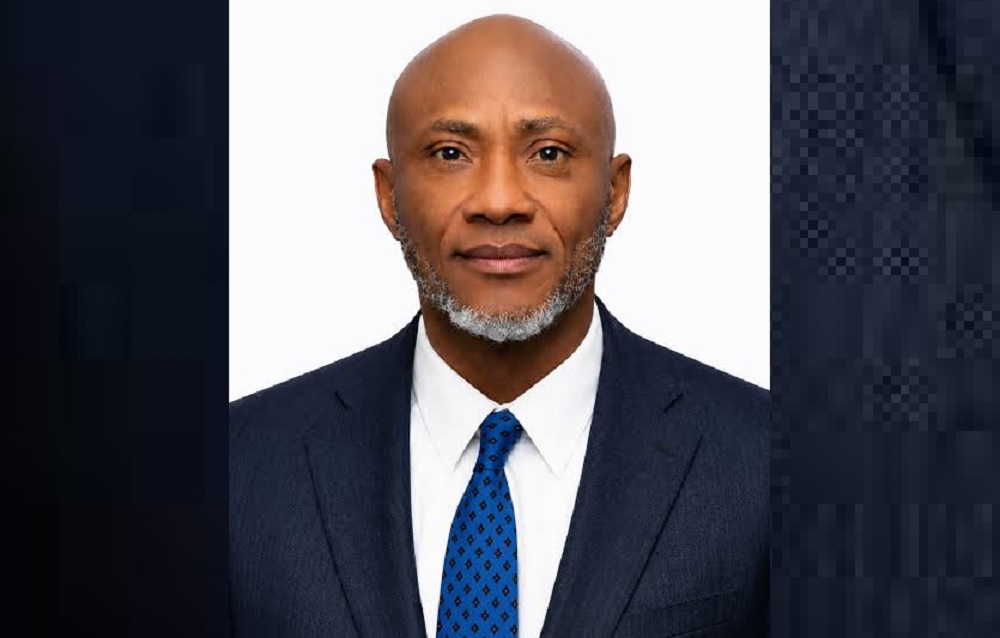
Thereafter, the four youngmen – hosts, Ralph Lewu, the subject of this tribute; Bank Modeyin; – and the guests, Femi Joseph; and the writer engaged in the discourse of different topics of mutual interests. From music to studies, future careers, and personal development, the four spent over 3 hours; which dragged into the early nights. Taking turns, everyone made useful contributions, and sought clarifications and information when and where necessary. For career choice and future endeavours, Ralph – without doubt – made the best ‘presentation.’ He was clear, direct, and determined on where he was, where he was headed, and what he desired to do, in future and more.
Aware that Ralph’s Diamond birthday was approaching, and conscious of the need to celebrate his achievements; over the years, the writer had a chat with Bank – his long-standing confidant and friend. One was not surprised when he said, “Ralph prefers a low-key celebrations, in fact, he does not want to do anything.” It was in sync with the writer’s characterisation of the subject matter. Though there has not been any physical interaction between Ralph and the writer since 2003, and a few phone conversations since then, but, from the various comments of people he has remained the same person. Holding on to rare attributes of humility, simplicity, thoughtfulness, empathy, and more. The writer being a distance-associate, Bank’s words provided the needed fillip to do a public commendation of an unsung hero whose career paths, professional trajectory, and life odysseys remains an enduring motivation for many people.
The writer in one of his forthcoming books counselled that, ” in whatever situation, it is imperative to realize that there are no alternatives for resilience and resoluteness because, at the end of the day, these are the ingredients that turns dream to action, and promise to fulfillment.” These and more are reflective at different stages of Ralph’s life. From education to work life as an employee, and employer of labour, he evokes passion, purpose, vision, commitment, and steadfastness. At the Victory Merchant Bank; STBank; and Asset Plus Limited; where he had illustrious careers, he epitomised hard work, resourcefulness, and responsiveness in meeting – and surpassing – goals of the respective institutions. Having shown outstanding capacity, competence, and capabilities at these organisations, Ralph, in July 2003 founded Capitalfield Investments Limited.
With the birth of the company, Ralph’s decision to be an entrepreneur was fulfillment of his age-long desire to not just be an employer of labour, but one that will positively touch lives of families and people, as well as contributing to national development. Happily, in about 23 years, the company has morphed into a Group with interests in diverse sectors including Investment; Insurance; Microfinance Banking; Asset Management; Energy; International Money Transfer; and Technology. Driven by the quest for breaking fresh grounds – he is always on the move; traversing Lagos, Abuja, and other cities across the country and abroad. Corroborating, Deacon David Yusuf, an Abuja-based realtor and schoolmate said, “on two different occasions within a week, we ran into each other, and he told me that he just arrived Abuja having travelled back to Lagos for a meeting, the last day we met.” Speaking anonymously, a staffer confessed that, “his energy for hard work and results has become an inspiration to many people, including some of his friends in the industry.”
From comments by people, Ralph’s commitment and dedication to friendship is unequivocal. With no airs, he relates easily, heartily, and cheerfully with people. For him, status, position, finances, or whatever categorisation does not matter in his relationship with people. Bank, arguably his closest friend affirmed that, “Ralph is ever committed to those he knew at the early stages of life, while in schools, and the latter part of his life. He remains the jovial, friendly, and good-natured person.” Hon. Ade Olamife, a former Deputy Governorship candidate, and friend at the Ahmadu Bello University, Zaria was more direct, “Ralph is someone loved by many people because he is not proud, he remains real with no pretence. He shows kindness and compassion to people without seeking recognition or praises.”
Indeed, Ralph Lewu has confirmed that, “the promise of a better tomorrow starts with what we do today,” in all his works, activities, and relationships. He dines with royalty, and wines with people of means but chooses to remain simple – a man whose humanity touches all, yet his humanness keeps him close to all. His generosity to people is selfless and unrestrained because, for him, giving is his nature. Always relatable and approachable, which is not common in this clime where many hide under protocols and some other nebulous reasons to create irrelevant status-barriers around themselves. He is different! Yes, he makes new contacts, but does not abandon foundational friends, classmates, and early-life acquaintances – like some people do. As you clock 60, and join the Diamond Club, I pray that God will increase your wisdom, bless you abundantly, protect you and your family, enlarge your coast, and crown all your efforts with outstanding success.
Happy Birthday, Barrister Ralph Lewu!!!
* BOLAJI AFOLABI, was with the Office of Public Affairs, The Presidency, Abuja, now the Chief Strategy Officer, SMEB Limited.
About the Author