News
More troubles for Emefiele as Ccourt seizes N830m, multibillion naira assets linked to him
- /home/naijuinz/public_html/wp-content/plugins/mvp-social-buttons/mvp-social-buttons.php on line 27
https://naijablitznews.com/wp-content/uploads/2024/02/Godwin-Emefiele.jpg&description=More troubles for Emefiele as Ccourt seizes N830m, multibillion naira assets linked to him', 'pinterestShare', 'width=750,height=350'); return false;" title="Pin This Post">
- Share
- Tweet /home/naijuinz/public_html/wp-content/plugins/mvp-social-buttons/mvp-social-buttons.php on line 72
https://naijablitznews.com/wp-content/uploads/2024/02/Godwin-Emefiele.jpg&description=More troubles for Emefiele as Ccourt seizes N830m, multibillion naira assets linked to him', 'pinterestShare', 'width=750,height=350'); return false;" title="Pin This Post">
By Francesca Hangeior

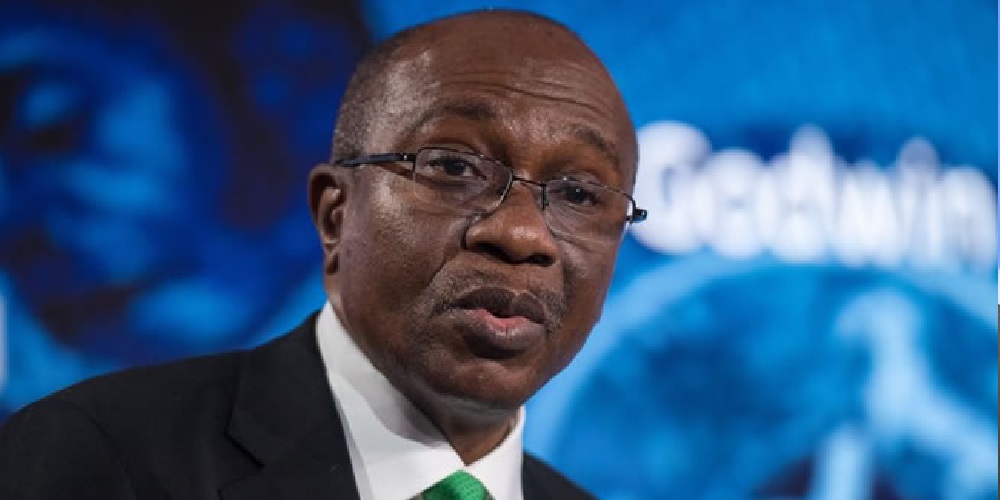
Justice Yellim Bogoro of the Federal High Court, Lagos has ordered an interim forfeiture of the sums of $4,719,054, N830, 875,611, and several properties linked to the embattled former governor of the Central Bank of Nigeria (CBN), Mr. Godwin Emefiele.
He made the order following an ex-parte application filed by the Economic and Financial Crimes Commission (EFCC) counsel, Bilkisu Buhari and C.C Chineye.

Justice Bogoro, after taking the lawyers’ submission, held: “I have listened to the submission of the applicant’s counsel and also perused the motion just moved, together with the affidavit in support.
“I find merit in the application and same is hereby granted as prayed.
“The applicant should publish this order in any daily newspaper circulating all over the federation for anybody interested to show cause why the final order of forfeiture should not be made.
“Case adjourned to July 2, for motion for final forfeiture.”
The monies forfeited to the Federal Government in the interim were said to be warehoused in First Bank; Titan Bank and Zenith Bank, being operated by Omoile Anita Joy; Deep Blue Energy Service Limited; Exactquote Bureau De Change Ltd; Lipam Investment Services Limited; Tatler Services Limited; Rosajul Global Resources Ltd and TIL Communication Nigeria Ltd.
His properties being forfeited include 94 Units of 11-floor building under Construction at 2, Otunba Elegushi 2nd Avenue (Formerly Club) Road, IKoyi, Lagos; AM Plaza, 11-floor office space, situated at 1E, Otunba Adedoyin Crescent, Lekki Peninsula Scheme 1, Lagos; Imore Industrial Park 1, Esa Street, Imoore Land purchased with (Deep Bive Industrial Town, Oriade LCDA, Amuwo Odofin LGA, Lagos; Mitrewood and Tatler Warehouse (Furniture Plant at Bogije) near Elemoro Lagos, Owolomi Village, Ibeju-Lekki LGA, Lagos and two properties purchased from Chevron Nigeria, Closed PFA Fund, Block B Lot and twin completed property in Lakes Estate Lekki, Lagos.
Others include One plot measuring 1,038.069 sqm, at Lekki Foreshore Estate Scheme, Block A, Plot 4, Foreshore Estate, Eti-Osa, LGA; Estate located at 100, Cottonwood Coppel Texas Drive, Coppel, Texas, Owned by Lipam investment Services; a Land at 1, Bunmi Owulude Street, (Maruwa), Lekki Phase 1, Lagos and a Property Situated at 8, Bayo Kuku Road, lkoyi Lagos.
The EFCC had approached the court for an interim forfeiture of the monies and properties, under Section 17 of the Advance Fee Fraud and Other Fraud Related Offence Act. 14 2006, Section 44(2)(b) of the Constitution and under the inherent jurisdiction of the court.
The anti-graft agency had asked the court for the following: “An interim order forfeiting to the Federal Government the funds warehoused in the accounts particularised in Schedule ‘A’ which funds are reasonably suspected to be proceeds of unlawful activities.
“An interim order forfeiting to the Federal Government properties provided in 2nd Schedule ‘B’ which are proceeds of unlawful activities.
“An order directing the publication In any National Newspaper, the interim order under reliefs 1-2 above, for anyone interested in the properties and funds sought to be forfeited to appear before this court to show cause within 14 days why the final order of forfeiture of the said properties and funds should not be made in favour of the Federal Government.”
Emefiele is having running legal battles in Abuja and Lagos over alleged fraud, among other charges.
The Federal High Court in Lagos, Friday, April 12, 2024, heard that Emefiele allegedly received millions of dollars in cash, in undocumented circumstances, through a proxy, Mr. Monday Osazuwa.
Emefiele and his co-defendant, Henry Isioma-Omoile were arraigned by the Lagos Zonal Command of the EFCC on Monday, April 8, 2024, on an amended 26-count charge bordering on alleged $4.5billion and N2.8billion fraud.
He is also being tried by the EFCC at the Special Offences Court in Ikeja over alleged abuse of office and accepting gratification to the tune of $4.5 billion and N2.8 billion.
News
CBN Imposes N100 Penalty On Inadequate Processing Of Forex Documents
The Central Bank of Nigeria (CBN) has introduced stricter sanctions for banks that process foreign exchange transactions without proper documentation, imposing penalties that could run into hundreds of millions of naira.
Under the revised foreign exchange regulatory framework, authorised dealer banks found to have completed forex transactions with insufficient supporting documents will pay a N100 million fine. They will also incur an additional N10 million penalty for each affected transaction.
The sanctions are contained in the fourth edition of the Foreign Exchange Manual released by the apex bank. The document serves as the operational guide for participants in Nigeria’s foreign exchange market.
According to the CBN, the updated manual is designed to strengthen regulatory compliance, improve transparency and reinforce confidence in the country’s foreign exchange system.
The regulator classified the offence as the execution of foreign exchange transactions without adequate documentation. It stated that any authorised dealer found culpable would be liable to the prescribed penalties.
The revised guidelines place greater emphasis on documentation requirements for all categories of foreign exchange transactions. These include spot transactions, forward contracts, swap arrangements, imports and export-related dealings.
Banks are now required to obtain, verify and retain all relevant supporting documents before foreign currency can be released to customers. Similar requirements apply to forward and swap transactions, where evidence of the underlying trade or obligation must be available before settlement.
The manual also retains existing documentation requirements for imports. Importers are expected to provide Form M, invoices, certificates of origin, packing lists and shipping documents, among other mandatory records.
In addition, importers must submit Exchange Control Documents within 90 days after negotiating shipping documents through overseas correspondent banks.
Failure to comply with the documentation requirements attracts progressively stiffer sanctions.
A first violation will result in a 90-day suspension from foreign exchange transactions. A second offence carries a 180-day restriction, while a third attracts a one-year suspension.
The CBN warned that a fourth violation could lead to a complete prohibition from participating in foreign exchange transactions.
Banks that fail to report cases of default to the regulator will also face sanctions under the new framework.
The apex bank further tightened reporting obligations for authorised dealers. Institutions that fail to submit required daily or monthly returns will be fined N500,000 for late submission.
Where returns are not rendered at all, the offending institution will pay a minimum penalty of N5 million. An additional N500,000 daily fine will apply until the breach is corrected.
The revised manual also strengthens oversight of banks’ foreign currency exposure levels.
Financial institutions that exceed approved Net Open Position limits will receive a warning for the first offence. A second violation will attract a 10-working-day suspension from the Nigerian Foreign Exchange Market.
A third breach will result in a 90-day suspension from market activities.
The CBN also imposed sanctions on unauthorised reallocation of foreign exchange funds. Any bank found engaging in such practices will pay N10 million for each transaction involved.
Beyond the monetary penalty, affected institutions may be referred to the Bankers’ Committee ethics framework for further disciplinary action.
The central bank said the new measures form part of ongoing efforts to deepen transparency, promote market discipline and establish a more rules-based foreign exchange regime.
According to the regulator, stronger compliance standards and stricter enforcement will help improve market integrity, reduce abuses and enhance investor confidence in Nigeria’s foreign exchange market.
News
Umahi Threatens To Delist Road Contractors Over Non-Compliance
The Minister of Works, Engr. David Umahi, has threatened to delist contractors who fail to comply with federal government construction guidelines on road projects across the country.
He also warned that ministry officials who fail to enforce compliance would be removed or redeployed.
Umahi issued the warning on Saturday during an inspection of the Mararaba–Keffi road project.
He said the federal government would begin a cleanup of non-performing contractors from next week.
“From next week, we are going to weed out contractors—whether indigenous or expatriate—who are not committed. Some of them have up to 25 jobs awarded before we came on board. If you are not ready to invest while awaiting federal government payments, then you are not part of the progress of this country,” he said.
He added that contractors who only depend on advance payments before mobilising to site would be removed, noting that some had benefitted from government jobs for over 30 years without adequate performance.
Umahi, however, commended JRB Construction Company for its quality of work and commitment to road infrastructure development despite funding challenges.
“I declare JRB as the best indigenous contractor because of the quality of work he does, the amount of equipment he has, and his partnership with the Federal Government,” he said.
He explained that the contractor was selected for intervention works when funding delays slowed down the dual carriageway project and immediately mobilised without receiving advance payment.
“Where we are facing challenges is identifying true partners in progress. JRB, I commend you,” he added.
Also speaking, the chairman of the House Committee on Works, Hon. Akintola Alabi, criticised some foreign contractors for collecting mobilisation fees without moving to site.
He commended JRB for demonstrating that Nigerian contractors can deliver quality infrastructure projects.
“There are some contractors from abroad who collect mobilisation and go back without working, then return for variations. But you are different. You continue working because you understand this is your country,” he said.
He further praised the contractor for his consistency and contribution to national infrastructure development.
News
Households groan as cooking gas price hits N2,400/kg
Nigerians in major cities are groaning under the rising cost of Liquefied Petroleum Gas, commonly called cooking gas, as the price has surged to as high as N2,400 per kilogramme in some retail outlets.
The sharp increase has worsened the hardship faced by households already battling soaring food prices and other living costs, pushing many to revert to less environmentally friendly alternatives such as firewood and charcoal.
Sunday PUNCH observed that while some filling stations sold the product at between N1,650 and N1,900 per kilogramme, neighbourhood retailers and black market operators charged significantly higher, up to N2,400 per kg depending on the location.
A housewife in Ibadan, Mrs Deborah Akintola, expressed frustration over the relentless hikes.
“Last week, I bought gas at Iyana Church Gasland at N1,600 per kilogramme. Now I hear it is N1,900 and even over N2,000 in some shops. In May, it was N1,000. This increase is just too much. Everything, including foodstuffs, is expensive,” she said.
At Bovas Filling Station in the Gbagi area of Ibadan, cooking gas was sold at N1,650 per kilogramme on Thursday.
A mother of two, Mary Dada, lamented the frequent fluctuations.
“I don’t understand why the price keeps going up. Every month, there is one increase or another. It’s just annoying,” she said.
In Lagos, residents shared similar complaints. Ibrahim Ozigis, who bought gas at Enyo Filling Station, Iju-Ishaga, said he paid N1,650 per kg this month compared to N1,100 in May.
Desire Billy, a resident of Isheri-Osun, said the rising cost was forcing many households to change their cooking habits.
“It has got to a point where you buy gas and cannot use it to cook beans. Last week, I bought it at N1,500 at AP Filling Station, whereas in February I bought it for N1,200. It keeps increasing,” she lamented.
In Ilorin, Kwara State, some residents have switched to charcoal.
Kemisola Nitta said some dealers had even suspended sales due to unstable prices.
“We have stopped using gas and opted for charcoal. I think it is cheaper,” she said.
Why prices remain high
Despite a significant increase in domestic production of LPG and reduced reliance on imports, prices have continued to climb.
Data from the Nigerian Midstream and Downstream Petroleum Regulatory Authority showed that local production from refineries and gas processing plants accounted for the bulk of supply between April 2025 and April 2026.
However, this has not translated into lower costs for consumers.
The Nigerian Association of Liquefied Petroleum Gas Marketers raised the alarm over erratic supply and rising costs, warning of possible scarcity.
In a statement signed by its National President, Edu Inyang, and Executive Secretary, Bassey Essien, the association said marketers now pay between N25.2 million and N26.2 million for 20 metric tonnes of the product.
“The citizens of Nigeria now have to buy cooking gas, which should be a social commodity, at a prohibitive cost of over N1,500 per kilogramme,” the association stated.
NALPGAM warned that the situation could trigger public unrest and undermine years of government efforts to promote clean cooking energy through increased LPG penetration.
A gas reseller in Ibadan, Opeyemi Olaire, attributed the high retail prices to transportation and operating costs.
“I sell at N2,400 per kilogramme. If I buy from Gasland at N1,700 and use an okada to transport it for N600, how much do you want me to sell it for? The government should look for a way to bring the price down,” she said.
The persistent rise in cooking gas prices is compounding the cost-of-living crisis, with many low-income families and small businesses struggling to cope.
-
News24 hours agoNigerians Outraged As Bandits Release Videos Of R@pe Of Female Victims
-
Metro24 hours agoDSS And Forest Guards Intercept Medical Supplies Suspected To Be Meant For Injured ISWAP Fighters In Borno State
-
News24 hours agoDoris Ogala Hospitalised After Collapse
-
News23 hours ago397 Nigerians undergo screening to leave S’Africa
-
Metro23 hours agoN36m fraud trial: Court adjourns judgment on Blessing CEO’s bail
-
News23 hours agoSupreme Court upholds death by hanging for kidnapper
-
Foreign23 hours agoTrump says Iran has 22% of missiles left
-
News23 hours agoBandits destroy houses, kidnap pastor’s nine-year-old son in Ondo

Warning: Undefined variable $user_ID in /home/naijuinz/public_html/wp-content/themes/zox-news/comments.php on line 49
You must be logged in to post a comment Login