News
Obasanjo queries implementation of subsidy removal, exchange rate unification
- /home/naijuinz/public_html/wp-content/plugins/mvp-social-buttons/mvp-social-buttons.php on line 27
https://naijablitznews.com/wp-content/uploads/2024/02/Tinubu-Obasanjo.jpg&description=Obasanjo queries implementation of subsidy removal, exchange rate unification', 'pinterestShare', 'width=750,height=350'); return false;" title="Pin This Post">
- Share
- Tweet /home/naijuinz/public_html/wp-content/plugins/mvp-social-buttons/mvp-social-buttons.php on line 72
https://naijablitznews.com/wp-content/uploads/2024/02/Tinubu-Obasanjo.jpg&description=Obasanjo queries implementation of subsidy removal, exchange rate unification', 'pinterestShare', 'width=750,height=350'); return false;" title="Pin This Post">
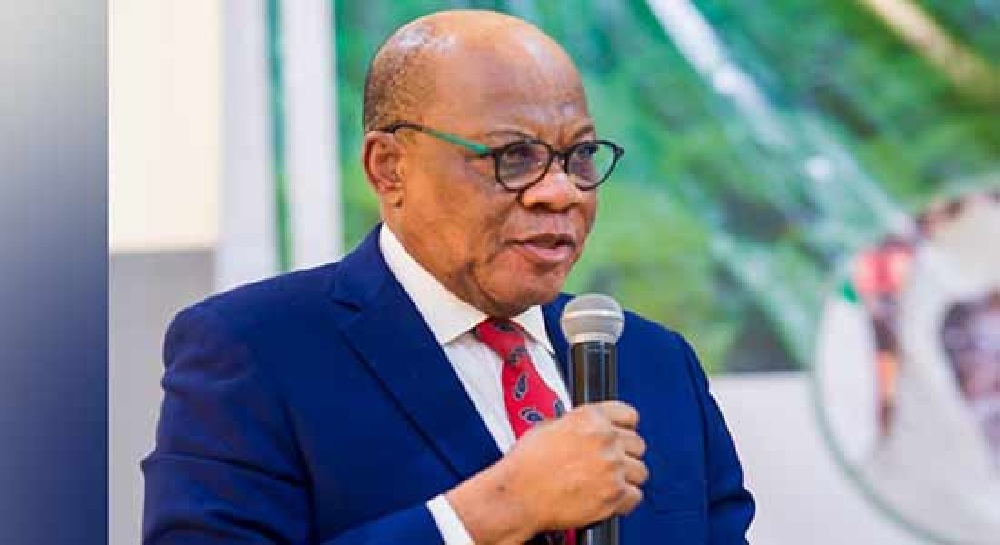
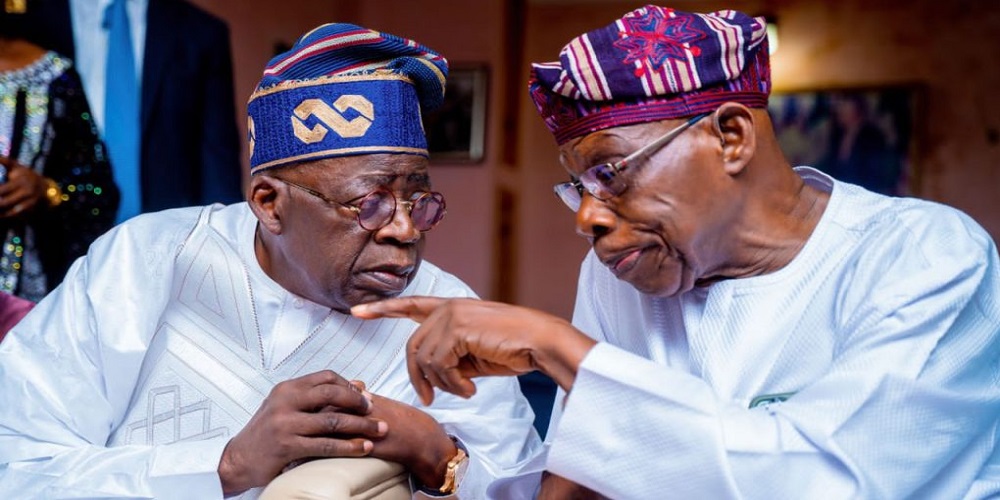
Former President Olusegun Obasanjo has taken a swipe at President Bola Tinubu’s implementation of the fuel subsidy removal and the unification of the exchange rate.

He said while they are necessary, their implementation was faulty. In a Sunday statement, Obasanjo’s spokesman Kehinde Akinyemi said his principal made the comment at a colloquium: “Nigeria’s Development: Navigating the Way Out of the Current Economic Crisis and Insecurity” at the Paul Aje Colloquium (tPAC) in Abuja on Saturday.
“Today, the government has taken three decisions, two of which are necessary but wrongly implemented and have led to the impoverisation of the economy and of Nigerians. These are the removal of subsidy, closing the gap between the black market and official rates of exchange and the third is dealing with a military coup in Niger Republic,” he said.

“The way forward is production and productivity which belief and trust in government leadership will engender. No shortcut to economic progress but hard work and sweat.”
Obasanjo also took a swipe at those against his position on the much-touted refurbished refinery at Port Harcourt, Rivers State, describing them as “sycophants and spin doctors”.
He declared that such people failed to remember that the attempt that was made in 2007 to partly privatise the refineries was made after a thorough study of the situation, hence his knowledge and a better understanding of the situation before making his decision late last year.
On what could be described as his position on 365 days of President Tinubu’s administration, the former president also posited ways out of the situation in the country, including a 25-year development agenda.
He said: “The economy does not obey orders, not even military orders. I know that. If we get it right, in two years, we will begin to see the light beyond the tunnel. It requires a change of characteristics, attributes, and attitudes by the leadership at all levels to gain the confidence and trust of investors who have
alternatives.
Obasanjo added: “Total Energy has gone to invest $6 billion in Angola instead of Nigeria. If the truth must be stated, the present administration has not found the right way to handle the economy to engender confidence and trust for investors to start trooping in.
“They know us more than we know ourselves. And now they are laughing at us, not taking us seriously. We have to present ourselves in such a way that we will be taken seriously. If the existing investors are disinvesting and going out of our country, how do we persuade new investors to rush in? We can be serious if we choose to be but we need to change from transactional leadership in government to transformational and genuine servant leadership.
“With change by us, the investors will give us the benefit of the doubt, and security will be taken care of on a sustainable long-term basis, they will start to test the water. With the right economic policies, attribute of integrity, and honesty of purpose, all should be well with all hands on deck and the government becomes a catalyst for development, growth, and progress.
The eldestatesman said, “tinkering with the exchange rate is not the answer. The answer is consistency and continuity in policy to ensure stability and predictability.
That way, we will be sure of incentivizing domestic and foreign investment. There must be honesty and transparency in government dealings and contracts and not lying with deception about these issues.
When the government is seen as pursuing the right policy, the private sector will go for production and productivity. Change is possible but it must begin with the leadership”.
The former president’s reaction to the refinery issue was coming barely six months after a claim that the refinery would begin operation in January. He noted that to get out of the current situation of the country, the government and the governed needed to look at the past and the present, and asked: How do we get here?
“Looking at the topic of today’s occasion, the question I would ask is, how do we navigate our way out of these crises and pave the path towards a more secure and prosperous Nigeria? I believe the answer to this requires a multi-faceted approach that addresses the root causes of these challenges,” he said. “The central questions are: where were we? And how did we get to where we are today?”
Obasanjo said, “Firstly, we must know where we are coming from. Our economy has consistently suffered from poor policies, lack of long-term sustainable policies, discontinuity, adhocry, and corruption firmed on personal greed, avarice, incompetence, lack of knowledge and understanding, and lack of patriotism.
“For instance, the statement and proposed actions given forty-five years ago to stop fuel scarcity are the same statement and action being touted today. I recall when I made the statement that the refineries would not work, the sycophants and spin doctors of this current administration went out to castigate me as not being a petroleum engineer and that I did not know what I was talking about.
“They forgot that the attempt that was made in 2007 to partly privatise the refineries was made by me after a thorough study of the situation. But the decision was reversed by my successor and the 750 million dollars paid was refunded.”
News
Nigeria-Sierra Leone Renew Commitment to Stronger Bilateral and Regional Ties
By Gloria Ikibah
Nigeria and Sierra Leone have reaffirmed their commitment to strengthening bilateral relations and advancing regional integration following the formal presentation of Letters of Credence by Nigeria’s High Commissioner to Sierra Leone, Ambassador Ayo Luther Ogbomode, to President Julius Maada Bio in Freetown.
The presentation took place at the State House, where the Nigerian envoy conveyed the goodwill message of President Bola Ahmed Tinubu and reiterated Nigeria’s resolve to deepen the longstanding friendship and cooperation between both countries.
During the audience with President Bio, Ambassador Ogbomode extended President Tinubu’s warm greetings and best wishes to the Sierra Leonean leader.
She said, “Nigeria remains unwavering in its commitment to further strengthening the longstanding bonds of friendship, cooperation and brotherhood that have historically united our two countries.”
The High Commissioner also congratulated President Bio on assuming the Chairmanship of the ECOWAS Authority of Heads of State and Government, expressing confidence in his ability to steer the regional bloc towards greater unity and progress.
“Nigeria has every confidence in your leadership and believes that under your stewardship, ECOWAS will continue to advance regional integration, democratic governance, economic prosperity, peace and collective security across West Africa”, she stated.
Responding, President Bio thanked President Tinubu and the Nigerian government for their goodwill and continued support, while reaffirming Sierra Leone’s commitment to strengthening ties with Nigeria.
“Sierra Leone remains strongly committed to deepening bilateral relations with Nigeria, particularly in the areas of trade, investment, education, security cooperation, capacity building and regional integration”, he said.
President Bio described the relationship between the two countries as one built on a rich shared history, common values and mutual respect.
“Nigeria and Sierra Leone enjoy an excellent and enduring relationship founded on a shared history, common values and mutual respect”, he added.
Speaking in his capacity as Chairman of the ECOWAS Authority, President Bio pledged to work closely with Nigeria in promoting regional peace, economic development and integration.
According to him, “As Chairman of the ECOWAS Authority, I remain committed to working closely with Nigeria in advancing regional stability, economic development and the collective aspirations of the peoples of West Africa.”
The Sierra Leonean leader also paid tribute to Nigeria for its role during his country’s civil war, acknowledging the sacrifices made in restoring peace and stability.
“The people and Government of Sierra Leone continue to hold Nigeria in the highest regard and remain deeply appreciative of the solidarity, leadership and assistance rendered during a critical period in our national history”, he said.
The meeting underscored the shared commitment of both countries to expanding cooperation, promoting regional peace and reinforcing the longstanding partnership that has defined relations between Nigeria and Sierra Leone over the years.
News
Nigeria-US Renew Security, Trade, Investment Partnership
By Gloria Ikibah
Nigeria and the United States have reaffirmed their commitment to strengthening their long-standing strategic partnership, with both countries pledging closer cooperation in security, trade, investment and regional stability.
The commitment was made on Monday when the Minister of State for Foreign Affairs, Ambassador Sola Enikanolaiye, received the United States Assistant Secretary of State for African Affairs, Frank Garcia, at the Ministry of Foreign Affairs in Abuja.
Welcoming the American delegation, Ambassador Enikanolaiye described the relationship between both countries as one of great importance to Nigeria, expressing optimism that the visit would further deepen bilateral cooperation across critical sectors.
He said, “Nigeria attaches great importance to its bilateral relations with the United States, and I am confident that this visit will deepen cooperation across key sectors and provide further impetus to the growing partnership between our two countries”.
The minister reaffirmed Nigeria’s commitment to expanding collaboration in trade and investment, maritime security, counter-terrorism, intelligence sharing, and regional peace and security.
He also highlighted the progress achieved through the Nigeria–United States Joint Working Group and disclosed that preparations were underway for the next round of bilateral engagements scheduled to take place in Washington, D.C., in August 2026.
Speaking on Nigeria’s security efforts, Enikanolaiye said the government remained committed to tackling insecurity through stronger law enforcement, effective prosecution of terrorism-related offences, better protection for vulnerable communities, and sustained efforts to secure both the Gulf of Guinea and the Lake Chad Basin.
Addressing concerns over religious freedom, the minister stressed that Nigeria remained committed to protecting all citizens regardless of their faith or ethnic background.
He also reaffirmed Nigeria’s readiness to maintain constructive dialogue with the United States on migration and consular matters.
“While security challenges exist, they should not be misconstrued as a policy of religious persecution or genocide. The Government remains firmly committed to protecting all citizens irrespective of religion or ethnicity and to strengthening the rule of law.”
In his remarks, Assistant Secretary Frank Garcia described Nigeria as one of the United States’ most important strategic partners on the African continent, noting that cooperation between both nations had continued to grow across several sectors.
“Nigeria remains one of America’s most important strategic partners in Africa. We are encouraged by the growing momentum in our cooperation, particularly in trade, investment, health, technology, maritime security and counter-terrorism, in line with the United States’ commitment to expanding commercial partnerships across the continent”, he said.
Garcia also praised Nigeria’s leadership in strengthening maritime security in the Gulf of Guinea and acknowledged its contribution to regional peace through the Multinational Joint Task Force.
He further expressed appreciation for Nigeria’s continued collaboration on migration and security issues.
According to him, “The United States remains steadfast in supporting Nigeria’s efforts to strengthen its security institutions, promote regional stability and expand economic opportunities for its people.”
At the end of the meeting, both countries agreed to sustain regular high-level consultations, strengthen cooperation in areas of mutual interest, and deepen people-to-people exchanges.
They also reaffirmed their commitment to resolving outstanding issues through dialogue while further consolidating the enduring partnership between Nigeria and the United States.
News
ECOWAS Parliament Maps Out Strategy to Tackle Irregular Migration Across West Africa
By Gloria Ikibah
Members of the ECOWAS Parliament have identified the key drivers of irregular migration across The Gambia and the wider West African region, while proposing a broad range of measures aimed at addressing the growing challenge.
The findings were presented by the forth Deputy Speaker, Hon. Billay Tunkara at the end of a Parliamentary Citizens’ Engagement on the Dangers of Irregular Migration and Modern Slavery, held in Banjul, The Gambia, from 6 to 10 July 2026.
Speaking on behalf of the parliamentary mission, Tunkara said the engagement reflected the regional parliament’s commitment to ensuring that citizens’ concerns shape policy decisions across the ECOWAS region.
He said: “Such solutions requires listening to communities, empowering young people, supporting survivors and returnees, strengthening families and creating opportunities that enable young people to choose hope, dignity and prosperity at home, rather than the risk of irregular migration.”
According to the report, participants consistently pointed to unemployment, underemployment, poverty, limited access to education and vocational training, as well as inadequate economic opportunities, as the main factors pushing young people towards dangerous migration routes.
The findings stated: “Many young people expressed the view that the opportunities currently available within the country (The Gambia) do not provide a realistic pathway to secure a prosperous future, thereby reinforcing the perception that migration offers a few viable means to improve their livelihood.”
The parliamentarians also found that family expectations, peer influence and misleading portrayals on social media continue to fuel irregular migration.
“Images and stories portraying migrants as successful abroad, together with the financial support sometimes provided by family members to facilitate irregular journeys, continue to encourage young people to migrate despite the known dangers”, the report noted.
The mission further revealed that testimonies from survivors and returnees painted a grim picture of the realities behind irregular migration.
“The testimonies of returnees and survivors confirmed that irregular migration and trafficking in persons are not abstract concerns but lived experience marked by deception, exploitation, forced labour, abuse, detention, family separation, and severe psychosocial trauma”, the report further noted.
Despite these experiences, the lawmakers observed that returnees could become powerful advocates against irregular migration.
“Participants nevertheless recognized that survivors and returnees can become powerful advocates for prevention. Their testimonies constitute one of the most credible means of sensitising young people in communities” it added.
The delegation stressed that awareness campaigns alone would not solve the problem unless they were backed by meaningful economic opportunities.
“Participants emphasized that awareness raising alone is insufficient to curb irregular migration, since the system must be accompanied by meaningful employment, entrepreneurial support, vocational skill development, agricultural modernisation, access to financing, and sustained investment in youth employment”, report stated.
The report also underscored the need to strengthen support systems for returnees.
“Social reintegration requires not only financial assistance, but also psychosocial care, skills development, livelihood support, job placements, community acceptance, and protection from stigma.
“Participants stressed the need for stronger legislation, more effective enforcement and penalties capable of deterring offenders and dismantling organised criminal networks.”
The engagement further highlighted the importance of direct interaction between lawmakers and citizens in shaping effective policies.
“The engagement also reaffirmed the value of direct interaction between parliamentarians and citizens. The combination of community-based dialogue, local language communication, survivors’ testimonies and support-based outreach helped strengthen trust, promote greater public awareness and encourage meaningful participation of young people and other community members”, it stated.
At the conclusion of the exercise, the ECOWAS Parliament recommended that member states prioritise job creation through greater investment in technology, technical education and vocational training centres.
The lawmakers also called for stronger legislation and closer cross-border collaboration to combat migrant smuggling and human trafficking, alongside improved intelligence sharing among security agencies.
Other recommendations included the establishment of comprehensive reintegration centres offering psychosocial support, vocational training, entrepreneurship assistance, business development services and employment opportunities for returnees and survivors.
The parliament also urged governments to expand access to affordable financing for young entrepreneurs, strengthen investment in education and agricultural training, modernise technical institutions, and incorporate lessons on irregular migration and human trafficking into school curricula.
The report further recommended increased investment in border surveillance technology, faster passage and implementation of The Gambia’s Immigration Bill, and a review of existing anti-trafficking laws to reflect emerging trends.
It also encouraged greater involvement of traditional rulers, religious leaders, civil society organisations, families and the media in sustained public awareness campaigns aimed at countering misinformation surrounding irregular migration.
The lawmakers further urged communities to discourage families from financing irregular migration and to report suspected cases of human trafficking and migrant smuggling to the relevant authorities.
They also advocated greater use of sports, arts and community dialogue as practical tools for educating young people about the dangers of irregular migration.
The delegation proposed institutionalising Parliamentary-Student Engagements across ECOWAS member states to strengthen oversight, public participation and evidence-based policymaking on migration and regional integration.
“The Parliamentary Citizen’s Engagement reaffirmed that irregular migration and trafficking in persons are complex regional challenges that require coordinated and sustained action by governments, parliaments, communities, civil society organisations, development partners and families”, it stated.
The parliamentarians commended the Government of The Gambia, the ECOWAS Resident Representative, development partners, traditional and religious leaders, youth and women groups, fishing associations, returnees, survivors and community members for their contributions throughout the engagement.
“The experience in Bakau, Brikama and Barra demonstrated that lasting solutions cannot be achieved through enforcement measures alone”, the report added.
-
News24 hours agoMilitary identifies Army lieutenant who paid supreme sacrifice in rescue of abducted Oyo pupils, teachers
-
News23 hours agoIranian Newspaper lists Trump, European leaders as alleged revenge targets
-
News24 hours agoAPC Volunteer supports Shettima’s reaffirmation, celebrates successful rescue of abducted school kids
-
News12 hours agoPolice to Arraign ‘Presidential Council’ DG Adeniyi Adeyemi Over Alleged Forgery, Impersonation
-
Metro12 hours agoTroops Kill ISWAP Cameraman In Borno, Recover Footage Of Terrorist Activities
-
News3 hours agoAfter 56 Days in Captivity, Oriire Parents Scared of Sending Rescued Kids Back to School
-
Sports12 hours agoSuper Eagles Goalkeeper, Stanley Nwabali Returns To Chippa United
-
Metro12 hours agoOch’Otukpo Orders Herders To Leave Otukpo Kingdom Immediately After Deadly Attack

Warning: Undefined variable $user_ID in /home/naijuinz/public_html/wp-content/themes/zox-news/comments.php on line 49
You must be logged in to post a comment Login