News
14 miners still trapped under Niger rock



By Francesca Hangeior.
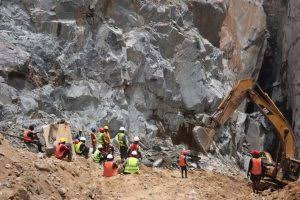
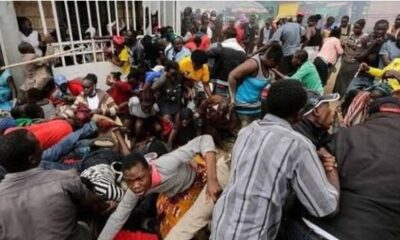
About 14 miners are still trapped under the debris of a collapsed mining pit in Galkogo community, Shiroro Local Government Area of Niger State, the Police Command said on Wednesday, June 5.
Key government officials of the Niger State Government have visited the site of the recent mining incident to assess the situation and oversee rescue operations.
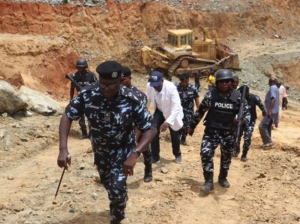
The Commissioner of Police Ebenezer Danmaman, accompanied by the Commissioner of Homeland Security and the Commissioner of Mineral Resources, arrived at the scene around noon on Wednesday.
Upon their arrival, the site engineer confirmed that 20 people were trapped under the rock. So far, 6 individuals have been rescued, leaving 14 still trapped.
Rescue efforts by the site engineers and emergency teams are ongoing.
Also present at the scene was the district head, Aliyu Umar, who confirmed the number of trapped persons.
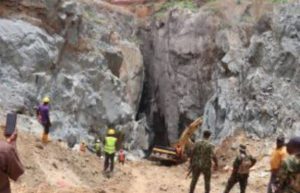
The Commissioner of Police also took the opportunity to remind the community that mining activities have been banned in the state. He urged the residents to cease such activities to prevent further tragedies.









By Gloria Ikibah
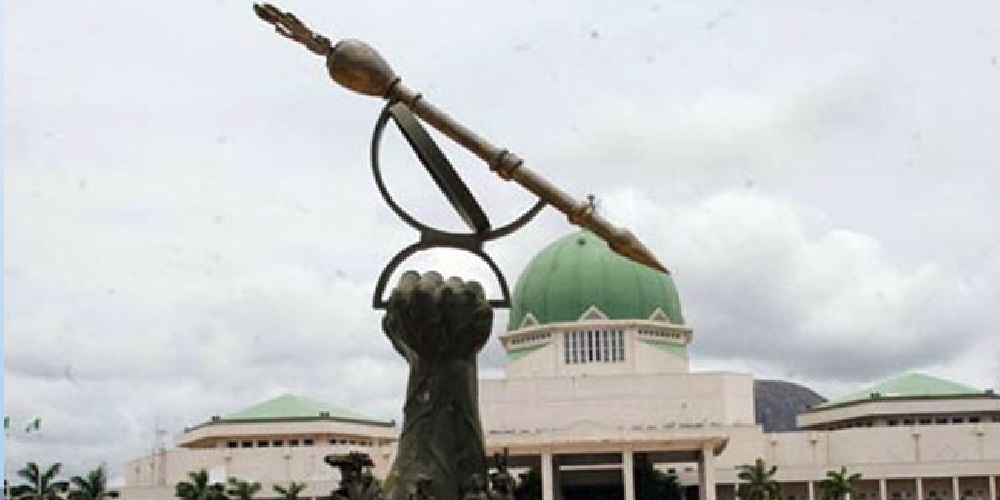
The National Assembly has transmitted the Constitution of the Federal Republic of Nigeria, 1999 (Sixth Alteration) Bill, 2026 to the Houses of Assembly of the 36 states for consideration and approval.
The transmission, carried out on Wednesday, September 16, 2026, marks the next stage in the ongoing constitutional alteration process and was undertaken pursuant to a directive from the leadership of the National Assembly.
The Clerk to the National Assembly, Kamoru Ogunlana, Esq., said the Bill was transmitted to the state legislatures in compliance with the provisions of Section 9 of the 1999 Constitution, as amended.
Under Section 9, a bill seeking to alter the Constitution cannot be passed by either chamber of the National Assembly unless it is approved by resolutions of not less than two-thirds of the Houses of Assembly of the 36 states.
The state legislatures are therefore required to consider the proposed constitutional amendments in accordance with their respective legislative procedures and communicate their resolutions to the National Assembly after completing their deliberations.
Although the Constitution does not stipulate a specific timeframe within which state Houses of Assembly must respond to a constitutional alteration bill, the National Assembly said the state legislatures are expected to communicate their decisions within 30 days of receiving the Bill.
The National Assembly, however, stressed that the 30-day period is an administrative timeframe and not a constitutional deadline.
According to the Clerk, the timeframe is intended to promote an orderly, coordinated and timely conclusion of the constitutional amendment process while respecting the constitutional independence of the state legislatures.
What the Constitution Requires
Nigeria’s Constitution sets a deliberately high threshold for constitutional amendments because changes to the country’s supreme law require approval beyond the National Assembly alone.
In addition to the required approval by at least two-thirds of the state Houses of Assembly, Section 9 prescribes other legislative requirements depending on the particular constitutional provisions being altered.
The process generally involves the introduction and passage of the alteration Bill by the National Assembly before it is transmitted to the state legislatures for consideration. The resolutions of the state assemblies are subsequently communicated to the National Assembly for the next stage of the process.
The requirement for state-level approval gives the 36 Houses of Assembly a constitutionally recognised role in determining whether proposed amendments can proceed.
The National Assembly said it recognises this responsibility and respects the independence of the state legislatures in considering the Bill.
National Assembly Seeks Coordinated Process
In the statement, the Clerk said the transmission was intended to facilitate the orderly discharge of the state assemblies’ constitutional responsibilities rather than interfere with their legislative processes.
“The National Assembly remains committed to ensuring that the constitutional alteration process is conducted in strict compliance with the Constitution,” the statement said.
It added that the process would be guided by due process, institutional cooperation and respect for the legislative responsibilities of all tiers of the legislature.
The National Assembly will await the resolutions of the 36 state Houses of Assembly before taking the subsequent steps required under the Constitution.
The transmission of the Sixth Alteration Bill comes amid continued efforts to amend aspects of Nigeria’s 1999 Constitution, a process that requires cooperation between the federal and state legislatures because of the constitutional threshold for altering the nation’s supreme law.
The statement was signed by Kamoru Ogunlana, Esq., Clerk to the National Assembly.
News
REVEALED: 11 Nigerian-Born Lawyers Hit by U.S. Disciplinary Actions Over Professional Violations

At least 11 Nigerian-born lawyers practising or based in the United States have faced suspension or other disciplinary measures over alleged or established professional violations, according to disciplinary records cited in a report by The Peoples Gazette.
The cases span several years and involve different jurisdictions and regulatory bodies, including state bar authorities, U.S. immigration authorities and the Board of Immigration Appeals.
The disciplinary matters range from unauthorised practice of law and failure to meet professional obligations to alleged misrepresentation, neglect of clients’ cases and mishandling of client funds.
The sanctions are not identical, and the grounds for disciplinary action vary from one case to another. Some of the lawyers have also reportedly been reinstated, while others remain suspended or have not been reinstated.
Below is a summary of the lawyers and the disciplinary actions reported against them.
1. Aloysius O. Ejimakor
Aloysius O. Ejimakor was suspended from practising law in New York for nine months in 2004 following disciplinary proceedings over alleged false claims concerning his professional qualifications.
According to a U.S. Department of Justice document, the Office of General Counsel for the Executive Office for Immigration Review commenced proceedings against him in July 2003.
The proceedings alleged that Ejimakor violated federal regulations by making false statements concerning his qualifications.
The report states that he had not been reinstated following the suspension.
2. Abiola O. Adesioye
Abiola O. Adesioye, based in the District of Columbia, was suspended in July 2025 by the Board of Immigration Appeals from practising before the board, U.S. immigration courts and the Department of Homeland Security.
The suspension followed an order issued by the District of Columbia Court of Appeals on March 25, 2025.
According to the report, disciplinary counsel for the Executive Office for Immigration Review and the Department of Homeland Security jointly petitioned for her immediate suspension under applicable federal regulations.
The Board of Immigration Appeals granted the petition pending the final resolution of the disciplinary proceedings.
3. Emelike Nwosuocha
Emelike Nwosuocha, who died on July 21, 2024, aged 64, faced disciplinary proceedings before his death.
According to the report, he was posthumously suspended for three years in 2024 over professional misconduct.
The disciplinary matter included an alleged failure to provide an affidavit required under an earlier suspension and failure to pay attorney fees owed to a defendant in a medical negligence lawsuit.
In 2023, Nwosuocha had reportedly received a six-month suspension after failing to respond to a disciplinary grievance.
The relevant disciplinary authorities subsequently affirmed the suspension.
4. Michael Ozulumba
Michael Ozulumba, who is based in Massachusetts, was reportedly suspended from practising before the Internal Revenue Service and the Executive Office for Immigration Review for two years.
The reported disciplinary findings involved professional misconduct, neglect of client cases and misrepresentations.
However, the supplied material contains a reference to a 2027 board decision. Since that date is still in the future as of September 16, 2026, that portion requires independent verification and has therefore not been treated here as an established past event.
5. Michael Imevbore Ojo
Michael Imevbore Ojo, based in Houston, Texas, was suspended from practising law for 12 months by the Evidentiary Panel of the District 4C05 Grievance Committee of the State Bar of Texas.
The disciplinary action reportedly involved alleged violations of Texas professional conduct rules, including neglect, failure to communicate with clients and failure to cooperate with a State Bar investigation.
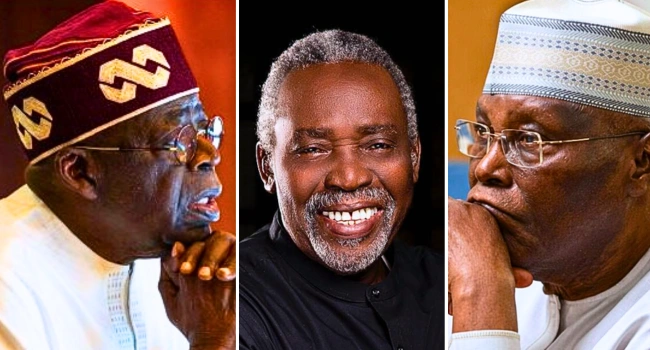
Nigeria’s political and entertainment communities have been thrown into mourning following the death of veteran actor and film executive, Oludotun Baiyewu Jacobs, popularly known as Olu Jacobs, at the age of 84.
Jacobs died on Wednesday, September 16, 2026, with his family announcing his passing in a statement shared by his son, Olusoji Jacobs, on Instagram.
The family described the celebrated actor as “The Lion of Lufodo” and said his death marked the end of a life dedicated to his family, the arts and the entertainment industry.
“Oludotun Baiyewun Jacobs (MFR), 11/07/1942 – 16/09/2026,” the family stated, while appealing to bloggers and social media influencers to respect their privacy as they mourn.
Tinubu: ‘His Passing Is a Great Loss’
President Bola Tinubu led the tributes, describing Jacobs as one of Nigeria’s most distinguished actors and a major figure in the development of the country’s creative industry.
In a statement signed by his Special Adviser on Information and Strategy, Bayo Onanuga, Tinubu said Jacobs’ career across theatre, television and film had inspired generations of actors and filmmakers.
“He was a giant of the Nigerian creative industry. His passing is a great loss to Nigeria, the African film industry and the global community of lovers of the performing arts,” the President said.
Tinubu also praised Jacobs for bringing depth, dignity and authenticity to his performances, saying his body of work would continue to inspire future generations.
The President extended his condolences to Jacobs’ wife, veteran actress Joke Silva, their children, grandchildren, relatives, colleagues and the wider Nigerian creative community.
Atiku: ‘An Institution Has Passed’
Former Vice President Atiku Abubakar also mourned Jacobs, describing him as an institution and a cultural icon whose career helped shape Nigeria’s entertainment landscape.
In a tribute shared on X, Atiku said Jacobs had become a familiar presence in the homes of generations of Nigerians and praised his distinctive voice, dignity and acting talent.
He also highlighted Jacobs’ international career before the emergence of Nollywood as a global phenomenon, noting his contribution to the foundations of Nigeria’s modern film industry.
Atiku extended his condolences to Silva, the Jacobs family and the wider Nigerian and African creative communities.
A Career That Spanned More Than Five Decades
Born on July 11, 1942, Jacobs built a career that stretched across more than five decades and encompassed theatre, British television, international cinema and Nollywood.
He trained at the Royal Academy of Dramatic Art in London before beginning his professional acting career in Britain. He appeared in several British television productions and international films before returning to Nigeria, where he became one of the country’s most recognisable screen and stage actors.
In Nigeria, Jacobs became particularly associated with roles portraying kings, chiefs, traditional rulers, patriarchs and other authoritative characters.
His commanding presence and distinctive voice became trademarks of his performances, helping establish him as one of the defining figures of Nigerian cinema.
Awards and National Recognition
Jacobs received several major honours during his career.
He won the Africa Movie Academy Award for Best Actor in a Leading Role in 2007 and was honoured by the Federal Government with the national award of Member of the Order of the Federal Republic (MFR) in 2011.
He also received the Industry Merit Award at the 2013 Africa Magic Viewers’ Choice Awards and a lifetime achievement award at the 2016 MAA Awards.
Jacobs was also a film executive and, alongside Joke Silva, co-founded the Lufodo Group, further extending the couple’s contribution beyond acting into the development of Nigeria’s performing arts sector.
Olu Jacobs and Joke Silva
Jacobs and Joke Silva became one of Nigeria’s most prominent entertainment couples.

NASS Transmits 2026 Constitution Amendment Bill to 36 State Assemblies

REVEALED: 11 Nigerian-Born Lawyers Hit by U.S. Disciplinary Actions Over Professional Violations

Olu Jacobs Dies at 84: Tinubu, Atiku Lead Tributes to Nollywood Icon



-

 Metro16 hours ago
Nigerian Army Speaks of Possible Attacks on Churches, Schools
-
 News23 hours ago
2027: Uzodinma and his cohorts are politically lazy- Wike
-
 News16 hours ago
Suspected Fulani Militias K!ll Christian Leader In Plateau
-
 News12 hours ago
PDP Warns APC Governors: ‘Ignore Wike at Your Own Peril’
-
 News12 hours ago
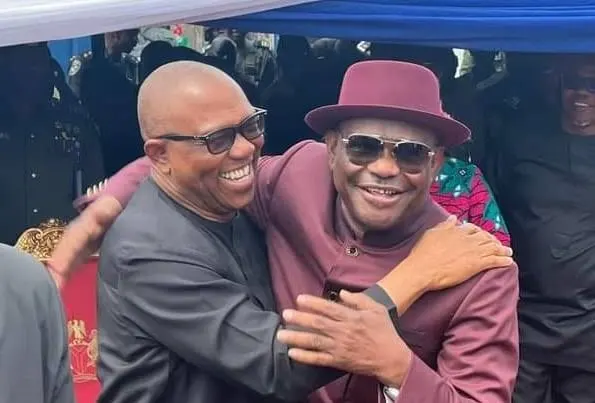
Obi: Wike Was Happier, Healthier When We Worked Together
-

 Opinion12 hours ago
Surging Energy demands and challenges of Ai
Warning: Undefined variable $user_ID in /home/naijuinz/public_html/wp-content/themes/zox-news/comments.php on line 49
You must be logged in to post a comment Login