News
It Will Take Decades To Get Out Of Banditry – Sultan Laments
- /home/naijuinz/public_html/wp-content/plugins/mvp-social-buttons/mvp-social-buttons.php on line 27
https://naijablitznews.com/wp-content/uploads/2024/06/Screenshot_20240624-180921_1.jpg&description=It Will Take Decades To Get Out Of Banditry – Sultan Laments', 'pinterestShare', 'width=750,height=350'); return false;" title="Pin This Post">
- Share
- Tweet /home/naijuinz/public_html/wp-content/plugins/mvp-social-buttons/mvp-social-buttons.php on line 72
https://naijablitznews.com/wp-content/uploads/2024/06/Screenshot_20240624-180921_1.jpg&description=It Will Take Decades To Get Out Of Banditry – Sultan Laments', 'pinterestShare', 'width=750,height=350'); return false;" title="Pin This Post">
By Kayode Sanni-Arewa

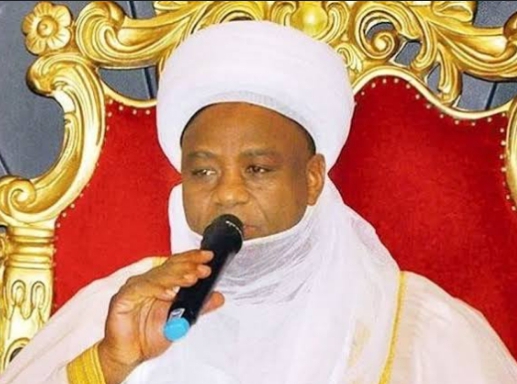
The Sultan of Sokoto, Muhammadu Saad Abubakar III, in Katsina on Monday, June 24, 2024
The Sultan of Sokoto, Muhammadu Saad Abubakar III, says it will take decades for the bandit-ravaged North-West geopolitical zone to come out of the menacing security challenge.

The President General of the Nigeria Supreme Council for Islamic Affairs (NSCIA) stated this at the North-West Peace and Security Summit in Katsina State on Monday.
“What we must do is to challenge these bandits because we all know the consequences of banditry and insurgency on our lives. But it will take decades to get out of it if all we get out of it. We all know the consequences and the problems,” he said.
The Sultan expressed the readiness of traditional rulers to partner with security agencies and the seven governors of the geopolitical zone to “save our region from the numerous problems” of banditry and insurgency.
He believed that at the end of the summit, proposals to bring insurgency to the barest minimum for people to go about their lives and businesses would be arrived at
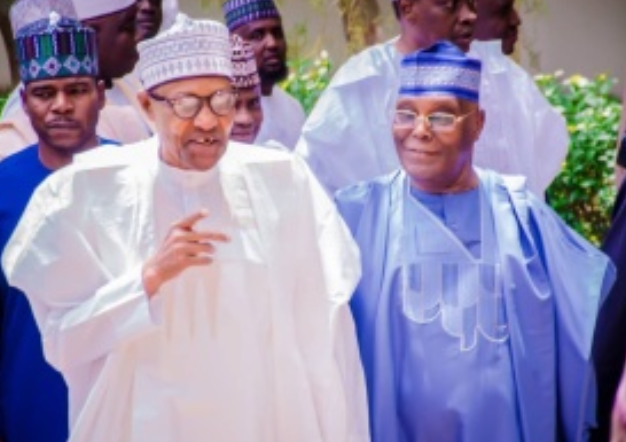
The summit was graced by Vice President Kashim Shettima, who represented President Bola Tinubu; ex-President Muhammadu Buhari, governors of the seven states in the North-West geopolitical zone, service chiefs, the Inspector General of Police.
Banditry became a phenomenon in Kaduna, Kastina, Zamfara, Sokoto, Kebbi, Kano, and Jigawa in the last one decade as a spillover of the intractable Boko Haram insurgency in the North-East zone.
Thousands of people, mostly vulnerable persons, have been killed and displaced by the bloodthirsty marauders who mostly disguise as herders. A very large number of people have also been kidnapped for ransom as the AK-47-wielding bandits multiply across the North-West zone and penetrate the North Central zone.
Non-kinetic approaches explored by governments at different levels have failed over the years as bandits continue to sack farmers from their farmlands, significantly affecting the food production of the country.

News
Finally, Federal Ministry of Finance Approves Payments to 1,240 Local Contractors
The Federal Ministry of Finance has approved payments to more than 1,240 contractors, providing immediate liquidity support to businesses across the country and reinforcing the Federal Government’s commitment to meeting its financial obligations.
The approval, granted by the Honourable Minister of Finance and Coordinating Minister of the Economy, Mr. Taiwo Oyedele, follows a diligent verification and reconciliation undertaken by the Ministry to ensure that only duly validated obligations qualify for payment.
The payments cover contractors across various Ministries, Departments and Agencies (MDAs) and represent a significant step in addressing long-standing payment obligations, particularly those affecting indigenous businesses and small and medium-sized enterprises (SMEs).
Contractors prioritised for payment in the most recent batch are those with verified claims in the region of ₦100 million or less. The release of funds is expected to provide immediate relief to hundreds of businesses, enabling them to return to project sites, pay workers, settle suppliers, meet financial commitments, and support economic activity across the country.
This development reflects the Ministry’s commitment to translating policy objectives into tangible outcomes by resolving inherited obligations in a transparent and fiscally responsible manner.
Over the past few months, the Federal Government has processed payments exceeding ₦700 billion across various categories of verified obligations owed to local contractors. Within the month of May alone, approximately ₦436.6 billion in transactions were processed, demonstrating a significant acceleration in payment activity aimed at unlocking liquidity and supporting economic growth.
By prioritising a large number of smaller contractors rather than concentrating payments among a few large beneficiaries, the Government is broadening the economic impact of these disbursements, supporting businesses across different sectors and regions of the country.
The latest payments are expected to strengthen confidence among contractors, suppliers, and service providers doing business with government by demonstrating the Government’s commitment to honouring duly verified obligations.
For many beneficiaries, the release of funds represents more than a financial transaction. It provides the certainty needed to sustain operations, preserve jobs, complete ongoing projects, and contribute to economic recovery and growth.
The Ministry remains committed to maintaining fiscal discipline while ensuring that legitimate obligations are settled in a timely manner going forward to substantially reduce outstanding liabilities over time, strengthen confidence in public financial management, and support the effective delivery of public services and infrastructure.
News
NCC hosts 185 girls on ICT industrial excursion
The Nigerian Communications Commission (NCC) has supported the Federal Government’s Girls in ICT empowerment initiative by hosting 185 students on an industry excursion.
NCC Director of Public Affairs, Nnenna Ukoha, disclosed this in a statement on Sunday in Abuja.
She said the tour was designed to inspire digital skills development and encourage future careers in technology.
The initiative was championed by the Ministry of Communications, Innovation and Digital Economy.
The programme aims to equip young Nigerians, particularly girls, with digital knowledge and relevant technology skills.
Ukoha said participants were selected by the ministry from across the country’s geopolitical zones.
She said the students were chosen for a competition promoting digital inclusion and greater participation of girls in Information and Communication Technology (ICT).
According to her, some participants were also drawn from Science, Technology, Engineering and Mathematics (STEM) disciplines.
“The visit to the Commission formed part of activities organised by the Ministry under the National Girls in ICT Programme.
“It is an initiative aimed at bridging the gender gap in technology through digital skills, mentorship opportunities and exposure to innovation,” she said.
Ukoha said participants learned about developments in telecommunications from 1886, when colonial authorities established communication facilities for administrative purposes.
She said the students were also introduced to the history of telegraph services linking Lagos with West Africa and Europe through submarine cables.
According to her, the tour highlighted the telecommunications landscape at Independence in 1960.
She said Nigeria then had only 18,724 telephone lines serving an estimated population of about 40 million people.
“The students were also briefed on post-Independence development plans and the operations of the former Department of Posts and Telecommunications.
“They also learned about Nigerian External Telecommunications Ltd. and the establishment of NITEL in 1985,” she said.
Ukoha said NITEL was created to coordinate internal and external telecommunications services across the country.
She noted that a major attraction during the visit was the display of historical artefacts preserved at the NCC Museum.
Among the exhibits were a Post Office Counter and Sorting Racks introduced in Lagos in 1852.
Other artefacts included the Grand ‘T’ Key used in the nineteenth century Lagos Post Office.
The collection also featured leather mail bags from 1863 and Drop Bag fittings from the late twentieth century.
Students viewed a 511A Letter Scale, an Improved Dynamometer Scale, telegram machines and the Teleprinter T100.
Additional exhibits included a Cordless PBX system, Digital Card Phone and other communications equipment.
Speaking during the tour, NCC Executive Vice Chairman, Dr Aminu Maida, said the initiative aligned with the Commission’s digital literacy objectives.
Represented by Director of Research and Development, Babagana Digima, Maida said the museum linked past and present generations.
He said the experience would help young people appreciate the sector’s transformation from analogue systems to the digital age.
According to him, understanding telecommunications history would inspire participants to contribute to future innovation.
Maida said exposing young people to technological advancement was essential for developing leaders for Nigeria’s digital economy.
“The whole idea is to engage the younger generation and show them what communication is all about.
“This museum preserves the history of communications and showcases the evolution from postal services to telegraphy and digital technology.
“We want to spark the curiosity of young people and help them understand how far the sector has progressed.
“When they see the past and the present, they can imagine the future and contribute to shaping it,” he said.
During the tour, NCC officials guided participants through exhibits documenting key milestones in Nigeria’s telecommunications history.
The students also explored the evolution of the communications sector and its contribution to national development.
News
Middle East conflict: Israel Launches Retaliatory Strikes on Iran in renewed violence
Israel has launched airstrikes on Iran in retaliation for waves of missiles fired at its northern regions on Sunday.
The development marked a day of renewed violence in the Middle East after a fragile ceasefire.
Iranian state television reports that the sound of explosions was heard in Isfahan, Karaj, Tabriz and Tehran.
The strikes occurred after Iran’s Islamic Revolutionary Guard Corps, IRGC, said it had targeted the Ramat David Airbase in northern Israel with ballistic missile fire on the evening of June 7.
The IRGC claimed that Israel used air-launched ballistic missiles in its attack on Monday morning.
The Israel Defense Forces, IDF, said it identified missiles fired from Iran toward northern Israel and defensive systems are operating to intercept the threat.
“A short while ago, the Israeli Air Force struck military targets belonging to the Iranian terror regime in western and central Iran,” the Israeli military stated.
-
News22 hours agoReps Recover N521.8m VAT From CBN, Targets Additional ₦33bn in Outstanding Liabilities
-
News20 hours ago12 Years On: Suswam’s ₦3.1bn Scam Trial Stalls as Defence Yet to Open Case
-
News22 hours agoStop Demarketing Plateau, Group Cautions Dalung
-
News22 hours agoFaleke Urges Civil Servants to Uphold Integrity, Hails Retiring National Assembly Clerk
-
News11 hours agoPhotos: Nigeria Will Survive Insurgencies like it Survived Past Political Upheavals, Pandemics – Akpabio
-
Metro11 hours agoHouses razed as soldiers, police clash with Delta community youths
-
News19 hours agoAirforce deploys surveillance aircraft to track abducted Oyo school children, teachers
-
News5 hours agoBREAKING: Resident doctors begin nationwide strike

Warning: Undefined variable $user_ID in /home/naijuinz/public_html/wp-content/themes/zox-news/comments.php on line 49
You must be logged in to post a comment Login