

News
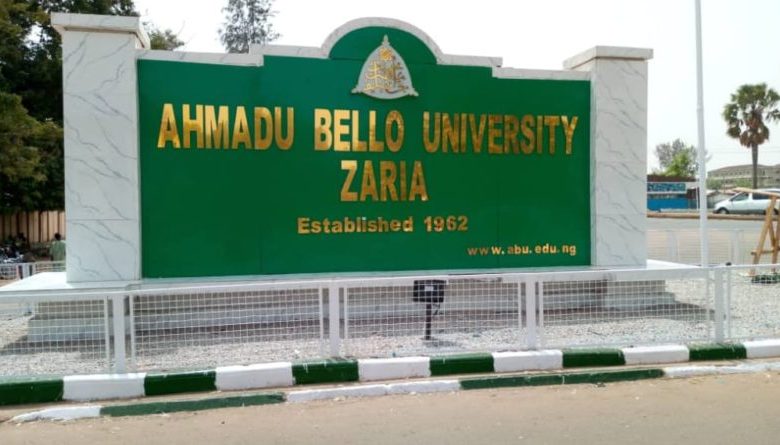
ABU professors write Tinubu over ‘looming energy crisis’
- /home/naijuinz/public_html/wp-content/plugins/mvp-social-buttons/mvp-social-buttons.php on line 27
https://naijablitznews.com/wp-content/uploads/2024/07/ABU-zaria.jpg&description=ABU professors write Tinubu over ‘looming energy crisis’', 'pinterestShare', 'width=750,height=350'); return false;" title="Pin This Post">
- Share
- Tweet /home/naijuinz/public_html/wp-content/plugins/mvp-social-buttons/mvp-social-buttons.php on line 72
https://naijablitznews.com/wp-content/uploads/2024/07/ABU-zaria.jpg&description=ABU professors write Tinubu over ‘looming energy crisis’', 'pinterestShare', 'width=750,height=350'); return false;" title="Pin This Post">
Your Excellency
Bola Ahmed Tinubu, GCFR
President and Commander in Chief of the Armed Forces of the Federal Republic of Nigeria

The Visitor
Ahmadu Bello University
Zaria
Sir,
AN OPEN LETTER TO THE VISITOR, PRESIDENT BOLA AHMED TINUBU, GCFR, OVER THE LOOMING ENERGY CRISIS IN AHMADU BELLO UNIVERSITY, ZARIA
We, the undersigned Nigerian citizens and academic staff of Ahmadu Bello University (ABU), Zaria, wish to forward a complaint over the debilitating energy crisis bedeviling Ahmadu Bello University – given the centrality of electricity supply to university operations – and seek your intervention for its resolution. We take this action out of the conviction that, as the President of the Federal Republic of Nigeria and Visitor to the University, Your Excellency is in a position to mediate over the matter especially because the crisis aggravated with the recent high increase in electricity tariff in the country, which ABU in particular, and Nigerian Public Universities in general, cannot afford due to their weak financial position resulting from chronic underfunding.
We also seek Your Excellency’s intervention because even where hard economic realities dictate recourse to commercialization of utilities, educational institutions should be safeguarded from the burden of meeting market-induced pricing, especially where their capacity to do so is highly constrained. As educational institutions of high value to public good, universities should be shielded from the extremities of commercialization.
The Ahmadu Bello University is a first-generation university established by Law [Cap A. 14 of the Federal Laws; The Universities Miscellaneous Provisions (Amendment) Act 2003].
Your Excellency, history and the Nigerian people will bear witness that for over sixty years ABU has served as a major organic driver and facilitator of national development through the production of quality and functional knowledge with sound moral content and the generation of skilled manpower through men and women of all races, nations, gender and creed for all sectors of the society, economy and culture at the national, continental and global levels. The University also attained eminence through its strong support of liberation struggles in Africa and beyond.
You are aware, Sir, that higher education is the backbone of any modern nation state and the marker of its performance, achievements, cultural standards, level of civilization and the prestige it commands in the comity of nations. It was Adam Smith who said that the true wealth of a nation is not gold or silver or a positive balance of trade, but rather its productive citizenry – its human capital in form of skills, knowledge and creativity.
Your Excellency, in today’s knowledge-based world, the Ahmadu Bello University, like other Nigerian universities, can exist, function, and execute its mandate only if such critical enablers of modern university – basic infrastructure for teaching, learning and research, including ICT[1]based substructure, quality manpower, unrestricted energy supply, and high-level funding, are firmly in place. For a developing nation that is yet to build a solid industrial base, the University is a significant national resource that requires the priority attention of government.
As an experienced public figure, Your Excellency knows that in the current knowledge, science and technology driven world, the acquisition of education is the minimal condition for survival and this makes education a basic need. The provision of basic needs to citizens or creating the conditions that enable citizens to meet their basic needs is a fundamental responsibility of government, a sign of good governance and for developing nations a sine qua non of governance.
Yet, it is common knowledge that the economics of education financing is unique, because it is not directly subject to the laws of supply and demand. Researches here in ABU, as elsewhere, have since established the truism that higher education, and indeed education in all its forms, is very expensive in its capital requirements, and exceptionally so in its recurrent expenditure, though very slow, but sure, in yielding returns.
The aforementioned facts imply that wise countries deploy today’s resources for the purposes of tackling the problems of tomorrow and answering the questions of today and of the future.
This is done through massive commitment of national social, financial and human capital. In this regard, no self-respecting nation will justify its education in pure economic terms or by the use of the profit motif argument. Sadly, the commodification of education has been the bane of the policies of successive Nigerian governments, especially since the imposition of the Structural Adjustment Programme (SAP) in 1986. This trend has steadily negated the utilitarian value of education and demeaned its significance as a necessity in the current competitive world order and our deplorable level of underdevelopment.
Your Excellency, it is our candid view that your government has embraced the neo-liberal, market-oriented reform agenda with uncritical zeal and haste in spite of the high level of stagnation of our economy, the progressive decline of the purchasing power of the national currency, depressed wages, widespread indigence and poverty, stagflation and general insecurity. For educational institutions, other manifest corollaries of these policies include decay, in teaching, learning and research infrastructure, dysfunctional municipal systems and ruinous energy crisis characterized by inadequate supply of electricity coupled with the crippling effects of unsustainable high costs of electricity and of energy in general.
Furthermore, the constant threats, and the actual brazen acts of disconnection of the universities from the national grid by the DISCOs pose an existential peril that the universities live with on daily basis now. The last time, Your Excellency, the DISCO here, in a fit of corporate impunity, disconnected the ABU, the system was left brutally traumatized, injured and paralyzed. The losses were beyond recount. A young doctoral scholar in the sciences, for instance, lost over 1000 painstakingly but systematically sampled bovine cardiac tissue research specimens.
Many other scholars and students had thousands of carefully cultured microbial samples in their laboratories wiped out. More than a thousand households had their precious little foodstuff destroyed. The ABU campuses, during the over one month of imposed total darkness, became desolate; staff, students and families lived like hunter-gatherers, scavenging for firewood and water from bushes, dirty wells and streams under heightened susceptibility to waterborne epidemies.
It is beyond dispute that Nigerian universities are not, by any law, statute, or ethical or socio[1]economic definition, profit-making or revenue-generating outfits. They are, however, now rendered unviable and unable to fend for themselves the potential for imminent collapse from mere electricity bills – and this being only one of the many fundamental concerns. Ahmadu Bello University, for instance, with an average total annual budgetary overhead grant of N150 million only, now requires an astounding but unaffordable N3.6 billion (monthly average of N300 million) to settle its annual electricity bill, at the cost of N206/kWh per unit of the so[1]called band A. For a university that requires about 7megaWatts of electricity, in addition to providing other energy costs per month, the financial implication is far beyond its capacity.
Your Excellency, even if the market-oriented principle of ‘cost-sharing’ between government and parents/wards is a viable option, the inability of the University to mobilize adequate financial and material support entails that it transfers the huge cost to students by hiking up fees and charges. If the N3.6 billion were to be transferred to the University’s 50,000 students, the current municipal charges alone will have to be hiked up by at least a rate of 500%.
Not only is this sum impossible to pay by virtually all students but it also negates the position of your government on the matter. You would recall, Sir, that at its inception, your government expressly forbade the Senates and Councils of Federal universities to hike up registration fees for the poor, beleaguered Nigerian students and their parents. Some of us hailed your government then as having the courage to acknowledge the suffering of the Nigerian parents and their wards. In any event, student charges are specifically meant to offset the cost of services in the learning and living campus environment and cannot be used to cover for these energy costs which justly belong to overhead grants that government should but has not, ironically, been responsible for.
Your Excellency, the Nigerian society, its developmental agendas and such of their key enablers as education, industrialization and national integration are in deep crisis and the country has reached a decision point that require critical and somber rethinking by the people and the nation, with you, as the leader. It is imperative that we decide if we truly want to have national public universities and the quality of universities that we want. But the one decision we cannot make at this existential moment is one of logical impossibility and delusion; that is, of having universities but not having to adequately fund or support them to thrive.
We need not remind Your Excellency, however, that the Constitution of the Federal Republic of Nigeria, that you swore to uphold, had defined education, in unequivocal terms, as a public good, thus, prioritizing investment in public education is a cardinal constitutional objective.
In view of the foregoing, Your Excellency, we urge you, as the Visitor to all Federal Universities and the Head of State and Federal Government, to take an urgent and decisive action by making the Federal Government bear the cost of electricity supply as a form of overhead grant to all the Federal Universities in the country. Alternatively, Your Excellency, the Federal Government, as PART OWNER – with 49% stake in GENCOs and DISCOs and continually investing more in them – as well as being the guarantor of social balance and social security in the land, could direct the DISCOs to provide unrestricted supply of electricity to all Nigerian universities in return for some tax credits. On the other hand, Your Excellency, the government could also charge the DISCOs to create a new dedicated social tariff band with lower rates that universities can afford given their present funding realities.
We are convinced, Your Excellency, that your government could accomplish this with all the necessary exigency. This will not only not hurt any sector of the economy, society or national life but that it will constitute an important first step and a signal that your government can and will address the myriads of problems in our tertiary institutions.
With regards,
Cc:ABU, academic staff, Open letter, Bola Tinubu, Looming energy crisis’
The President, Senate of the Federal Republic of Nigeria
The Speaker, House of Representatives of the Federal Republic of Nigeria
Chairmen, Senate & House Committees on Tertiary Institutions
The National Security Adviser
The Hon Minister, FMOE
His Eminence, the Sultan of Sokoto, Alhaji Saad Abubakar III
His Highness, the Emir of Zazzau, Ambassador Ahmed Nuhu Bamalli
The President Inter-Religious Council of Nigeria
The Chancellor, ABU, Zaria
The Chairman & Members, ABU Governing Council
The Chairman, Committee of Pro Chancellors of Nigerian Universities
The Vice Chancellor, ABU, Zaria
The Chairman, Committee of Vice Chancellors of Nigerian Universities
The President, NLC
The President, TUC
The President, ASUU
The President, SSANU
The President, NAAT
The President, NASU
The President, NANS
This story’s headline has been updated to reflect that only professors are involved in the letter, not the academic staff
News
Fuel price: Read further details after stakeholders meeting with Nigerian govt
Dangote Refinery, depot owners, and petroleum products marketers have agreed to further slash premium motor spirit prices across the value chain after meeting with the Nigerian government.
Recall that the federal government had insisted on further fuel price cuts by Dangote Refinery, depot owners, and marketers, respectively, on the basis of falling crude oil prices.
The Nigerian government stood on this ground in a meeting with the oil downstream sector’s regulator, the Nigerian Midstream and Downstream Petroleum Regulatory Authority, with the attendance of stakeholders within the value chain, including Dangote Refinery, depot owners and petrol marketers.
Nigerian Government had warned refiners and marketers on adherence to cost-reflection prices commensurate with the $72 per barrel Brent crude price amid war escalation in the Middle East.
NMDPRA’s position is that fuel price, indeed, other petroleum products should drop further.
The chief executive of NMDPRA, Rabiu Umar, stated this during Monday’s stakeholders meeting on cost-reflective pricing of petrol in Abuja.
Providing further details on the meeting, both the president of the Petrol Petroleum Products Retail Outlets Owners Association of Nigeria, Billy Gillis-Harry, and the president of the Independent Petroleum Marketers Association of Nigeria, Abubakar Maigandi, in separate interviews with DAILY POST, confirmed that fuel prices would further drop nationwide.
According to them, petrol may decline further to around N1000 or less if crude oil price continues to fall.
Gillis-Harry revealed that fuel price is to be reduced below its current rates of N1150 and N1299 per liter in Abuja and its environs.
According to him, major stakeholders in the country’s petroleum downstream sector were in the same boat on the fuel price drop.
However, he insisted that marketers cannot be compelled to sell fuel below cost.
He provided details of the meeting outcome, stating that it is focused on finding practical solutions that would make fuel more affordable for Nigerians.
“You can quote us that PETROAN is willing to work with the NMDPRA, the Federal FCCPC, the minister of petroleum, and all stakeholders to ensure that price reduction is implemented for the benefit of Nigerians.
“However, nobody is going to be running a business at a loss, and then, you know, basically what that means is that’s the close of business,” he said.
He explained that fuel pricing remains largely dependent on international market forces, noting that fluctuations in crude oil prices and other global factors make it difficult to fix a specific pump price.
“The true cost-reflective price is still determined internationally. That’s the reality,” Gillis-Harry said.
He added that the dynamics affecting pricing change constantly, making it impossible to announce a fixed cost-reflective price.
“It’s not easy to work things out because the dynamics of the input vary. There’s no time that is static,” he stated.
Why fuel pump price hasn’t dropped like crude oil price- Gillis-Harry
Addressing public expectations that petrol prices should immediately fall whenever crude oil prices decline, the PETROAN president said such assumptions do not reflect the realities of the downstream petroleum market.
“The expectations that are put by Nigerians, ‘Oh, the crude oil has come down to $72, therefore, it must affect us.’ But that is not the reality,” he said.
According to him, international oil prices remain volatile, noting that even during the meeting, crude prices rose sharply.
“Even today, as we are sitting there, we were checking the price volatility. Price increased by $7,” he said.
Gillis-Harry stressed that no stakeholder in the petroleum value chain could independently determine fuel prices, adding that efforts are ongoing to reduce costs across the industry.
“We cannot, in reality, make any pronouncements today. Because what we’re trying to do is everybody must take a cut,” he said.
“Every one of us must take a cut. We had earlier issued a press release on this matter, and it hasn’t changed.
“That press release was based on empirical evidence, empirical data, all of which today was very transparently presented.”
Marketers, retailers will not shut down due to fuel price reductions
He also maintained that the government cannot simply direct marketers to sell petrol at a predetermined price without considering market realities.
“If you tell us to go and sell at this price, then business is closed. How do Nigerians get fuel overnight?” He asked.
He added that allowing experienced operators to continue running the business remains the best approach to ensuring uninterrupted fuel supply.
“So as it is today, prices will come down, we know. But how much it will come down, we cannot say.
“And I don’t think it will be fair for me, for anybody, to make that kind of assumption because it will be just, at best. And assumptions are not facts,” Gillis-Harry said.
He noted that refiners, importers, and retailers have already begun adjusting prices downward where possible.
“You can see Dangote has been reducing. Our retail outlets have been reducing. That’s how we continue to go until the price comes down,” he said.
While expressing confidence that petrol prices would continue to decline over time, Gillis-Harry said the pace of reduction would depend on prevailing market conditions.
“It will come down. But how fast and how well is something that we have to keep working on until we get the dynamics of how to make sure that there’s an answer,” he added.
On his part, Maigandi reiterated that Dangote Refinery marketers will continue to reduce the price upon lower crude oil prices.
According to him, the federal government cannot impose fuel prices on stakeholders in the petroleum downstream.
“Fuel prices will go down further; that was our major agreement. Both Dangote Refinery and depot owners assured Nigerians.
“But you can say exactly that the fuel price may come down to below N1,000 per liter,” he stated.
Recall that Dangote Refinery, depot owners, and filling stations have dropped fuel prices by at least N100 per liter in the last three weeks.
This has led to fuel pump drops to between N1150 and N1299 per liter in Abuja and its environs.
At the weekend, Nigerian National Petroleum Company Limited slashed its fuel price to N1,150 per liter.
MRS filling station, AA Rano, Ranoil, NIPCO, and other filling stations dispense between N1,191 per liter and N1,240.
Recall that Brent and West Texas Intermediate crude blends stood at $71 and $68 per barrel at the time of filing this report.
News
2027: ADC has no blueprint to rescue Nigeria – Atiku’s political acolyte Aliyu dumps party, joins APC
Aslam Aliyu, a political acolyte of the African Democratic Congress, ADC, presidential candidate, Atiku Abubakar, has dumped the party and joined the ruling All Progressives Congress, APC.
In a statement, Aliyu said the ADC does not have a concrete rescue plan for Nigeria, stating that her decision followed a long reflection on Nigeria’s political direction and the capacity of the opposition to provide alternative governance.
According to her, for almost two decades, she had worked tirelessly within the political camp of Atiku, noting that throughout the entire period, her loyalty never wavered.
She, however, stressed that after almost two decades of dedicated engagement, it has become undeniably clear that the opposition lacks a meaningful development blueprint or a viable and sustainable national rescue plan.
“The ADC has no concrete plan for the country, other than to criticise the government without bringing a single viable solution to the table. Political culture must move past theatrical criticism and embrace measurable progress.
“I am a mother, calling on patriotic Nigerian youths, women, and forward-thinking opposition members to abandon counterproductive politics and join hands with President Bola Ahmed Tinubu,” she said.
“There is no vacancy in Aso Rock Villa, as Bola Ahmed Tinubu will emerge as the winner of the presidential election come 2027, by the grace of Almighty Allah,” she said.
The Zamfara-born politician further stated that her defection was driven by a desire to contribute more effectively to national development under a structured political platform.
News
‘Fake’ agency: Angry Gbajabiamila threatens Adeyemi with N10bn defamation lawsuit
Chief of Staff to the President, Femi Gbajabiamila, has threatened legal action against Prince Adeniyi Adeyemi, demanding N10 billion in damages over allegations linking him to murder, bribery, and other criminal activities.
This was contained in a letter dated July 6, 2026, signed by Senior Advocate of Nigeria, Kemi Pinheiro, on behalf of Pinheiro LP, the legal representatives of the Chief of Staff.
The letter reads in part, “The publication which has been extensively circulated across several print, electronic and social media platforms and has consequently attracted widespread public attention, contains numerous statements which are not only false, malicious, reckless and entirely without factual foundation, but were clearly designed to portray our client as corrupt, dishonest, criminally culpable, morally bankrupt, administratively incompetent, a murderer and unfit to occupy public office.
“In particular, in your press conference, you falsely alleged, among other things, that our client demanded or requested forty-eight percent (48%) of the alleged take-off grant of an entity described as the Presidential Foreign Intervention Promotion Council, received the sum of 400,000,000.00 by proxy in connection with appointments relating to the said entity, abused and exploited his office as Chief of Staff to intimidate individuals and media organizations,
“Knowingly participated in fraudulent governmental processes relating to the national budget acted dishonestly and in a manner warranting his resignation from public office sought to manipulate or misuse security agencies against you may have acted under the influence of intoxicating substances in the discharge of his official duties and engaged in conduct suggestive of corruption, abuse of office, criminality and gross misconduct is a murderer, assassin and participated in a criminal cover-up.
“These allegations are not only false but are gravely defamatory. They plainly convey to ordinary, reasonable members of society that our client is corrupt, dishonest, criminally culpable, morally bankrupt, unfit for public office, violent, dangerous and undeserving of public trust.”
Gbajabiamila’s lawyers demanded that Adeyemi, within 72 hours of receiving the letter, cease making or publishing further defamatory statements, remove the alleged offending press conference and related materials from all platforms under his control, and publish a full, unequivocal and unreserved retraction and apology.
The lawyers further demanded that the apology be published with the same prominence as the original allegation in at least five national newspapers, across all platforms where the disputed publication appeared, and on every social media account used to disseminate it.
In addition, the legal team also requested that a written undertaking be submitted to their law firm, assuring that no further defamatory statements would be made against their client.
However, according to the letter, failure to comply with the demands within the stipulated period would with no option but to initiate both criminal and civil proceedings.
The proposed legal action would include a criminal complaint for alleged criminal defamation under the laws of the Federal Capital Territory, FCT, as well as a civil suit seeking N10 billion in aggravated and exemplary damages, which they said would be donated to charities of Gbajabiamila’s choice.
The legal team also said it would seek a perpetual injunction restraining any further defamatory publications and a mandatory court order compelling Adeyemi to publish a retraction and apology.
Recall that Adeyemi held a press conference on June 25, accusing Gbajabiamila of seeking a share of the alleged take-off funds of the Presidential Foreign Intervention Promotion Council, PFIPC, receiving money through intermediaries, abusing his office and participating in efforts to conceal wrongdoing.
-
News20 hours agoJust in: Tony Elumelu to vacate UBA Group, details here
-
Metro8 hours agoEFCC Opens N15.6 Billion Fraud Case Against Ex-Skye Bank Chairman, Ayeni
-
News20 hours agoRussian Airstrike k!lls 23-yr-old female Nigerian Medical graduate in Ukraine days to graduation ceremony
-
Economy8 hours agoUBA Appoints New Chairman As Tony Elumelu Set To Retire
-
News20 hours agoTinubu: Strong Institutions Are Bedrock of Democracy as Wike Delivers Body of Benchers Annex(Photos)
-
Sports8 hours agoSpain Defeat Portugal To End Cristiano Ronaldo’s World Cup Career
-
Sports8 hours agoHeartbreaking Moment Cristiano Ronaldo Cries Profusely As His #FIFAWorldCup Career Ends After Spain Loss
-
News12 hours agoCustoms Beat 2025 Revenue Target, Seek Reps’ Nod For N11.27tn 2026 Budget

Warning: Undefined variable $user_ID in /home/naijuinz/public_html/wp-content/themes/zox-news/comments.php on line 49
You must be logged in to post a comment Login