Connect with us

News

Reps Investigates Alleged Importation Of Adulterated Petrol, Price Hike, Others

Published

on

ADVERTISEMENT
Zoom Ad
ADVERTISEMENT
Zoom Ad
 
By Gloria Ikibah 
 
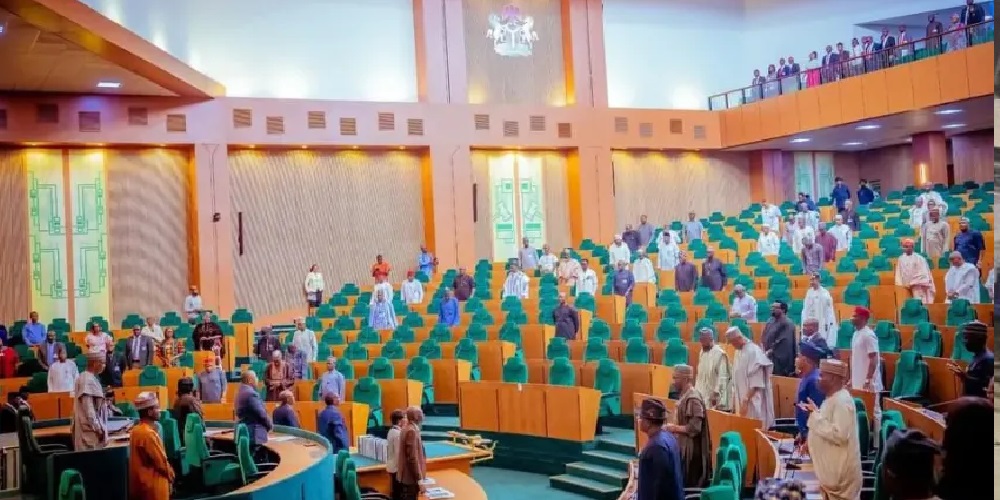
The House of Representatives has commenced investigation of importation of adulterated petroleum products into the country, difficulties of domestic refineries in accessing crude oil feedstock and broader threats those issues pose to Nigeria’s energy security.
 
Speaker of the House, Rep. Abbas Tajudeen at the inauguration of the Joint Committee on Petroleum Upstream and Downstream on Monday in Abuja, expressed concern over the resurgence of fuel queues at petrol stations, increasing cost of Premium Motor Spirit (PMS), and unavailability of crude oil feedstock for downstream domestic refineries.
 
Naijablitznews.com recalled that the House of Representatives had at plenary on July 9th 2024 , adopted a motion on, “Urgent need to carry out a legislative forensic investigation into the challenges affecting the downstream and midstream petroleum sectors in Nigeria and other related matters to find out a lasting solution to all challenges”.
 
The House had subsequently mandated the Committees on Petroleum Resources Midstream and Downstream to “Carry out a legislative forensic investigation into the resurgence of fuel queues in petrol stations, allegations of high cost of PMS, unavailability of fuel stock for downstream domestic refineries, disruption of distribution of PMS products, unfair subsidization of PMS and other petroleum products, racketeering and favouritism in the Pro Forma Invoice System regime.” etc
 
Represented by Deputy Speaker Benjamin Kalu, Speaker Abbas said the investigation will also extend to other related issues impacting the sector; adding that the quality of petroleum products imported into Nigeria has come under scrutiny, and authorities must ensure compliance with global standards.
 
The Speaker insisted that the Nigerian Midstream and Downstream Petroleum Regulatory Authority (NMDPRA) and Standards Organization of Nigeria (SON) must guarantee that all petrol imported into the country is rigorously tested in laboratories to meet the standard sulphur and octane levels.
 
He said: “It is unacceptable that the petrol imported into the country contains high sulphur levels, is leaded, and has low octane levels – as we notably experienced in recent past that even led to socio-economic losses on a national scale including the knocking down of the engines of vehicles of Nigerians in their hundreds.
 
“In carbon control economies, maintaining high octane levels is a significant regulatory issue for both energy regulators and environmental protection
agencies. The lower the octane level, the cheaper the cost of refining, but this should not be at the expense of quality and environmental standards.
 
“The role of regulatory bodies such as the Standards Organisation of
Nigeria (SON), the National Environmental Standards and Regulations Enforcement Agency (NESREA), and the NMDPRA is pivotal in ensuring that the petrol consumed in Nigeria is of environmentally friendly grade.
 
“One critical aspect we must address is the infrastructure for quality assurance that enables robust testing of petroleum products with the standard practice for manual sampling fully adhered to.
 
“It is expected that the joint committee on this nationally important assignment will carry out investigations on the quality and the number in of laboratories that both the
NMDPRA and SON have or use for their tests and return with actionable feedback.
 
“As for the difficulties encountered by domestic refiners in accessing reliable supplies of crude oil feedstock for their refineries, it must be reiterated that
President Bola Ahmed Tinubu is fully committed to providing a level playing ground for producers and refiners to do business in the industry.
 
“Therefore, I implore the rule of engagement to ensure that the pricing model from the oil producers does not hinder the domestic refineries,” he added.
 
In their remarks, Co-chairmen of the Joint Investigative committees; Rep. Ikenga Ugochinyere (Downstream) and Rep. Henry Okojie (Midstream) called on all stakeholders to provide comprehensive support, including essential information and documentation.
 
They therefore urged refinery operators, importers, producers, and marketers of petroleum products to share their complaints, suggestions, and independent facts.
 
“To ensure a thorough examination, the committee plans to: Conduct laboratory investigations at all local refineries, marketer and importer facilities, and regulatory agency labs such as the Nigerian Midstream and Downstream Petroleum Regulatory Authority (NMDPRA), Visit various filling stations of different marketers, importers’ depots, and other relevant sites to collect samples for analysis.
 
“These samples will be examined in their labs, and also in alternative private independent labs to ascertain sulfur levels and other critical components. The committee will hire an internationally certified lab and where possible conduct live testing of all imported and locally produced products to help resolve the issues. The results of such testing on all imported and produced petroleum products, will be announced publicly.
 
“The committee affirmed that apart from finding a final solution to the alleged embarrassing issue of non-availability of crude supply to domestic refiners both modular and big refiners, the findings will stretch to crude produced and the quantity that ought to go to local refiners and the reasons for falling short, the impact of crude forward sales on availability of crude to domestic refiners and other issues,” they said.
 
According to the  joint committee, letters of invitation for paper submissions and appearances have been dispatched to key stakeholders, including the Minister for Petroleum (Oil), the management of NNPCL, the GCEO Mele Kyari, Executive Vice President Downstream, and Authority Chief Executive of NMDPRA, Operations Officers, and their lab heads or testing partners.
 
Others include IPMAN, PETROAN, NUPRC CEO, independent oil producers, international oil companies (IOCs), importers, marketers, and depot owners.

 
Continue Reading
Advertisement
Click to comment

Warning: Undefined variable $user_ID in /home/naijuinz/public_html/wp-content/themes/zox-news/comments.php on line 49

You must be logged in to post a comment Login

Leave a Reply

News

Rainbow Coalition Moves to End Rivers Political Rift, Assures Members of No Victimisation

Published

on

ADVERTISEMENT
Zoom Ad
ADVERTISEMENT
Zoom Ad

The Reconciliation Committee of the Rainbow Coalition has assured members of the political group that no one will be victimised or discriminated against as part of ongoing efforts to restore peace and unity in Rivers State.

The committee gave the assurance on Sunday after meeting with Rivers State Governor, Sir Siminalayi Fubara, at the Government House in Port Harcourt. The meeting was the second between the governor and members of the committee in about two weeks.

The committee said the reconciliation process was aimed at rebuilding the political family and creating a new atmosphere in which all members would be treated equally and with respect, regardless of their past political disagreements.

Speaking to journalists after the meeting, Chairman of the committee, Senator Magnus Abe, said the gathering was held to further deliberate on modalities for achieving lasting peace among the previously estranged political leaders.

Advertisement

The committee was constituted by the leader of the group, Nyesom Wike, Minister of the Federal Capital Territory and former governor of Rivers State.

Abe said the committee had held a series of meetings to develop a framework for bringing all members together, adding that significant progress had been made in the reconciliation process.

He said the development should reassure Rivers residents who have been concerned about the political divisions in the state.

“We are all in agreement and we have made very good progress,” Abe said.

Advertisement

He added that the renewed engagement marked “a significant shift in the political atmosphere of the state,” expressing optimism that the reconciliation would pave the way for greater unity, progress and prosperity in Rivers State.

Also speaking, the South-South Zonal Publicity Secretary of the All Progressives Congress, APC, Dr Samuel Nwanosike, commended Governor Fubara for receiving the delegation and providing an avenue for the stakeholders to engage in a spirit of brotherhood.

Nwanosike described the outcome of the meeting as a major step towards restoring unity within the political family.

“The family is back; sincerely back, and soon, they will see the working of the Rainbow Coalition,” he said.

Advertisement

He added that the coalition was committed to ensuring that Rivers residents enjoyed the dividends of democracy.

Another stakeholder, Chief Ambrose Nwuzi, said members who support Governor Fubara had embraced the reconciliation process, stressing that peace remained the best option for the state.

Nwuzi described the previous disagreements among the political actors as part of the challenges that could arise in any human society.

He said the leaders had agreed on the need to reconcile and that the process was already yielding results.

Advertisement

“I can tell you that we have reconciled. All that we are waiting for is for the Honourable Minister of the Federal Capital Territory to put the seal on the reconciliation process which has been going on for the past few weeks,” he said.

Other members of the delegation included the APC governorship candidate in Rivers State, Hon. Kingsley Ogundu Chinda, and Mr Tamosisi Gogo-Jaja, among others.

The latest development is expected to further strengthen the ongoing efforts to end the prolonged political differences among the stakeholders and restore unity within Rivers State’s political family.

Advertisement
Continue Reading

News

FCT: Tinubu’s Govt Signs 26,272 Certificates of Occupancy To Aid Businesses, 17,575 More Than Those Signed in 13 Years

Published

on

ADVERTISEMENT
Zoom Ad
ADVERTISEMENT
Zoom Ad


To aid the ease of doing business in the Federal Capital Territory (FCT), and in line with President Bola Ahmed Tinubu’s Renewed Hope Agenda, a total of 26,272 Certificates of Occupancy (C-of-O) have been signed by the FCT Minister, Nyesom Wike, since the President assumed office.

This is against a total of 8,697 produced and signed between 2010 and 2023.

During the five and half years administration of President Goodluck Jonathan, a total 5,500 Certificates of Occupancy were produced and signed while 3,197 were produced and signed during the eight years administration of President Muhammadu Buhari.

Advertisement

Many of the allottees who are beneciaries of the 26,272 Certificates of Occupancy produced and signed by the FCT Administration under Wike, got their allocations more than 10 years ago.

Certificate of Occupancy functions as trusted collateral for commercial loans, mortgages, or business expansion capital.

Inability of property owners to get Certificates of Occupancy when needed is one of the challenges facing small and medium businesses, as it restricts access to funding.

Senior Special Assistant to the FCT Minister on Public Communications and Social Media, Lere Olayinka, said in a statement on Sunday, that the FCT Administration under the present Government of President Tinubu, has streamlined the process to enable land allottees receive their documents within two weeks of completing payments.

Advertisement

“The moment necessary payments are made, land allottees can now get their C-of-O within two weeks.

“Also, an automated notifications has been introduced to ensure that land allottees are informed when their documents are ready for collection,” Olayinka said.

He attributed the delays under previous administrations to inefficiencies that discouraged landowners from completing payments.

Apart from producing and signing 26,272 Certificates of Occupancy, a total of 2,521 Consents to assign was granted while 177 Consents to Mortgage were granted in the last three years of President Tinubu’s administration, by the FCT Administration under Nyesom Wike.

Advertisement

This is against 753 Consents to assign and 180 Consents to Mortgage granted by the administration of President Jonathan as well as 684 Consents to assign and 164 Consents to Mortgage granted during the eight years government of President Buhari.

A consent to assign is a legal document required when selling a property, or shifting loan agreements while consent to mortgage is an official approval required before a property can be used as collateral for a loan.

Continue Reading

News

3,000 Man O’War officers undergo intensive training in readiness for safe sch engagement (Photos)

Published

on

ADVERTISEMENT
Zoom Ad
ADVERTISEMENT
Zoom Ad


3,000 Man O’War officers undergo intensive training in readiness for safe sch engagement (Photos)

In a renewed demonstration of its commitment to strengthening community safety and supporting the implementation of the Safe School framework across Nigeria, approximately 3,000 officers and men of Man O’ War Nigeria from the 36 States, Federal Capital Territory (FCT) and Railway Commands are undergoing an intensive one-week capacity-building training at the Citizenship and Leadership Training Centre (CLTC), Mountain School, Shere Hills, Jos, Plateau State.

The training forms part of the organisation’s readiness towards its proposed engagement in community-based Safe School interventions and is designed to strengthen the capacity of Man O’ War personnel to operate effectively within diverse environments and respond appropriately to emergencies and security-related challenges around schools and host communities.

Advertisement

The comprehensive exercise combines land-surface, waterway and hill-terrain training, exposing participants to practical situations that require physical endurance, teamwork, discipline, situational awareness and effective decision-making. The programme recognises that schools and vulnerable communities across Nigeria are situated within different geographical environments, requiring volunteers to possess adaptable skills for effective community engagement.

Participants are also undergoing physical conditioning and mental alertness exercises, aimed at improving endurance, resilience, concentration, rapid response and the ability to remain composed while managing challenging situations. The combination of physical and mental preparedness is intended to ensure that personnel are better equipped to support communities during emergencies and other situations requiring organised volunteer intervention.

The waterway component of the training provides participants with practical exposure to safety considerations in riverine and aquatic environments, particularly in recognition of the vulnerabilities faced by communities where waterways form part of the daily transportation routes for children and other residents.

Similarly, the land and hill-terrain exercises are designed to strengthen mobility, endurance, navigation, teamwork and operational awareness in difficult terrains. These exercises are particularly relevant to community-based interventions in areas where schools and settlements are located within challenging geographical environments.

Advertisement

Speaking on the significance of the training, the National Commander of Man O’ War Nigeria, NC Adedamola Gbenga mss, mipm, msr, fwip, stated that the organisation was strengthening its personnel because effective Safe School engagement requires volunteers who are physically prepared, mentally alert, disciplined and capable of working collaboratively with communities and relevant authorities.

He noted that the training goes beyond physical exercises, stressing that participants are being prepared to understand their communities, identify potential risks, promote preventive measures and support appropriate response mechanisms within the limits of their volunteer responsibilities.

The National Commander further explained that the nationwide structure of Man O’ War Nigeria provides an opportunity to take community-based safety awareness and resilience-building initiatives closer to schools and vulnerable communities. He emphasised that the organisation’s personnel would continue to work within established legal and institutional frameworks while supporting government agencies, security stakeholders and community structures.

The training also reinforces the importance of preparedness, early warning, community awareness, emergency response, leadership, discipline and collective responsibility in strengthening the safety of schools and their surrounding communities.

Advertisement

Man O’ War Nigeria recognises that school safety is a shared responsibility that requires sustained collaboration among government institutions, security agencies, educational authorities, parents, traditional institutions, community leaders, civil society organisations and responsible citizens.

The organisation therefore views the one-week training as an important step towards preparing its personnel for effective community engagement under the Safe School framework, particularly in vulnerable communities where environmental, security and emergency-response challenges may require additional preparedness.

The exercise further demonstrates Man O’ War Nigeria’s commitment to its core philosophy of building disciplined, responsible and resilient citizens capable of contributing positively to the safety and development of their communities.

At the conclusion of the training, the participants are expected to return to their respective State, FCT and Railway Commands with enhanced knowledge, physical preparedness, mental alertness and practical skills that can contribute to safer schools and more resilient communities across Nigeria.

Advertisement

Man O’ War Nigeria remains committed to strengthening its partnership with the Safe School Initiative, government institutions, security agencies and other relevant stakeholders in advancing a coordinated and community-based approach to school safety.

Continue Reading

Trending

Copyright © 2024 Naija Blitz News