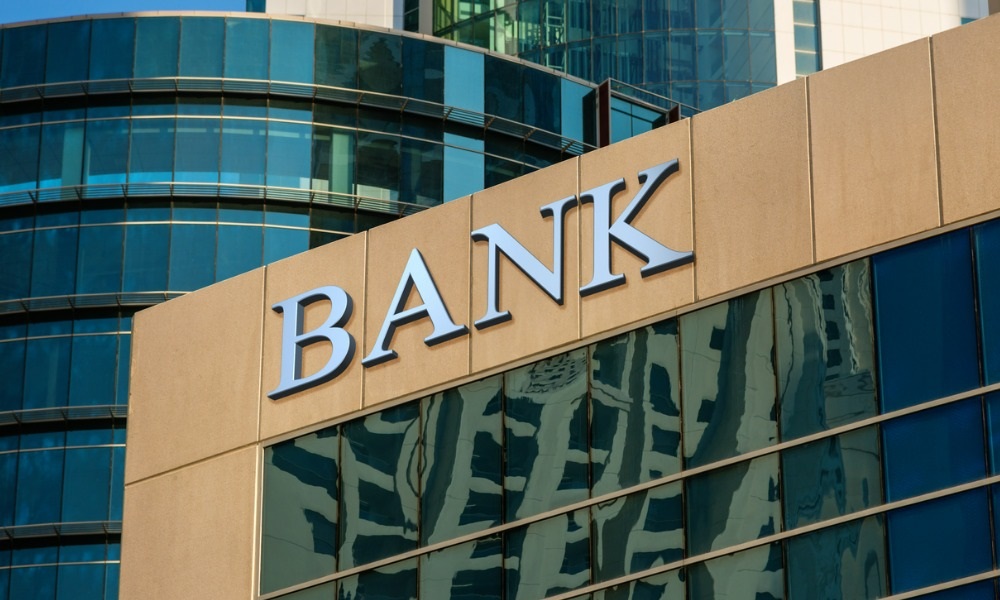
The Nigerian banking sector has recently become a focal point for investment, largely due to a new directive issued by the Central Bank of Nigeria, mandating an increase in the minimum capital base for banks.


As a result, 26 banks are actively engaged in the capital markets and other investment platforms, seeking to raise funds to strengthen their financial stability and resilience.
This initiative is designed to bolster the sector’s ability to support economic growth, enhance its robustness against financial shocks, and ultimately contribute to a more stable and dynamic economic environment. 
In late March, the Central Bank of Nigeria directed deposit money banks to recapitalise. The apex bank directed commercial banks with international authorisation to increase their capital base to N500bn and national banks to N200bn while those with regional authorisation are expected to achieve a N50bn capital floor.
Similarly, non-interest banks with national and regional authorisations will need to increase their capital to N20bn and N10bn, respectively.
According to the CBN circular, only the share capital and share premium items on the shareholder fund portion of the balance sheet will be recognised in this particular round of recapitalisation.
The apex bank circular said the banks must meet the minimum capital requirement within 24 months commencing from April 1, 2024, and terminating on March 31, 2026, using the options of raising additional capital, mergers and acquisitions, and license change.
Currently, five major banks are on course to raise N1.36tn in the capital market. Zenith Bank has commenced plans to raise about N290bn in fresh capital, which is higher than the N230bn it needs to meet the fresh recapitalisation mandate of the CBN.
Fidelity Bank has also expanded the scope of the bank’s capital raising from its initial target of N127.1bn to N205.45bn.
Access Holdings is raising N351bn from existing shareholders, while Guaranty Trust Holding Company is seeking N400.5bn from the public.
While FCMB Group has launched its public offer seeking to raise N110.9bn additional capital through the issuance of 15.197bn shares at N7.30 per share. More banks are still expected to enter this market to raise funds.
The Group Chief Executive Officer, FCMB Group, Ladi Balogun, during its “Facts Behind the Offer” presentation at the Nigerian Exchange, noted that in addition to its public offer, the Group has adopted a three-phased approach to raise up to N397bn additional capital to drive its diversification plans, including incorporating a Technology Holding Company by 2026.
Under the ongoing recapitalisation, the CBN is using a distinctive definition of minimum capital as an addition of share capital and share premium, rather than the entirety of shareholders’ funds used under the 2004 recapitalisation.
With the distinctive definition, nearly all banks need to raise funds to retain their banking license.
While banks have employed a range of strategies, including collaborating with social media influencers, to attract potential investors to buy shares, customers should be mindful that their investment choices can result in either profit in the form of dividends or significant losses. Therefore, it is crucial for investors to carefully evaluate their options and make informed decisions about where to invest their money.
In separate interviews with our correspondent, financial experts advised that patience is a key trait for any potential investor. They emphasized the importance of carefully evaluating all options and taking the time to make a well-informed decision before investing.
They emphasised that customers should also closely examine various indices and metrics before making any investment decisions.
CaR ratio
This includes assessing the banks’ capital adequacy ratios, which evaluate the bank’s capital relative to its risk-weighted assets. A higher capital adequacy ratio signifies a stronger capacity to absorb potential losses, indicating a more stable and secure investment.
Assets
Also, evaluate the quality of the bank’s assets, particularly their loan portfolios. High levels of non-performing loans can indicate potential risk and stay informed about regulatory changes and government policies such as the windfall tax, which has set the market on a run of negative ratings. These changes can impact the banking sector’s stability and profitability.
Return on equity
Each bank’s profitability metrics, such as return on equity and return on assets, provide insights into the bank’s operational efficiency and profitability. Similarly, analyse the bank’s dividend policies. Changes in dividend payouts can indicate the bank’s financial health and its ability to generate cash flow.
Funding sources
Other important indices to consider include funding sources, as a diversified and stable funding base can help mitigate risks associated with market volatility. Additionally, evaluating management quality is crucial, as strong leadership can drive a bank’s performance and strategic direction.
Investors should also assess the bank’s market position and competitive advantages; banks with robust market positions are generally better equipped to attract both capital and customers, enhancing their overall stability and growth potential.
Pitfalls to avoid
One pitfall to avoid is investing in banks that are likely to be involved in mergers and acquisitions. While these activities can create synergies and improve market presence, they may also introduce uncertainties and risks that could affect investor returns. It is important to carefully consider the potential impacts of such strategic moves on the bank’s performance and overall stability before making an investment decision.
Don’t take your eyes off economic data
Likewise, it is important to monitor the broader economic environment, such as interest rates, inflation, and economic growth, as these factors can greatly affect the performance of the banking sector during recapitalisation.
Don’t overlook the status
Speaking further, the former President of the Chartered Institute of Bankers of Nigeria and professor of Economics, Prof. Segun Ajibola, affirmed that it is generally better to invest in tier-one banks because these institutions are considered more stable and less likely to experience sudden, adverse events.
He explained that some banks, despite not being among the largest, have demonstrated strong performance over time. By examining their track records, investors can see that these banks have consistently performed well. These factors can help investors decide to choose shares from such banks based on their solid performance history.
Ajibola said in a telephone interview, “Ordinarily, it is safer to deal with tier-one banks. These tier-one banks are the big banks around. That one can at least place some trust in their shares. So, investing in them, one can be sure.
“Nothing untoward can happen to them that fast. So, then, to a fair extent, those who are categorized under tier two, because tier one, it is almost certain that they will meet the new capitalisation base.
“Tier 2, some of them should be able to, but Tier 3 is a risk. Secondly, invest in banks that have broad ownership. Wema Bank, for example, is not a big bank but has very broad ownership. And some other banks like that, that their ownership is a bit broad and cannot liquidate anyhow.
“Thirdly, you have to check the performance of the banks over the years, over the period.”
Management structure
According to the don, intending investors should not invest heavily in a bank where ownership is in the hands of very few people, and their scope of operation is not that broad.
“You cannot compare a regional bank with an international bank. What has been their performance over the years? Does the bank pay dividends regularly? Is it a bank with appreciating shares? It’s always better to buy shares and stocks of listed companies,” he noted.
Furthermore, the Chief Executive Officer of Cowry Treasurers Limited, Charles Sanni, told The PUNCH that value was a key index premised on earnings per shareholder or dividends per shareholder in the past period.
Records
“You are to look at their track records, which include their financial performance and their market opportunities. It should be such that you are seeing an upside that is based on the forecast that the banks have or you are seeing the value that would come to you obviously as a shareholder, because what it means is that either you are increasing your stake or taking a fresh stake in entities.
“Therefore, value is what you should be going for and this is what you would see from either their earnings per shareholder or dividends per shareholder in the past period. Also, that you having good earnings doesn’t translate to the fact that it would be distributed, so potential investors have to check what their dividend payout ratio is like,” he explained.
Corporate governance structure
According to Sanni, customers must look at the corporate governance culture of the entity.
“What is it like, I know that they are all under the central bank’s supervision. But you can see that these guys are up there in terms of their corporate governance. That gives you a sort of confidence that the funds or capital being raised are not going to just fickle away.
“That takes me to the fact that you have to look at their non-performing loan portfolio to see what it looks like. What is the provision for those types of loans? Those are just the things you have to look at.
“You also have to look at the loan-to-deposit ratio. So, if it’s very high, the higher the risk, the higher the return, so you need to be able to balance that,” he counselled.
On his part, the Director of Research and Strategy at Chapel Hill Denham, Tajudeen Ibrahim, stated, “I believe that investors should be aware that investment in equities is a variable income instrument, which means the value of investment can reduce over time, and it is against this backdrop, investors have to speak to professionals to know which of the banks are good investments for them.
“Importantly, investors should be enlightened in their investment arrangements when they want to invest in equities, and those include offers currently in the market.”
Credit: PUNCH