Connect with us

News

Protests Rock Anambra Community Over Alleged Land Encroachment

Published

on

ADVERTISEMENT
Zoom Ad
ADVERTISEMENT
Zoom Ad

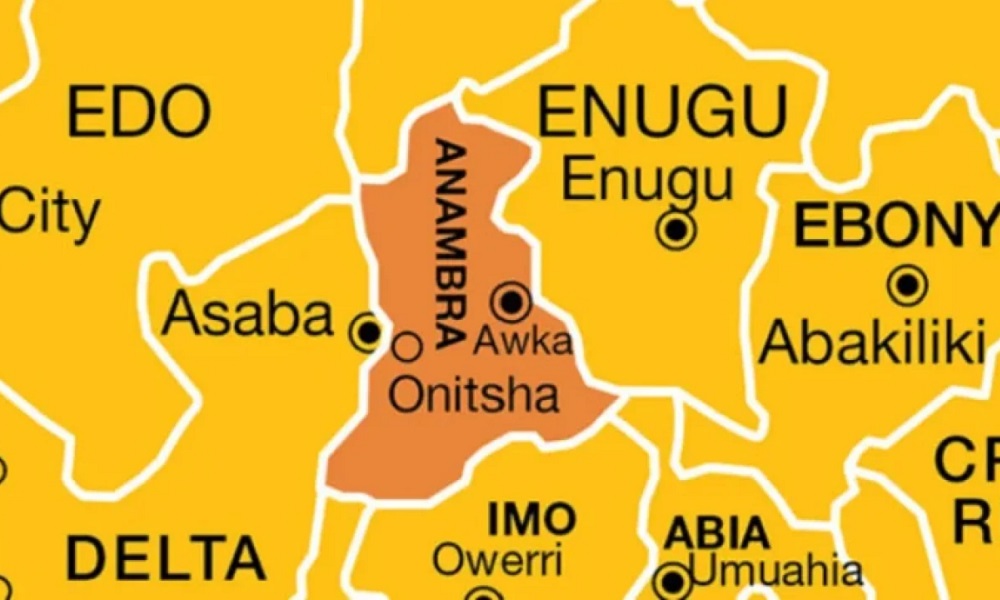
The people of Umuenu village, Umuawulu community in Awka South Local Government Area, Anambra state, staged a peaceful protest against illegal encroachment into their ancestral land, Agu Udo/Agu Ofu, by a neighbouring village, Abo Ani, in Orunba North Local Government Area, hometowm of Chief Ernest Ezeajughi, Chief of Staff to Governor Chukwuma Soludo.


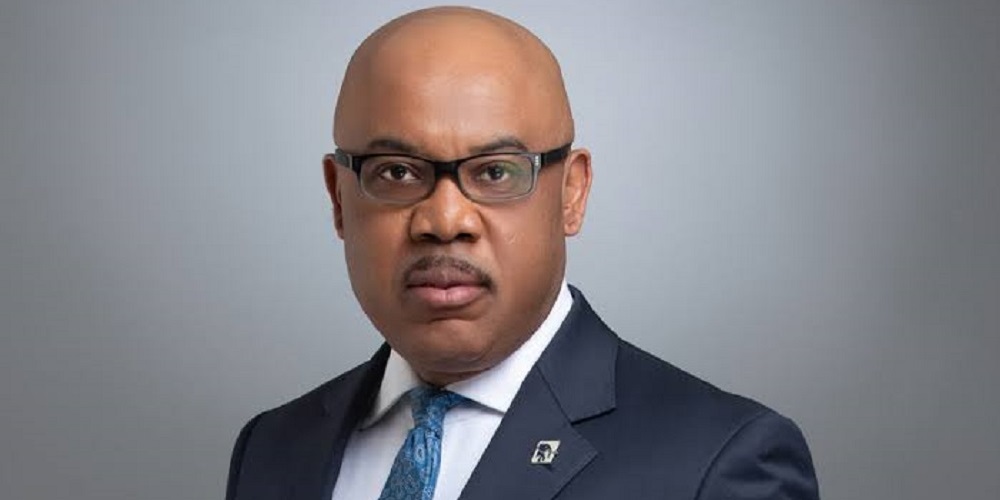
Protesters accuse Ezeajughi of using his position as Soludo’s Chief of Staff and Awgbu community indigene to influence the state boundary committee Chairman, Ifeanyichukwu Ibezim, to suppress Umuenu villagers of Umuawulu and favour Abo-Ani villagers of Awgbu.

However, in a swift response, Ezeajughi debunked the Umuenu villagers’ allegation, describing it as extremely spurious.

Ezeajughi, who denied the allegations over the phone, stated that the Deputy Governor is the Chairman of the Boundary Committee, which is responsible for investigating and resolving boundary disputes in the state.

Advertisement

“I am not aware of any meeting, nor was I a member of the team that went to inspect or demarcate the disputed land between villages in Umuawulu and another village in the Awgbu community. According to Ezeajughi, only the Deputy Governor has the authority to preside over land matters brought before the Anambra State Boundary Dispute Commission.

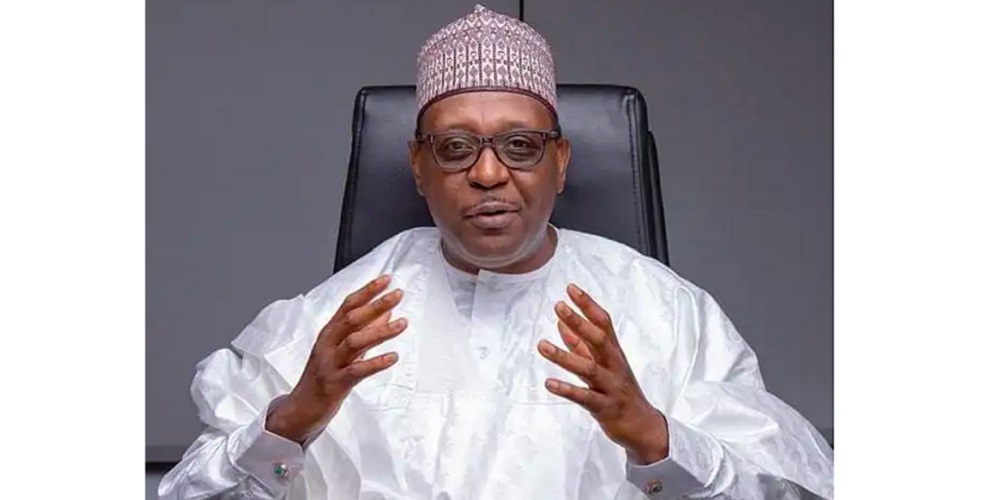
In response, Deputy Governor Ibezim stated, “I made changes to our boundary committee”. I took the time to physically visit these disputed areas and verify all of the claims. At the very least, we would be able to see every sign of demarcation, such as trees, rivers, and landmarks that keep communities together’, the Deputy Governor said.

Ibezim stated, “In the case in question, I went there, walked for kilometres through the bush, and stood there. The two villages and a community – because it is between Enugwu village in Umuawulu, Umuenu village in Umuawulu, and Abo Ani in Awgbu, all for the case in my office, and we set a date to go there. Surprisingly, Umuenu did not show up.

“There, we did not want to make our own decision, so I called the leader of Umuawulu and the lawyer representing them, only to discover that after all of us agreed to meet there, he went back, because he was part of the decision that we would go physically there, and he told me that he decided later to go to court again.”

Advertisement

“I made no statements there. All I told the people present was that we had seen things and would return to make our decision. I left. Whatever they are saying is simply a result of their unwillingness to let peace reign. We have not issued an official statement or made a decision on this matter. “They should wait for my decision first.”

“I have not made a final decision, and they are carrying placards. I simply stated that I had heard and seen the location, but had not made a decision.

When asked if the Supreme Court decision referred to by Umuenu residents favoured the village, the Deputy Governor responded, “People lay claims to all sorts of things.” Let them deliver the Supreme Court decision. You have this and that judgement; we have lawyers.”

“As the executive arm of the government, we have a statutory responsibility to protect judicial decisions. To even protect the laws enacted by the legislature because we control the means to do so.

Advertisement

“I do not own any land there. I do not want to have one because I am not from Umuawulu or Awgbu. So, when someone calls the Chief of Staff or anyone else, the Chief of Staff does not accompany us and is unaware that we are going there.”

“There is something called monumentation. Ask them if we have done monumentation, which is when we physically go out and use beacons to fix and establish boundaries. Let them decide whether we did that. Let them say whether I pointed to any point as the boundary.”

“Many elders from other villages went with us and climbed the hills, but there was no single representative from Umuenu; in the meantime, you agreed to be there on a date you even set. There is so much insincerity in this land dispute. Some claim that we go out and place beacons in order to obtain lands for ourselves. I just wonder why I should do that,” said Ibezim.

Protesters held placards reading, “Governor Soludo come to our rescue, Abo Ani encroached on our land, we have supreme court judgement in our favour on the land, Deputy Governor Onyekachukwu Ibezim is biassed, Deputy Gov has been influenced by Chief of Staff who hails from Awgbu, Deputy Gov writes scripts of Chief of Staff and former director of Anambra State Boundary Commission, Chief Davidson Nkala, Soludo intervene before they take over.”

Advertisement

Speaking to reporters during the protest, the protesters’ spokesperson and former chairman of the Umuenu Umuawulu community, Chief Humphrey Obi, recounted how the land dispute began in the 1960s and how Umuenu won all three court cases involving the Court of Republic of Biafra, Onitsha Judicial Division, the Supreme Court of Nigeria, and others that ruled against the Abo Ani Awgbu community.

Obi specifically cited the July 5, 1967 decision of the High Court of the Republic of Biafra, Onitsha Judicial Division, presided over by Justice W. O. Egbuna in the suit filed by Jerome Okpala and Nwanaka Nwankwo for themselves and on behalf of Umuenu village, Umuawulu against Richard Onyenegbu and five others for themselves and as representing the people of Abo-Ani village, Awgbu, which gave Umuenu village victory.

In the judgement, which bears the suit number 0/41/1963, Justice Egbuna stated: “I have monitored the evidence led by the plaintiffs and I am satisfied that this Aguofu land in dispute belongs to the Umuenu people of Umuawulu and not to the defendants, Abo-Ani Awgbu.”

The court went on to say, “I am also convinced that the plaintiffs have been farming on this land, received a judgement over it in 1928, and have continued to use the land until the defendants trespassed into it.”

Advertisement

He stated that, dissatisfied with the three court decisions, the Abo Ani people went to the Anambra State Boundary Commission, which was chaired by the Deputy Governor, His Excellency, Onyekachukwu Ibezim, and demanded the demarcation of the disputed land.

“At the Commission, we insisted that we are the owners of the land and that the Supreme Court’s decision must be followed because it is still binding law.

“Funny enough, our brother Enugwu community Umuawulu, who supported Abo Ani and testified against us in court that Abo Ani owned the land, has now reversed course and claimed that the land belongs to them, Enugwu, demonstrating that they are backed up by some powerful forces from the state government.

“While we were interfacing with Abo Ani at the meeting presided over by the Deputy Governor, he informed us that he has no business with the Supreme Court judgement and others, and that he has not even gone through the documents we submitted; he only wants the inspection and demarcation of the land in dispute.

Advertisement

“It is clear from the Deputy Governor’s utterances that he is biassed and influenced by the Chief of Staff, who is from Awgbu, and Nkala, a former Director of the Anambra State Boundary Commission, which is why we are calling on Governor Soludo to come to our rescue.

“It is the sacred duty of the Anambra State Boundary Committee to follow and apply the said demarcation as judiciously fixed to accord with the judicially fixed boundary, as anything less will not only amount to the Anambra State Boundary Committee reviewing and reversing the judgement of the competent court, but will also amount to contempt of court,” Obi warned.

In a petition to Governor Soludo, the President and Secretary of Umuenu Umuawulu, Nze Okoye Godwin and Mr. Nwafor Tochukwu, respectively, reminded him of his belief in the supremacy of law, stating that he should not allow any influence from any quarter to cede the land or part of it to both Abo Ani Awgbu and Enugwu Umuawulu because they were trespassers stopped by the courts of the land.

Reiterating the dangers of ceding land to unauthorised communities, the duo urged Governor Soludo to instead invite the Attorney General and Commissioner for Justice to explain the implications of disobeying a court order.

Advertisement

Among those who spoke during the protest was Tochukwu Okoye, 94, who said, “I am surprised that someone who signed witness for another now claims to be the owner of the land; let us think twice. I am calling on Soludo, a peaceful man, to intervene in this situation.”

Chief Johnson Anazonwu Nwafor, 88, stated, “I was cultivating with my father in that land as a child, so I know everything there. We have no problem with Enugwu in that land; only Awgbu people. Our village is peaceful; otherwise, there would be bloodshed in that land as a result of what they are doing to us.”

Mr. Roseline Adobe, a widow, added, “I cultivated yam and cassava, among other things, but they destroyed all of my crops and took my hoe and knife.” “That is the only place I feed my kids.”

According to Mrs Susan Nwaeke Ogbunike, “They stormed into the farm where we were cultivating, chased us away, levelled all my farm, destroyed all my crops, and as a result, my blood pressure rose, and I am still suffering from it today. Governor Soludo, we are requesting your assistance.

Advertisement

Mrs Chinwendu Nwanaka, a widow, said, “I was on my way to get something in my farm when someone told me that everything we cultivated, yam, cassava, cocoyam, was destroyed. When I got there, I could not get anything, and I started crying because no one could help me.”
Continue Reading
Advertisement

News

Akpabio sad over demise of Dotun Oladipo, says he was a courageous journalist

Published

on

ADVERTISEMENT
Zoom Ad
ADVERTISEMENT
Zoom Ad


The President of the Senate, Senator Godswill Obot Akpabio, has expressed profound sadness over the death of veteran journalist and publisher of The Eagle Online, Dotun Oladipo.

Akpabio described Oladipo’s passing as a painful loss to the Nigerian media industry and the nation, noting his significant contributions to journalism, public discourse and the growth of online media in Nigeria.

The President of the Senate commiserated with the family, friends, colleagues and professional associates of the deceased, particularly members of the Guild of Corporate Online Publishers (GOCOP), where Oladipo served as Emeritus President.

Advertisement

“Dotun Oladipo was a courageous, principled and dedicated journalist who devoted a significant part of his life to the pursuit of truth, responsible journalism and the advancement of society.

“His sudden passing is a profound loss to his family, the journalism profession and Nigeria as a whole. His immense contributions to the development of online journalism, as well as his commitment to professional excellence, integrity and public interest, will remain indelible.

“As the philosopher John Stuart Mill reminded us, ‘He who knows only his own side of the case knows little of that.’ Dotun understood that a free and responsible press must listen, question and speak truth to power. His life demonstrated that journalism, when guided by courage and conscience, can illuminate society and strengthen democracy.

“His legacy will continue to inspire journalists and media professionals who believe in the power of responsible journalism to strengthen democracy and contribute to national development,” Akpabio said.

Advertisement

The Senate President prayed that God Almighty would grant the deceased eternal rest and give his family, friends, colleagues and loved ones the fortitude to bear the irreparable loss.

Akpabio also urged members of the media to uphold and build upon Oladipo’s legacy of professionalism, integrity, courage and unwavering commitment to the public interest.
“May God acquaint his soul with the compass of His course” he added.

Continue Reading

News

SGF sets up presidential security committee, demands professionalism, urgency

Published

on

ADVERTISEMENT
Zoom Ad
ADVERTISEMENT
Zoom Ad

The Secretary to the Government of the Federation (SGF) on Wednesday inaugurated the Presidential Committee on the National Threat Assessment and Five-Year Strategic Defence Operations Plan, charging members to approach the assignment with the highest degree of professionalism, objectivity, urgency and patriotism.

The committee, established by President Bola Ahmed Tinubu, has 90 days to produce a comprehensive National Threat Assessment and a rolling Five-Year Strategic Defence Operations Plan for the President’s consideration and approval.

The SGF, who described the assignment as one of considerable national importance, urged members to bring their collective expertise to bear on developing a coherent framework that would strengthen Nigeria’s capacity to anticipate, plan for and respond to current and emerging security threats.

He assured the committee of the full support and cooperation of the Office of the Secretary to the Government of the Federation, adding that it had been authorised to consult or co-opt representatives of other Ministries, Departments and Agencies whose specialised knowledge might be required.

Advertisement

According to a statement issued by his Special Adviser on Media and Publicity, Yomi Odunuga, Akume said the inauguration marked an important step in strengthening the country’s ability to understand and respond effectively to an increasingly complex and evolving security environment.

He observed that contemporary security threats had become increasingly interconnected and adaptive, with the capacity to exploit gaps between institutions, jurisdictions and operational theatres.

While acknowledging significant successes recorded by the Armed Forces and other security agencies across different theatres in recent months, the SGF said Nigeria must move beyond responding to individual security challenges to building a system capable of anticipating threats, setting priorities, allocating resources rationally and sustaining operational momentum.

Such a system, he said, must also ensure that national security objectives are consistently translated into measurable outcomes.

Advertisement

The SGF stressed that although heads of defence, intelligence and security agencies must retain the flexibility required to respond to immediate threats, their responses should be anchored on a shared national understanding of the security environment and a coherent short-, medium- and long-term strategy.

He noted that operational requirements were sometimes considered independently without sufficient reference to an agreed national threat assessment, clearly prioritised national objectives or a unified capability plan.

According to him, the situation made coordination more difficult and limited the efficient deployment of scarce resources.

The committee, he explained, is therefore expected to help establish a coherent strategic system in which Nigeria’s threat assessment determines operational objectives, while those objectives, in turn, determine the capabilities required.

Advertisement

Capability requirements, he added, should inform expenditure, procurement, force development and industrial priorities.

“In simple terms, we must establish a clear path from threat to objective, from objective to capability, from capability to resource, and from resource to measurable outcome”, the SGF said.

He explained that the National Threat Assessment would provide the government with a comprehensive and objective understanding of Nigeria’s security landscape by identifying what threatens the country, why the threats matter, how they are likely to evolve and the consequences of failing to address them.

It would also determine appropriate government responses and provide a common planning basis for the Armed Forces, intelligence services and other relevant security agencies.

Advertisement

According to him, the assessment should enable the government to distinguish between immediate threats requiring urgent operational responses and emerging threats demanding early investment in intelligence, technology, infrastructure, doctrine, training and other capabilities.

The Five-Year Strategic Defence Operations Plan, on the other hand, would translate the National Threat Assessment into practical and prioritised operational requirements.

The SGF said the plan should establish what must be achieved in each operational theatre and identify the forces, capabilities, equipment, infrastructure, logistics, intelligence, technology and other enablers required to achieve the objectives.

It would also identify existing capability gaps and establish priorities based on the severity and urgency of identified threats, as well as provide a realistic implementation timetable specifying what is required, when it is required, why it is required, who is responsible for delivering it and how progress will be measured.

Advertisement

The five-year timeframe, he said, would provide the medium-term horizon required for force development, capability acquisition, infrastructure development, training, maintenance, research and development and the strengthening of Nigeria’s defence industrial base.

The plan would, however, operate on a rolling basis and be reviewed annually to accommodate emerging threats, changing operational realities, technological developments and lessons from ongoing operations.

Under its Terms of Reference, the committee is to review the principal existing and emerging security threats facing Nigeria and assess their relative urgency and strategic implications.

It is also mandated to define operational priorities and identify capabilities required in each theatre; determine capability gaps and equipment, logistics, infrastructure, technology, personnel and support requirements; and establish procurement priorities based on assessed threats and operational requirements rather than institutional preferences.

Advertisement

The committee will also establish implementation steps and realistic timelines for each priority, including measures for monitoring progress and assessing outcomes, as well as make other recommendations necessary for the formulation and effective implementation of the Strategic Defence Operations Plan.

The SGF said the nation’s military and security personnel, who continue to demonstrate courage and commitment in defending the country, deserve a strategic framework that clearly defines their objectives and provides the capabilities, resources and support required to accomplish them.

He thereafter formally inaugurated the committee on behalf of President Tinubu, wishing members wisdom, diligence, and successful deliberations in discharging the national assignment. Government

The committee, which will be coordinated and supported by the Office of the Special Adviser to the President on Homeland Security, Major General Adeyinka Famadewa (rtd), has as members the National Security Adviser, Nuhu Ribadu; Minister of Defence, General Christopher Musa (rtd); Minister of State for Defence, Bello Muhammad Matawalle; and Chief of Defence Staff, General Olufemi Oluyede.

Advertisement

Others are the Chief of Army Staff, Lt.-General Waidi Shaibu; Chief of Air Staff, Air Marshal Sunday Kelvin Aneke; Chief of Naval Staff, Vice Admiral Idi Abbas; Inspector-General of Police, Olatunji Rilwan Disu; Director-General of the Department of State Services, Tosin Ajayi; and Director-General of the National Intelligence Agency, Ambassador Muhammed Muhammed.

In his closing remarks, Famadewa expressed appreciation to President Tinubu for the confidence reposed in members and the opportunity given to them to contribute to the security and well-being of the country. Government

He urged members to work collectively and in synergy towards strengthening Nigeria’s security architecture, stressing that the assignment must be approached as a shared national responsibility.

Famadewa said his role would not be to command members of the committee but to facilitate collaboration and harness their collective expertise towards achieving the objectives set by the President.

Advertisement

He also said subcommittees would be established to facilitate the work, allow members to concentrate on specialised areas, and ensure the committee completes the assignment within the stipulated 90-day timeframe.

The Nation

Continue Reading

News

How Late Nollywood actor Ogogo donated N2.5m to mosque renovation while on sick bed – Muslim community

Published

on

ADVERTISEMENT
Zoom Ad
ADVERTISEMENT
Zoom Ad

Details have emerged that the late veteran actor Taiwo Hassan, popularly known as Ogogo, donated ₦2.5 million towards the renovation of a mosque in Ilaro, Ogun State, last month despite being on a sick bed.

According to a post by A. Adebanji on X, Ogogo personally contacted the Imam of Ilaro mosque after learning that renovation work was ongoing and expressed his desire to contribute to the project.

The Ilaro Muslim community said it was shocked when it received ₦2.5 million from the actor and immediately contacted him to confirm the donation.

“He told us he would have given us more, but because of his health situation, he didn’t want to come on social media to start begging for financial assistance,” the community said.

Advertisement

The revelation has added a poignant dimension to tributes following Ogogo’s death, highlighting his philanthropic gesture towards his community even while he was battling ill health.

The community prayed for Allah’s forgiveness and eternal rest for the late actor.

Ogogo was widely known for his contributions to the Nigerian film industry, particularly Yoruba-language cinema, and remained a prominent figure in the entertainment industry until his death.

Advertisement
Continue Reading

Trending

Copyright © 2024 Naija Blitz News