News
Fuel scarcity: Suppliers shun NNPC over $6 billion PMS debts

- /home/naijuinz/public_html/wp-content/plugins/mvp-social-buttons/mvp-social-buttons.php on line 27
https://naijablitznews.com/wp-content/uploads/2024/04/fuel-scarcity.jpg&description=Fuel scarcity: Suppliers shun NNPC over $6 billion PMS debts', 'pinterestShare', 'width=750,height=350'); return false;" title="Pin This Post">
- Share
- Tweet /home/naijuinz/public_html/wp-content/plugins/mvp-social-buttons/mvp-social-buttons.php on line 72
https://naijablitznews.com/wp-content/uploads/2024/04/fuel-scarcity.jpg&description=Fuel scarcity: Suppliers shun NNPC over $6 billion PMS debts', 'pinterestShare', 'width=750,height=350'); return false;" title="Pin This Post">


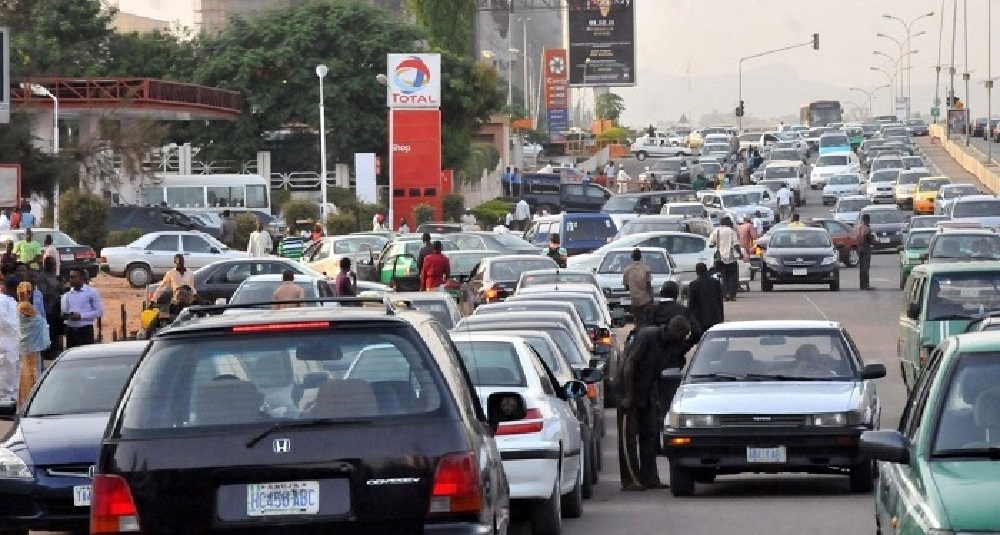
From fresh facts that came to light yesterday, the current nationwide fuel scarcity is accentuated by the sum of $6 billion owed suppliers by the Nigeria National Petroleum Company Limited (NNPCL).
The supply agents have become reluctant about importing premium motor spirit (PMS) for the NNPCL.
As a result, the oil firm has been rationing stock and prevailing on major suppliers not to cut off supply.
Five vessels meant for Nigeria have refused to discharge fuel to NNPCL due to fear of payment, one of the major suppliers told THE NATION yesterday.
But the Chief Corporate Communications Officer of NNPC Limited, Mr. Olufemi Soneye, assured that the oil firm was alive to its responsibility.
He said in the oil trading business, transactions are often carried out on credit with intermittent outstanding balances.
Sources said that last month, the Federal Government bailed out NNPCL with about $300 million to make fuel available in the country.
The intervention of the government was, however, rated as a temporary relief.
Reports by REUTERS, an international news agency, had indicated that Afreximbank disbursed $925 million to NNPCL as part of a syndicated $3.3 billion crude oil-backed prepayment facility.
The uncertainty over the payment of the $6 billion, it was learnt, has made most suppliers “hesitant” in bringing in products.
It was gathered that NNPCL “solely imports the product using supply agents.”
As at yesterday, findings confirmed that the national oil firm was “weighed down by the over $6 billion piled up liabilities.”
The NNPC is “struggling to supply dealers due to shortage of product at its tanks, “an authoritative source said yesterday.
“Bulk sales of ships and trucks to depot owners have slowed down in the last five days due to shortage of supply.
“No bulk sales has happened since Tuesday, which heightened the scarcity in the downstream sector, ” the source said.
An oil chief who is in the know of the goings-on in the industry linked the fuel queues being experienced in the last eight weeks” largely to the reduction in supply of products by suppliers who were being owed.”
“I was aware that at some point in mid-August the Federal Government had to come in by giving money to NNPC to defray some of the outstanding liabilities and boost confidence of the suppliers to continue.
“However, what was paid was about $300 million which only helped in getting reprieve for about a week before the queues fully returned,” he said.
Another informed source said: “Suppliers of petrol are hesitant about supplying new product to the Nigeria National Petroleum Company Limited (NNPCL) due to piling debts.
“At present at least five vessels originally intended for supply to Nigeria have refused to discharge fuel to NNPC due to fear of payment.
“The situation has increased pressure on the petroleum company which has now resorted to rationing the stock it has while appealing to its long-term suppliers not to halt supplies .
Why and how NNPCL incurred $6 billion liabilities
In a report, Reuters said: “Nigeria’s debt to gasoline suppliers has surpassed $6 billion – doubling since early April – as state oil firm NNPC struggles to cover the gap between fixed pump prices and international fuel costs, under rising cost of living.
The agency said the company has still not paid for some January imports, and the late payments amount to $4 billion to $5 billion.
Under contract terms, NNPC is meant to pay within 90 days of delivery.
“The only reason traders are putting up with it is the $250,000 a month (per cargo) for late payment compensation,” one industry source said.
Reuters said: “At least two suppliers already stopped participating in recent tenders after hitting self-imposed debt exposure limits to Nigeria, the sources said, meaning they will not send more gasoline until they receive payments.
“Nigeria’s tenders to buy gasoline in June and July were smaller, traders said. NNPC will import via tender about 850,000 tonnes in July, two of the sources said, down from the typical 1 million tonnes in previous months.”
More challenges and solution(s)
Recently, the Minister of State for Petroleum (Oil), Senator Heineken Lokpobiri, said it was imperative for the NNPC Limited to adjust its pricing strategy for imported fuel to curb smuggling.
He also admitted that NNPC Limited had financial constraints in maintaining and rebuilding Nigeria’s ageing pipelines.
He said the weak pipelines are susceptible to vandalism.
Lokpobiri, who spoke at the 2024 Energy and Labour Summit in Abuja, said selling imported fuel below the landing cost is a key factor fueling smuggling activities.
He said: “If NNPC imports PMS and sells to marketers at perhaps N600 or below, there’s no way that smuggling can stop.
“When smugglers are taking the products outside the country, even if you put all the policemen on the road, they are Nigerians; you and I know the answer.”
“These pipelines, some dating back to the 1960s and 1970s, are highly susceptible to vandalism and crude oil theft, which significantly impacts the nation’s oil revenue.
“The old, corroded pipelines, some of which date back to the 1960s and 1970s, are easily vandalized,” Lokpobiri explained.
“The reason why pipeline vandalism is very easy to do is because the pipelines have all expired; they are completely corroded.
“So, anybody can just go and tap it, and the thing is busted. The challenge lies in transporting it to terminals due to the deteriorated state of the pipelines.”
NNPC reacts
NNPCL’s Soneye could not immediately confirm the exact liabilities to the suppliers.
He, however, said in oil trading, transactions on credit were normal.
He said: “In the oil trading business, transactions are often carried out on credit. So, it is normal to have outstanding balances at certain times.
“Additionally, through our subsidiary, NNPC Trading, we maintain open trade credit lines with several traders. I will need some time to provide you with the exact amount.”

By Francesca Hangeior
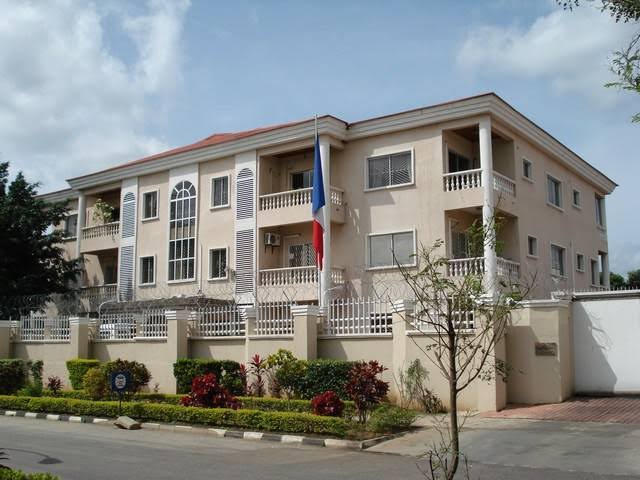
The French Embassy in Nigeria has ended its €750,000 Plastic Waste Management Project in eleven universities after three years of implementation.
The embassy hinted of plans to expand the initiative to more Nigerian universities following the successful pilot phase.
The embassy disclosed this on Tuesday in Abuja during the project’s closeout session attended by representatives of participating universities, development partners and other stakeholders.
The initiative, funded by the French Embassy, was implemented in 11 Nigerian universities to promote plastic waste management, environmental sustainability, research, innovation and entrepreneurship through plastic recycling technologies.
Some of the universities include: University of Port Harcourt; University of Lagos; Yaba College of Technology; Alex Ekwueme Federal University, Ndufu-Alike, Ebonyi State; Nile University of Nigeria; Obafemi Awolowo University, Ile-Ife; University of Delta, Agbor and University of Calabar.
Speaking after the event, the French Embassy’s Deputy Head of Cooperation, Pierre Andriamampianina, said the project had exceeded expectations, with participating institutions implementing activities beyond those initially planned.
He said France invested more than €750,000 in the project, adding that its impact had gone beyond the financial commitment through improved capacity building, youth engagement, innovation and job creation.
“The return on investment for Nigeria is much more than the money invested. The gains are enormous in terms of capacity building, public participation, youth mobilisation and innovation,” he said.
According to him, the project’s final evaluation showed that participating universities demonstrated exceptional commitment by introducing additional activities independently.
“It is a huge success in terms of student mobilisation, job creation, production using recycled plastics and improved university governance through better plastic waste management,” Andriamampianina said.
He said the embassy intends to build on the project’s success by expanding participation to more tertiary institutions across the country.
“Our expectation is that this project will create a strong network of universities, academics and innovators that will continue to grow and bring more universities on board. We currently have 11 universities in the project, but we hope many more institutions will join,” he added.
Also speaking, the Vice-Chancellor of Nile University of Nigeria, Prof. Dilli Dogo, described the initiative as evidence of the impact of strategic international partnerships on higher education and sustainable development.
He said the project had strengthened practical learning, research and entrepreneurship at the university, noting that discussions with the French Embassy in 2023 led to the establishment of a fabrication laboratory and a plastic recycling micro-factory.
According to Dogo, the project has demonstrated that plastic waste can be converted into valuable products while equipping students with practical and entrepreneurial skills.
“Everything is possible in this country. All we need is to harness the necessary resources, talents, motivation and encouragement. We can achieve a lot,” he said.
He urged universities to prioritise practical skills and entrepreneurship to enable graduates to create jobs rather than depend solely on paid employment.
A representative of the Vice-Chancellor of the University of Lagos, the Deputy Vice-Chancellor (Development Services), Prof. Afolabi Leshi, said the project had enriched teaching, research and entrepreneurship within the institution.
He disclosed that the university plans to use its plastic recycling micro-plant to manufacture household and office furniture from recycled plastic waste before expanding into commercial production.
Leshi said the institution also plans to partner with formal and informal waste collectors to ensure a steady supply of recyclable materials, creating jobs while improving waste management.
He added that the initiative had strengthened research in environmental sustainability, material science and climate action and inspired students to pursue careers in environmental engineering and related fields.
Stakeholders at the closeout session said the project demonstrated how collaboration among governments, universities and development partners can address environmental challenges while creating sustainable economic opportunities for young Nigerians.
By Francesca Hangeior
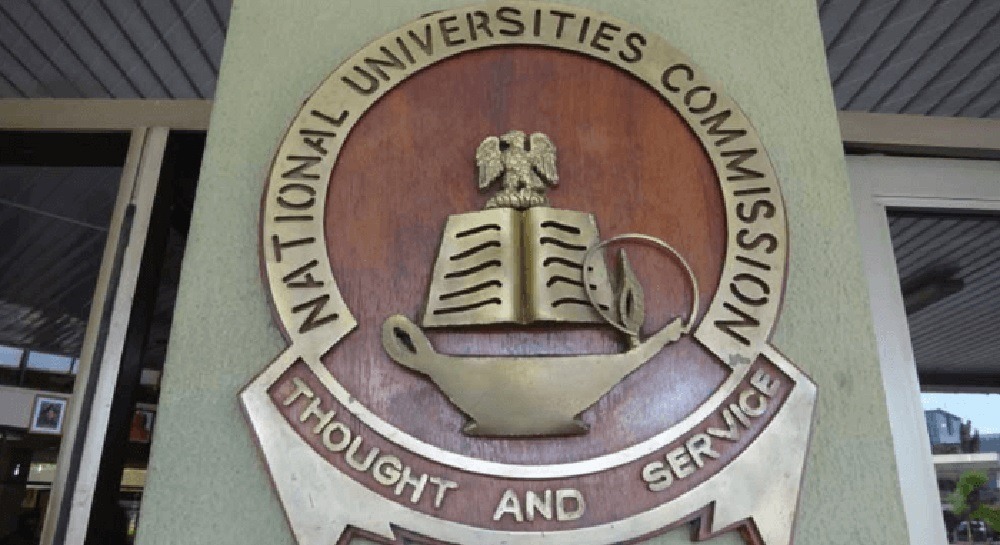
The National Universities Commission (NUC) has approved the unbundling of the Department of Mass Communication, University of Nigeria Nsukka (UNN) into five new undergraduate programmes with effect from the 2026/2027 academic session.
This is contained in a statement issued on Thursday in Nsukka by Mr Inya Egwu, the acting Public Relations Officer of UNN.
According to him, the newly approved full-time programmes are B.Sc. (Advertising), B.Sc. (Broadcasting), B.Sc. (Development Communication Studies), B.Sc. (Journalism and Media Studies), and B.Sc. (Public Relations).
The statement said the approval was conveyed to the university in a circular dated June 19, 2026.
“The decision followed a comprehensive resource verification visit conducted by a panel of experts to assess the human and material capacity available for the proposed programmes.
“The approval, according to NUC, strictly applies to full-time mode of delivery; any plan to introduce part-time or postgraduate components for these programmes will require further notification and approval by the commission.
“The programmes should retain their approved titles and nomenclature, as any modifications will be subjected to regulatory clearance,” Egwu said.
He said the Head of the Department of Mass Communication, Prof. Michael Ukonu, expressed gratitude to the Vice-Chancellor for his support throughout the NUC resource verification.
He also thanked the Director of Academic Planning, Prof. Anthony Attama, for guiding the department throughout the verification.
According to him, the unbundling will align the university’s ambition to maintain its world-class standards and transformational vision.
By Francesca Hangeior
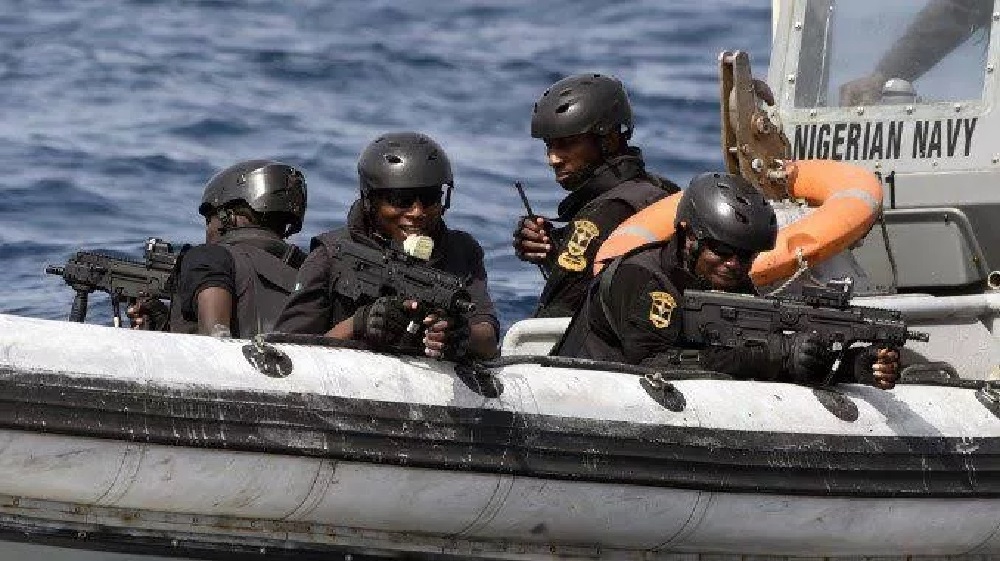
The Nigerian Navy has nabbed a member of a motor theft syndicate linked to more than 50 stolen vehicles across the Federal Capital Territory (FCT).
This is contained in an operational report made available to journalists on Thursday in Abuja by the Director of Naval Information, Capt. Abiodun Folorunsho.
Folorunsho said Naval Base Abuja operatives carried out the operation as part of ongoing efforts to strengthen the FCT’s security architecture through intelligence-led operations in collaboration with sister agencies.
According to him, the suspect was intercepted while attempting to leave the FCT.
“Preliminary investigations reveal that he allegedly impersonated an Inspector of the Nigerian Correctional Service (NCos) to facilitate his criminal activities.
“He has confessed to his involvement in a vehicle theft syndicate responsible for stealing vehicles from different parts of the FCT.”
The Director of Naval Information also said that investigations revealed that the criminal network operated across state boundaries with stolen vehicles reportedly disposed of through accomplices outside the FCT.
He said that efforts were ongoing in collaboration with other relevant security agencies to apprehend other members of the syndicate.
“The suspect, together with relevant exhibits and evidence, has been handed over to the Nigeria Police Force, FCT Command, for further investigation and prosecution in accordance with established inter-agency procedures,” he said.
The naval spokesperson reaffirmed the Navy’s commitment to strengthening inter-agency cooperation to support national security and ensure a safe and secure environment for all Nigerians.

French Embassy ends €750,000 plastic recycling initiative

NUC approves unbundling of UNN Mass Comm programme

Navy arrests member of vehicle theft syndicate in Abuja




-
 News23 hours ago
CBN revokes licences of 46 Microfinance Banks over failure to satisfy regulatory requirements
-

 Foreign10 hours ago
‘Send Them To Hell’ – Iranian Clerics Call For Ass@ss!nation Of Trump, Netanyahu
-

 Sports23 hours ago
Transfer: Galatasaray receive two €120m different offers for Victor Osimhen
-

 Economy21 hours ago
See Black Market Dollar To Naira Exchange Rate Today 1st July 2026
-
 News24 hours ago
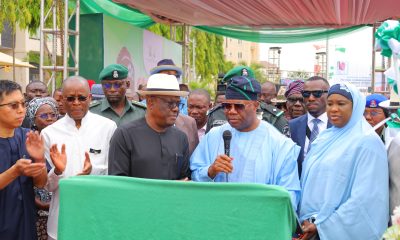
Tinubu Hails Wike’s Performance, Says All FCT Districts Now Feeling Impact of Governance(Photos)
-

 Entertainment23 hours ago
Chris Brown to cough out $13m as US Court orders him to pay Ex-House keeper over dog attack
-

 News22 hours ago
Citizen Patience and Collaborative Efforts: A Pathway to Greatness for Tinubu’s Government, By Hajia Hansatu Zannah*
-

 News20 hours ago
NUT suspends strike, directs Oyo teachers to resume Thursday
Warning: Undefined variable $user_ID in /home/naijuinz/public_html/wp-content/themes/zox-news/comments.php on line 49
You must be logged in to post a comment Login