News
DSS releases NLC president, Ajaero, on bail

- /home/naijuinz/public_html/wp-content/plugins/mvp-social-buttons/mvp-social-buttons.php on line 27
https://naijablitznews.com/wp-content/uploads/2024/02/Joe-Ajaero4.jpg&description=DSS releases NLC president, Ajaero, on bail', 'pinterestShare', 'width=750,height=350'); return false;" title="Pin This Post">
- Share
- Tweet /home/naijuinz/public_html/wp-content/plugins/mvp-social-buttons/mvp-social-buttons.php on line 72
https://naijablitznews.com/wp-content/uploads/2024/02/Joe-Ajaero4.jpg&description=DSS releases NLC president, Ajaero, on bail', 'pinterestShare', 'width=750,height=350'); return false;" title="Pin This Post">


Labour leader Joe Ajaero was released on bail last night after his arrest by the Department of State Services (DSS).
He may have been arrested over a petition against him by Air Peace, the airline indicated.
Ajaero was picked up at the Nnamdi Azikiwe Airport in Abuja en route to the United Kingdom (UK) on the invitation of the Trade Union Congress (TUC) of Britain.
His arrest could also be in connection with his alleged involvement in a case of criminal conspiracy, terrorism financing, treasonable felony, subversion, and cybercrime over which he was questioned.
The police interrogated Ajaero on August 29 over a ‘suspected terror-tenant’ operating a bookshop on the second floor at the Labour House, headquarters of the NLC in Abuja.
Ajaero’s office is on the 10th floor of the building.
Although the NLC President was summoned on August 19, he sought to honour the invitation on August 29.
On September 3, the police placed a N10 million bounty on a Briton Andrew Wynne (also known as Andrew Povich) after he was declared wanted for allegedly plotting to overthrow a democratically elected government.
Wynee, who fled Nigeria for the United Kingdom, has vowed not to make himself available for interrogation, saying he feared for his life.
From his UK base, the Briton in an interview, blasted the security operatives and the government, while he declared himself innocent.
He admitted that some of the suspects arrested in connection with the protest patronised his bookshop.
The police also re-invited Ajaero to clear the air on his relationship with the wanted Briton who operated the bookshop.
Yesterday, Air Peace, which earlier petitioned the police against Ajaero and the NLC, said the police may have chosen to action on the petition despite withdrawing it.
Spokesman of the airline, Omotade Makinwa, said in a statement: “We express deep concern over recent media reports regarding the arrest of NLC President in connection to a petition filed by the airline in September 2023.
“This development, which has led to negative publicity, does not reflect the current relationship between Air Peace and the NLC.
“It is important to clarify the events leading up to the petition. On the 3rd of May, 2023, the NLC disrupted Air Peace operations as part of a broader conflict with the Imo State government.
“Although Air Peace had no involvement in the dispute between the NLC and the Imo State government, our airline was unfortunately used as a tool to exert pressure on the government.
“This unlawful disruption of our services caused significant financial losses and impacted the travel plans of many Nigerians across multiple states.
“In response to this disruption, Air Peace’s legal team submitted a formal petition against the NLC to the Nigerian Police.
“Despite our repeated efforts to follow up on the petition, the Police failed to take prompt action.
“However, over a year later, the Nigeria Police have chosen to act on the original petition, which has now led to the alleged arrest of the NLC president.
“Prior to this arrest, the airline and the NLC had already reached an amicable resolution, and Air Peace had withdrawn its petition, allowing a positive working relationship to resume between the two organisations.”
NLC placed all its affiliates, state councils and civil society allies on the “highest state of alert” following Ajaero’s arrest.
Head of Information and Public Affairs, Benson Upah, said the Congress would not “stand idly by while the rights of its leaders and members are trampled upon.”
NLC also summoned an emergency meeting of its organs over the matter.
The National Administrative Council (NAC) of the NLC also condemned Ajaero’s arrest.
In a statement by NLC Deputy President, Prince Adeyanju, the Congress said it was “an affront to the rights of workers and the democratic principles of freedom of movement and expression.”
Also yesterday, the Trade Union Congress (TUC) of Nigeria, in a statement by its president, Festus Osifo, said Ajaero’s arrest represented a clear violation of the rights to freedom of association and expression, which are fundamental democratic pillars.
The Labour Centre said: “This arrest sets a dangerous precedent that threatens not only the leadership of the Nigerian labour movement but also the voices of millions of working-class Nigerians who rely on unions to represent and protect their interests.
“It is imperative that the government respects the rule of law, democratic norms, and the legitimate rights of workers and their representatives. The labour movement has always stood for peaceful negotiations.”
The Peoples Democratic Party (PDP) warned against “draconian” tendencies and actions that may create crises.
“There is a need for caution,” the party said through its spokesman Debo Ologunagba.
The National Union of Electricity Employees (NUEE), Ajaero’s primary constituency, faulted his arrest.
Acting General Secretary, Igwebike Dominic, said in a statement: “This brazen act of intimidation and harassment is a violation of his fundamental rights and freedom as a Nigerian citizen.

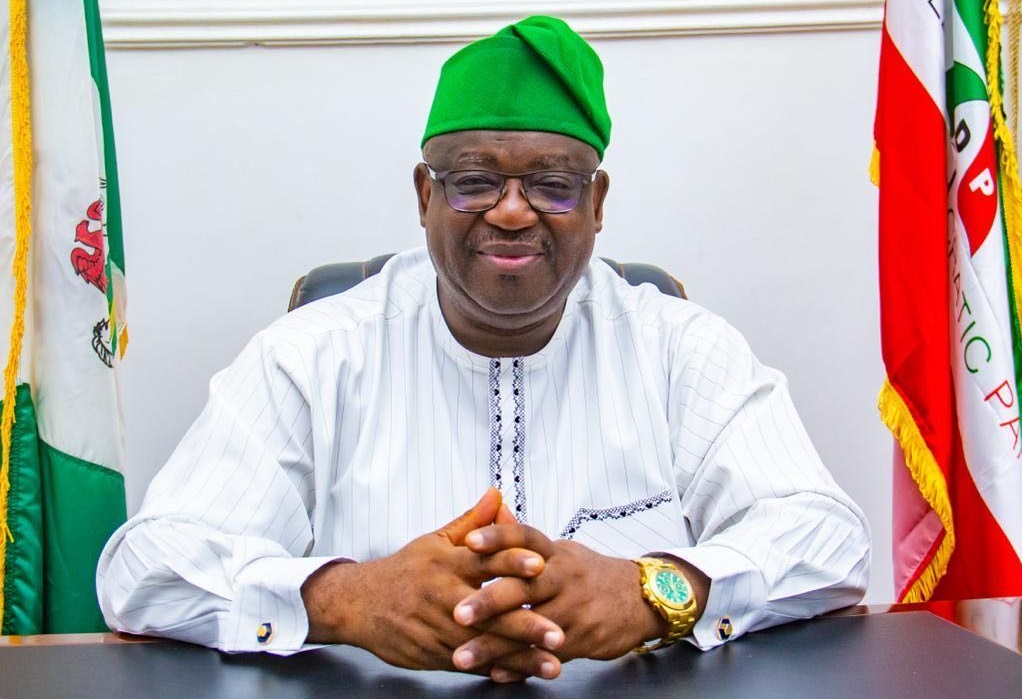
The Plateau Vanguard for Democracy has declared its support for Governor Caleb Mutfwang’s directive stopping the activities of a purported Hisbah enforcement group operating in parts of Jos North Local Government Area.
In a statement issued by its National Coordinator, Chris Ishaku, the group said no private organisation had the constitutional authority to intimidate residents, enforce unauthorised rules or impose sanctions outside Nigeria’s established legal system.
The directive followed reports that persons associated with the group had allegedly harassed, intimidated and extorted residents while attempting to compel them to comply with rules not recognised by Plateau State law.
Ishaku described the governor’s intervention as a necessary defence of public order, individual liberty and the equal protection of all residents, irrespective of their religious, ethnic or community affiliations.
“Plateau State belongs equally to all its citizens. No private organisation may appoint itself a police force, court or government and impose sanctions unknown to the Constitution and laws of the state,” he said.
He stressed that support for the directive should not be interpreted as opposition to any religion or community, but as an affirmation that Plateau State has one Constitution, one legal system and one legitimate authority.
The organisation urged religious, traditional, political and community leaders to discourage their followers from participating in unlawful enforcement activities. It advised residents with complaints about the conduct of others to report such matters to the police or other legally constituted agencies.
Ishaku also welcomed the governor’s instruction directing security agencies to identify and investigate those allegedly involved.
He nevertheless called on the agencies to act professionally, respect due process and avoid subjecting innocent residents to collective suspicion.
“Anyone found sponsoring, aiding or carrying out unlawful acts should be prosecuted, while innocent residents must be protected,” he said.
“Peace cannot survive where competing groups create competing laws. Plateau’s diversity must be governed by justice, tolerance and one constitutional order.”
The allegations against the purported group have not been independently established, and no response from its alleged members was included in the statement.
Saina Buba, the Borno State Commissioner for Youth and Sports Development, has threatened political opponents with physical harm if they fail to support the ruling All Progressives Congress (APC).
Buba made the remark during a campaign inauguration event organised by the Tinubu City Boy Movement, a political support organisation campaigning for President Bola Tinubu’s administration and his anticipated 2027 re-election bid.
Addressing the crowd, the commissioner warned that anyone who opposed the APC by raising a finger against the party would have the same finger cut off.
He said those who challenged the party would have their fingers broken, stressing that the warning was part of the political contest.
Buba also warned that government benefits would be used to favour supporters of the administration while those who refused to support it could face punitive treatment.
The commissioner said those who supported the government would enjoy its benefits, while those who rejected it would face the consequences.
Buba’s comments have sparked outrage.
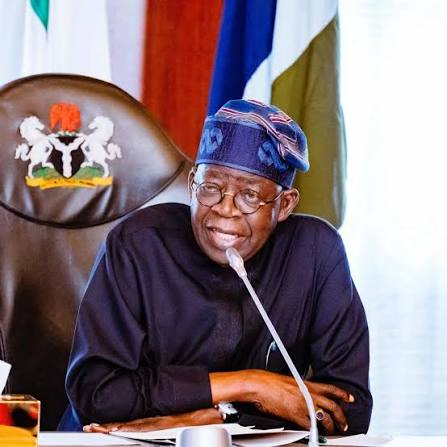
The Grassroots Mobilisation Network (GMN), a support group of the African Democratic Congress (ADC), on Sunday called on President Bola Tinubu to break his silence over alleged references to him in narcotics-related documents reportedly submitted by the United States FBI before the District Court for the District of Columbia, or resign from office.
The group, in a statement by its spokesperson, Mr Peter Emeka, expressed concern over what it described as the continued silence of the Presidency, arguing that Nigerians deserve clarity on an issue that, in its view, has implications for the country’s international reputation.
Pressing for a US response, the APM National Publicity Secretary, Abubakar, said the sustained efforts by the Tinubu Presidency to block the release of the report to the public heightened suspicion of guilt and desperation for a cover-up.
“The APM urges the United States authorities to note that withholding such information is of enormous harm to Nigeria’s security, national integrity and democratic growth.
“The United States, being a leading democracy in the world, should at all times be seen to facilitate the consolidation of democracy and transparency in the international fight against drug trafficking and corruption.
“The drug and other ancillary allegations against President Tinubu, who is a major contender in the 2027 presidential election, constitute a global issue which continues to harm Nigeria’s reputation among the comity of nations.
“This is especially as the public is already aware of the 1993 $460,000 forfeiture judgment against accounts traced to Tinubu by the US District Court for the Northern District of Illinois following an investigation into drug-related transactions.
“The effect of the $460,000 forfeiture judgment is that, by virtue of Section 137 of the Constitution of the Federal Republic of Nigeria, 1999 (as amended), President Tinubu remains ineligible for election in Nigeria. Moreover, Nigeria is a signatory to international conventions on drugs and money laundering.”
The APM urged the “United States authorities to assist Nigerians in their decision to elect a leader with clean records and not an individual encumbered by drug-related allegations and corruption cases.”
On its part, the spokesman for the Grassroots Mobilisation Network (GMN), Mr Peter Emeka, said, “We call on President Tinubu to come out clean and speak to the nation over the ongoing litigation in America.”
He also criticised Nigeria’s law enforcement and intelligence agencies, accusing them of failing to adequately investigate or respond to the allegations and documents circulating in the public domain.
“Our system has failed for the fact that they were unable to detect all these embarrassing documents being paraded against the President, which are now the subject of litigation in a far-away country,” Emeka stated.
“Our intelligence agencies saddled with the responsibility of investigation and various checks have all failed,” he added.
According to the group, the continued silence from the Presidency is becoming increasingly disturbing and has the potential to deepen public suspicion.
“If the President continues to remain mute, he should quietly resign to save the nation from the ongoing global embarrassment,” Emeka said.
In a related development, the GMN has demanded greater transparency regarding President Tinubu’s reported three-week vacation in Europe.
The group said that, given the prevailing mood in the country and the controversy surrounding the narcotics-related allegations, the Presidency should provide Nigerians with adequate information about the President’s itinerary and engagements while away.
“The prevailing mood of the country requires the Presidency to make a full disclosure of President Tinubu’s movements,” the group said.
The GMN maintained that greater transparency would help dispel speculation, reassure Nigerians and protect the country’s image and standing in the international community.
The group urged the Presidency to address the issues directly rather than allow speculation and unanswered questions to dominate public discourse.

No group can impose strange laws on Plateau residents – PVD
Borno Commissioner Vows To Cut Off Fingers Of Those Who Vote Against APC

Just in: Lionel Messi finally retires from international football



-
 Economy22 hours ago
Record $947m July Remittances Bring Cardoso’s $1bn Monthly Target Within Sight
-

 News22 hours ago
Borno Commissioner Threatens Opponents: ‘Follow Us And Enjoy Honey, Refuse And Be Flogged’
-

 Metro22 hours ago
Two ladies arrested for stealing their neighbors’ 3 kids 2 weeks after moving in as tenants
-

 Politics22 hours ago
NDC Accuses INEC of Replacing Its 2027 Candidates With ‘Strange Names’
-

 News22 hours ago
Preaching Hell Won’t Make Nigerians Born Again Because They Are Already in Hell — Pastor Ibiyeomie
-
 News22 hours ago
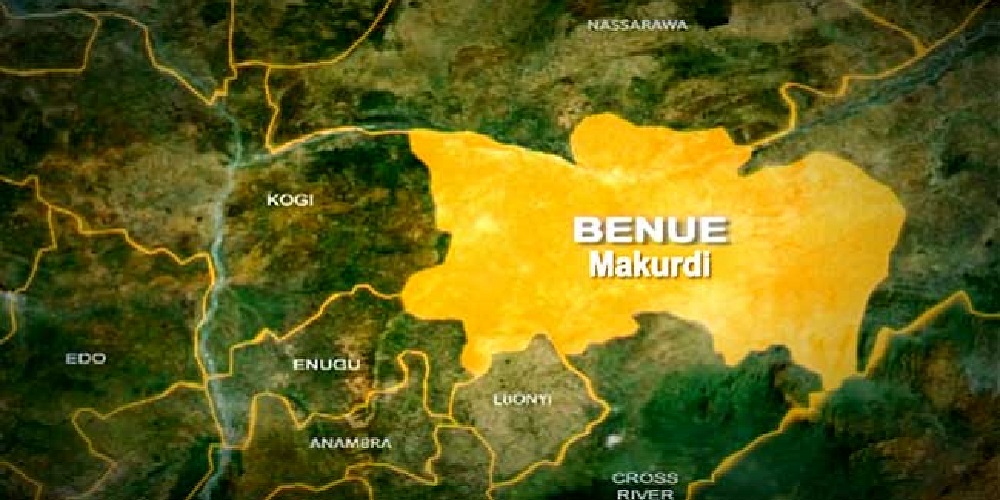
Newborn baby found abandoned in Benue forest
-
 News22 hours ago
We are not part of G-100 summit, says PDP
-
 News23 hours ago
Why DSS Wants Tinubu-Sowore Case Paused Until After 2027 Poll
Warning: Undefined variable $user_ID in /home/naijuinz/public_html/wp-content/themes/zox-news/comments.php on line 49
You must be logged in to post a comment Login