
News
Zamfara Civil Service reshuffled after memo leakage showing financing of terrorism, banditry

- /home/naijuinz/public_html/wp-content/plugins/mvp-social-buttons/mvp-social-buttons.php on line 27
https://naijablitznews.com/wp-content/uploads/2024/09/Picsart_24-09-11_18-17-18-622-1000x600.jpg&description=Zamfara Civil Service reshuffled after memo leakage showing financing of terrorism, banditry', 'pinterestShare', 'width=750,height=350'); return false;" title="Pin This Post">
- Share
- Tweet /home/naijuinz/public_html/wp-content/plugins/mvp-social-buttons/mvp-social-buttons.php on line 72
https://naijablitznews.com/wp-content/uploads/2024/09/Picsart_24-09-11_18-17-18-622-1000x600.jpg&description=Zamfara Civil Service reshuffled after memo leakage showing financing of terrorism, banditry', 'pinterestShare', 'width=750,height=350'); return false;" title="Pin This Post">


By Ojomah Austin.
Zamfara State has been thrust into a maelstrom of political upheaval following the emergence of a leaked memorandum purportedly implicating senior government officials, including the Governor, in the financing of terrorism and banditry. This bombshell revelation has ignited widespread indignation and outrage, both domestically and internationally. The fallout from this explosive expose has led to an unprecedented and abrupt reshuffling of key civil servants across the state, in a move that has sent shockwaves through the bureaucracy.
Sources within the Zamfara State Government House have revealed that the Governor was visibly incensed upon learning of the leaked memo, which allegedly detailed financial transactions facilitating banditry and further entangling high-ranking government officials in the scandal.
At the epicenter of the Governor’s anger was reportedly the Commissioner of Finance, who, as the overseer of the state’s financial management, is responsible for orchestrating the movement of accounting staff within the bureaucracy.
*A Strategic Move or A Defensive Maneuver?*
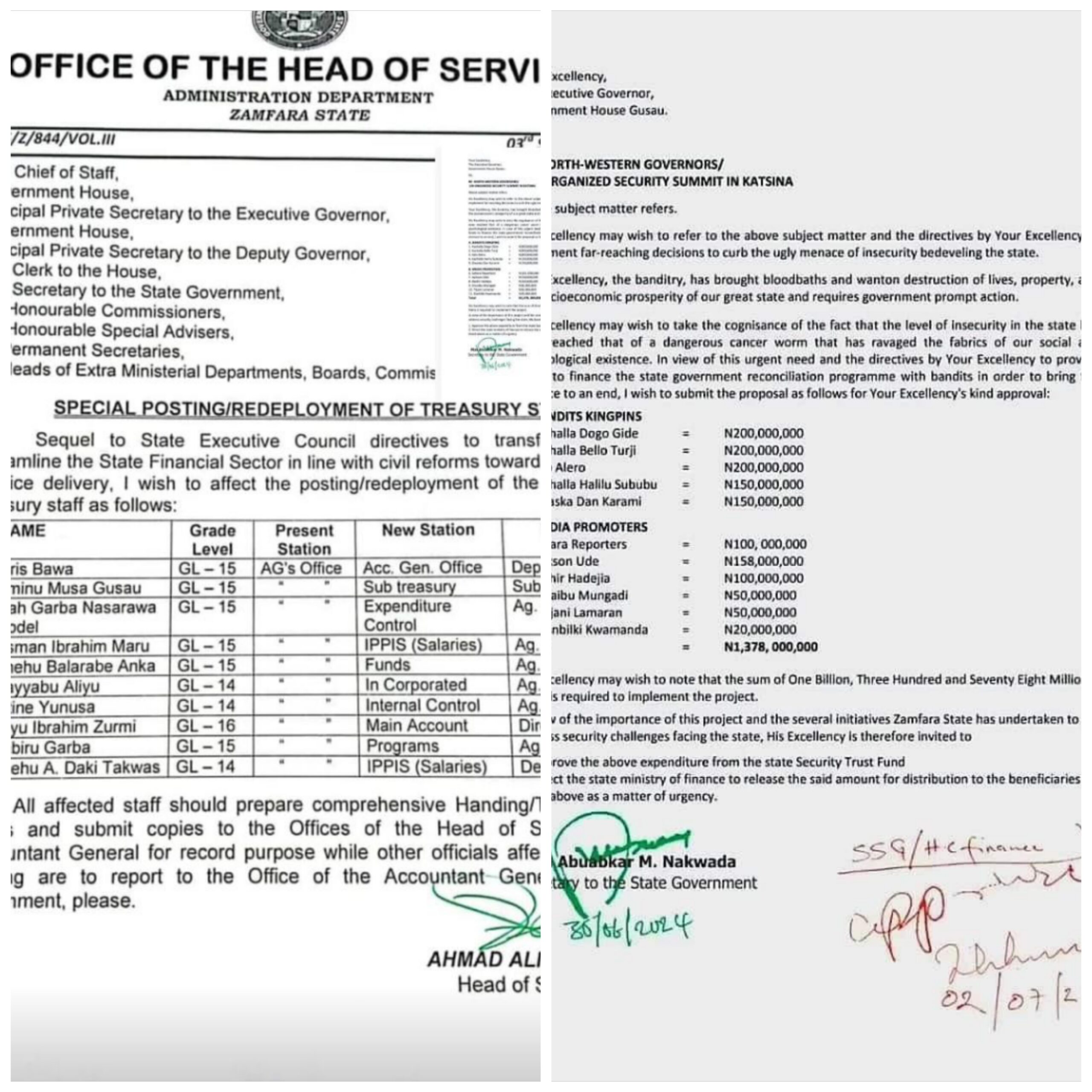
In an attempt to mitigate the fallout from the public embarrassment and intense backlash from international human rights organizations, Governor Dauda Lawal swiftly initiated a comprehensive reorganization of civil servants within the state bureaucracy, specifically focusing on the treasury department. This strategic move was formally communicated through a subsequent memo, meticulously outlining the extensive reshuffling of civil servants.
According to credible sources, the Governor’s office, in an unconventional and unexpected maneuver, sidestepped the Commissioner for Finance and instead entrusted the Head of Service, Ahmad Aliyu Liman, with the sensitive task of orchestrating the “special” redeployment of treasury staff.
This unusual deviation from established protocol has raised eyebrows, sparking speculation about the motivations behind this decision and the extent of the Governor’s involvement in the treasury department’s affairs.
The follow-up memo obtained by our investigative team, with the reference number HOS/Z/844/VOL.III, outlines the redeployment of various senior treasury staff, including directors and deputy directors in key financial departments.
Here are some of the notable redeployments:
-Idris Bawa (GL-15): Moved from the Accountant General’s Office to a new post in the same office.
Aminu Musa Gusau (GL-15): Shifted from the Sub-Treasury to become the Deputy Accountant General.
Isah Garba Nasarawa Godel (GL-15): Appointed Acting Director of Expenditure Control.
Shehu Balarabe Anka (GL-15): Moved to the IPPIS (Salaries) department as Acting Director of Funds.
The comprehensive reshuffling affected over a dozen senior civil servants, many of whom held critical positions in the state’s financial management and control systems. Sources inside the government claim that these postings are part of a broader move to sanitize the state’s financial sector in line with civil service reforms. However, the sudden nature of the redeployment raises questions about its true intent.
*An Act of Reform or Damage Control?*
Interestingly, the Commissioner of Finance, typically entrusted with overseeing the assignment of accounting staff within the state bureaucracy, was conspicuously bypassed in this reshuffling exercise. According to well-placed sources, this decision stemmed from a profound lack of confidence in his office, coupled with deep-seated concerns that sensitive documents may continue to surface in the media.
The strategic redeployment of key financial personnel coincides with escalating suspicions that the Governor’s office is endeavoring to conceal the damning allegations outlined in the initial leaked memo.
While the government asserts that these personnel changes constitute part of comprehensive financial sector reforms, critics vehemently argue that the Governor’s true intention is to insulate himself from intensified scrutiny. The timing of this reshuffling has also raised significant concerns. If, as the Governor’s office maintains, the initial allegations of financial support to bandit leaders were entirely fabricated, it beggars the question: why the apparent haste to reassign key staff and prevent further leaks?
The emergence of the leaked documents has galvanized international and local organizations to demand a thorough, impartial investigation into the state’s financial dealings.
*Zamfara’s Dark Web of Terrorism Links?*
Zamfara State’s troubles have intensified with the surfacing of fresh allegations linking Governor Dauda Lawal to Farouq Abdulmutallab, the infamous perpetrator of the 2009 ”ailed terrorist attack. Although the specifics of this purported link remain unsubstantiated, the mere mention of Abdulmutallab’s name in conjunction with Zamfara’s escalating crisis has significantly exacerbated suspicions of the Governor’s involvement in terrorism financing.
Local leaders and astute political observers are gravely concerned that should these allegations be validated, Zamfara, already a volatile hotbed of banditry and insecurity, may descend into even greater instability.
The confluence of events – the leak of sensitive documents, the ensuing reshuffling of key personnel, and the Governor’s alleged ties to global terrorism – raises profoundly disturbing questions about the quality of governance and security apparatus in the state. The potential implications of these allegations are far-reaching, threatening to undermine the fragile stability of the region and perpetuate an environment conducive to terrorist activities.
*Political Fallout and the way Ahead*
To date, the Governor’s office has remained conspicuously silent, failing to issue an official statement addressing the leaked memo or the recent reshuffling, beyond the dubious assertion that these measures constitute part of broader “civil service reforms.”
Nevertheless, pressure continues to intensify from diverse quarters, with numerous voices demanding the Governor’s immediate resignation and a comprehensive, impartial investigation into the financial transactions of the Zamfara State Government. The strategic redeployment of key treasury personnel may temporarily appease certain elements within the government, but it will do little to dispel the pervasive specter of alleged corruption and complicity in terrorist activities now hanging over the state administration.
As the situation continues to unfold, attention remains fixed on Zamfara State, with all eyes watching for developments.
The true intentions behind the government’s actions, whether genuine reform or an intricate cover-up will likely become increasingly transparent as investigations progress, shedding light on the veracity of the allegations.
*The Unanswered Questions*
The question remains: if the initial memo alleging the Governor’s collusion with bandit leaders was indeed fabricated and tampered with, why the abrupt shift in focus towards preventing government document leaks, implicitly acknowledging the veracity of the prior accusations?
The swift reshuffling of civil servants and the deliberate bypassing of the Commissioner of Finance in this process betray a state of palpable panic and desperation, suggesting a frantic endeavor to reassert control and contain potential damage. This sudden and drastic action raises more questions than answers, casting doubt on the Governor’s professed innocence and fueling speculation about his actual involvement in the allegations.
The haste with which the Governor’s office has moved to reorganize key personnel and sidestep established protocols implies a profound sense of vulnerability, underscoring the likelihood that the initial memo struck closer to truth than initially acknowledged.
The Governor of Zamfara stands at a precarious juncture, faced with a daunting decision that will determine the fate of his administration and the state’s role in combating terrorism. The recent reshuffling, ostensibly presented as a facet of civil service reform, appears to be a strategic maneuver aimed at mitigating the fallout from the damning allegations contained in the leaked memo.
As clamors for accountability intensify, both domestically and internationally, the leadership of Zamfara State teeters on the brink of collapse, its credibility severely compromised. The citizens of Zamfara have lost faith in Governor Dauda Lawal’s ability to ensure their safety and security, which now seems an elusive dream on the verge of extinction.
The state’s pleas for help have become a desperate cry, borne out of frustration and despair. The people’s aspirations for a leader who would usher in an era of peace and stability, freeing them from the scourge of insecurity, have been cruelly dashed.
The lingering questions remain: Will terrorism ever be eradicated in Zamfara State? Will a worthy leader emerge to rescue its people from this abyss of fear and uncertainty?













President Tinubu Will Commission Body of Benchers Building, Abuja Today
#FCTProjects2026
#FCTProjectsCommissioning

By Francesca Hangeior
The Nigerian Meteorological Agency has warned of a flash flood risk alert for the first dekad of July (July 1–10).
NiMET warns that widespread rainfall expected during the period could trigger flooding across 27 states as the country enters the peak of the rainy season.
In the advisory, NiMet attributed the heightened risk to the persistent rainfall experienced in June, which it said has left soils across much of the country unable to absorb additional precipitation.
“Following widespread rainfall recorded across many parts of Nigeria in June, soils have become heavily saturated, reducing their ability to absorb additional rainfall.
“As July marks the beginning of the peak rainy season, the risk of flash flooding is expected to increase, particularly in low-lying, urban, coastal, and poorly drained areas,” the Sunday statement read.
According to the agency, states likely to experience flash flooding during the period include “Taraba, Sokoto, Borno, Zamfara, Kebbi, Katsina, Kaduna, Nasarawa, Plateau, Adamawa, Kwara, Kogi, Oyo, Ogun, Lagos, Osun, Ekiti, Delta, Edo, Abia, Imo, Anambra, Enugu, Akwa Ibom, Cross River, Rivers and Bayelsa.”
It warned that the anticipated heavy rainfall could have far-reaching consequences for transportation, public utilities, agriculture, infrastructure and public health.
The weather agency asserted that the heavy rainfall could “trigger localized flooding, resulting in traffic gridlock, road closures and disruptions to transportation.”
The agency also cautioned that “temporary power and telecommunications outages may occur in affected areas, while poor visibility during intense rainfall could pose risks to motorists and aviation operations.”
The forecast further highlighted the potential for waterlogging of farmlands, with possible crop losses, as well as damage to roads, bridges, drainage infrastructure and other public facilities.
Health officials were also urged to remain vigilant over the increased risk of waterborne diseases associated with stagnant floodwaters and poor sanitation.
To minimise the impact of the expected flooding, NiMet urged residents and emergency responders to take preventive measures without delay.
The agency advised Nigerians to: “Follow weather forecasts and flash flood advisories issued by NiMet; keep drains, gutters, and waterways free of refuse to ensure the free flow of water.
“Also, it said it should secure loose outdoor objects and reinforce vulnerable structures; and avoid walking or driving through floodwaters.”
By Francesca Hangeior
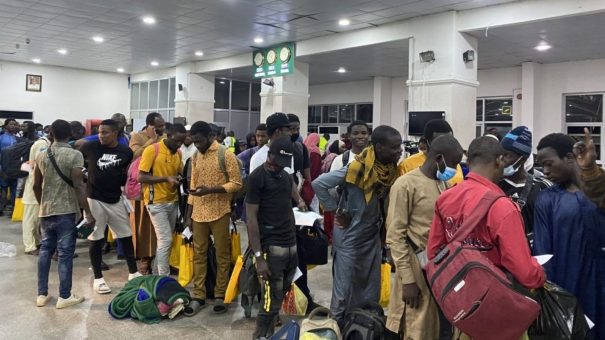
The Federal Government has concluded arrangements to evacuate 270 Nigerians from South Africa as part of its ongoing repatriation exercise for citizens willing to return home.
The returnees are expected to arrive at the Murtala Muhammed International Airport, Lagos, in the early hours of Wednesday aboard an Air Peace aircraft deployed for the evacuation.
The latest evacuation follows the Federal Government’s continued efforts, through the Nigerian High Commission in Pretoria and other relevant agencies, to facilitate the voluntary return of Nigerians facing various challenges in South Africa.
Announcing the schedule for the operation in a statement by the spokesperson for the Ministry of Foreign Affairs, Kimiebi Imomotimi Ebienfa, on Monday, the FG disclosed that the aircraft would depart Lagos on Tuesday afternoon for Johannesburg, before returning with the evacuees overnight.
The statement read, “In continuation of the ongoing evacuation of our nationals from South Africa, the Air Peace aircraft deployed for the process is expected to depart Lagos tomorrow, Tuesday 7 July, 2026, for Johannesburg, South Africa at 3.30 p.m.
“The aircraft will depart Johannesburg for Lagos with 270 returnees at 12.00 midnight, and the estimated time of arrival at the Murtala Muhammed International Airport, Lagos is 5.00 a.m. on Wednesday, 8 July, 2026, all things being equal.”
It could be recalled that the Federal Government has, over the years, undertaken several evacuation exercises involving Nigerians stranded abroad due to security concerns, economic hardship, immigration issues and humanitarian emergencies.
Air Peace has also played a key role in previous government-assisted evacuation missions, including the repatriation of Nigerians from countries affected by conflicts and other crises.
The latest exercise underscores the government’s commitment to ensuring the safe return of its citizens who have indicated a willingness to come back to Nigeria.
The Federal Government assured Nigerians still residing in South Africa of their safety, even as fresh concerns over xenophobic tensions and renewed anti-immigrant protests continue to trigger calls for stronger diplomatic action.
The assurance came after Nigerians reportedly stormed the country’s embassy in Pretoria as xenophobic tensions escalated, while another batch of 269 Nigerians evacuated from South Africa arrived at the Murtala Muhammed International Airport, Lagos, on Tuesday aboard an Air Peace flight from Johannesburg at 10.48 am, marking the second government-coordinated evacuation exercise in recent weeks.

England sends 10-man Mexico out of World Cup sails into quarters

DAY 19 of Projects Commissioning in the FCT

NiMet warns of flooding in Lagos, Ogun 25 other states




-

 News23 hours ago
SAD: Two more Nigerians killed in South Africa, death toll hits 4
-

 Politics9 hours ago
Senator Ogoshi Onawo resigns from ADC over incessant legal battles
-
 Opinion9 hours ago
10TH Senate Takes on Nigeria’s Toughest Security Question: State Police
-

 Entertainment9 hours ago
Video of Family of Bouncer Reportedly Killed in Sam Larry Crash Sparks Emotional Reactions Online
-

 Sports22 hours ago
2026 World Cup: Mbappe, Messi in fiery race For Golden Boot
-

 News22 hours ago
Sad: Former Bauchi deputy governor loses two children in fatal accident
-

 News22 hours ago
Xenophobic: Nigeria Slams Killing Of Two Citizens In South Africa
-

 News21 hours ago
IMF: Tinubu’s govt dismisses report on alleged missing N8trn
Warning: Undefined variable $user_ID in /home/naijuinz/public_html/wp-content/themes/zox-news/comments.php on line 49
You must be logged in to post a comment Login