Connect with us

News

NAF bombs terrorists who attacked security operatives in Niger

Published

on

ADVERTISEMENT
Zoom Ad
ADVERTISEMENT
Zoom Ad

By Francesca Hangeior

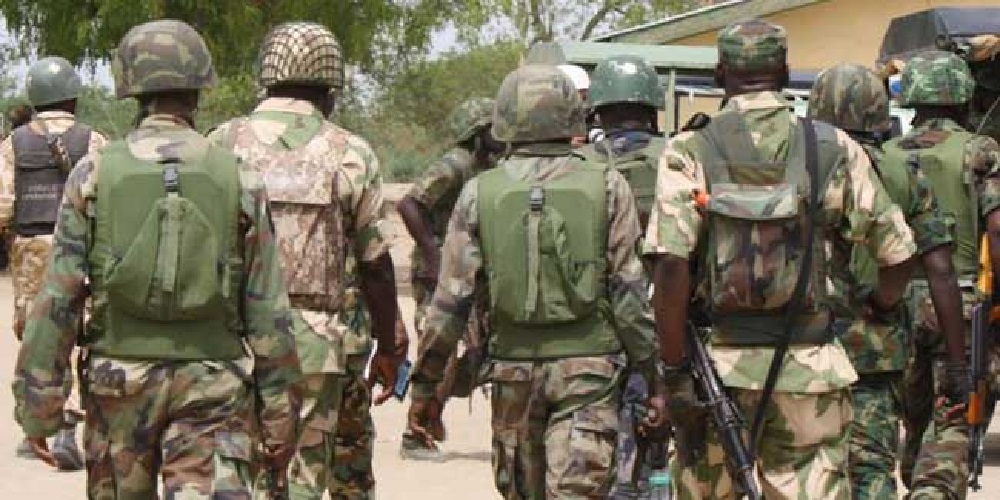
Airstrikes from the air component of Operation Whirl Punch have killed several terrorists who attacked other security agents in the Shiroro Local Government Area of Niger State.

The terrorists, over 100 in number, were said to have engaged operatives from other security agencies in a fierce gun battle.

A statement on Thursday by the Deputy Director of Public Relations and Information, Nigerian Air Force, Group Captain Kabiru Ali, said the operatives, during the attack, requested air support.

Advertisement

Ali noted that after the operation conducted on Wednesday, 28 bodies of the terrorists had so far been recovered, adding that several more terrorists, weapons, and burnt motorcycles were still being cleared.

He said, “In a decisive operation against criminal elements terrorizing communities in Shiroro Local Government Area of Niger State, the Air Component of Operation WHIRL PUNCH conducted a highly successful air interdiction mission on 11 September 2024.

“The mission targeted terrorists in Bassa, upon receipt of a request for air support from friendly forces in the area.

“Upon arrival, Nigerian Air Force air assets observed over 100 terrorists engaging friendly forces in a fierce firefight. After confirming the positions of friendly troops, the NAF conducted precision airstrikes on the terrorists’ positions. The strikes were devastating, neutralizing dozens of terrorists in successive passes. As of the time of reporting, 28 bodies had been recovered from the target area, with several more terrorists, weapons, and burnt motorcycles still being cleared”.

Advertisement

He stated that through the operation, the service had demonstrated its commitment to assisting other security agencies in the fight against crime across the country.

Ali said, “This successful operation underscores the Nigerian Air Force’s commitment to protecting the nation and supporting our sister Services and other security agencies in combating banditry, terrorism, insurgency, and all other forms of criminality.

“Nigerians can be assured that NAF will continue to conduct air operations, both independently and in collaboration with surface forces, to eliminate all threats to the peace, prosperity and security of our great nation.”

Shiroro Local Government in Niger State has been a hotspot for banditry activities.

Advertisement

The military withdrew its forces from the area after multiple attacks on troops by bandits in the local government.


Continue Reading
Advertisement
Click to comment

Warning: Undefined variable $user_ID in /home/naijuinz/public_html/wp-content/themes/zox-news/comments.php on line 49

You must be logged in to post a comment Login

Leave a Reply

News

Angry Residents Set Ablaze Tinubu, Sule Campaign Posters, Chant ‘We Reject APC’ in Nasarawa

Published

on

ADVERTISEMENT
Zoom Ad
ADVERTISEMENT
Zoom Ad

Tension erupted in Kofan Kaura, Lafia Local Government Area of Nasarawa State, as residents reportedly set fire to campaign posters bearing the images of Bola Tinubu and Governor Abdullahi Sule while openly rejecting the ruling All Progressives Congress (APC).

In videos circulating online, the residents were seen burning posters and brooms, the symbol of the APC, while chanting slogans such as “We reject you” and “We don’t want APC.”

The demonstration is believed to reflect growing dissatisfaction among some members of the community over the state of governance, economic hardship, and other challenges facing residents.

The indigenes of Kofan Kaura, in Lafia LGA, Nasarawa state burnt brooms and the campaign posters of Tinubu and their Governor, Abdullahi Sule.

Advertisement

They chanted “we reject you,” “we don’t want APC.”

The incident has since generated reactions on social media, with supporters and critics of the ruling party offering differing interpretations of the protest.

The development comes amid increasing political activity and public debate ahead of the 2027 elections, as political parties and citizens continue to assess the performance of elected officials at both the state and federal levels.

Advertisement
Continue Reading

News

Emir urges subjects to buy arms to defend themselves against bandits

Published

on

ADVERTISEMENT
Zoom Ad
ADVERTISEMENT
Zoom Ad

The Emir of Argungu, Alhaji Muhammad Samaila Mera, has called on his subjects to legally acquire weapons to protect their communities against persistent attacks by bandits.

He also urged communities in the emirate to remain vigilant and take proactive measures against terrorists and criminal elements that often invade the areas.

The monarch made the call during a meeting with district heads, village heads, and ward heads at his palace in Argungu.

He added that communities should consider raising funds collectively to purchase legally approved weapons for self-defence.

Advertisement

“If you acquire such weapons legally, make sure the bandits are aware that your community possesses the means to defend itself. This alone can serve as a deterrent and discourage attacks,” he said.

He stressed that Islam does not encourage people to remain helpless in the face of violence.

“It is not right for a Muslim to remain passive while criminals kill people, kidnap innocent citizens, and rape our women. Be prepared to defend yourselves, your families, and your communities against any attack,” the Emir stated.

The royal father lamented that many communities had become vulnerable because they lack the means to defend themselves.

Advertisement

He said, “When bandits attack, people start running, including village heads. This is happening because communities do not have adequate means of self-defence.”

He clarified that he was not encouraging communities to take the law into their own hands or engage in acts of terrorism, but rather advocating lawful self-defence, noting that the security challenge has become too overwhelming for security agencies alone to handle.

He said it was disheartening for communities to continue to lose lives without any form of resistance, while warning against ethnic violence and extrajudicial killings.

The emir warned that he would not support anyone carrying arms to attack other ethnic groups or engage in unlawful killings.

Advertisement

He said many of the attacks are reprisals, he therefore urged the communities not to carry out revenge attacks against innocent people because every unlawful killing only breeds another cycle of revenge.

The emir said that, although many members of the Lakurawa group had left the area, they had allegedly left behind armed bandits who continue to terrorize communities and maintain links with their former collaborators.

He called on communities across the Argungu Emirate to remain vigilant, cooperate with security agencies, and uphold the fear of God in all their dealings.

Advertisement
Continue Reading

News

Nigeria Does not need new State Police, needs legal support for existing security structures — Major General Ishola Williams

Published

on

ADVERTISEMENT
Zoom Ad
ADVERTISEMENT
Zoom Ad

A Retired Nigerian Army Major General, General Ishola Williams, has declared that Nigeria’s debate over state policing is largely misplaced, insisting that what the country requires urgently is not further argument but a constitutional amendment to properly formalise existing security structures already functioning across states.

Speaking on Friday during an interview on Frontline, a current affairs Programme on Eagle 102.5 Fm, Ilese Ijebu, Ogun State, Williams maintained that Nigeria has, in practice, already implemented a form of state policing through regional security outfits, especially the Southwest security network, Amotekun, which he described as an operational reality lacking constitutional backing.

According to him, the continued call for the creation of state police ignores the fact that sub-national security structures are already active, though poorly coordinated and legally constrained by the current constitution.

“We’ve already got a state police in practice, what we actually need now is a constitutional amendment to recognise and properly structure what already exists on the ground,” he said, stressing that endless debate was slowing down meaningful reform.

Advertisement

Williams argued that the country’s worsening insecurity reflects not just operational failure but a deeper crisis of policy confusion and institutional overlap, which he said has left security agencies working at cross purposes.

He said Nigeria is currently facing what he described as a “dual national emergency,” where citizens are trapped between insecurity and economic hardship, making survival increasingly difficult.

“The reality is that Nigerians are now living in fear and deprivation at the same time. People cannot afford basic living, and at the same time, they cannot move safely. When both fear of hunger and fear of violence exist together, then the nation is in danger,” he stated.

He criticised the Federal Government’s handling of recent security crises, particularly in the South-West, saying official responses often lack urgency and operational seriousness.

Advertisement

Williams also questioned the visibility of the Office of the Special Adviser to the President on Homeland Security, noting that the role appeared inactive despite rising insecurity across multiple regions.

“We have an office that was created for homeland security, but there is no public engagement, no briefing, no visible strategy. It raises serious concerns about whether the system is even coordinated,” he said.

The retired general also criticised proposals to recruit large numbers of untrained operatives, describing them as ineffective in confronting organised criminal networks.

“So they felt the best thing is recruiting 1,000 foreign guards, Those 1,000 people, have they been trained already to be able to rescue those who are kidnapped in the forest? Does it make sense?” he said, dismissing such strategies as symbolic rather than practical.

Advertisement

He questioned Nigeria’s intelligence capacity, arguing that external observers often express disbelief at the country’s security coordination.

“My colleagues outside the country ask me whether we have people who are thinking at all in our Homeland security system.” he revealed, underscoring what he described as systemic failure.

The retired officer also noted that he had repeatedly submitted policy proposals over the years, particularly on school protection, but they were ignored.

“Do you know that nobody has taken up that proposal?” he said, lamenting what he sees as institutional neglect of expert recommendations.

Advertisement

Williams stressed the need to clearly separate public safety from national security responsibilities, saying confusion between both concepts is weakening the system.

“Secondly too, I keep telling people, including you journalists, stop confusing public safety with security. That is a confusion and government is confused. Government is confused.” he stated emphatically.

He argued that the absence of clear operational boundaries between agencies has created overlap and inefficiency in responding to threats.

Williams questioned the visibility and effectiveness of the newly appointed Special Adviser on Homeland Security, Adeyinka Famadewa.

Advertisement

“The office has been appointed, nobody has heard anything from him, nobody has interviewed him, and he too have been keeping quiet.” he said.

He further criticised the delegation that visited Oriire Local government area of Oyo state, describing them as lacking urgency and seriousness.

“All of them were well-dressed, they were not going like people who are going to an area with lack of safety.” he said.
Williams argued that such symbolic gestures fail to reflect the gravity of insecurity on the ground.

He further warned that Nigeria’s security response structure appears disorganised and driven by ad hoc decisions rather than long-term planning.
“And they are acting like confused people. As if there are people there who do not think about what to do.” he said.

Advertisement

The retired general criticised the idea that recruitment alone could solve kidnapping and banditry challenges.
He lamented the continued abduction of schoolchildren and rural dwellers, describing it as a tragic indication of state failure to respond decisively to early warnings further expressing frustration over repeated failures to implement existing security proposals and frameworks.

Williams also condemned what he described as lack of rapid response to kidnapping incidents involving children.
He referenced the abduction case involving sister of former minister of power, Bayo Adelabu and her twin sons noting the rapid response of the police to the incident.
“Within 6 hours, police said they were doing something about it.” he said.

He argued that this was not in the case of the kidnapping that happened in Oriire Lcal Government of Oyo State insisting that a properly structured special forces response would have changed the outcome of such incident.

“As soon as they announced that they had been kidnapped, special forces with drones and helicopters should have gone after these people.” he said.
Williams maintained that failure to act decisively within critical hours emboldens criminal groups.

Advertisement

Political commentary blog
He reiterated that Nigeria already possesses multiple layers of security institutions but lacks coordination.

“We’ve already got a state police, what is Amotekun? Tell me. What is Amotekun?” he repeated, stressing his earlier position.

He insisted that the real issue is not creating new structures, but reforming and legally empowering existing ones.

Williams criticised the slow pace of governance on the issue of state policing, alleging deliberate delays in decision-making processes.

Advertisement

“They continue to deceive people. And if you look at it, President Bola Ahmed Tinubu is not interested in state police. He is not interested in the restructuring.
And they are playing tricks now to keep the whole thing going until December. Even Senate President, Akpabio said so openly that they will not do anything until December”

The retired general also questioned the role of the Inspector General of Police in shaping security restructuring proposals.

“The IGP wants to protect his interests. But we want independent state police. But he too wants to have control.” he said.

Williams argued that institutional self-interest is slowing down meaningful reform of policing structures.
He further criticised the continued centralisation of elite police units, arguing for structural independence while maintaining that Nigeria requires specialised paramilitary units capable of rapid response to internal threats.

Advertisement

Williams warned that insurgent groups are becoming increasingly entrenched in specific regions, particularly the North-East.
He said prolonged conflict has allowed extremist groups to consolidate territorial influence in parts of the region.

The retired general also criticised regional security coordination across West Africa.
“So the whole security system along the West Coast is in a mess.” he said, blaming weak regional cooperation and poor funding structures.
He concluded that Nigeria’s security crisis is rooted in structural confusion, lack of constitutional clarity, and weak accountability systems.

Source: Eagle FM

Advertisement
Continue Reading

Trending

Copyright © 2024 Naija Blitz News