
News
Confusion Trails Rivers LG Election Amid Conflicting Court Rulings on INEC Voters’ Register

- /home/naijuinz/public_html/wp-content/plugins/mvp-social-buttons/mvp-social-buttons.php on line 27
https://naijablitznews.com/wp-content/uploads/2024/06/images-67.jpeg&description=Confusion Trails Rivers LG Election Amid Conflicting Court Rulings on INEC Voters’ Register', 'pinterestShare', 'width=750,height=350'); return false;" title="Pin This Post">
- Share
- Tweet /home/naijuinz/public_html/wp-content/plugins/mvp-social-buttons/mvp-social-buttons.php on line 72
https://naijablitznews.com/wp-content/uploads/2024/06/images-67.jpeg&description=Confusion Trails Rivers LG Election Amid Conflicting Court Rulings on INEC Voters’ Register', 'pinterestShare', 'width=750,height=350'); return false;" title="Pin This Post">


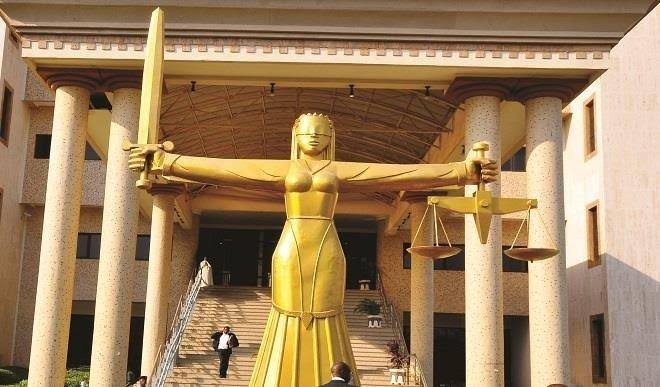
Uncertainty has shrouded the planned local government election in Rivers State, following the setting aside of all steps taken so far by the Rivers State Independent Electoral Commission (RSIEC) towards the conduct of the October 5 polls.
Justice Peter Lifu of a Federal High Court in Abuja, who set aside all the processes taken by the Rivers State Government, also restrained the Independent National Electoral Commission (INEC) from releasing the voter’s register used in the conduct of the 2023 general election to the Rivers SIEC for the purpose of conducting the October 5, 2024 local government elections in the state.
Besides, Justice Lifu, in a judgment delivered on Monday, also restrained the Inspector General (IG) of Police and the Department of State Services (DSS) from providing security for the said election.
This latest order by Justice Lifu however, runs contrary to an earlier order issued by a High Court in Rivers State, which had cleared the coast for the conduct of the October 5 polls.
Justice I. Igwe of the Rivers State High Court had, in a judgment delivered on September 4, ordered the Rivers State electoral body to conduct the October 5 council polls using the 2023 voter’s register.
In making the order, Justice Igwe had held that the defendants are bound by Section 7, Subsection 1 of the Constitution and Section 5 (A) of RSIEC Law Number 2 of 2018 to make provisions and conduct the local government polls within the shortest possible time, especially following the expiration of the tenure of the former elected officials on June 17.
Besides, Justice Igwe observed that the Federal Government has urged states without democratically elected local governments to do so within three months, following the Supreme Court’s judgment on local government autonomy.
The Rivers High Court subsequently ordered that all necessary arrangements be made to ensure the conduct of the election on October 5, 2024, as announced by RSIEC.
But with the judgment of the Federal High Court in Abuja, on Monday, it is not certain the order INEC, Police and DSS would obey considering the fact that both courts are of equal jurisdiction.
While the suit in Rivers was filed by the All People’s Party (APP), that of Abuja was filed by the All Progressives Congress (APC), which claimed that before the RSIEC can announce the date for the conduct of the local government elections, the voter’s register from INEC to be used for the polls must be updated and published 90 days to the poll.
APC argued that since this has not been done, the court should intervene by ordering INEC not to release the voter’s register used in Rivers State during the last general election.
Delivering judgment, Justice Lifu agreed with the plaintiff that all processes for the conduct of the October 5 council polls has not been fully complied with hence the need to restrain INEC and security agencies from participating in the election.
It is the position of the court that the update and revision of the voter’s register ought to have been concluded before a date for the conduct of the polls can be fixed.
The judge therefore ordered INEC not to make the certified voter’s register available to RSIEC until the law has been fully complied with.
Justice Lifu also barred RSIEC from accepting any voter’s register from INEC or using it for the purpose of the October 5 local governments poll.
Earlier, the court dismissed nine preliminary objections filed by the defendants against the suit for lacking in merit.
The court also struck down Section 60(2) of the Rivers Electoral Act, 2018, signed by former governor and now Minister of the Federal Capital Territory (FCT), Mr Nyesom Wike, for being inconsistent with the constitution, pointing out that the said law restricted access to justice by aggrieved persons.
Justice Lifu also held that his court has the necessary jurisdiction to entertain the case of the plaintiff because INEC and the security agencies who were defendants in the suit are federal agencies.
The court also settled the issue of representation of the APC in favour of the nation as against the state.t
A the hearing, the Rivers State APC had through its lawyer, Chief Chris Uche (SAN), applied for the withdrawal of the suit but, Justice Lifu held that the state chapter of the APC is not a juristic person and had also failed to prove that the National Working Committee (NWC) of the APC had instructed them to take any steps in respect of the case before him.
According to the judge, it is only the National Legal Adviser of the party and the NWC that could engage a counsel to represent the party in any court case, adding that Chief Joseph Daudu and Ogwu Onoja both SANs were duly engaged to represent the APC in the suit.
The court subsequently struck out all the submissions of the Rivers State APC in the suit.
Meanwhile, Chief Gordy Uche (SAN), who represented the Rivers APC, told journalists shortly after the judgment that his client would appeal the judgment of Justice Lifu at the appropriate time.
News
Taraba APC dispute: Electoral victories should not breed arrogance, exclusion – Kefas tells candidates

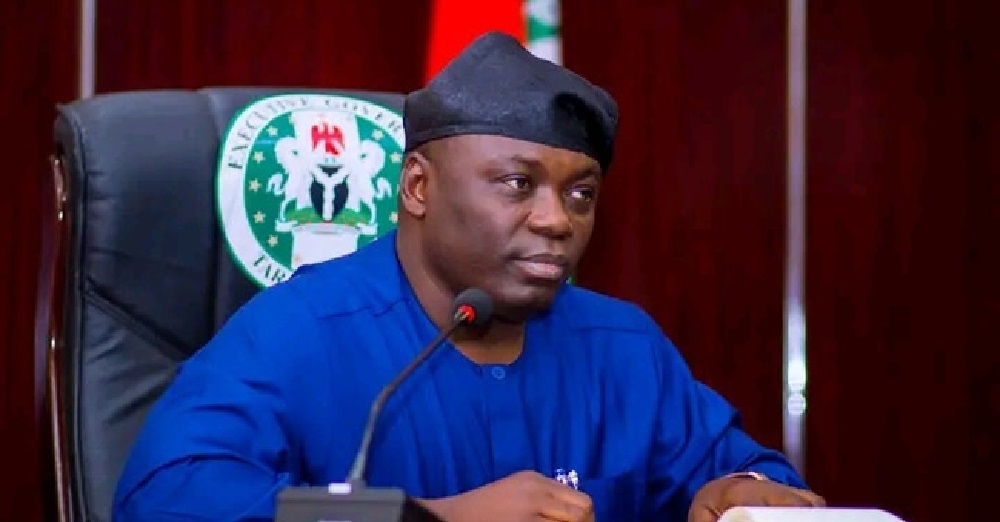
Governor Agbu Kefas of Taraba State has urged party members who secured the All Progressives Congress (APC) ticket ahead of the upcoming elections to demonstrate humility by reaching out to those who were unsuccessful, saying electoral victories should not breed arrogance or exclusion.
The governor made the appeal on Tuesday during a reconciliation dinner with APC stakeholders in Jalingo, describing the gathering as a “family meeting,” aimed at healing divisions, rebuilding trust, and strengthening the party.
He called on APC members in the state to put aside grievances arising from the party’s congresses and primary elections and work together ahead of future electoral contests.
Kefas acknowledged that the process leading to his defection from the Peoples Democratic Party (PDP) to the APC, as well as the ward, local government, and state congresses and subsequent primaries, had generated mixed feelings among party members.
He admitted that while some members were satisfied with the outcome of the exercises, others felt disappointed or excluded from the process.
“Wherever this happened, I sincerely regret the pain or misunderstanding that may have arisen,” the governor said, adding that his decisions were never intended to suppress legitimate political ambitions or diminish the contributions of party stakeholders.
“The decisions taken during the political process were aimed at preventing prolonged internal conflicts that could have weakened the party and divided the people of Taraba State,” Kefas said.
The governor stressed that reconciliation should now take precedence over political differences, noting that party contests should not create permanent enemies or destroy long-standing relationships.
He urged party members who secured the APC ticket to demonstrate humility by reaching out to those who were unsuccessful, saying electoral victories should not breed arrogance or exclusion.
“No candidate can succeed alone,” he said, urging successful aspirants to carry every stakeholder along, regardless of the outcome of the primaries.
Kefas also appealed to aspirants who did not emerge victorious to remain committed to the party, assuring them that political opportunities extend beyond a single election cycle.
He pledged to deepen consultations with party leaders and stakeholders across the state, saying reconciliation would not end with the dinner but would continue through sustained dialogue at the ward, local government, senatorial, and state levels.
The governor said reconciliation should go beyond appointments and political positions, stressing that respect, consultation, inclusion, and recognition were essential to building a stronger party.
He called for an end to divisions between old and new members of the APC, insisting that there should be “only one APC in Taraba State.”
Kefas further pledged to lead with humility, listen to constructive criticism, and broaden consultations in decision-making, while urging all stakeholders to place the collective interest of the party above personal grievances.
He reminded party members that politics should ultimately focus on improving the lives of citizens through better security, education, healthcare, infrastructure, electricity, employment, and agricultural development rather than internal disputes.
The governor urged party leaders, aspirants, and supporters to embrace forgiveness, rebuild trust, and unite ahead of future elections.
“Let tonight mark the beginning of a new chapter founded on respect, forgiveness, consultation, discipline, and shared purpose,” he said.
Kefas expressed confidence that a united APC would be better positioned to earn the confidence of the people of Taraba State and achieve electoral success while advancing peace, progress, and prosperity across the state.

The Court of Appeal in Abuja has reserved judgement in the appeals seeking to set aside the judgement of the Federal High Court that ordered the Independent National Electoral Commission, INEC, to deregister the African Democratic Congress, ADC, and four other political parties.
A three-member panel of the Court of Appeal, led by Justice Abba Bello Mohammed, on Tuesday reserved judgement to a date to be communicated to the parties after they adopted their respective briefs of argument.
Apart from the ADC, the other political parties challenging the Federal High Court’s judgement delivered by Justice Peter Odo Lifu are the Action Peoples Party (APP), Action Alliance (AA), Accord Party (AP), and the Zenith Labour Party (ZLP).
The Court of Appeal had, on June 16, granted a stay of execution of the High Court’s judgement and took a swipe at Justice Lifu for refusing to stay proceedings in the matter as ordered by the appellate court, despite its higher position in the judicial hierarchy.
The appellate court held that Justice Lifu ignored its earlier order of May 22 directing him to stay proceedings pending the determination of an interlocutory appeal against his ruling, despite being notified of the order.
The Court of Appeal described his conduct as “a form of judicial impertinence,” noting that the Supreme Court had previously held that such conduct amounts to “judicial rascality” and is unbecoming of a judicial officer.
Justice Lifu had ordered INEC to deregister the five political parties on the grounds that they failed to meet the constitutional requirements necessary to retain their registration.
The court also restrained INEC from recognising the affected parties, accepting nominations from them, or allowing them to participate in the 2027 general elections.
Justice Lifu further ordered the parties to stop presenting themselves as registered political parties, holding that the suit filed by the National Forum of Former Legislators (NFFL) had merit.
A body operating under the aegis of the National Forum of Former Legislators (NFFL) instituted the suit, marked FHC/ABJ/CS/2637/2026, against the five political parties.
The NFFL, through its lawyer, Rabo Mohammed, argued before the High Court that INEC has a constitutional obligation under Section 225A of the 1999 Constitution (as amended), the Electoral Act 2022, and the INEC Regulations to deregister political parties that fail to meet the prescribed electoral performance thresholds.
The plaintiff maintained that the affected parties failed to satisfy the constitutional benchmarks, including winning at least 25 per cent of the votes in a state during a presidential election or securing at least one elective seat at the federal, state, or local government level.
According to the NFFL, the ADC and the four other parties failed to meet these requirements in the 2023 general elections and subsequent by-elections, making their continued recognition by INEC unlawful.
The Attorney General of the Federation and Minister of Justice, Prince Lateef Fagbemi, SAN, who is also a defendant in the suit, supported the plaintiff’s position.
In his court filings, the AGF argued that allowing the parties to remain registered violates the provisions of the Constitution and undermines the integrity of Nigeria’s electoral system.
He further contended that INEC would continue to breach its constitutional obligations unless the court intervened.
However, dissatisfied with the Federal High Court’s decision, all the defendants, including INEC, appealed the judgement and urged the Court of Appeal to set it aside.
Justice Abba Bello Mohammed, supported by Justices Donatus Okorowo and Oyebisi Oyebola Oyewumi, after hearing the arguments of the respective lawyers, announced that a date for the delivery of the judgement would be communicated to all parties.
Senate President Godswill Akpabio has revealed that the National Assembly is considering a review of the Electoral Act 2026 following complaints that provisions in the law contributed to the defeat of many incumbent lawmakers during party primaries ahead of the 2027 general elections.
Akpabio made the disclosure on Tuesday while speaking at the National Assembly Open Week organised by the House of Representatives in Abuja.
He admitted that lawmakers inadvertently enacted provisions that worked against their own political interests, leaving many senators and members of the House of Representatives unable to secure their parties’ tickets for re-election.
According to him, although the law helped reduce violence during party primaries, it also created challenges for many serving legislators.
“From the Electoral Act that we passed, you can see that not many people were killed, if any, during the primaries in many states of the federation. But we shall tinker with the Act again to make sure that we are not the victims of our own actions,” Akpabio said.
He noted that many lawmakers were overwhelmed by the influence of political leaders within their constituencies during the nomination process.
“I understand that many members and many senators were overwhelmed by the leadership of their various political constituencies. At the end of the day, we seem to have made a law against ourselves,” he added.
The Senate President assured Nigerians that the National Assembly would revisit the legislation to ensure future lawmakers do not face similar difficulties in securing party nominations. According to him, experienced legislators contribute significantly to governance, stressing that continuity in the legislature strengthens lawmaking and national development.
The Electoral Act 2026 restricted political parties to either direct primaries or consensus arrangements for selecting candidates, replacing the system previously used in earlier election cycles.
The changes attracted criticism from several political stakeholders who argued that the process gave excessive influence to party leadership, leading to the defeat of dozens of sitting lawmakers during the primaries.
Despite the concerns, Akpabio defended the performance of the 10th National Assembly, saying it had passed several landmark legislations aimed at improving security, economic growth and national development.
He cited laws strengthening the fight against terrorism, reforms aimed at returning out-of-school children to classrooms, tax reforms designed to boost the economy while protecting ordinary Nigerians, approval of a new national minimum wage, investment-focused legislation and the establishment of Regional Development Commissions. Akpabio, however, lamented that many Nigerians criticise legislation without taking time to understand its contents.
Describing the National Assembly Open Week as an important democratic initiative, he encouraged Nigerians to actively engage with lawmakers by offering constructive criticism and participating in the legislative process.
“A parliament that listens becomes wiser. A democracy that listens becomes stronger. Ultimately, Parliament is judged not by what it says, but by what it does,” he said.
Also speaking at the event, the Catholic Bishop Emeritus of the Abuja Archdiocese, John Cardinal Onaiyekan, urged members of the National Assembly to remain committed to their constitutional responsibility of representing the people and serving as an effective check on the Executive arm of government.
According to the cleric, the legislature remains the cornerstone of democratic governance and must not abandon the trust reposed in it by Nigerians.
Similarly, Executive Director of the Policy and Legal Advocacy Centre (PLAC), Clement Nwankwo, called on lawmakers to strengthen oversight of the Executive, improve transparency and ensure prompt attention to national issues.
He stressed that while lawmaking is essential, democracy can only thrive when Parliament effectively holds the Executive accountable, ensures prudent management of public resources and faithfully represents the interests of citizens. Nwankwo warned that weak legislative oversight encourages corruption and erodes public confidence, while an independent and courageous National Assembly remains critical to sustaining Nigeria’s democracy.

Taraba APC dispute: Electoral victories should not breed arrogance, exclusion – Kefas tells candidates

Appeal Court reserves verdict on deregnition of ADC, four parties

Senate Moves to Amend Electoral Act After Dozens of Incumbent NASS Members Lose Party Tickets




-
 News21 hours ago
VIDEO: DAY 25 of Projects Commissioning in FCT: Watch Wike’s brief dancing steps
-
 News21 hours ago
Shettima reveals how he shed tears beside Buhari during his last moments on earth
-
 News23 hours ago
Reps Demand Answers Over N5.3trn CBN Debt, Query OAGF on Deductions from MDAs’ Accounts
-

 News20 hours ago
Tinubu Commissions Bwari Water Project, Pledges Clean Water for All FCT Satellite Towns(Photos)
-
 News19 hours ago
BREAKING: PFIPC scam: Police nab Prince Adeniyi Adeyemi
-

 News17 hours ago
NSITF presents 78 beneficiaries with prostheses
-

 News22 hours ago
Oyedele Sets Up Advisory Committee to Turn Economic Reforms into Results
-

 Economy19 hours ago
See Black Market Dollar To Naira Exchange Rate Today 14th July 2026
Warning: Undefined variable $user_ID in /home/naijuinz/public_html/wp-content/themes/zox-news/comments.php on line 49
You must be logged in to post a comment Login