
News
More trouble for Nigerians as fuel price hike imminent over rise in FX, oil price, Middle East



By Mario Deepromoter
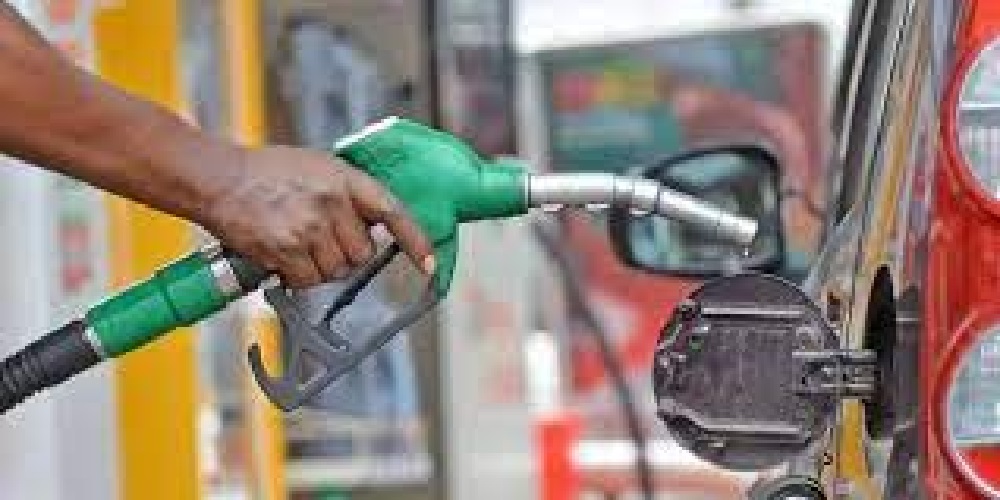
There are strong signals that an increase in the price of Premium Motor Spirit (PMS), also known as petrol is imminent.
The anticipated hike, players note, is primarily driven by a rise in the exchange rate of the dollar to the naira, coupled with escalation in the global price of crude oil.
As these economic factors converge, consumers in Nigeria may soon face higher fuel costs, reflecting the interconnected nature of international markets and local economies.
The naira showed further signs of weakness last week, closing the market at N1,700 from N1,600 to $1, a development that is set to affect retail fuel prices.
Brent, the global benchmark for crude, hit $78.04 per barrel on Sunday, up from $74.05 per barrel on September 23, 2024.
More so, there are concerns that a widening regional conflict in the Middle East could disrupt global crude flows. Market fears are rising over the possibility that Israel might target Iranian oil infrastructure, which could provoke retaliation.
President, Petroleum Products Retail Outlets Owners Association of Nigeria (PETROAN), Mr. Billy Gilly-Harry, told Daily Sun that the hostilities in the Middle East will definitely impact petrol prices in the coming days.
He explained that, at the moment, vessels are changing their routes as a result of the crisis in the Middle East, thereby causing an increase in shipping costs, which will subsequently impact prices.
“As an association, we have taken cognizance of the impact of this crisis on fuel costs, and I can tell you categorically that this will lead to an upward review of fuel prices. Certainly, the landing cost of fuel will go up. But what I cannot say is what that cost will be,” he said.
Chief Executive Officer of Pinnacle Oil and Gas Limited, Mr. Robert Dickerman, said the global market price for any oil commodity is dollar-based and must be converted to naira at the naira/USD exchange rate.
He added that the large majority of price increases we have seen in the past year are not because of government policies, price gouging, or product hoarding, nor are they due to an increase in the price of crude oil, but are due to the fall in the value of the naira.
“Every drop in naira value raises the cost of anything imported or market-priced, whether it is gasoline, manufactured goods, or food,” he said.
Dickerman said Nigeria must address the root of the problem, which is how to restore global confidence in Nigeria’s economy and currency, create foreign investment in jobs and local production, increase tax revenue, and achieve fiscal prudence, saying that is the only way to lower petroleum product prices in Nigeria.
The impending fuel price hike, according to industry observers, may have forced the Nigerian National Petroleum Company (NNPC) Ltd to shut its petrol payment portal against fuel marketers.
Spokesperson for the Independent Petroleum Marketers Association of Nigeria (IPMAN), Mr. Chinedu Ukadike, said that marketers have more than 2,000 pending tickets for the purchasing of 45,000 litres of petrol, warning that the situation may lead to another round of fuel scarcity nationwide.
“I can’t confirm the price now because the portal is still shut down.
“We have more than 2,000 tickets for 45,000 litres (of petrol). That is 45,000 multiplied by 2,000; you can now know the number of million litres it will be. This is just an estimate; you know I don’t work with NNPCL, and I don’t know what is on their system.”
He added that a 45,000-litre truckload of PMS is around N39.5 million, making N79 billion when multiplied by 2,000.
Some of the marketers at the Apapa depot who spoke in confidence expressed concerns that the development could hamper the fragile fuel distribution chain, leading to shortages in the weeks ahead.
They said any disruption in the fuel supply chain is a potential threat for a fuel crisis and therefore called on all relevant stakeholders to address whatever challenges that may want to rear their ugly heads.
But in a separate reaction, the National Vice President of IPMAN, Mr. Hammed Fashola, in a telephone interview with Daily Sun on Friday, said there is no cause for worry, assuring that as long as the tickets which are already in the custody of NNPC Ltd are being serviced, there would be no disruption.
He maintained that the portal closure against fresh payment by NNPC Ltd was taken in the best interest of the market, saying there was no point in holding on to the business funds of marketers when there was a backlog to clear.
“It is better to allow the funds to be in the hands of marketers to enable them to use it for other things, rather than holding on to it when there won’t be immediate supply.”
In his reaction, the spokesperson of NNPC Ltd, Mr. Olufemi Soneye, who confirmed the shutdown of the portal, assured stakeholders that it would be opened as soon as they clear the backlog.
He said that the portal closure was intended to prevent the company from holding marketers’ funds for an extended period.
“We have a significant backlog to address. The closure is intended to prevent us from holding marketers’ funds for an extended period.
Credit: Daily Sun
News
Reforms in NNPCL under Ojulari have increased Nigerians’ trust in current administration – Centre

The Centre for Reforms and Good Governance (CRGG) has hailed the transformative leadership of Engr. Bashir Bayo Ojulari as Group Chief Executive Officer of the Nigerian National Petroleum Company Limited (NNPCL), declaring that the sweeping reforms under his stewardship have significantly boosted public confidence in President Bola Ahmed Tinubu’s administration.
In a statement signed by its Executive Director, Maxwell Onazi, the Centre described Ojulari’s tenure since his appointment on April 2, 2025, as a defining chapter in the commercialisation and professionalisation of Nigeria’s national oil company.
According to the CRGG, Ojulari’s results-driven approach has delivered measurable gains across upstream production, financial performance, transparency, infrastructure delivery and investor confidence, reversing years of opacity and operational inefficiency.
The Centre noted that these outcomes align directly with the Renewed Hope Agenda and demonstrate the administration’s capacity to appoint competent technocrats capable of delivering tangible national value.
“Engr. Bayo Ojulari has shown that with disciplined leadership, commercial focus and commitment to transparency, NNPCL can be transformed from a historically loss-making entity into a profitable, investor-ready national asset,” Maxwell Onazi stated.
“The surge in production, the restoration of regular Federation Account remittances, the unprecedented financial disclosures and the unlocking of multi-billion-dollar investments are not abstract achievements.
“They are concrete evidence that the Tinubu administration’s reforms in the oil and gas sector are working and that Nigerians can once again trust that their most strategic national resource is being managed with integrity and competence.”
The Centre highlighted the dramatic rise in upstream output under Ojulari’s watch.
According to the CRGG, the first half of 2026 alone produced clear evidence of the transformation. NNPCL recorded ₦19.04 trillion in revenue and ₦2.28 trillion in profit after tax between January and June 2026, while statutory remittances to the Federation Account reached ₦6.286 trillion in the same period and climbed to ₦7.913 trillion by the end of July, including a single-month payment of ₦1.627 trillion in July.
These figures, the Centre noted, represent a decisive break from past patterns of irregular transfers and limited disclosure.
“The 2026 half-year numbers speak louder than any rhetoric. Revenue of ₦19.04 trillion, profit after tax of ₦2.28 trillion and nearly ₦8 trillion remitted to the Federation Account in seven months show that NNPCL is now operating as a true commercial entity that delivers value to the Nigerian people,” Maxwell Onazi stated.
“When citizens see consistent, transparent remittances and rising production under a leadership appointed by this administration, their trust in the broader reform agenda of President Tinubu naturally increases.
“Ojulari’s results have made that connection clear and credible.”
The Centre further highlighted the operational gains that underpinned the financial performance.
National crude oil production has been sustained at levels above 1.7 million barrels per day for much of 2026, reaching peaks of approximately 1.73 million barrels per day, the highest in five years.
NNPC Exploration and Production Limited continued to post strong output, with earlier records of 355,000 barrels per day in late 2025 extended into higher peaks of around 365,000 barrels per day.
Gas production also strengthened, hitting 7,841 million standard cubic feet per day in June 2026, supporting the administration’s gas-based industrialisation push.
“Infrastructure progress has been equally notable, the group added. “The Ajaokuta–Kaduna–Kano (AKK) and Obiafu–Obrikom–Oben (OB3) gas pipelines advanced to 94 per cent and 98 per cent completion respectively in 2026, while major upstream projects such as Bonga Southwest-Aparo moved closer to delivering additional barrels and jobs.
“Cost discipline remained a priority, with Ojulari’s team achieving $3.4 billion in savings through systematic contract reviews and optimisation.
“These are not isolated successes. Higher production, stronger gas output, near-completion of critical pipelines and multi-billion-dollar cost savings form a coherent picture of a national oil company that is finally being run with commercial rigour,” Onazi said.
The Centre for Reforms and Good Governance concluded that Ojulari’s first year-plus in office has set a new benchmark for public-sector performance and provided a clear demonstration that competent, reform-minded leadership can deliver results that benefit the entire nation.
It called on stakeholders to sustain support for the ongoing transformation so that the gains already recorded can be consolidated and expanded in the years ahead.
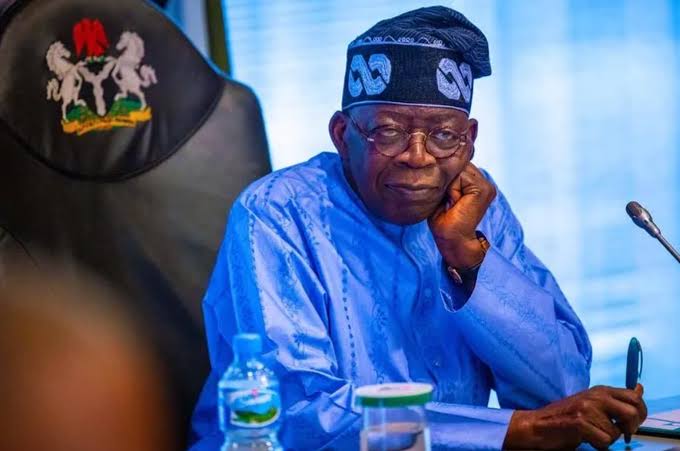
The Good Governance Assembly (GGA) has called on President Bola Ahmed Tinubu to remove the Commissioner for Insurance and Chief Executive Officer of the National Insurance Commission (NAICOM), Olusegun Ayo Omosehin, from office over allegations arising from the recently concluded insurance industry recapitalisation exercise.
The civil society organisation, in a statement signed by its Executive Director, Peter Bawa, alleged regulatory overreach, abuse of office and financial impropriety in the implementation of the recapitalisation programme.
The group said its demand was based on a petition before the Economic and Financial Crimes Commission (EFCC) and the Federal Ministry of Finance concerning disputed fees and capital transfer requirements imposed during the exercise.
Among the issues raised are an alleged one per cent capital injection fee, the directive requiring certain insurers to transfer their recapitalisation funds into an escrow account with the Central Bank of Nigeria (CBN), and an alleged N180 million payment described as a fee for verification consultants.
The allegations have also been raised by NICON Insurance Limited and Nigeria Reinsurance Corporation, which petitioned government authorities over the disputed requirements. The Federal Ministry of Finance subsequently directed NAICOM to suspend enforcement of the contested fees and the full-capital escrow directive against the two companies pending determination of their petition.
The ministry also requested NAICOM to provide detailed explanations and legal justification for the disputed requirements.
According to the GGA, the controversy raises questions about regulatory accountability and could affect confidence in the insurance industry.
“The allegations against Mr. Ayo Omosehin are not administrative technicalities,” Bawa said, alleging that the disputed requirements involved significant sums of money across the sector.
He argued that Omosehin should not remain in charge of the industry regulator while the allegations are being examined.
The GGA further claimed that the disputed charges, if applied across the industry, could amount to billions of naira.
It said the development was particularly concerning coming after the recapitalisation exercise, which was designed to strengthen the financial capacity of insurance companies and improve confidence in the sector.
The organisation also urged the Federal Government to ensure that any investigation into the allegations is independent and transparent.
“We therefore call on President Tinubu to remove the NAICOM boss without further delay so that a full, independent and transparent investigation can proceed free from any perception of interference,” Bawa said.
However, NAICOM has rejected allegations of fraud or wrongdoing by its officials.
In a September 10 rejoinder, the commission described reports alleging fraudulent activities and the detention of its officials as false and misleading. NAICOM said neither the Commissioner for Insurance nor any of its directors had been indicted, charged or found culpable of fraudulent activity.
The commission also confirmed that the EFCC had requested information and explanations concerning allegations circulated in the media, but said responding to such a request was part of its cooperation with law-enforcement agencies and should not be interpreted as evidence of wrongdoing or culpability.
NICON and Nigeria Re, however, have maintained their call for an investigation, alleging that the one per cent capital injection fee lacked statutory backing and questioning the handling of funds collected during the recapitalisation process.
The companies have also challenged NAICOM’s alleged requirement that insurers transfer their entire capital injections into a CBN escrow account, arguing that Section 16(3) of the Nigerian Insurance Industry Reform Act 2025 provides for a 10 per cent statutory deposit.

. As NDLEA intercepts over N3billion worth of opioids at Lagos airport, nabs Cross-border Togolese traffickers, others in Lagos, Oyo, Edo, Bauchi raids
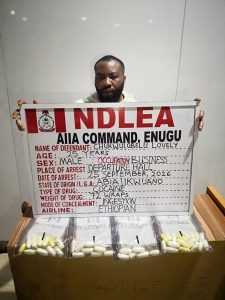
Operatives of the National Drug Law Enforcement Agency (NDLEA) have arrested a 25-year-old newlywed businessman Lovely Chukwulobelu at the Akanu Ibiam International Airport (AIIA), Enugu, for attempting to traffic 72 wraps of cocaine which he ingested, to Portugal where he resides.
The groom was intercepted by NDLEA officers at the departure hall of the Enugu airport on Thursday 25th September 2026, with cocaine in his gut and wedding ring on his finger, while he attempted to board an Ethiopian Airline flight to Portugal via Addis Ababa. He was subsequently placed under excretion observation during which he egested a total of 72 wraps of the Class A illicit drug.
The suspect, who claimed he was into car decoration business at the Trade Fair Complex, Ojo area of Lagos before he relocated to Portugal in May 2023, said he returned to Nigeria recently to get married on 13th September 2026. He said he resorted to the criminal trade to offset expenses incurred during his wedding.
At the import shed of the Murtala Muhammed International Airport (MMIA) Ikeja Lagos, NDLEA operatives on Tuesday 22nd September 2026 uncovered one of the year’s biggest opioid hauls during a joint examination of three monitored consignments, leading to the seizure of Two Million Five Hundred and Fifty-Five Thousand (2,550,000 ) pills of Tramaking 225mg, Tramaking 250mg, and Royal Tapentadol 250mg, with a combined gross weight of 1,640.55 kilograms. The consignments, were imported from India and Bangladesh via Qatar Airways, RwandAir, and Ethiopian Airlines.
In Bauchi, NDLEA operatives arrested two suspects: Umar Hamidu, 35, and Abdulkarim Salihu, 45, along the Maiduguri bypass with 300 compressed blocks of skunk, a strain of cannabis weighing 262.5kg, concealed in the false bottom of a truck marked MUB757 YH, while two cannabis farms with a combined estimated yield of 1,360.23kg at Eko Camp, Ilushi, Edo state were destroyed by NDLEA officers supported by soldiers on Wednesday 23rd September.
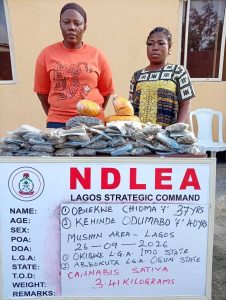
In Lagos, two female suspects: Odumabo Kehinde, 36, and Obiekwe Chioma, 40, were arrested on Saturday 26th September when NDLEA operatives raided Anifowoshe Street in Mushin where they recovered 3.4kg skunk from them. In another operation in Lagos same day, NDLEA officers intercepted a 58-year-old man Ugwu Johnson at Ebute-Ero motor park, with large quantities of illicit consignments, including: 5.920kg skunk; 2,400 ampoules of pentazocine injection; 8,400 tablets of nitrazepam; and 40,000 pills of tramadol.
Two Togolese nationals: Yinusa Abdulsamad, 35, and Fatai Baba, 33, were nabbed by NDLEA officers on Saturday 26th September at Iganna-Ilero road, Iganna, Oyo state with 305.6kg of skunk concealed in two pick-up vans used for cross-border trafficking racket, moving Ghanaian-sourced cannabis into Nigeria through the Oyo axis.
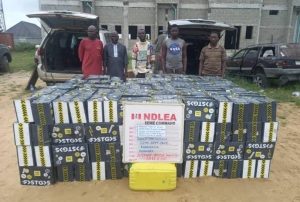
At the Seme border in Badagry, Lagos, five suspects were arrested with 420 cartons of nitrous oxide popularly called laughing gas weighing 1,688.4kg, along with two vehicles used in conveying the exhibit from the border into Lagos. They include: Kingsley John, 40; John Chibuike Okeke, 44; Lamidi Ismaila, 40; Babatunde Samuel, 42; and Afeesu Idowu, 47.
With the same vigour, Commands and formations of the Agency across the country continued their War Against Drug Abuse (WADA) sensitization activities to schools, worship centres, work places and communities among others in the past week. These include: WADA sensitization lecture to students and staff of Community High School, Saki, Oyo state; Auchi College, Auchi, Edo; Alkali Modibbo Islamic Centre, Dukku, Gombe; and Junior Arabic Secondary School, Kahu, Kibiya LGA, Kano, while the Delta Ports Command of NDLEA paid a WADA advocacy visit to His Royal Majesty, Ogiame Atuwatshe III, the Olu Of Warri, Delta state, among others.
While commending the officers and men of MMIA, AIIA, Lagos, Oyo, Edo, Seme, and Bauchi Commands for the various successful operations, Chairman/Chief Executive Officer of NDLEA, Brig. Gen. Mohamed Buba Marwa (rtd) enjoined them and their colleagues across the country to continue with the ongoing balanced approach to the drug control efforts of the Agency.

Reforms in NNPCL under Ojulari have increased Nigerians’ trust in current administration – Centre

Group Demands Omosehin’s Removal as NAICOM Chief Over Recapitalisation Allegations

Europe-bound bridegroom excretes 72 wraps of cocaine at Enugu airport(Photos)


-

 News19 hours ago
House of Assembly Candidate, Sanni Urges Unity Among Ekiti ADC Members
-

 Sports11 hours ago
2027: NDC chairmen reject Obi-Kwankwaso structures
-
 News12 hours ago
Police, DSS, ICPC Cleared Me of PFIPC Scam Allegations — Gbajabiamila
-

 News11 hours ago
‘I’m like three women’ — Ivie Atuwatse rules out polygamy for Olu of Warri
-

 Metro11 hours ago
Hisbah arrests eight over homosexuality in Jigawa
-
 News12 hours ago
PHOTOS: Jerry Eze leads thousands in prayer at Man United’s Old Trafford
You must be logged in to post a comment Login