
News
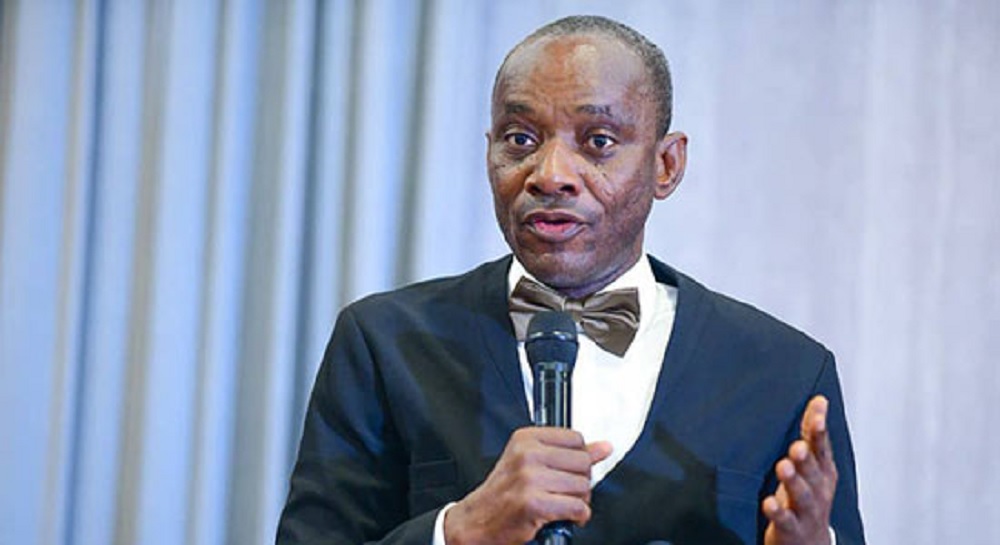
Sam Amadi to deliver 6th JFCN annual lecture

- /home/naijuinz/public_html/wp-content/plugins/mvp-social-buttons/mvp-social-buttons.php on line 27
https://naijablitznews.com/wp-content/uploads/2024/10/Sam-Amadi.jpg&description=Sam Amadi to deliver 6th JFCN annual lecture', 'pinterestShare', 'width=750,height=350'); return false;" title="Pin This Post">
- Share
- Tweet /home/naijuinz/public_html/wp-content/plugins/mvp-social-buttons/mvp-social-buttons.php on line 72
https://naijablitznews.com/wp-content/uploads/2024/10/Sam-Amadi.jpg&description=Sam Amadi to deliver 6th JFCN annual lecture', 'pinterestShare', 'width=750,height=350'); return false;" title="Pin This Post">


Dr. Sam Amadi, a former Chairman of the Nigerian Electricity Regulatory Commission(NERC), is the Guest Speaker at the 6th Annual lecture of Just Friends Club of Nigeria which holds at Bolingo Hotel, Abuja on Tuesday, November 5, 2024. The time of the event is 10 am.
A statement by the club’s President, Mr. Fred Ohwahwa,stated that the topic of Dr. Amadi’s lecture is: “ HIGH COST OF GOVERNANCE AS AN IMPEDIMENT TO DEVELOPMENT.”
Dr. Amadi is currently the Director of Abuja School of Social and Political Thought and a Visiting Professor at the Emerald Energy Institute at the University of Port Harcourt.
He holds a research doctorate degree (SJD) in Law from Harvard University, Cambridge, Massachusetts (2004), a Master of Public Administration (MPA) {2003} and a Master’s in Law (LL.M (2001) from the same institution. He has an LL.B. from the University of Calabar, in 1992. He was called to the Nigerian Bar in 1993 after passing from the Nigerian Law School.
The Chairman of the 6th JFCN Annual Lecture is a former Executive Director (Programmes) of Nigerian Television Authority(NTA) and former Director General of National Lottery Regulatory Commission, Olorogun Peter Igho.
The panelists are Dr. Ahmed Adamu, an associate professor and a petroleum economist at Nile University, Abuja; Dr. Felix Oisamoje, an adjunct Senior Lecturer of Mass Communications at Bingham University, Keffi; and Mr. Maxwell Kadiri of Open Society Justice Initiative.
The Master of Ceremony is Mrs. Eugenia Abu, a broadcast journalist, writer, poet and media consultant, best known as a former News Anchor and Correspondent for NTA.
It would be recalled that the Guest Speaker at the inaugural Annual Lecture was Mr. Benjamin Ezra Dikki, then Director General of the Bureau of Public Enterprises. Dikki spoke on “The Federal Government’s Privatization and Economic Reform Programme.” The Guest Speaker at the 2nd JFCN Annual Lecture was Mr. Tony Ejinkeonye, then President, Abuja Chamber of Commerce & Industry, who spoke on “the Role of the Private Sector in FCT Development.”
The 3rd JFCN Annual Lecture had Dr. Abraham Nwankwo, a former Director General of Debt Management Office, as Guest Speaker and his topic was “Realism and Paradox in Financing Nigeria’s Huge Infrastructure Needs.” The 4th JFCN Annual lecture had Rev. Father George Ehusani as Guest Speaker.His topic was “Beyond The 2023 Elections: That Nigeria May Be Saved.” A former Chairman of the National Human Rights Commission (NHRC), Prof. Chidi Anslem Odinkalu, was the Guest Speaker at the 5th JFCN Annual Lecture. His topic was “Resetting Nigeria.”
JFCN is a socio-cultural organisation that fosters and encourages the spirit of oneness, companionship and comradeship amongst members and between the club and other friendly associations. The club is also involved in recreation, sports and engages in acts of philanthropy in favour of the needy members of the society at large. Its members are professionals in engineering, communication, accounting, business, legal and other sectors of the economy.

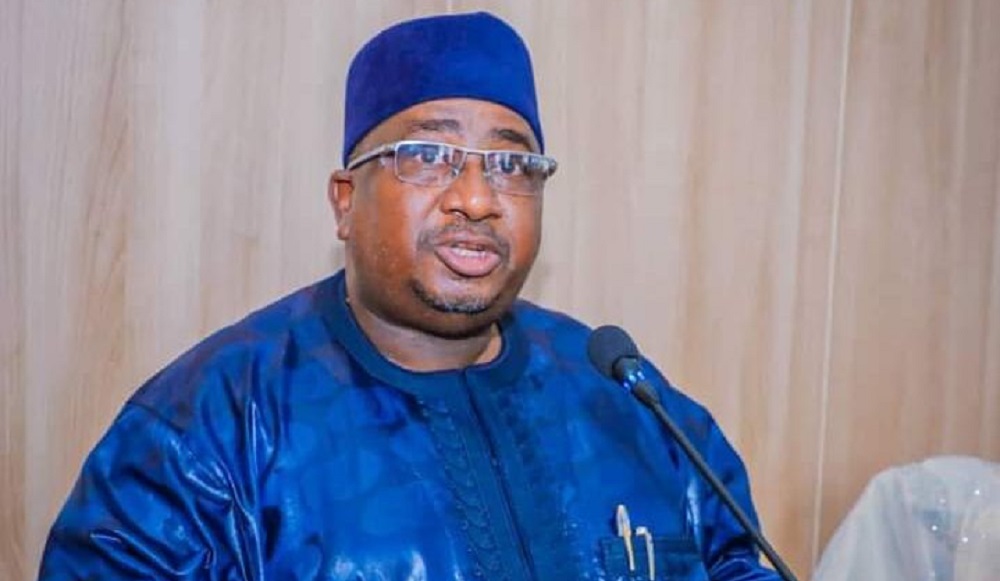
Governor Nasir Idris of Kebbi State has replaced his deputy, Senator Umar Abubakar Tafida Arugungu, with a former Commissioner for Finance, Ibrahim Muhammad Augie, as his running mate for the 2027 governorship election.
The decision was announced on Sunday by the All Progressives Congress National Organising Secretary, Suleiman Muhammad Argungu, at the Presidential Lodge in Birnin Kebbi.
Argungu made the announcement during a thank-you visit by political stakeholders from the Argungu Emirate to the governor.
He explained that the change followed legal advice regarding the eligibility of the incumbent deputy governor to contest alongside Idris in the 2027 election.
According to him, Tafida Arugungu was dropped as the governor’s running mate based on the advice received from legal experts.
Argungu subsequently named Augie as the new running mate to Idris, while stressing that the decision was taken with the knowledge and consent of the outgoing deputy governor.
He dismissed speculation of a rift between Idris and Tafida Arugungu, urging APC members and supporters across the state to accept the development and remain united ahead of the 2027 poll.
Speaking to journalists after the event, Idris also denied any disagreement with his deputy, assuring party supporters that he would work with Augie to advance the interests of the state.
Augie, who hails from Augie Local Government Area, served as Commissioner for Finance during the administration of former Governor Atiku Bagudu.
The governor also thanked the people of the Argungu Emirate for their continued support for his administration and called on party members to remain focused on the development of the state.
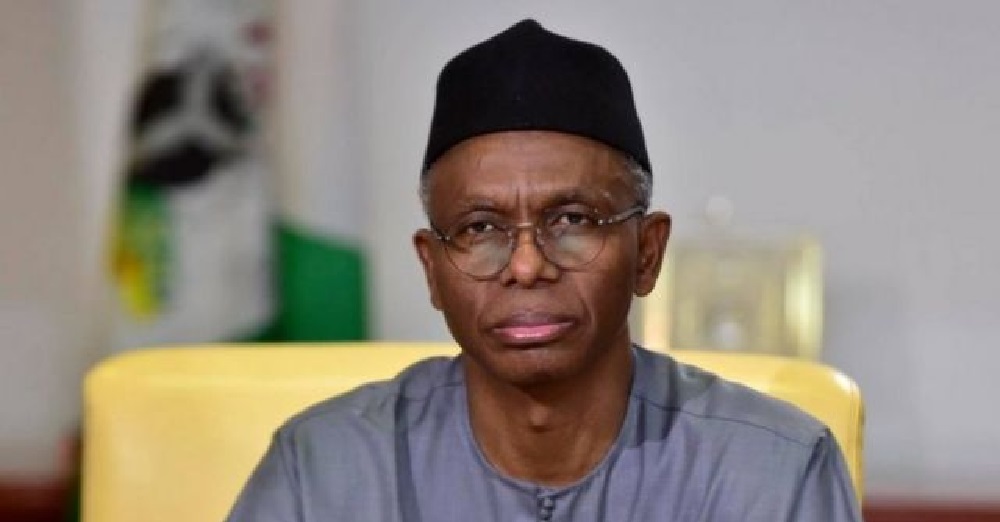
Former Governor of Kaduna State, Nasir el-Rufai, has filed, among nine reliefs, a fresh N10 billion fundamental rights suit against the Independent Corrupt Practices and Other Related Offences Commission (ICPC), alleging that the agency has prevented his wife and son from visiting him in custody.
In the meantime, El-Rufai’s son and representative of Kaduna North Federal Constituency, Mohammed El-Rufai, over the weekend celebrated his father and stepmother, Asia, on their 27th wedding anniversary.
The former minister’s originating motion marked FHC/ABJ/CS/1852/2026 and filed at the Federal High Court in Abuja on August 13, 2026, by El-Rufai’s lawyer, Ubong Akpan, also listed the ICPC chairman and the Attorney General of the Federation (AGF) as second and third defendants.
He alleged that his wife, Aichatou Asabe, and son, Abba el-Rufai, were prevented from accessing him despite an existing court order permitting visits by his family members and legal representatives.
The former governor asked the court to declare that his fundamental rights under Part IV of the 1999 Constitution remain enforceable despite his detention by the ICPC.
He alleged that the repeated denial of access to his family members had prevented them from providing him with food, medication and other necessities.
According to him, the alleged restriction violated his rights to dignity, private and family life as guaranteed under Sections 34 and 37 of the Constitution, as well as Articles 5 and 18 of the African Charter on Human and Peoples’ Rights.
Also alleging that ICPC officers physically restrained and intimidated his wife and son during an incident on July 7, he asked the court to declare the alleged conduct and continued denial of family access without lawful authority unconstitutional, illegal, null and void.
The former governor further sought an order directing the ICPC and other respondents to grant him unhindered and reasonable access to his family and lawyers throughout his detention, in line with an earlier order of the Federal High Court.
According to el-Rufai, the alleged actions had subjected him to “humiliation, emotional trauma, anxiety and psychological distress.”
He argued that the respondents’ conduct amounted to an unjustifiable interference with his dignity and family life and was inconsistent with constitutional protections and provisions of the African Charter.
Meanwhile, in a statement on Facebook, Mohammed described his stepmother as the “glue” of the family and praised her for her compassion, intellect and support for vulnerable people.
He recalled how Asia took him back to Zaria Academy when he was in Junior Secondary School 1, describing her as “an avid reader, a brilliant lawyer” and a woman whose compassion extended beyond her immediate family.
He said his stepmother devoted herself to supporting widows and orphans during his father’s tenure as governor, while also crediting her with shaping his values and approach to representing Kaduna North.
“Every good thing we continue to do for Kaduna North is due to the teachings and knowledge she has imparted in me since I was 11 years old. Every bad thing is my fault,” he said.
Reflecting on Asia and his father’s marriage, Mohammed said he had witnessed his stepmother’s unwavering support for his father through different periods of his life. He added that her strength and presence had remained a source of comfort, particularly as his father’s detention continues.
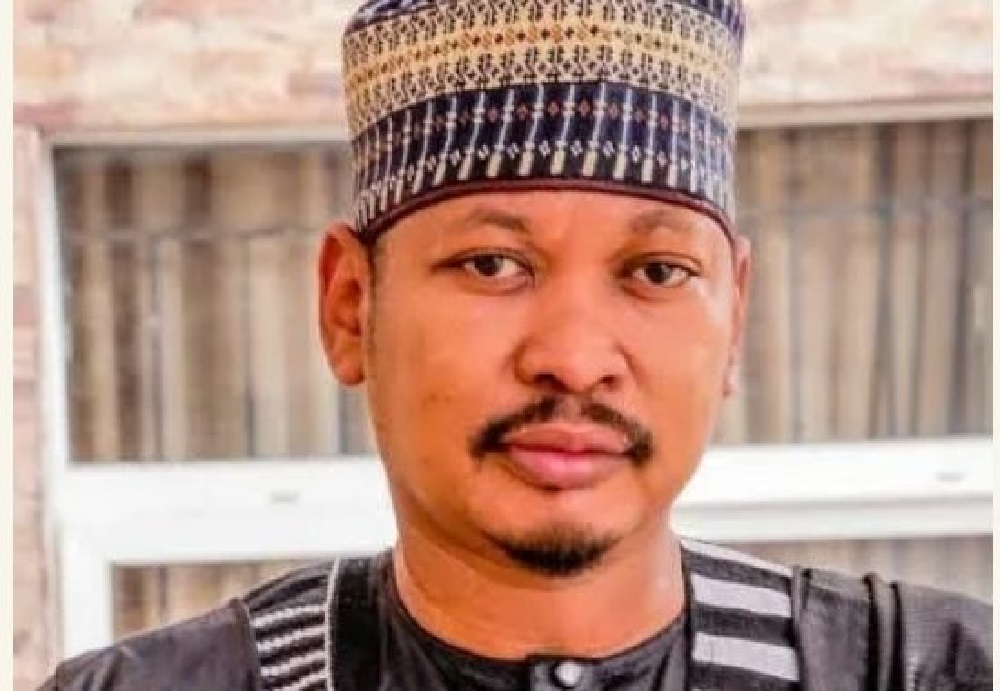
Abdulaziz Umar Ganduje, the eldest son of former Governor of Kano State and ex-National Chairman of the All Progressives Congress (APC), Abdullahi Umar Ganduje, has returned to the ruling party after a brief defection to the New Democratic Congress (NDC).
On Sunday, Abdulaziz was formally received back into the APC fold at the Ganduje Ward office in Dawakin Tofa Local Government Area, where he collected his membership card.
Party officials and supporters were present to witness the occasion, which was seen as a reaffirmation of loyalty to the APC structure in Kano.
Abdulaziz had earlier joined the NDC and picked up its nomination form to contest the Dawakin Tofa/Tofa/Rimin Gado Federal Constituency seat. His move was widely interpreted as aligning with the Kwankwasiyya movement of former Governor Rabiu Musa Kwankwaso, a long-time rival of his father.
His return to APC comes after the deadline for obtaining nomination forms had closed, meaning the action was symbolic rather than an immediate electoral bid. It is, however, viewed as a significant step in consolidating the Ganduje family’s political base in Dawakin Tofa.
Kano politics has for years been shaped by the rivalry between Kwankwaso’s Kwankwasiyya movement and Ganduje’s APC faction.
Abdulaziz’s earlier defection was seen as a boost to Kwankwasiyya, while his return strengthens his father’s camp ahead of the 2027 elections.

Finally, Cameroon win first WAFCON trophy, after slamming Malawi 3-0

2027: Gov dumps deputy, picks ex-commissioner as running mate

el-Rufai files fresh N10b suit against ICPC for allegedly denying family access to him




-
 News23 hours ago
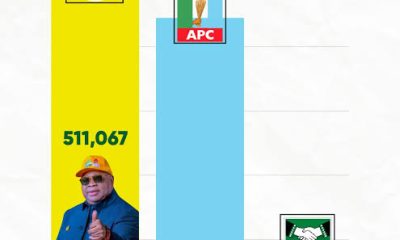
BREAKING: Adeleke dismantles APC with 511,067 votes
-

 News21 hours ago
NDLEA nabs India-bound bizman with cocaine, recovers N3.6b Colos, codeine in Lagos(Photos)
-
 News18 hours ago
Osun election: Read What Adeleke Said After Defeating Oyebamiji
-
 News21 hours ago
Major reason why dancing Gov Adeleke won Osun again: The Forces Behind the Governor’s 2026 victory
-
 News18 hours ago
Makinde Hails Adeleke’s Re-election, Berates Attempt to Use Federal Might
-

 News15 hours ago
3,000 Man O’War officers undergo intensive training in readiness for safe sch engagement (Photos)
-

 Opinion21 hours ago
The Sundiata Post Model (7): A Philosophical Triad and the Language of 21st-Century Journalism
-
 Politics15 hours ago
OSUN DECIDES: APC studying results across 332 wards, reveal next move
Warning: Undefined variable $user_ID in /home/naijuinz/public_html/wp-content/themes/zox-news/comments.php on line 49
You must be logged in to post a comment Login