Economy
Hardship: Nigeria experiencing deepening economic crisis – IMF



The International Monetary Fund, IMF, has warned that Nigeria is experiencing a deepening economic crisis.
IMF expressed concern that the stagnant per-capita growth, widespread poverty, and severe food insecurity have further intensified the persistent cost-of-living crisis in Nigeria.
This was contained in its recently published report titled ‘Review of Nigeria’s Post Financing Assessment by the IMF Executive Board.’
In line with the report, the inadequate collection of revenue has impeded the delivery of services and the allocation of resources towards public investment.
According to the report, the observed inflation rate for October stood at 27 percent compared to the same period last year (with food inflation at 32 percent).
The growth was attributed to the removal of fuel subsidies, the depreciation of the exchange rate, and the negative impact on agricultural production in the country.
The report read in part, “Nigeria faces a difficult external environment and wide-ranging domestic challenges. External financing (market and official) is scarce, and global food prices have surged, reflecting the repercussions of conflict and geo-economic fragmentation.
“Per-capita growth in Nigeria has stalled, poverty and food insecurity are high, exacerbating the cost-of-living crisis. Low reserves and very limited fiscal space constrain the authorities’ option space. Against this backdrop, the authorities’ focus on restoring macroeconomic stability and creating conditions for sustained, high and inclusive growth is appropriate.”
In the midst of Nigeria’s ongoing economic challenges, the report highlighted that on January 12, 2024, the Executive Board of the International Monetary Fund completed an evaluation of post financing and approved the Staff Appraisal without delay.
Additionally, it emphasized that Nigeria possesses sufficient capability to repay its debts to the IMF.

By Gloria Ikibah.
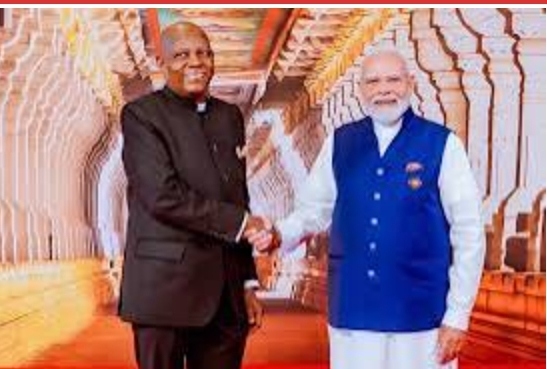
Nigeria and India have reaffirmed their commitment to deepening bilateral relations, with economic cooperation, consular matters, education and cultural exchanges featuring prominently in talks between their foreign ministers.
Nigeria’s Minister of Foreign Affairs, Ambassador Bianca Odumegwu-Ojukwu, held bilateral discussions with her Indian counterpart, Dr S. Jaishankar, on the sidelines of the 18th BRICS Leaders’ Summit in New Delhi.
The summit was hosted by India under the theme, “Building Resilience, Innovation, Cooperation and Sustainability”.
A major issue discussed was the welfare of Nigerians living in India, particularly those who have overstayed their visas.
Odumegwu-Ojukwu sought a further extension of the existing amnesty arrangement to allow affected Nigerians to return voluntarily without facing penalties.
The two ministers also discussed the possibility of concluding a bilateral Memorandum of Understanding on the Transfer of Sentenced Persons.
Such an agreement will establish a framework for the humane and orderly transfer of eligible prisoners between Nigeria and India.
Economic relations also featured prominently during the meeting, with both sides exploring opportunities to expand trade and investment and strengthen mutually beneficial economic partnerships.
The ministers further identified education and cultural exchanges as key areas for improving people-to-people relations between the two countries.
Greater cooperation in these areas is expected to promote mutual understanding and create more opportunities for citizens of Nigeria and India.
The meeting formed part of Nigeria’s efforts to use its participation in the BRICS platform to advance bilateral partnerships, open up new economic opportunities and strengthen South-South cooperation.
Nigeria became a BRICS partner country in January 2025, providing a platform for Abuja to deepen engagement with major emerging economies while pursuing its broader economic and diplomatic interests.
The bilateral talks with India therefore added a practical dimension to Nigeria’s participation in the New Delhi summit, particularly in areas directly affecting Nigerians in India and the wider economic relationship between both countries.
By Gloria Ikibah
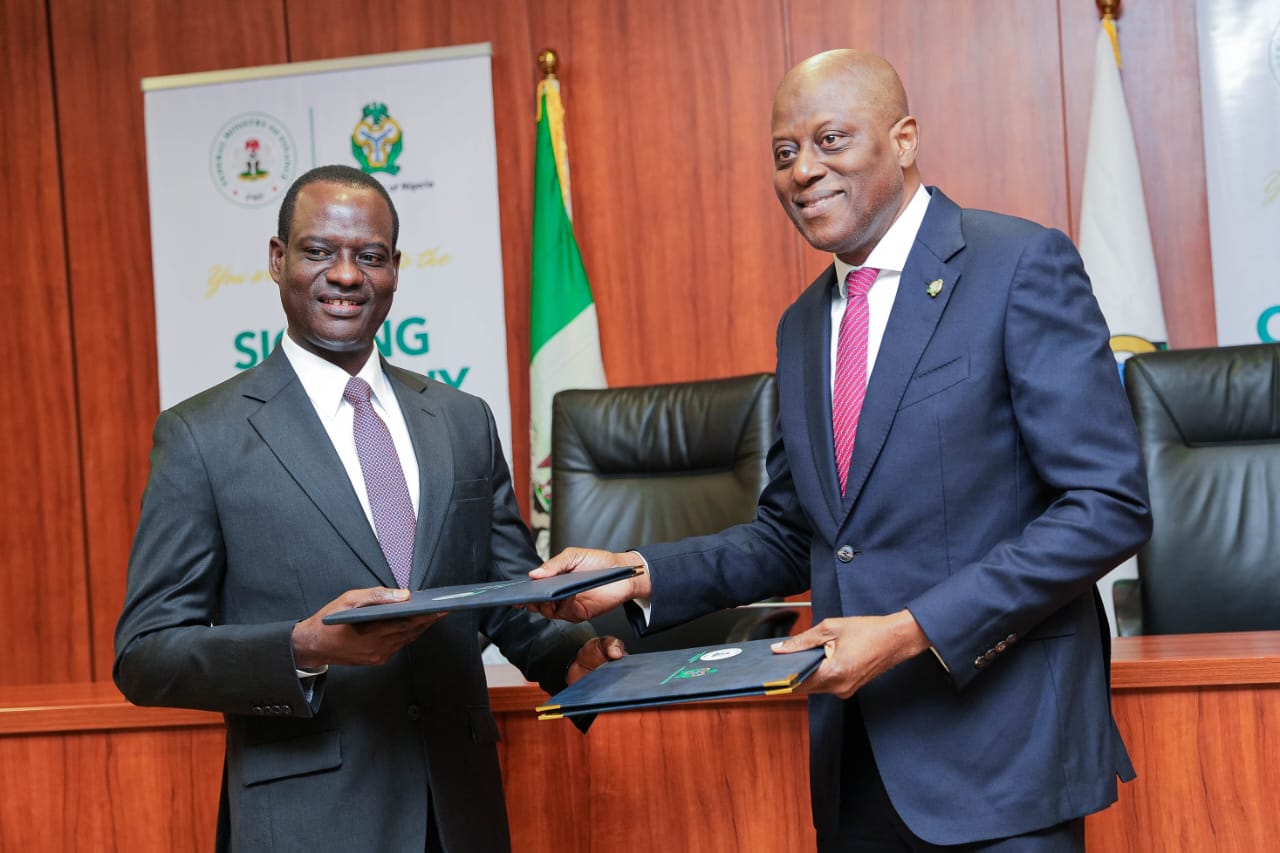
The Federal Government and the Central Bank of Nigeria (CBN) have signed a Memorandum of Understanding (MoU) to strengthen coordination between fiscal and monetary policies as the country steps up efforts to tackle inflation and improve economic stability.
The agreement, signed by the Minister of Finance and Coordinating Minister of the Economy, Taiwo Oyedele, and CBN Governor Olayemi Cardoso, in Abuja on Friday, establishes a structured framework for regular consultation, information sharing and policy coordination between the two institutions.
Speaking at the signing ceremony, Oyedele said the framework will make fiscal-monetary coordination a permanent institutional process rather than one dependent on the personalities occupying key offices.
He stressed that although the Ministry of Finance and the CBN have separate mandates and must retain their independence, their decisions ultimately affect the same economy.
According to him, government borrowing affects liquidity, interest rates and financing costs, while monetary policy also has implications for government finances. Exchange rates, tariffs, government spending and agricultural policies, he added, directly affect prices, revenues and economic activity.
According to Oyedele, bringing inflation sustainably into single digits was a major objective of the new framework, but stressed that the task could not be left to monetary policy alone.
“Our objective is to bring inflation sustainably into single digits and keep it there — and that cannot be monetary policy’s job alone,” he said.
The Minister said the Finance Ministry will contribute through disciplined spending, sound cash and liquidity management, efficient government financing and measures aimed at addressing structural causes of inflation, including food, energy, imported costs and logistics.
On food inflation, Oyedele said the government will work with relevant institutions and state governments to strengthen grain reserves, improve agricultural yields and irrigation, build climate resilience and address gaps in farm-to-market infrastructure.
He also ruled out any return to fuel subsidy, saying such a move would place additional pressure on public finances and the naira.
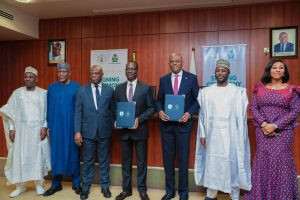
FG, CBN sign pact to tackle inflation
The Minister said improved foreign exchange stability and tax exemptions on fuel had contributed to moderating prices, while efforts to strengthen domestic production would remain important to reducing inflationary pressures.
Oyedele said access to reliable and timely economic data would be central to the new coordination framework.
Under the agreement, the Finance Ministry and CBN are expected to strengthen information sharing on government cash positions, financing plans, credit growth and foreign exchange flows.
“Better coordination starts with a common evidence base,” he said.
The Minister said the framework will provide for aligned macroeconomic assumptions, more consistent forecasts and clearer mechanisms for resolving areas where fiscal and monetary policies could work at cross purposes.
He added that the government was working with the National Bureau of Statistics to expand the quality and range of data available for economic policy decisions.
Oyedele also cited what he described as improving confidence in the Nigerian economy, including a balance of payments surplus of more than $5 billion in 2025 and external reserves of over $54 billion.
He pointed to increased non-oil exports, declining refined-product imports as domestic refining capacity expands, Nigeria’s return to Frontier Market status and its inclusion in JPMorgan’s new frontier local-currency government bond index.
The Minister, however, said the government’s ambition went beyond attracting short-term portfolio funds, stressing the need for patient capital that would support factories, infrastructure, technology and job creation.
He said this will require policy consistency and certainty, as well as a regulatory environment that did not impose unnecessary burdens on businesses.
He added that the framework will also consider the economic consequences of insecurity and illicit financial flows.
Oyedele said the Finance Ministry will continue to pursue fiscal discipline, improved liquidity management, stronger transparency and data systems, more efficient financing and reforms designed to increase production and ease structural inflation.
“Nigeria has one economy. Fiscal policy cannot succeed without price stability; monetary policy cannot deliver price stability if fiscal policy pulls in the opposite direction,” he said.
Cardoso: MoU formalises decades of collaboration
Cardoso described the signing as a significant step towards strengthening Nigeria’s macroeconomic management and economic stability.
He said fiscal and monetary policies were complementary instruments whose combined impact would be stronger when they worked in harmony.
The CBN governor stressed that the MoU did not create a new relationship between the two institutions, noting that they had collaborated for decades on inflation management, debt sustainability, budget financing, exchange rate stability and responses to economic shocks.
Rather, he said, the agreement formalised the longstanding relationship through structured processes for consultation, information exchange and policy coordination.
“This memorandum provides a structured framework for regular consultation, information exchange and policy coordination. It will strengthen collaboration in critical areas such as government cash management, debt issuance planning, liquidity forecasting, macroeconomic analysis and periodic policy consultations, thereby enhancing policy coherence and the effectiveness of economic management,” Cardoso said.
He said the framework would transform a relationship built largely on established practice into one anchored by clear processes and enduring institutional commitment.
According to Cardoso, the new arrangement would create predictable mechanisms for engagement, improve decision-making and strengthen the institutions’ capacity to respond to emerging economic challenges.
The CBN governor said the timing was particularly important as the apex bank advances its transition towards an inflation-targeting framework, noting that the effectiveness of such a framework also depends on a supportive fiscal environment.
He said the MoU will provide the foundation for an operational framework through which both institutions could align their actions, minimise policy trade-offs and pursue shared economic objectives.
Cardoso commended Oyedele and the technical teams from both institutions for their roles in bringing the agreement to fruition.
He reaffirmed the CBN’s commitment to sound monetary policy, macroeconomic stability and financial system resilience, saying the strengthened partnership would contribute to building a more stable and productive Nigerian economy.
The agreement is expected to deepen cooperation in government cash management, debt issuance planning, liquidity forecasting, macroeconomic analysis and periodic policy consultations, while preserving the distinct mandates and institutional independence of the Finance Ministry and the CBN.


The Black Market Dollar-to-Naira Exchange Rate for 18th September 2026 Can Be Accessed Below.
NOTE: The exchange rate changes hourly. It depends on the volume of dollars available and the Demand. This means…you can buy or sell 1 dollar at a certain rate, and the price can change (high or low) within hours.
The official naira black market exchange rate in Nigeria today, including the Black Market rates, Bureau De Change (BDC), and CBN rates.
The exchange rate fluctuates hourly based on the supply and demand of dollars in the market.
What’s the dollar to naira black market today, 18th September 2026?
The exchange rate for a dollar to naira at Lagos Parallel Market (Black Market) players sell a dollar for ₦1375 and buy at ₦1380 on Friday, 18th September, 2026, according to sources at Bureau De Change (BDC).
Please note that the Central Bank of Nigeria (CBN) does not recognize the parallel market (black market), as it has directed individuals who want to engage in Forex to approach their respective banks.
Dollar to Naira Black Market Rate Today
Dollar to Naira (USD to NGN) Black Market Exchange Rate Today
Selling Rate ₦1375
Buying Rate ₦1380
Dollar to Naira CBN Rate Today
Dollar to Naira (USD to NGN) CBN Rate Today
Highest Rate ₦1332
Lowest Rate ₦1324

*WHEN PRIVACY BECOMES CONTENT*

JAMB sacks staff member over extortion of candidates

UNICAL suspends nine students over exam misconduct




-
 News21 hours ago
2027: Tinubu Moves to Give Wike Rivers, FCT Campaign Control Amid APC Governors’ Clash
-
 News21 hours ago
Atiku Challenges Tinubu Over Third Straight UNGA Absence, Questions ‘American Baggage’
-

 News21 hours ago
Fresh Crisis: Atiku, Malami, Others Fingered As EFCC Begins Fresh Probe Of Mambilla Power Deal
-

 News21 hours ago
Akpabio felicitates First Lady Oluremi Tinubu at 66, hails commitment to a better Nigeria
-

 Sports21 hours ago
Man City Survive Sunderland Scare, Liverpool Sneak Past Bournemouth
-
 News19 hours ago
Watch FCT minister Nyesom Wike on TVC by 5pm today as he speaks on Rainbow Coalition, 2027 elections